bluename
How to Care for Rare Sarracenia varieties: 5 Exotic Plant Tips
You’ve finally done it. You’ve acquired that stunning, elusive Sarracenia cultivar you’ve been dreaming of—perhaps a deep-veined Sarracenia leucophylla ‘Hurricane Creek White’, or a dramatic, almost black Sarracenia ‘Reptilian Rose’. The initial thrill, however, is quickly shadowed by a nagging anxiety: “This isn’t a common pitcher plant. What if I kill it?” I’ve been there, standing over a precious new arrival with a mix of awe and dread. The care guidelines for standard Sarracenia suddenly feel insufficient for these rare, often more finicky, beauties. Through years of cultivating these exotic wonders, and after more than one heart-stopping close call, I’ve honed a set of practices that address the unique needs of rare Sarracenia varieties. Let me guide you through five essential tips, born from direct experience, to not just keep your rare plant alive, but to have it thrive and put on its spectacular show.
Understanding What Makes Rare Sarracenia Different
First, it’s crucial to understand why these varieties demand extra attention. Rare Sarracenia are often the result of selective breeding or are geographically unique forms. They might prioritize breathtaking color over vigorous growth, or have adapted to very specific micro-habitat conditions. Their genetics can make them less tolerant of the “one-size-fits-all” approach. My first major lesson came with a Sarracenia rubra ssp. jonesii, a federally endangered variety. I treated it like my hardy Sarracenia purpurea, and it languished for months until I dug deeper into its native mountain seepage habitats. This taught me that rarity often equals specificity.
Tip 1: The Non-Negotiable Trinity: Water, Light, and Soil
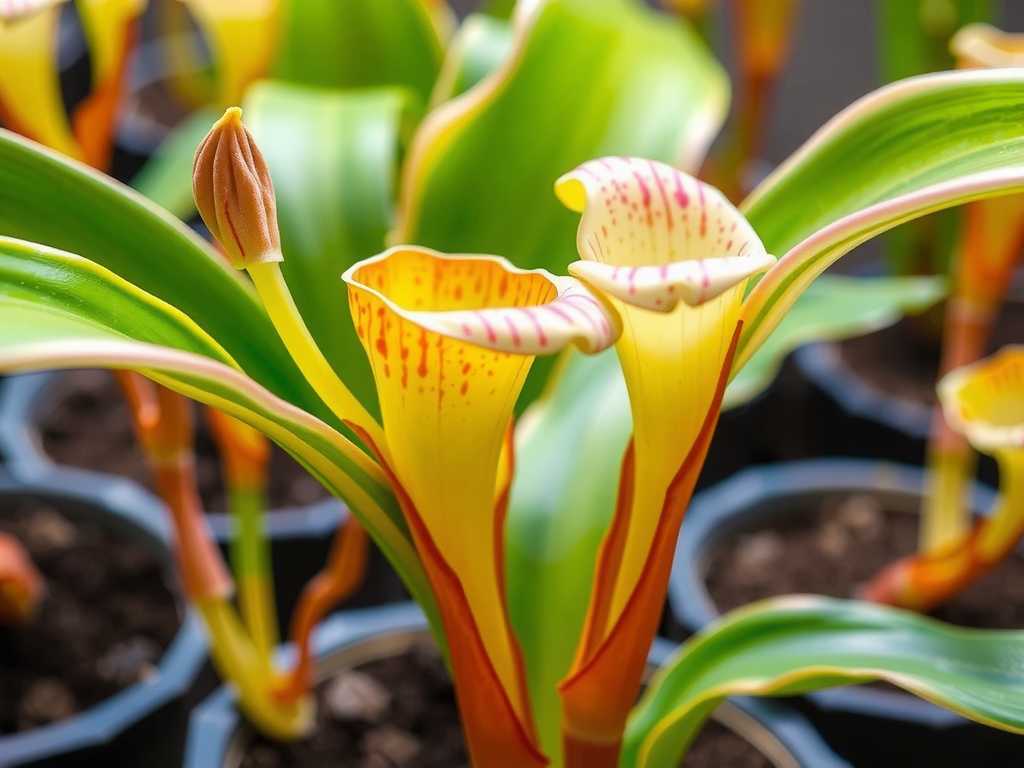
For common Sarracenia, the rules are simple: full sun, mineral-free water, and nutrient-poor soil. For rare varieties, these elements are not just rules; they are the absolute foundation. Any compromise here is a direct path to failure.
Water: Purity is Paramount Tap water, even if it’s deemed “soft,” is a silent killer. The dissolved minerals (Total Dissolved Solids or TDS) accumulate in the soil, slowly poisoning the roots. I use a TDS meter religiously. My water source must read below 50 ppm (parts per million), and ideally under 10 ppm. I rely solely on rainwater, distilled water, or reverse osmosis water. During a two-week observation period with a new Sarracenia flava ‘Maxima’, I made the mistake of using collected rainwater from an old, slightly mossy barrel without testing it. The TDS was over 80 ppm. Within 10 days, the vibrant new pitcher growth showed slight browning at the tips—a classic early sign of mineral burn. I immediately flushed the pot with copious amounts of distilled water for several days. The browning halted, and subsequent new growth was clean. The fix was simple, but the vigilance must be constant.
Light: Maximum Photons, No Compromise Rare Sarracenia need intense, direct sunlight—a minimum of 6 hours, but 8+ is ideal for bringing out their full color potential. I grow mine outdoors in full, all-day sun. When I first acquired a prized Sarracenia leucophylla ‘Tarnok’, I was nervous about sun-scorching and placed it in dappled afternoon shade. The result was pathetic, etiolated pitchers with weak, green coloration, completely lacking the promised white tops with red veins. I moved it incrementally over a week to full sun. The observation over the next two weeks was transformative. New pitchers emerged shorter, sturdier, and began developing intense red venation. The existing pitchers didn’t recover, but the plant’s trajectory completely changed. Insufficient light is a common pitfall for indoor growers; high-output LED or T5 fluorescent grow lights are mandatory, placed just inches from the plant.
Soil Mix: Aeration is Key The standard 50:50 peat moss and perlite mix works, but for rare specimens, I refine it. I aim for a sharper, more aerated structure to prevent any risk of sour, anaerobic conditions around valuable roots. My go-to mix is a long-fiber sphagnum moss and horticultural perlite or pumice blend (about 60:40). The sphagnum moss provides acidity and moisture retention while maintaining air pockets. I avoid fine, decomposed peat that can compact. Repotting is best done in late winter or very early spring, just as the plant emerges from dormancy.
Tip 2: Mastering the Dormancy Cycle – The Make or Break Period
This is where many rare Sarracenia are lost. They require a cold, dormant winter rest to reset their biological clock. Without it, they weaken and die within a few years.
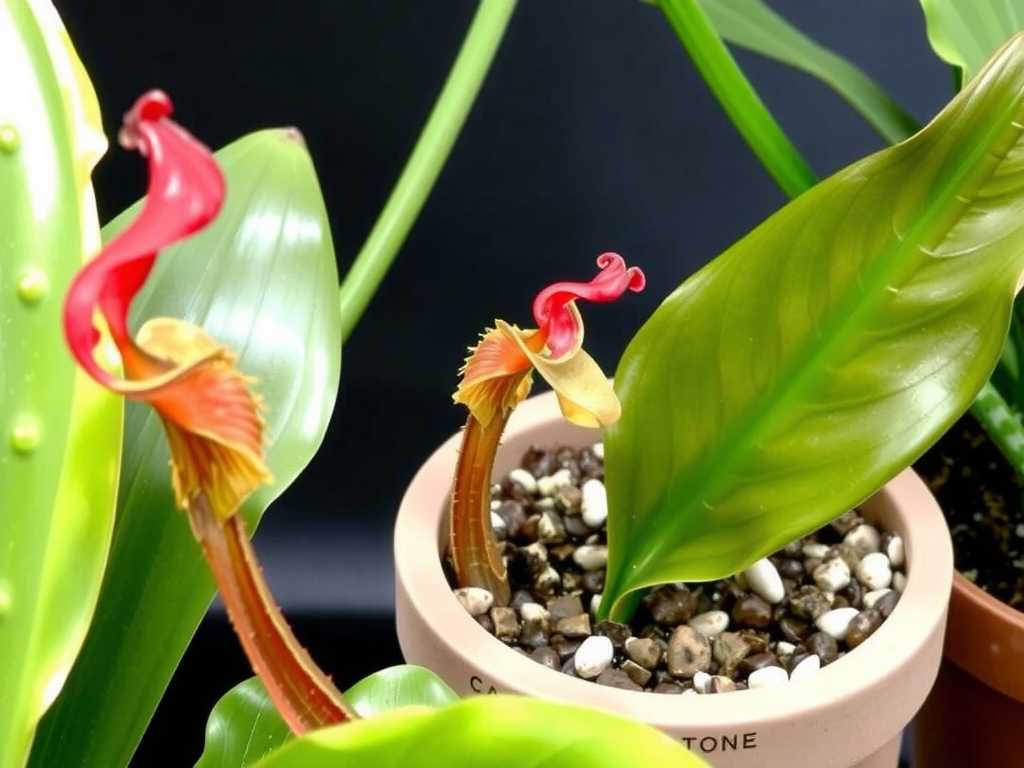
The How and Why From late autumn to early spring, the plant needs 3-4 months of temperatures between 0°C and 10°C (32°F to 50°F). Growth halts, and some pitchers may brown. This is normal and critical. I use an unheated greenhouse, but a cold frame, a very bright garage window, or even a protected spot outdoors in milder climates (Zones 7-8) can work.
My Dormancy Experiment and a Near-Disaster One winter, fearing for a delicate Sarracenia psittacina ‘Cobalt’, I brought it into a cool basement (around 12°C/54°F) under a weak light. I thought I was being cautious. It was a mistake. The temperature was too high to trigger proper dormancy, yet the light was too low for growth. The plant expended energy trying to grow spindly, pale pitchers. By spring, it was exhausted. When moved to full sun, it collapsed. I saved it by placing it in the fridge (in its pot, in a plastic bag) for a controlled 8-week chill, mimicking the required vernalization. It recovered slowly that season. The lesson was stark: a proper, cold, bright dormancy is not optional. As the Royal Horticultural Society (RHS) advises for hardy carnivorous plants, “Provide a cold winter rest period to maintain plant health long-term.”
Tip 3: Feeding vs. Fertilizing: A Critical Distinction
Never fertilize the soil of a Sarracenia. Their roots cannot absorb nutrients this way and it will cause fatal burn. They are adapted to gain nutrients from captured prey.
The Hands-Off (and Hands-On) Approach Outdoors, they will catch insects naturally. For indoor cultivation or during slow periods, you can assist. I use freeze-dried bloodworms (sold for fish food), rehydrated with a drop of water. Once every 2-4 weeks during active growth, I’ll drop a few tiny pieces into a few pitchers. The key is tiny amounts. Overfeeding a pitcher will cause it to rot. I observed that a fed pitcher will often seal its hood over the digesting prey and remain plump and colorful for much longer than an unfed one. The American Sarracenia Society (ASHS) notes that while feeding isn’t strictly necessary for survival, it can promote larger, more robust pitcher development in cultivation, especially for show plants.
Tip 4: Pest and Problem Management – Vigilance for Valuables
Rare plants are magnets for pests like aphids and scale. A severe infestation on a common plant is a nuisance; on a rare one, it’s a crisis.
My Proactive Regimen I inspect my rare specimens weekly, turning leaves and looking at growth points. At the first sign of aphids (clusters of tiny green or black insects), I act. My safest, most effective solution is a systemic insecticide containing imidacloprid, applied as a soil drench. It is absorbed by the roots and makes the plant toxic to sucking insects without harming the plant itself. This method, recommended for use on ornamental plants by many conservatories, avoids any risky spray contact with the delicate pitchers. For a minor outbreak, a strong jet of pure water or manual removal can suffice. Prevention through isolation of new plants for a few weeks is a non-negotiable step.
Tip 5: Propagation as Insurance – Securing Your Investment
The single best way to ease the anxiety of growing a rare Sarracenia is to propagate it. Successfully creating a division means you have a backup.
The Division Process The ideal time is during repotting in late winter. I gently wash the rhizome (the horizontal stem) to see the growth points or “eyes.” Using a sterile, sharp knife, I cut a section that includes at least one growth point and a portion of roots. The cut surfaces are dusted with sulfur or cinnamon powder to prevent fungal infection. The division is then potted separately. Over a two-week observation period post-division, the parent plant and division may show no top growth as they recover. The key is to keep them consistently moist and in bright, indirect light initially. Signs of success are the maintenance of existing pitcher turgor and, eventually, the emergence of a new, small growth point from the division’s eye.
What about growing Sarracenia from seed for rare types? While possible, seed propagation for complex hybrids will not yield identical plants. For preserving a specific cultivar, division or rhizome cuttings are the only reliable vegetative propagation methods.
I’ve heard “tray method” watering is best. Is this true for all rare varieties? Yes, the tray method is highly effective and recommended. Keep 1-2 inches of pure water in a tray beneath the pot, allowing the soil to wick moisture upward. This mimics their natural bog conditions. Refill as it evaporates. During dormancy, keep the tray just slightly moist, not waterlogged.
My rare Sarracenia’s pitchers are turning brown from the top. What’s wrong? Individual pitchers have a lifespan, typically one season, and browning is natural as they age. However, if new pitchers are browning quickly, it’s a stress signal. The most common culprits are: 1) Mineral burn from impure water (check your water source), 2) Low humidity combined with intense heat (more common indoors), or 3) A sudden, drastic change in environment (acclimatize plants slowly to new conditions).
Can I grow these rare pitcher plants successfully indoors year-round? It is challenging but possible with dedicated equipment. You must provide: 1) Extremely intense full-spectrum LED or T5 HO lights for 14-16 hours a day, placed very close to the plant, 2) A winter dormancy period by moving the plant to a cool, bright location like an unheated sunroom or using a wine fridge with lights for a controlled chill, and 3) Consistently high humidity (above 50%), often requiring a humidifier or terrarium setup. Most experts, including the ASHS, agree that outdoor growing in suitable climates yields far superior, more resilient plants.
Caring for rare Sarracenia is a deeply rewarding journey that blends horticultural precision with simple wonder. It demands that you become an attentive observer, learning to read the subtle cues in pitcher color, texture, and growth. By committing to the absolute fundamentals of pure water, blinding light, and proper dormancy, you create a stage where these exotic performers can truly shine. The pitfalls—whether from overzealous care, impure water, or insufficient winter chill—are all navigable when you understand the plant’s innate needs. Start with one rare variety, apply these focused tips, and enjoy the process of nurturing a truly extraordinary piece of the botanical world. The moment you see that first perfectly formed, vividly colored pitcher emerge under your care, all the vigilance will feel utterly worthwhile.