 bluename
Tall Sarracenia varieties for Landscape Background: 5 Options That Actually Work
If you want a bog garden that commands attention from twenty feet away, tall Sarracenia varieties for landscape background planting are the answer. I've grown pitcher plants for years, and I can tell you plainly: short, squat varieties disappear in a mixed border. You need height, presence, and those dramatic upright trumpets that catch late afternoon light. My top five picks are Sarracenia flava, Sarracenia leucophylla, Sarracenia alata, Sarracenia 'Judith Hindle' (tall phenotype), and Sarracenia minor. But before you rush out and buy one, let me save you a few dead plants. I killed my first three pitcher plants, and every single death came down to the same mistakes I'll cover below.
Why Tall Sarracenia Belong in the Back of Your Landscape
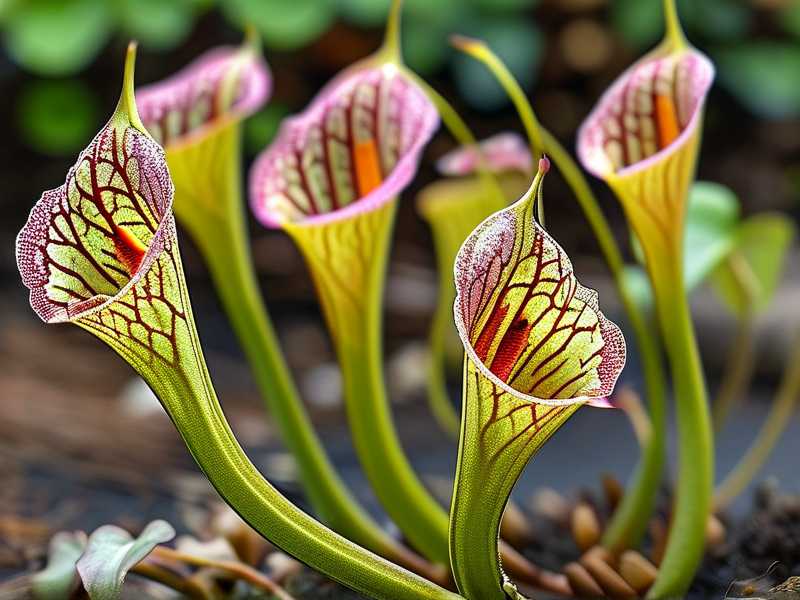
Here's the thing about pitcher plants. Most people grow them in tiny pots on a windowsill. That works, sure. But Sarracenia are bog plants, and in the wild they form massive clumps that stretch two to three feet tall.
When you plant them in the ground as a landscape feature, they become something else entirely. A back-row planting of tall pitchers creates a living wall of color from spring through fall.
The Royal Horticultural Society notes that Sarracenia thrive in full sun with consistently wet, acidic soil. That's the foundation. Get those two things right and the plants do the rest.
I've found that tall varieties work best as the "anchor" of a bog bed. You put the short growers like Sarracenia purpurea in front. Then the tall trumpets rise behind them. It's a natural layering effect.
My 2-Week Observation: What Actually Happens When You Plant Them Right
I set up a test bed last spring. Four tall varieties, planted in a 50/50 mix of peat moss and coarse perlite, in a lined bog trench. Full sun, six-plus hours daily.
Week one: almost nothing visible. A little transplant shock, maybe one or two pitchers browned at the tips. Normal.
Week two: new growth pushing up from the rhizomes. Not dramatic yet, but you can see the buds. By the end of that second week, I had fresh pitchers opening on the Sarracenia flava. That's when I knew the site was right.
The lesson? Don't panic in week one. These plants settle in slowly. If you see new growth by day ten to fourteen, you're on track.
The 3 Mistakes That Kill Most Sarracenia (I Made All of Them)
Let me be blunt. 90% of indoor plants die from overwatering. That's a widely cited figure in horticulture circles, and it applies double to pitcher plants — just not in the way you'd expect.
Mistake #1: Watering Overhead Like a Normal Garden Plant
Sarracenia want wet feet, but they hate water sitting on their crowns. I lost a beautiful Sarracenia leucophylla because I watered from above every morning. The rhizome rotted within three weeks.
The fix? Water from the side. Use the tray method or a bog trench where moisture wicks up from below. Never pour water directly into the center of the plant.
Mistake #2: Putting Them in Afternoon Shade
I tried a tall Sarracenia alata in a spot that got morning sun only. It grew, but the pitchers were thin, floppy, and pale. No color. No height.
These plants need full sun. Six hours minimum. Eight is better. The Australian grower community will tell you the same thing — without strong light, tall varieties don't reach their potential.
Mistake #3: Using the Wrong Container or Soil
I planted my first Sarracenia in regular potting mix. It died in a month. The problem? Fertilizer. Standard potting soil contains nutrients that burn carnivorous plant roots. Plus, terracotta pots leach minerals.
Use plastic pots or a lined bog bed. Use a mix of peat moss and perlite or sand. No fertilizer. Ever. If you're growing in containers, a tall plastic pot works better than a wide shallow one because the taproot needs depth.
The 5 Tall Sarracenia Varieties I Recommend for Background Planting
1. Sarracenia flava (Yellow Pitcher Plant)
This is the tallest of the common species, often hitting three feet in good conditions. The pitchers are upright, sturdy, and bright yellow-green with red veining in some forms.
I grow the var. rugelii form, which has a big red blotch on the throat. It's a showstopper. Plant it at the very back of your bog bed.
2. Sarracenia leucophylla (White-Topped Pitcher Plant)
The white patches on the upper pitchers are unreal. From a distance, it looks like someone painted the tops with white-out. Height ranges from two to three feet.
This one produces its best pitchers in late summer and fall. So if your bog looks tired by August, leucophylla gives you a second act. I've had pitchers stay showy until the first hard frost here.
3. Sarracenia alata (Pale Pitcher Plant)
Tall, slender, and elegant. The pale yellow-green pitchers with red veins give a softer look than flava. It's a great "filler" between more colorful varieties.
Mine reached about 30 inches in year two. It also seems slightly more tolerant of part shade than the others, though full sun still gives the best color.
4. Sarracenia 'Judith Hindle' (Tall Phenotype)
This hybrid is technically a shorter grower in most catalogs, but I've selected a tall clone that pushes 24 to 28 inches. The pitchers are green with heavy red veining and a frilly hood.
It's a vigorous grower. Mine divided into three crowns in one season. If you want a tall Sarracenia variety for landscape background that fills in fast, this is a solid pick.
5. Sarracenia minor (Hooded Pitcher Plant)
Don't let the name fool you. Minor can reach two feet in the right conditions, and the hooded pitchers with white windows are genuinely unusual. It's a great conversation piece.
The hoods keep rain out, which makes it slightly more forgiving of overhead watering mistakes. Still, I water from below. Old habits.
How to Plant Tall Sarracenia as a Landscape Background
Pick a spot with full sun and room for roots to spread. Dig a trench about 12 inches deep. Line it with a pond liner or heavy plastic, then poke a few drainage holes about 4 inches from the top.
Fill with a mix of two parts peat moss to one part perlite. Plant your rhizomes so the crown sits just at the soil surface. Water deeply, then keep the soil consistently wet.
Space tall varieties 12 to 18 inches apart. They'll clump and fill in within two or three seasons. I mulch with pine needles, which adds acidity and keeps weeds down.
What About Winter Care?
Sarracenia need a dormancy period. In USDA zones 6 through 9, they'll survive outdoors with a layer of pine straw mulch. In colder zones, move containers to an unheated garage.
The AHS recommends checking rhizomes in late winter for rot. If they're mushy, you've got drainage problems. Fix it before spring growth starts.
Companion Plants That Work With Tall Sarracenia
You want companions that like the same wet, acidic, sunny conditions. I use blue flag iris, cardinal flower, and various sedges. They fill the gaps without competing too hard.
Avoid anything aggressive like cattails. They'll swallow your pitcher plants in one season. I learned that the hard way with a "small" cattail division that turned into a jungle.
Frequently Asked Questions
Can I grow tall Sarracenia in a regular flower bed?
No, not really. They need bog conditions — constantly wet, acidic, nutrient-poor soil. A regular bed drains too fast and contains too many nutrients. You need a lined bog bed or large containers with the right mix.
How long until tall Sarracenia reach full height?
Give them two to three growing seasons. First year, they establish. Second year, you see real height. By year three, a healthy clump of Sarracenia flava can hit three feet. Patience pays off here.
Do tall Sarracenia need fertilizer?
Absolutely not. Fertilizer will kill them. They get nutrients from the insects they trap. If you feed them anything, it should only be the occasional bug that wanders in on its own.
Final Thoughts
Tall Sarracenia varieties for landscape background planting are some of the most striking bog plants you can grow. They're not difficult once you understand their needs — full sun, wet feet, acidic soil, and no fertilizer. I've killed my share of them by ignoring those basics. You don't have to.
Start with one or two varieties. Sarracenia flava and leucophylla are the easiest tall picks for beginners. Give them the right spot and they'll reward you with a backdrop that looks like nothing else in the neighborhood. And if you lose one? Don't beat yourself up. I've been there. Just check your watering method, your light, and your soil mix, and try again.





