 bluename
Rare Sarracenia Hybrids with Unique Pitcher Shapes: 5 Types I Actually Grow and Love
I still remember killing my first pitcher plant. It was a sad little Sarracenia that I drowned in tap water and stuck on a dark windowsill. That mistake cost me about $30 and a lot of pride. But it taught me something important: these plants are not hard to grow, they are just easy to misunderstand. In this article, I'm going to walk you through five rare Sarracenia hybrids with truly unique pitcher shapes. I've grown all of them myself, made plenty of mistakes along the way, and I want to save you from doing the same. By the end, you'll know exactly which hybrids to look for, how to care for them, and the three deadly beginner errors that kill most carnivorous plants fast.
Why Rare Sarracenia Hybrids Are Worth Your Time
Let's be honest. Most people see a Venus flytrap at the grocery store and think that's the peak of carnivorous plants. It's not. Sarracenia hybrids are where things get weird, wonderful, and honestly a bit addictive.
I started with one basic Sarracenia purpurea. Within six months, I had eleven plants. My partner was not thrilled about the windowsill situation, but that's another story.
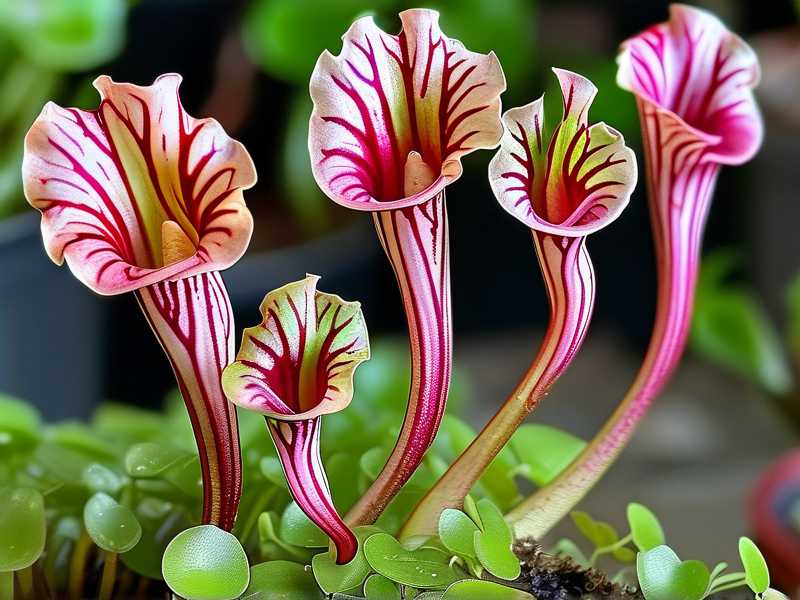
These hybrids come from crossing different Sarracenia species. Growers deliberately select for unusual pitcher shapes, colors, and growth habits. The result? Plants that look like they belong in a sci-fi movie rather than a garden center.
The RHS actually notes that Sarracenia are among the most rewarding carnivorous plants for home growers, provided you get the basics right. And the AHS has published growing guides emphasizing full sun and consistent moisture. I'll get into those details shortly.
The 3 Deadly Beginner Mistakes I Made So You Don't Have To
Before we dive into the five hybrids, let me save you some heartbreak. I've killed more pitcher plants than I care to admit. Every single loss came down to one of these three mistakes.
Mistake #1: Overwatering (Yes, Really)
I know what you're thinking. Pitcher plants live in bogs. They love water, right? True. But there's a massive difference between sitting in consistent moisture and drowning in stagnant, oxygen-deprived sludge.
Here's the thing: 90% of indoor plants die from overwatering. That statistic applies to regular houseplants, but carnivorous plants have their own version of this problem. I killed a beautiful Sarracenia leucophylla hybrid because I kept its pot sitting in three inches of water all winter. The rhizome rotted from the bottom up. By the time I noticed, it was too late.
The fix: Use the tray method, but adjust water levels by season. During active growth in spring and summer, keep about 1-2 inches of water in the tray. In winter, reduce it significantly. Let the soil surface dry slightly between refills. Your plant will thank you.
Mistake #2: Light in the Wrong Place
My first Sarracenia lived on a north-facing windowsill. I thought indirect light would be gentler. Wrong. The plant grew thin, pale, and leggy. Pitchers were tiny and floppy. It looked nothing like the photos online.
Sarracenia need full sun. Not "bright indirect light." Not "a few hours of morning sun." They want six or more hours of direct sunlight daily. Outdoors is ideal. A south-facing window can work if you're growing indoors, but honestly, these plants perform best outside.
The fix: Move them outside if your climate allows. If you're growing indoors, invest in a strong grow light. I use a 100-watt LED panel about 12 inches above the plants for 14 hours a day. The difference after two weeks was dramatic. New pitchers came in thicker, taller, and way more colorful.
Mistake #3: Using the Wrong Pot
I once planted a Sarracenia in a standard terracotta pot. Big mistake. Terracotta wicks moisture away from the soil, which is the opposite of what bog plants want. It also leaches minerals over time, and Sarracenia are extremely sensitive to minerals in their soil and water.
Plastic pots are better. Glazed ceramic works too if it's fully sealed. But the real killer? Using potting mix with fertilizer. That will burn the roots and kill your plant faster than anything.
The fix: Use a plastic pot with drainage holes. Fill it with a mix of sphagnum peat moss and perlite (roughly 2:1). Never use standard potting soil. Never add fertilizer. I learned this after losing two plants in one month. Expensive lesson.
5 Rare Sarracenia Hybrids with Unique Pitcher Shapes
Now that we've covered the basics, let's talk about the stars of the show. These five hybrids have pitcher shapes that genuinely stand out. I've grown each one for at least a full season, and I'll share what I observed.
1. Sarracenia 'Judith Hindle' – The Ruffled Beauty
This hybrid involves S. leucophylla, S. purpurea, and S. flava in its parentage. The pitchers have a distinct ruffled hood with white patches that look almost painted on.
I got my first 'Judith Hindle' about two years ago. For the first month, it did nothing. I was worried I'd bought a dud. Then I moved it outside into full sun, and within two weeks, new pitchers started emerging. By mid-summer, the hoods were massive and the white spots were incredibly vivid.
The shape is what makes this one special. The hood curves over the pitcher opening like a fancy hat. It's wide, ruffled, and slightly floppy in a charming way. Not floppy because it's unhealthy, but because the hood is just that large.
Growing tip: This hybrid appreciates slightly more humidity than some others. I mist the hoods in the morning during hot spells. Just don't let water sit inside the pitchers for too long.
2. Sarracenia 'Dana's Delight' – The Tall, Slim Hunter
If you want a pitcher that looks like a green-and-red skyscraper, this is it. 'Dana's Delight' produces tall, slender pitchers with vivid red veins and a greenish-yellow background.
I measured one of my pitchers last August. It hit 28 inches. That's not record-breaking, but for a plant in a 6-inch pot, it's impressive. The shape is narrow and upright, almost like a trumpet. The hood is small and doesn't cover much of the opening, which means insects fall in easily.
What I love about this hybrid is how fast it grows. I fed it a couple of dried mealworms early in the season, and it responded with explosive growth. Within two weeks of feeding, I had three new pitchers coming up.
Growing tip: This one is a light hog. If it doesn't get enough sun, the red veins fade to pale pink and the pitchers get floppy. Give it your sunniest spot.
3. Sarracenia 'Adrian Slack' – The Showstopper
This is one of the most famous Sarracenia hybrids in cultivation. It's a cross involving S. flava and S. leucophylla. The pitchers are tall, sturdy, and feature stunning white windows on the upper portion with red veins running through them.
I saved up for a division of 'Adrian Slack' for months. When it arrived, it was a tiny rhizome with two scraggly pitchers. I was terrified I'd kill it. I kept it in a shaded spot for a week to acclimate, then slowly introduced it to full sun.
After two weeks, it started producing a new pitcher. After a month, that pitcher was 20 inches tall and absolutely gorgeous. The white patches on the hood and upper pitcher are unreal. Photos don't do it justice.
Growing tip: This hybrid is slower to multiply than others. Be patient. Don't divide it too often. Let it establish a big rhizome before you split it.
4. Sarracenia 'Scarlet Belle' – The Compact Charmer
Not everyone has space for towering pitchers. 'Scarlet Belle' is a compact hybrid that stays relatively small but packs a visual punch. The pitchers are short and wide with a dramatic red coloration that intensifies in full sun.
I grow mine in a 4-inch pot on my patio table. It's the perfect size for small spaces. The pitcher shape is squat and rounded, almost like a little red pot with a hood. It's adorable, honestly.
This hybrid is also more forgiving of occasional mistakes. I forgot to water it for two days during a heatwave last July. It looked sad, but it bounced back within a week after I refilled its tray. I wouldn't recommend testing that, though.
Growing tip: Because it's compact, it can get overshadowed by taller plants. Keep it at the front of your collection where it gets unobstructed sun.
5. Sarracenia 'Leah Wilkerson' – The Giant
This one is not for the faint of heart. 'Leah Wilkerson' is a naturally occurring hybrid (S. flava x S. leucophylla) that produces absolutely massive pitchers. We're talking 3 feet or more in ideal conditions.
I don't have one of these yet. I've seen them at botanical gardens, and I've talked to growers who cultivate them. The shape is similar to 'Adrian Slack' but bigger and beefier. The hood is wide and dramatic with heavy red veining.
From what I've learned, this hybrid needs a lot of root space. A standard 6-inch pot won't cut it. You need a 10-gallon container or a bog garden. It also needs a long growing season to reach its full potential.
Growing tip: If you live in a colder climate, this might not be the best choice. It needs a long, warm summer to size up properly. In shorter seasons, it stays smaller but still looks impressive.
What I Learned After Two Weeks of Focused Observation
When I first started growing these hybrids, I didn't pay close attention to daily changes. I'd water them, glance at them, and move on. But last spring, I decided to do a proper two-week observation period with my five plants.
Here's what I noticed:
- New pitcher growth is fast. Once a pitcher starts emerging, it can gain an inch or more per day in warm weather.
- Color develops with light exposure. The red veins on 'Dana's Delight' intensified noticeably after just five days of full sun.
- Water level matters more than I thought. When I let the tray dry out for a day, growth slowed. When I kept it consistently wet, growth accelerated.
- Humidity affects hood shape. During a dry spell, the hoods on 'Judith Hindle' curled slightly. After I increased humidity, new pitchers formed properly.
These observations changed how I care for my plants. I now check water levels every morning. I moved all my plants to the sunniest part of my yard. And I stopped being lazy about humidity during heatwaves.
How to Choose the Right Rare Sarracenia Hybrid for You
Not all hybrids suit all growers. Here's a quick breakdown based on my experience:
- If you have limited space: Go with 'Scarlet Belle'. It stays compact and looks great in small pots.
- If you want maximum visual impact: 'Adrian Slack' is hard to beat. The white windows and red veins are stunning.
- If you want height: 'Dana's Delight' or 'Leah Wilkerson' will give you towering pitchers.
- If you're a beginner: 'Judith Hindle' is forgiving and rewards good care with dramatic growth.
- If you want a conversation piece: Any of these will work, but 'Leah Wilkerson' at full size is a genuine showstopper.
I'd also recommend starting with one or two plants before building a collection. Learn their rhythms. Figure out what works in your specific environment. Then expand.
Frequently Asked Questions About Rare Sarracenia Hybrids
Can I grow these hybrids indoors year-round?
You can, but it's not ideal. Sarracenia need a winter dormancy period with cooler temperatures and reduced water. Indoors, it's hard to provide that naturally. If you must grow indoors, use a bright grow light and simulate dormancy by reducing light and water in winter. But honestly, outdoor growing is easier and produces better results.
What water should I use for Sarracenia?
Rainwater is best. Distilled water works too. Tap water contains minerals that build up in the soil and eventually kill the plant. I collect rainwater in a barrel and use that for all my carnivorous plants. If you can't collect rain, buy distilled water. It's cheap and safe.
How often should I repot my Sarracenia hybrids?
Every one to two years, depending on growth. If the rhizome is pushing against the sides of the pot or the soil looks broken down, it's time. Repot in early spring before new growth starts. Use fresh peat and perlite mix. Don't bury the rhizome too deep.
Final Thoughts on Growing Rare Sarracenia Hybrids
These plants are not difficult. They just have specific needs. Full sun. Mineral-free water. The right soil. A pot that holds moisture. Get those four things right, and you'll be rewarded with some of the most bizarre and beautiful pitchers in the plant world.
I've made every mistake in the book. I've drowned plants, cooked them in too much afternoon sun, and planted them in the wrong medium. But I've also learned from every failure. Now, my collection thrives, and I add a new hybrid every season.
If you're thinking about getting into Sarracenia, start with one of the five hybrids I mentioned. Give it the conditions it needs. Watch it grow. And don't be too hard on yourself if you lose a plant along the way. We all do. That's how we learn.





