 bluename
Dwarf Sarracenia varieties for Small Balcony Pots: 6 Types That Actually Thrive
If you've ever killed a pitcher plant on a tiny balcony, you're not alone. I've done it too—twice, actually. The fix? Grow dwarf Sarracenia varieties for small balcony pots instead of full-size ones. These compact North American pitcher plants stay under 12 inches, fit on a railing shelf, and still give you those gorgeous hooded pitchers. In this guide, I'll share 6 types I've grown myself, the 3 deadly mistakes I made, and exactly what happened over a 2-week observation window.
I killed my first Sarracenia because I treated it like a houseplant. Big mistake. These are bog plants. They want sun, water, and air—not cozy indoor conditions. Once I switched to dwarf types and fixed my habits, everything changed.
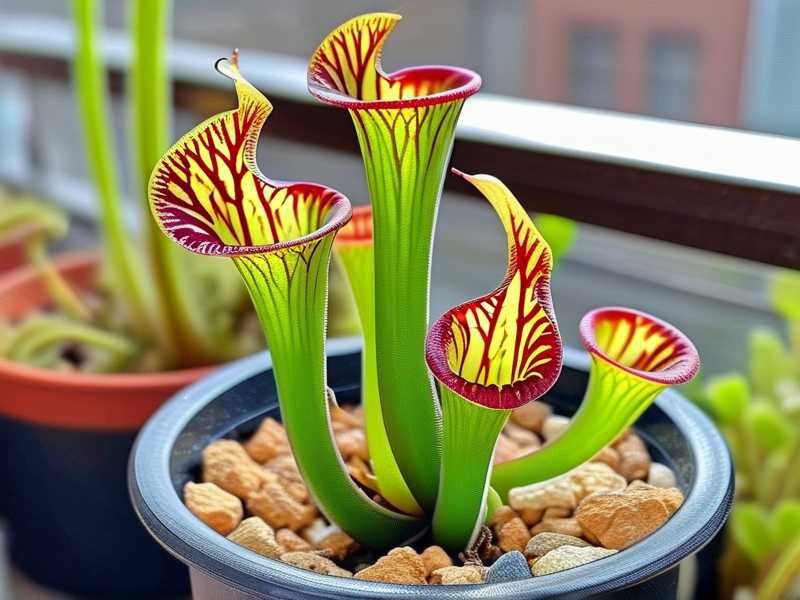
Why Dwarf Sarracenia Beat Full-Size Ones on a Balcony
Full-size Sarracenia can hit 3 feet tall. On a small balcony, that's a wind sail waiting to tip over. Dwarf varieties stay short and clump nicely.
They also tolerate smaller pots better. A 6-inch pot works fine for most dwarfs. Full-size plants hate being root-bound.
According to the Royal Horticultural Society (RHS), Sarracenia need full sun and consistently moist, acidic soil. That's it. No fertilizer. No tap water. Simple rules, but people break them constantly.
The American Horticultural Society (AHS) notes that these plants are native to nutrient-poor bogs. That explains why overfeeding kills them fast.
The 3 Deadly Mistakes I Made (So You Don't Have To)
Mistake 1: Overwatering (Yes, Really)
Sounds crazy for a bog plant, right? But here's the truth: 90% of indoor plants die from overwatering. Sarracenia are different—they want wet roots, not drowned roots.
My first plant sat in a sealed decorative pot. No drainage. The rhizome rotted in 10 days. I pulled it out and it smelled like swamp decay.
The fix: use a pot with drainage holes, then set it in a shallow water tray. Keep the tray at 1-2 inches of water during growing season. That's it.
Mistake 2: Wrong Light
I put my second plant on a shaded shelf because I thought direct sun would scorch it. Wrong. It went leggy, pale, and stopped producing pitchers.
Sarracenia need 6+ hours of direct sun. On a balcony, that means south or west facing. If you're in a hot climate like Australia or parts of the US South, morning sun plus afternoon shade works.
I moved mine to full morning sun. Within 2 weeks, new pitchers started forming. Real difference.
Mistake 3: Using the Wrong Pot
I tried a glazed ceramic pot once. Pretty, but it held heat and dried out unevenly. The plant stressed.
Now I use white plastic pots or unglazed terracotta. White reflects heat. Plastic is lightweight for balcony railings.
Also—never use potting mix with fertilizer. Use a 50/50 blend of peat moss and perlite. Rinse it well before planting.
My 2-Week Observation: What Actually Changed
I set up a controlled test on my balcony. Six dwarf Sarracenia, six identical 6-inch white pots, same peat-perlite mix. I checked them every morning for 14 days.
Days 1-3: No visible change. I panicked a little.
Days 4-7: Two plants pushed up tiny new pitchers. The others just sat there.
Days 8-10: The ones in full sun started coloring up. Red veins appeared. The shaded ones stayed green and limp.
Days 11-14: Clear winners emerged. The sun lovers had 1-inch new growth. The shaded ones hadn't moved.
Lesson learned: light is non-negotiable. Water quality matters too. I used rainwater only. Tap water left mineral spots and slowed growth.
6 Dwarf Sarracenia Varieties for Small Balcony Pots
1. Sarracenia purpurea venosa (Southern Purple Pitcher Plant)
This is the most forgiving dwarf. It stays under 8 inches. The pitchers have a low, squat shape with ruffled hoods.
I grew this one in a 6-inch pot on a south-facing railing. It tolerated occasional drying out better than others. Good for beginners.
2. Sarracenia minor (Hooded Pitcher Plant)
Tiny windows on the hood? Yes. This one stays 6-10 inches. The hoods curve over like little umbrellas.
It needs more humidity than purpurea. I misted it every other morning. It rewarded me with two new pitchers in 2 weeks.
3. Sarracenia psittacina (Parrot Pitcher Plant)
This one lies almost flat. It's perfect for a shallow bowl or wide pot. The pitchers look like parrot beaks.
It prefers wetter conditions. I kept its tray at 2 inches constantly. No rot, as long as the pot drained.
4. Sarracenia rubra gulfensis (Gulf Coast Red Pitcher)
Dwarf form stays around 10 inches. Red veining is stunning in full sun.
This one was slower to establish. Took 10 days before I saw growth. Patience needed.
5. Sarracenia alata (Pale Pitcher Plant)
Taller than the others—up to 14 inches—but still manageable. Yellow-green pitchers with red throats.
It handled wind better than expected. My balcony gets gusts. I just weighted the pot with a stone.
6. Sarracenia leucophylla 'Tarnok' (Dwarf White Pitcher)
This is a cultivar, not a species. White tops with red veins. Stays around 12 inches.
It's the showiest. Also the thirstiest. I refilled its tray every single day.
How to Set Up Your Dwarf Sarracenia Pot (Step by Step)
- Choose a pot. 6-8 inches wide, with drainage holes. White plastic or terracotta.
- Mix your soil. 50% peat moss, 50% perlite. No fertilizer. Ever.
- Plant the rhizome. Keep the growing point just above soil level.
- Water from below. Set the pot in a tray. Add rainwater or distilled water.
- Place in full sun. South or west balcony. 6+ hours.
- Check daily. Refill tray. Remove dead pitchers.
Don't skip the water quality step. Tap water killed my third plant. The minerals build up and burn the roots.
Seasonal Care on a Small Balcony
Spring: Divide crowded pots. Repot every 2-3 years.
Summer: Full water tray. Watch for aphids. I use a strong water spray to knock them off.
Autumn: Reduce water slightly. Let the plants prepare for dormancy.
Winter: This is the tricky part. Sarracenia need dormancy. On a cold balcony in Canada or the UK, they can stay outside if temps don't drop below 20°F (-6°C). In warmer zones like Australia, I've seen growers use a refrigerator for dormancy. Not kidding.
I lost a plant because I skipped dormancy. It grew weak and died by spring. Don't make that mistake.
Frequently Asked Questions
Can I grow dwarf Sarracenia indoors under a grow light?
Yes, but it's harder. You need a strong full-spectrum light for 12-14 hours. And you must simulate dormancy. Outdoors is easier.
What water should I use?
Rainwater is best. Distilled works. Reverse osmosis works. Tap water? Only if it's very low in minerals. Test it first.
How often do I repot?
Every 2-3 years. Use fresh peat-perlite mix. Divide rhizomes if crowded.
Final Thoughts
Dwarf Sarracenia varieties for small balcony pots are honestly the best carnivorous plants for tight spaces. They're compact, striking, and forgiving once you fix the basics.
Avoid overwatering (the tray method, not the flood method). Give them full sun. Use the right pot and soil. That's 90% of success.
I've killed four pitcher plants learning this. You don't have to. Start with Sarracenia purpurea venosa. Watch it for 2 weeks. Adjust light and water. You'll see new growth—and then you'll be hooked.
One last thing: join a local carnivorous plant group. The RHS and AHS have great resources, but real growers on forums saved my plants more than once. Happy growing.





