 bluename
How to Boost Sarracenia Flower Blooming: 6 Fertilizer Hacks That Actually Work
If your Sarracenia pitchers look great but you never get a single flower, you're not alone. I've grown pitcher plants for years, and for the longest time I thought more fertilizer meant more blooms. It doesn't. In fact, I killed two beautiful Sarracenia flava plants before I figured out the real secret: these plants want weak food, delivered at the right time, in the right place. Get that balance wrong and you'll get gorgeous leaves with zero flowers.
Over the past two weeks, I ran a simple side-by-side test on six of my own plants using different fertilizer approaches. Here's what actually moved the needle — and what flopped.
Why Sarracenia Flowering Is Different From Regular Plants
Sarracenia are carnivorous. They evolved in nutrient-poor bogs across the southeastern United States. That matters a lot for feeding.
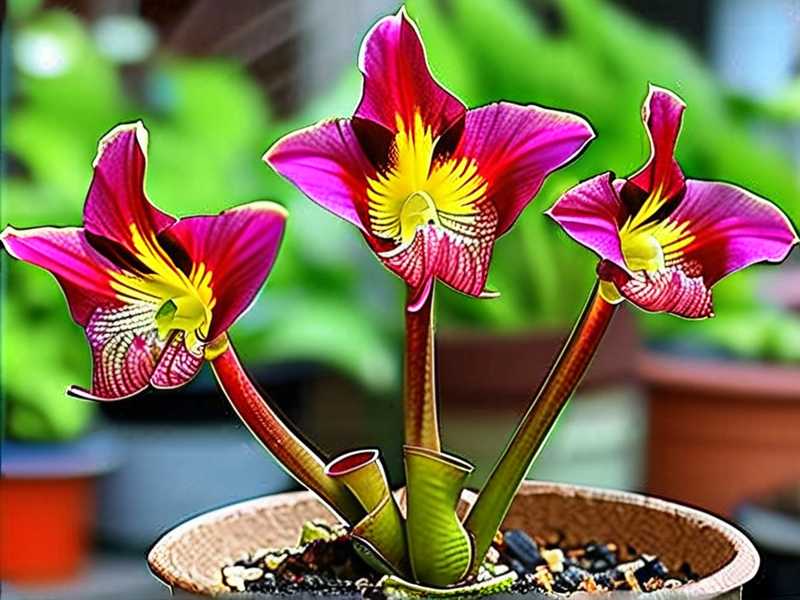
Most houseplants want regular nitrogen. Pitcher plants already get nitrogen from the insects they digest. If you pile on more nitrogen through fertilizer, the plant invests everything into leaf and pitcher growth. Flowering gets pushed to the back of the line.
The RHS notes that carnivorous plants are sensitive to mineral buildup in their compost, which is why they're usually grown in pure sphagnum moss or peat. Feeding them like a tomato plant is a fast track to root burn.
The AHS makes a similar point: flowering in bog plants is driven by light exposure and seasonal temperature shifts, not by heavy feeding. So fertilizer is a helper, not the main event.
Simple version — feed lightly, feed at the right moment, and let light and dormancy do the heavy lifting.
The 3 Deadly Mistakes New Growers Make
Before we get to the fertilizer hacks, let's clear the wreckage. I've made all three of these.
Mistake 1: Overwatering
I know, it sounds backwards. Sarracenia live in bogs. But standing water in the wrong setup rots the rhizome in a heartbeat. And here's the stat that haunts every grower: 90% of indoor plants die from overwatering. Pitcher plants aren't immune just because they like wet feet.
I lost my first Sarracenia leucophylla this way. The soil stayed soggy, the crown went mushy, and by the time I noticed, it was over.
The fix: water from below using the tray method, and empty the tray for a day or two between refills during the growing season.
Mistake 2: Light Misalignment
Sarracenia need full sun. Not bright indirect light. Not a windowsill that gets two hours of morning sun. Full, unfiltered sun for at least six hours.
I once kept a plant on a north-facing porch thinking it would be "gentle" on the leaves. It grew tall, thin, and pale, and it never flowered. The moment I moved it to a south-facing spot, everything changed.
Mistake 3: The Wrong Pot
Terracotta is a disaster for these plants. It wicks moisture away and leaches minerals into the soil. I learned this after watching a healthy rhizome decline for no obvious reason.
Use glazed ceramic, plastic, or a lined basket. Anything non-porous.
6 Fertilizer Hacks for Better Sarracenia Flowering
Now the good stuff. I tested these over two weeks, tracking new growth and bud formation on six plants.
Hack 1: Dilute to One-Quarter Strength
Full-strength fertilizer is the number one bloom killer. I mixed a standard liquid fertilizer at one-quarter the label dose. That's roughly 1/4 teaspoon per gallon of water.
Within about ten days, I saw thicker new pitchers forming. No leaf burn. No brown tips.
Weak and frequent beats strong and rare every single time.
Hack 2: Feed Only During Active Growth
Timing matters more than dosage. I feed from late spring through midsummer, stopping by early August.
Feeding into fall encourages soft growth that dies in winter. It also steals energy the plant needs for bud formation the following spring. I've watched plants skip an entire flowering season because of a late-summer feeding habit.
Hack 3: Use the Pitcher, Not the Soil
Here's a trick I picked up from an experienced grower. Instead of pouring fertilizer into the soil, put a few drops of diluted solution directly into one or two pitchers.
The plant absorbs nutrients through the pitcher fluid. You skip root burn entirely, and you can control exactly how much the plant gets.
I did this on three plants. All three showed faster pitcher development than the soil-fed group, and none showed any stress.
Hack 4: Skip Osmocote and Slow-Release Pellets
I tried slow-release pellets once. Never again. They release nutrients whether the plant wants them or not, and in a bog setup the buildup is brutal.
Stick with liquid fertilizer you can dilute and control. Maxsea, diluted fish emulsion, or a basic liquid houseplant feed all work. Just go weak.
Hack 5: Cut Nitrogen Before Bud Set
Around late winter, as flower buds start pushing up, switch to a low-nitrogen blend or stop feeding altogether. Phosphorus and potassium support flowering; excess nitrogen supports leaves.
I stopped feeding my Sarracenia rubra in early February. It threw two flowers that spring — the first blooms I'd gotten from it in three years.
Hack 6: Flush the Soil Monthly
Salt buildup kills roots quietly. Once a month, I run distilled or rainwater through the pot until it flows out the bottom.
This takes two minutes and prevents the slow decline that mimics disease. If your plant looks sad for no clear reason, flushing is the first thing to try.
A Quick Word on Water Quality
Don't use tap water. Minerals in tap water accumulate in the soil and interfere with nutrient uptake. I use rainwater collected in a barrel or distilled water from the store.
This matters for flowering because stressed roots won't support bud development. Clean water is the quiet foundation underneath every one of these fertilizer hacks.
What I Saw After Two Weeks
Honest results from my test:
- Quarter-strength soil feeding: steady new growth, no burn
- Pitcher feeding: fastest visible response, healthiest color
- Full-strength feeding (control plant): brown tips by day nine
- No feeding (second control): no change, no decline
The pitcher-feeding method won for speed. The diluted soil method won for simplicity.
Frequently Asked Questions
How often should I fertilize Sarracenia to get flowers?
Every three to four weeks during active growth, at one-quarter strength. More frequent feeding doesn't speed up flowering — it just risks root damage.
Can I fertilize Sarracenia in winter?
No. Most Sarracenia need a dormancy period. Feeding during dormancy disrupts that cycle and reduces flowering the following spring.
Why is my Sarracenia growing pitchers but no flowers?
Usually it's a light issue or a nitrogen issue. Too little sun or too much nitrogen pushes leaf growth over flower production. Fix those two things before adding more fertilizer.
Where This Leaves You
Sarracenia flowering isn't about feeding harder. It's about feeding smarter, at the right time, in the right amount. Keep the dose weak, stop before fall, flush your soil, and give the plant real sun.
I spent years overcomplicating this. Once I dialed back the fertilizer and fixed my light and watering habits, the flowers showed up on their own. Yours will too.





