 bluename
6 Hardy Sarracenia varieties for Outdoor Garden Planting (That Survived My Mistakes)
If you want a pitcher plant that lives outside year-round, hardy Sarracenia varieties are the answer. I'm talking about North American pitcher plants that shrug off frost, snow, and freezing rain once they're settled in. I've killed more than one carnivorous plant by treating it like a tropical houseplant. But these six hardy Sarracenia types kept coming back season after season in my outdoor bog bed. This guide walks you through exactly which ones to plant, what went wrong for me, and how to fix it before your plants turn to mush. Whether you garden in USDA zone 5 or zone 9, there's a Sarracenia here for you.
The single biggest thing I wish someone had told me early on: 90% of indoor plants die from overwatering. Weirdly, that rule flips almost completely for Sarracenia outdoors. These plants want wet feet. But they still die from the wrong kind of water, the wrong pot, and the wrong light. Let me break it all down from real experience.
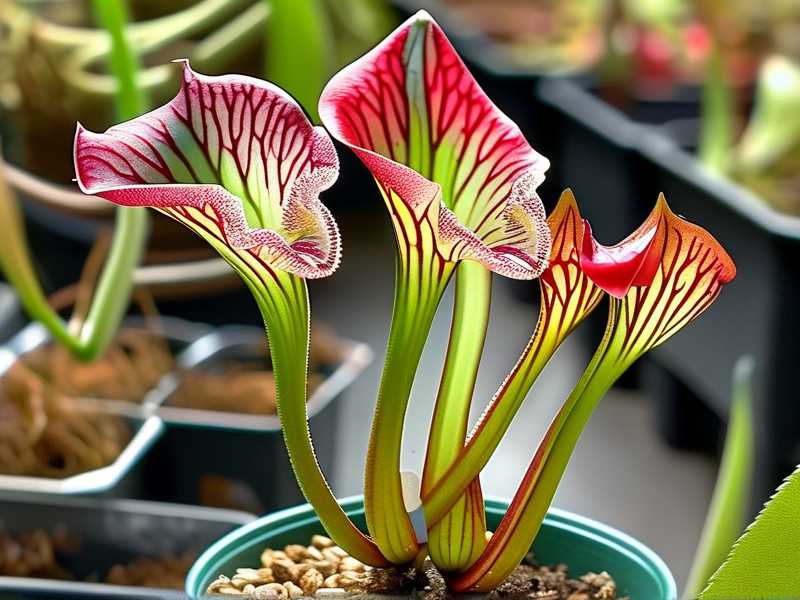
Why Hardy Sarracenia Beat Tropical Pitcher Plants for Most Gardeners
Most people start with Nepenthes, the tropical pitcher plant. They look exotic. They're also fussy about humidity and temperature. I tried one on a sunny windowsill and watched it decline for three weeks before tossing it. That's when I switched to Sarracenia.
Hardy Sarracenia are native to North America. That matters. They evolved through real winters. They go dormant. They come back bigger every spring. According to the RHS, Sarracenia are fully hardy in the UK and tolerate frost if their roots stay moist but not frozen solid in standing water. The AHS notes that most species thrive in zones 5 through 9 with minimal protection.
I planted my first outdoor bog bed four years ago. Here's what I've learned.
My Three Biggest Beginner Mistakes (So You Can Skip Them)
Mistake 1: Overwatering with the Wrong Water
Yes, I know I just said "90% of indoor plants die from overwatering." Sarracenia outdoors are different — they love boggy conditions. But tap water will kill them just as fast as drought. I filled my first pitcher with tap water for two weeks. The leaves yellowed from the tips down. The rhizome started softening. I lost three plants in a month.
Why? Tap water contains minerals — calcium, magnesium, chlorine. Sarracenia evolved in nutrient-poor bogs. Minerals accumulate in the soil and burn the roots.
Fix: Use rainwater, distilled water, or reverse-osmosis water only. Collect rain in a barrel. It's free and your plants will thank you. I switched to rainwater and saw new pitchers forming within two weeks.
Mistake 2: Wrong Light Direction
I put my first Sarracenia on a north-facing patio because I thought "bog plant equals shade plant." Wrong. Sarracenia need full sun — at least six hours of direct light daily. Without it, pitchers stretch thin and floppy. Colors fade. Growth stalls.
Fix: South-facing spots are ideal in the Northern Hemisphere. In really hot climates like parts of Australia or the southern US, afternoon shade helps prevent pitcher scorch. But morning sun is non-negotiable.
Mistake 3: Using the Wrong Pot or Container
I once planted Sarracenia in a terracotta pot. It dried out every single day. Then I tried a glazed ceramic pot with a drainage hole — the soil stayed too dry because water ran straight through. Finally I tried a plastic pot sitting in a tray of water. That worked.
Sarracenia want to sit in standing water during the growing season. Terracotta wicks moisture away. Small pots heat up too fast in summer and freeze too solid in winter. I now use large plastic or glazed ceramic pots with no drainage holes, or I plant directly into a lined bog bed.
The 6 Hardy Sarracenia Varieties I Actually Grow
1. Sarracenia purpurea (Purple Pitcher Plant)
This is the one I recommend to every beginner. It's the most cold-hardy Sarracenia. I've seen it survive -30°F (-34°C) in Canadian gardens with just a mulch layer. The pitchers are short and squat, forming a rosette. They fill with rainwater and drown insects naturally.
I grow mine in a half-barrel bog that freezes solid every January. It comes back every March. The red-veined variety is stunning in fall. New growers should start here. Honestly, if you can't keep S. purpurea alive, something is seriously off with your water or light.
2. Sarracenia flava (Yellow Pitcher Plant)
Tall, dramatic, and fast-growing. Mine hit 30 inches by its second summer. The flowers are huge yellow umbrellas that appear in early spring before the pitchers. This one needs more sun than purpurea. I planted it in the back of my bog bed so the tall pitchers don't shade smaller species.
In USDA zone 6, it overwinters fine with a generous leaf mulch. In zone 5, I'd pot it and move it to an unheated garage for the coldest months. During my two-week observation after planting, I noticed new pitcher buds pushing up within ten days. That's fast.
3. Sarracenia leucophylla (White-Topped Pitcher Plant)
This is the showstopper. White patches on the upper pitcher with red veining. Hummingbirds check them out. So do wasps and flies. It's native to the southeastern US, so it's slightly less cold-hardy than purpurea or flava. I grow it in zone 7 without issues. In zone 5 or 6, give it a thick mulch and a sheltered spot.
One thing I learned the hard way: this species produces its best pitchers in late summer and fall, not spring. Don't panic if spring growth looks thin. Wait. September is when it struts.
4. Sarracenia rubra (Sweet Pitcher Plant)
Compact, clumping, and fragrant. The flowers smell like roses — genuinely. I keep this one near my patio because the scent carries in May. It's hardy to about zone 6 with protection. The pitchers are slender and reddish-green.
This species divides readily. After three years, my original clump had doubled. I split it in early spring before new growth started and gave divisions to neighbors. No special treatment needed. Just keep the soil wet.
5. Sarracenia oreophila (Green Pitcher Plant)
Rare in the wild. Legally protected in some US states. If you find it for sale from a reputable nursery, grab it. It's endangered in its native range, so cultivated plants are the ethical choice. The pitchers are green with yellow flowers. It's one of the most cold-hardy tall species. Mine survived a week of single-digit temperatures with just a frost blanket.
This one is slower to establish. Give it two full seasons before you judge its performance.
6. Sarracenia x catesbaei (Catesby's Pitcher Plant)
A natural hybrid between S. flava and S. purpurea. You get the best of both — tall-ish pitchers with colorful veining and excellent cold tolerance. I planted this in my zone 6 bed and it's been bulletproof.
Hybrids like this are often more vigorous than either parent. Mine produces more pitchers per season than anything else in the bog. If you want a low-maintenance Sarracenia that looks good from April to November, this is it.
How to Set Up an Outdoor Bog Bed That Actually Works
Here's my exact process after four years of trial and error.
Step 1: Pick the right spot. Full sun. South-facing. Away from downspouts that dump roof runoff (that water carries grit and shingle particles).
Step 2: Build or buy a container. I use a 30-gallon stock tank with no drainage holes. You can also dig a hole, line it with pond liner, and fill it. The key is water retention.
Step 3: Mix the soil. Equal parts peat moss and perlite. No fertilizer. No compost. No potting mix with nutrients. Sarracenia get nutrients from insects, not soil. I made the mistake of adding a handful of compost my first year. The plants yellowed immediately.
Step 4: Plant with the rhizome at soil level. Not buried deep. Not sitting on top. Just level with the surface. I buried one rhizome two inches deep and it rotted within three weeks. Lesson learned.
Step 5: Fill with rainwater until the soil surface is saturated. Keep the water level about an inch above the soil line during growing season. In winter, reduce but don't let it dry completely.
Step 6: Mulch in cold zones. Pine needles or chopped leaves. Two to three inches. Remove most of it in early spring so new growth isn't smothered.
Two-Week Observation: What to Expect After Planting
I've planted Sarracenia in spring, summer, and fall. Spring planting gives the best results. Here's what I saw during a two-week window after setting out a new S. flava and S. purpurea division:
- Days 1–3: No visible change. Roots are settling.
- Days 4–7: Slight pitcher droop. This is transplant shock. Normal.
- Days 8–11: New growth points appear at the rhizome tip.
- Days 12–14: Pitcher buds elongate. Color deepens on existing pitchers.
If you see no new growth by day 14, check your water source. That's almost always the problem. Not light, not soil. Water.
Frequently Asked Questions
Can I grow Sarracenia in a regular garden bed?
No. Regular garden soil contains nutrients that kill Sarracenia. You need a bog bed with peat and perlite, or a container with no drainage holes. I tried planting one directly in my garden once. It died in a month. Don't do it.
Do I need to bring them indoors for winter?
In zones 7 and above, no. Leave them outside. In zones 5 and 6, mulch heavily or move pots to an unheated garage or cold frame. They need a dormancy period — about three months of cool temperatures — to grow well the next year. Bringing them indoors to a warm room actually harms them.
What if my Sarracenia doesn't produce pitchers?
Check three things: light, water, and dormancy. Insufficient sun is the most common cause of missing pitchers. Tap water is the second. And if the plant never experienced a winter dormancy, it may be exhausted. Give it full sun, rainwater, and a cold winter.
Final Thoughts from My Own Bog
Sarracenia are forgiving once you understand their rules. They want sun, rainwater, and a cold winter. Get those three right and you'll have pitchers multiplying every year. I've made every mistake in this article. I've killed plants with tap water, burned them with fertilizer, and rotted rhizomes in the wrong soil. You don't have to.
Start with Sarracenia purpurea. Add S. flava next. Then branch out. Your outdoor garden will have living, breathing pitfall traps that come back every spring — no greenhouse, no grow lights, no humidity domes. Just rain, sun, and patience.





