 bluename
How to Fertilize Sarracenia Safely: 5 Gentle Feeding Tips
If you've ever watched a pitcher plant turn brown overnight, you already know how scary fertilizer can be. Here's the short answer: Sarracenia are carnivorous bog plants that evolved to eat insects, not plant food. Fertilize them at quarter strength, only during active growth, and only through the pitchers or the soil surface — never a heavy drench. I've killed two pitcher plants learning this the hard way, and honestly, most people do.
The truth is, feeding your pitcher plant isn't about making it grow faster. It's about giving it a tiny nudge without burning the roots. Get it right, and you'll see new pitchers forming within about two weeks. Get it wrong, and you'll watch your plant collapse in days.
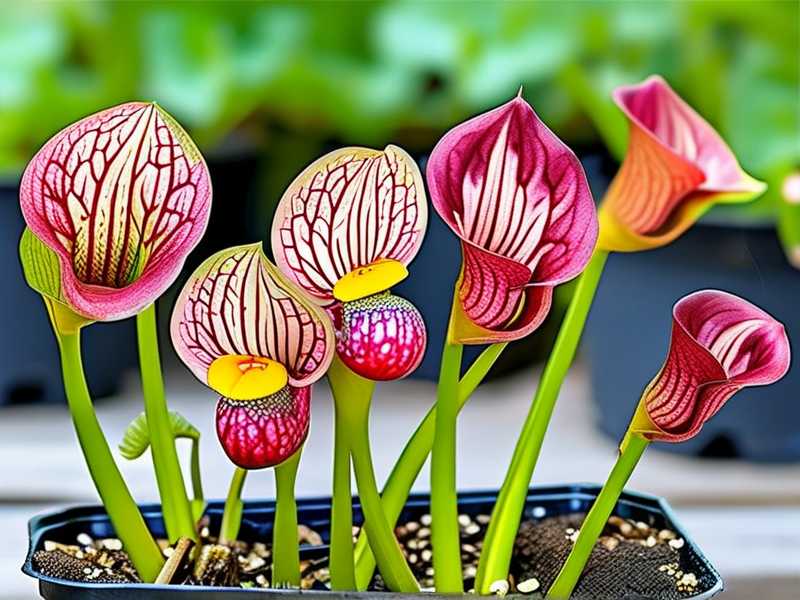
I've been growing North American pitcher plants for years now, and I've tested just about every feeding method out there. Some worked. Some absolutely didn't. Let me walk you through what I've learned so you don't repeat my mistakes.
Why Sarracenia Are Different From Your Other Plants
Sarracenia grow in nutrient-poor bogs along the southeastern United States. The soil there is basically sand and sphagnum moss with almost nothing in it. These plants adapted by catching bugs to get nitrogen and minerals instead of pulling them from the ground.
That's the whole reason overfeeding is such a problem. Their roots aren't built for rich soil. They're built for starvation.
I once made the mistake of treating my first Sarracenia like a tomato plant. I gave it a diluted all-purpose fertilizer at half strength. Within five days, the rhizome started turning mushy. The whole plant was gone in under two weeks.
That's when I learned the golden rule: less is always more with carnivorous plants.
Tip 1: Dilute Everything to Quarter Strength (or Less)
This is the single most important thing I can tell you. When a fertilizer bottle says "half strength for houseplants," go quarter strength for your pitcher plant. Some growers even go as low as one-eighth strength.
I use Maxsea 16-16-16 at quarter strength now. That's about 1/4 teaspoon per gallon of water.
Why so weak? Because Sarracenia roots have a low tolerance for dissolved salts. A full dose will pull water out of the roots instead of into them. That's fertilizer burn, and it looks almost identical to underwatering. The plant wilts, edges turn brown, and by the time you figure out what happened, the rhizome is already damaged.
Use distilled water, rainwater, or reverse osmosis water to mix your fertilizer. Tap water adds minerals that build up in the soil over time.
Tip 2: Feed Through the Pitchers, Not Just the Soil
This one changed everything for me.
Instead of pouring fertilizer into the soil, you can drop a tiny amount of diluted fertilizer directly into the pitcher tubes. The plant absorbs nutrients through the pitcher walls. This method is much safer because it bypasses the roots entirely.
I fill each pitcher about one-quarter full with quarter-strength fertilizer solution. That's roughly a tablespoon per pitcher for medium-sized plants. Don't fill it to the top. The plant still needs air circulation inside the tube.
I tried this method on a Sarracenia leucophylla two summers ago. Within ten days, I noticed the pitchers getting taller and the color deeper. No root stress at all.
One warning though: only put fertilizer in pitchers that are at least a few weeks old. Brand new pitchers are still developing their digestive enzymes. Fertilizer can damage them before they're ready.
Tip 3: Only Feed During Active Growth
Sarracenia have a clear growing season and a clear dormancy period. Feeding them at the wrong time is like giving someone a steak dinner while they're in a coma.
In North America and Europe, active growth runs from late spring through mid-summer. That's when you want to fertilize. Once late summer hits, stop. The plant is preparing for dormancy.
In Australia, flip that schedule. Their growing season runs roughly from October through February.
I feed my plants every three to four weeks during the growing season. That's it. Four or five feedings total for the entire year. Some experienced growers only feed once or twice a season.
Here's a quick reference:
- Spring (new growth appears): First feeding at quarter strength.
- Early summer: Feed every 3-4 weeks.
- Late summer: Stop all feeding.
- Fall and winter: No fertilizer at all. The plant is dormant.
I made the mistake of feeding in October during my second year. The plant didn't go dormant properly. It stayed weak all winter and nearly died. Dormancy is non-negotiable for Sarracenia. Skip feeding in fall and winter, period.
Tip 4: Use the Right Fertilizer Type
Not all fertilizers are safe for pitcher plants. I learned this the expensive way.
Stay away from anything with high phosphorus or urea-based nitrogen. These can damage the rhizome. What works best is a balanced, water-soluble fertilizer with micronutrients. Maxsea and Dyna-Gro are two brands that carnivorous plant growers commonly use.
Organic fertilizers, slow-release pellets, and compost are all bad ideas. They encourage mold and bacterial growth in the bog soil. And frankly, "90% of indoor plants die from overwatering" — this number applies to pitcher plants too. Adding organic matter to their soil makes it hold moisture longer, which makes overwatering more likely.
The RHS recommends avoiding any fertilizer containing high levels of urea for carnivorous plants. I follow that advice strictly now.
What About Insect Feeding?
Honestly, if your plant is outdoors, it'll catch its own food. I've never needed to hand-feed insects to outdoor pitcher plants.
If you keep yours indoors or in a greenhouse with no bug activity, you can drop a dried mealworm or a small cricket into one or two pitchers per month. Don't overdo it. One insect per pitcher is plenty.
I tried feeding my indoor Sarracenia purpurea freeze-dried bloodworms once. The pitcher rotted within a week. Too much organic material sitting in the tube. I stick with live or freshly killed insects now, and only occasionally.
Tip 5: Watch Your Plant for Two Weeks After Feeding
Don't just feed and forget. Watch closely.
After I feed my pitcher plants, I check them every day for the first two weeks. Here's what I look for:
- New growth: Tiny new pitcher buds appearing at the rhizome. This is the best sign.
- Color change: Deeper reds or yellows in the pitcher veins. This means the plant is absorbing nutrients.
- Brown tips on pitchers: Could be normal aging or could be fertilizer burn. If multiple pitchers show this at once, flush the soil with distilled water immediately.
- Mushy rhizome: This is bad. Stop all feeding and let the soil dry slightly.
During my first successful feeding cycle, I didn't see any change for the first eight days. I was convinced I'd done something wrong. Then on day ten, two new pitcher buds popped up. By day fourteen, both had opened into small but healthy pitchers.
Patience matters here. Don't feed again just because you don't see results in a week.
The Three Biggest Mistakes New Growers Make
I talk to a lot of new pitcher plant owners, and the same three issues come up over and over. These aren't directly about fertilizer, but they absolutely affect how your plant handles feeding. If you get these wrong, no amount of careful fertilizing will save your plant.
Mistake 1: Overwatering
This is the classic killer. People hear "bog plant" and think "swamp plant" and keep the soil constantly flooded.
Sarracenia like consistently moist soil, not standing water. I use the tray method: keep the pot in a tray with about an inch of water, and let the tray dry out for a day or two before refilling. The soil stays damp but not soggy.
When the soil is waterlogged, the roots can't absorb oxygen. Add fertilizer on top of that, and you've got root rot waiting to happen. Remember, "90% of indoor plants die from overwatering" — pitcher plants aren't an exception.
Mistake 2: Wrong Light
Sarracenia need full sun. Not bright indirect light. Full, direct, blazing sun for at least six hours a day.
I kept my first pitcher plant on a north-facing windowsill. It survived but never thrived. The pitchers were small and pale, and it couldn't handle even the weakest fertilizer.
Once I moved it to a south-facing spot with direct sun, everything changed. Stronger growth, better color, and much better tolerance for feeding.
If you're growing indoors, you'll need a strong grow light. A basic LED won't cut it. You want something that delivers at least 200-300 PPFD at the plant's surface.
Mistake 3: Wrong Pot and Soil
Use a tall pot — at least 6 inches deep. Sarracenia have long roots. A shallow pot stunts them.
For soil, use a mix of sphagnum peat moss and perlite at a 1:1 ratio, or pure sphagnum moss. No potting soil. No compost. No vermiculite.
I once used a standard houseplant mix because I ran out of peat moss. The plant declined within a month. The soil was too rich and held too much water.
Terracotta pots aren't ideal either. They wick moisture away from the soil too quickly. Plastic or glazed ceramic works best.
The AHS notes that carnivorous plants require specialized growing media to thrive. Standard potting mixes simply won't work.
Frequently Asked Questions
Can I use regular houseplant fertilizer on my Sarracenia?
No. Regular houseplant fertilizers are too concentrated even at half strength. You need to dilute to quarter strength or less, and use a formula without urea. If that's all you have, skip fertilizing altogether. Your plant will do fine catching its own insects.
How often should I fertilize my pitcher plant?
During the growing season, every three to four weeks is plenty. That works out to about four or five feedings per year. Some growers feed even less. More frequent feeding doesn't make the plant grow faster. It just increases the risk of root damage.
My pitcher plant looks worse after fertilizing. What should I do?
Flush the soil with distilled water right away. Pour water through the pot several times to wash out excess salts. Stop all feeding for at least six weeks. If the rhizome is still firm, the plant will likely recover. If it's mushy, you may need to remove the damaged sections and repot in fresh soil.
What I Wish I'd Known Sooner
Fertilizing Sarracenia isn't complicated, but it's easy to get wrong. The biggest shift in my thinking came when I stopped trying to "feed" my plants and started thinking of fertilizer as a rare, gentle supplement.
These plants survived for thousands of years in some of the poorest soil on the planet. They don't need much from you. A light feeding a few times a year, clean water, strong sun, and the right soil — that's the whole formula.
If you're new to pitcher plants, my honest advice is this: don't fertilize at all for the first year. Let your plant settle in and show you how it grows. Then start with one gentle feeding at quarter strength and watch what happens over two weeks. You'll learn more from that single cycle than from any guide.
And if you ever feel tempted to pour in a little extra "just to be safe" — don't. With Sarracenia, less really is more.





