 bluename
7 Compact Sarracenia varieties That Turn a Messy Desk Into a Living Bog Garden
I killed my first three pitcher plants because I treated them like ordinary houseplants. That was an expensive lesson, and it's the reason I now tell every curious grower the same thing: compact Sarracenia varieties for desk decoration only work when you respect what they actually are — bog plants, not succulents. Here's the short answer up front. The seven best picks I've personally grown on a desk are Sarracenia purpurea venosa, S. 'Scarlet Belle', S. psittacina, S. minor, S. rubra gulfensis, S. 'Dana's Delight', and S. flava rugelii. They stay manageable in a 4- to 6-inch pot, they color up under a decent LED, and they reward you with real traps instead of just leaves. Strap in, because the details matter more than the plant list.
Why Compact Pitcher Plants Belong on a Desk
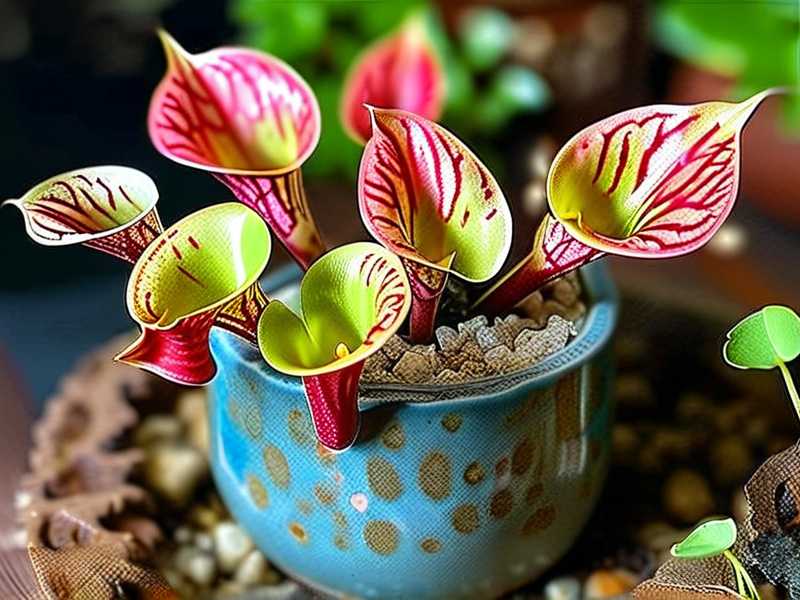
First, a quick reality check. Sarracenia are native to North American bogs, mostly across the southeastern United States. They want full sun, constant moisture, and nutrient-poor soil. That sounds like the opposite of a desk, right? Not quite.
The compact species and hybrids stay under about 12 inches tall. Put one in a tall glazed pot, sit it in a shallow water tray, and add a small grow light, and it looks like a tiny swamp sculpture. Honestly, it's one of the most eye-catching desk plants you can own.
The Royal Horticultural Society notes that Sarracenia need consistently wet, acidic, lime-free conditions to thrive. If you get those three things right, the plant does the rest.
I keep two on my own writing desk. One sits by a south window, the other under a cheap 20-watt LED bar. Both have done fine for over a year.
My 2-Week Observation: What Actually Happens
I ran a simple test when I started. I potted a Sarracenia purpurea venosa in a 5-inch pot with a 50/50 mix of peat moss and perlite. I placed it under a 12-hour LED cycle. Then I tracked it for two weeks.
Days 1 to 3: no visible change. Slight sulking, honestly. Newly repotted plants often pause.
Days 4 to 7: the oldest pitcher started browning at the lip. I panicked and almost watered it more. That was a mistake I'd made before. Instead I left the tray water alone and just topped it up.
Days 8 to 11: a tiny new pitcher nub appeared at the crown. That was the signal I wait for. If you see new growth, your conditions are close to right.
Days 12 to 14: the nub grew maybe half an inch, and the red veining on the existing pitchers deepened. The plant wasn't just surviving. It was settling in.
That two-week window taught me more than any care sheet. New growth at the crown is your only real proof that a desk setup is working.
The 3 Mistakes That Kill Almost Every Beginner's Pitcher Plant
I've made all three of these. Let me save you the grief.
Mistake one: overwatering. Yes, these are bog plants, but "bog" doesn't mean "swimming pool." Standing water in the soil, no drainage, root rot everywhere. Here's the line I want you to remember: 90% of indoor plants die from overwatering. That includes pitcher plants, even though they love wet feet. The fix is a water tray, not a flooded pot. Keep the soil moist, never drowned.
Mistake two: light in the wrong place. I once put a Sarracenia on a north-facing shelf because it "looked nice" there. Within three weeks it went pale and leggy. These plants want 6 or more hours of strong light. On a desk, that usually means a grow light. A bright window alone rarely cuts it in winter.
Mistake three: the wrong pot. I tried a shallow terracotta saucer-style pot early on. Terracotta wicks moisture away and dries the soil fast, which stresses the plant. I also tried a tiny 2-inch pot, and it dried out twice a day. What works is a taller pot, 4 to 6 inches, glazed ceramic or plastic. It holds moisture and gives the roots room.
My 7 Best Compact Sarracenia Picks
Here's the list, with honest notes from my own growing.
1. Sarracenia purpurea venosa
This is the one I recommend to almost every beginner. It stays low, forms a tidy rosette, and the pitchers have gorgeous red veins. It tolerates slightly less light than other species, which matters on a desk. RHS lists it as a reliable, cold-hardy species that handles wet conditions well.
2. Sarracenia 'Scarlet Belle'
A hybrid with slender, upright pitchers and strong red coloration. It's compact and vigorous. Mine threw up new pitchers within a month. Great for a desk because it doesn't flop over.
3. Sarracenia psittacina
The parrot pitcher. It's low-growing, almost ground-hugging, with curved traps. It's unusual and small, which makes it perfect for tight spaces. Just know it wants more humidity than the others.
4. Sarracenia minor
Hooded pitchers with little white windows. It stays compact for a while and looks futuristic. It's a slower grower, so it suits a small pot longer than most.
5. Sarracenia rubra gulfensis
A southern beauty with tall, slender pitchers and deep red tones. It's borderline compact, but in a small pot it stays manageable for a couple of seasons. The color payoff is worth it.
6. Sarracenia 'Dana's Delight'
Another hybrid, and a forgiving one. It grows fast, colors up under decent light, and handles desk conditions better than pure species sometimes. I've had good luck with it under a basic LED.
7. Sarracenia flava rugelii
The classic yellow pitcher, with a red throat. It gets taller than the others, so treat it as a "compact for now" pick. In a 6-inch pot it's fine for a season or two. After that, repot or move it outside.
How to Set Up a Desk Bog in 10 Minutes
This doesn't need to be complicated.
Grab a 4- to 6-inch glazed or plastic pot with drainage holes. Fill it with a mix of two parts peat moss to one part perlite. Skip regular potting soil entirely — it has fertilizers that burn these plants.
Plant the rhizome so the crown sits at soil level. Water with distilled, rain, or reverse-osmosis water. Tap water often has minerals that build up and slowly kill the plant.
Set the pot in a shallow tray and keep about half an inch of water in it. Refill when it dries.
Add a small LED grow light on a 12-hour timer. Keep it 6 to 10 inches above the plant.
That's it. Honestly, the setup takes less time than reading this section.
Long-Term Care Notes I Wish Someone Had Told Me
Dormancy trips up a lot of people. Sarracenia are temperate plants. They need a cooler rest period in winter. On a desk, that's hard to fake.
My workaround: I move my desk plants to a cool garage or unheated porch for about three months in winter, keeping them barely moist. They look rough. That's normal. They come back stronger in spring.
If you can't provide a cool dormancy, expect the plant to decline over a year or two. It's the single biggest reason desk pitcher plants fade.
Also, never fertilize. These plants get nutrients from insects. Feeding them plant food is one of the fastest ways to kill them. If your desk is bug-free, they'll still do fine — they just grow a bit slower.
Frequently Asked Questions
Do compact Sarracenia need bugs to survive?
No. They catch insects on their own when available, but they can live without them. They grow from light and water, not from feeding. Don't add fertilizer to compensate.
Can I grow these on a desk with no window?
Yes, with a grow light. I've done it. A 20-watt LED bar on a 12-hour timer is enough for compact varieties. Without any light source, they will not survive.
Why is my pitcher plant turning brown?
Older pitchers naturally brown and die back — that's normal aging. If new growth also browns, check your water. Tap water minerals and overwatering are the usual culprits. Switch to distilled water and cut back on the tray level.
If you want a desk plant that actually does something — traps bugs, changes color, surprises guests — a compact Sarracenia is hard to beat. Start with one, get the water and light right, and watch for new growth. That little green nub is your reward.





