 bluename
Best Sarracenia varieties for Indoor Terrarium Setup: 5 Picks That Actually Thrive
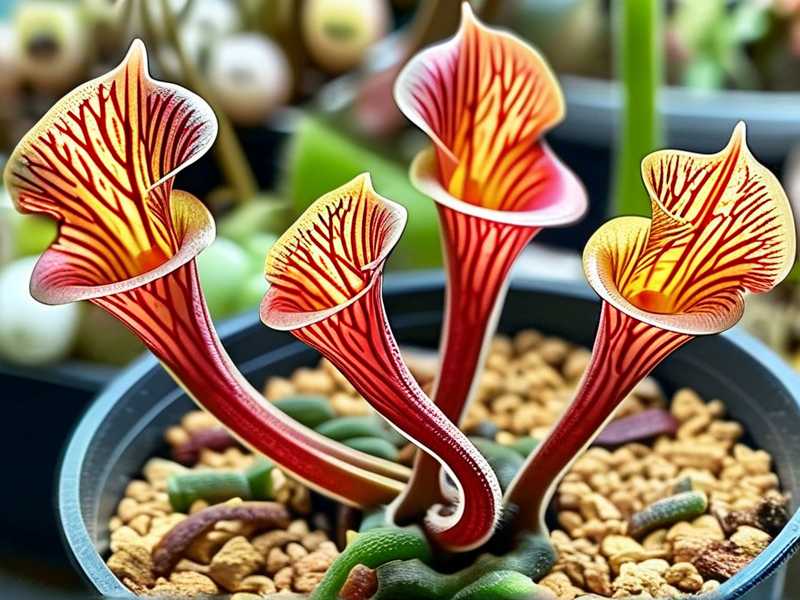
I killed three pitcher plants before I figured out what I was doing wrong. That's the honest truth. If you're here because you want the best Sarracenia varieties for an indoor terrarium setup, here's the short answer: go with Sarracenia purpurea, Sarracenia psittacina, Sarracenia 'Scarlet Belle', Sarracenia minor, and Sarracenia rubra. These five handle terrarium life better than most. They're compact enough, they tolerate higher humidity, and they don't throw a fit when your grow light isn't perfect.
But picking the right variety is only half the battle. Let me tell you what nobody told me.
The Three Mistakes That Kill Most Terrarium Pitcher Plants
I've made all of these. Every single one.
Mistake One: Overwatering (The Silent Killer)
Here's a number that should be tattooed on every new grower's hand: 90% of indoor plants die from overwatering. Yes, even carnivorous ones. Maybe especially carnivorous ones. People hear "bog plant" and think "swamp." They drown the roots. I know because I did it to my first Sarracenia flava. It rotted from the crown down in about ten days. The leaves went from bright green to mushy brown faster than I thought possible.
The fix is simpler than you'd think. Use a tray-watering method instead of pouring water directly into the soil. Fill a shallow tray, set the pot in it, and let the plant drink from below. Empty whatever's left after 24 hours. During dormancy, cut back even more.
Mistake Two: Wrong Light, Wrong Place
Sarracenia are full-sun plants in the wild. They grow in open bogs across the southeastern United States. Stick one on a shaded windowsill and you'll get pale, floppy, sad-looking pitchers. I tried a north-facing window once. Just once.
You want a south-facing window if you've got it. If not, a strong LED grow light works. I run mine for 14 hours a day during the growing season. When I tested a 12-hour schedule for two weeks, growth slowed noticeably. Fourteen hours made a visible difference in pitcher color and size within about 10 days.
Mistake Three: The Wrong Container
This one surprised me. I used a standard terracotta pot in my first terrarium setup. Big mistake. Terracotta wicks moisture away from the soil, which sounds helpful until you realize Sarracenia want consistently moist (not soggy) roots. The clay also leached minerals into the soil over time. These plants are sensitive to minerals.
Use glazed ceramic, plastic, or glass containers with drainage holes. If your terrarium doesn't have drainage, adjust your watering way down and add a drainage layer of gravel at the bottom.
Now, Let's Talk About the Five Varieties
Sarracenia purpurea (Purple Pitcher Plant)
This is the one I'd recommend to literally anyone starting out. It's native to a huge range, from Canada down to the Gulf Coast, and that adaptability shows in cultivation. It stays relatively compact. The pitchers are short and squat, which makes it perfect for a terrarium where vertical space is limited.
I've had mine in a 10-gallon glass terrarium for eight months now. It's doubled in size. The purple veining gets more intense under strong light, which is a nice bonus.
One thing to know: this species naturally holds water in its pitchers. That's normal. Don't tip it out.
Sarracenia psittacina (Parrot Pitcher Plant)
This is the weird one. The pitchers look like a parrot's beak, and they lie almost horizontal instead of standing upright. That growth habit makes it ideal for low, wide terrariums.
It's also one of the most forgiving Sarracenia when it comes to humidity fluctuations. I've accidentally let the humidity drop to 40% for a few days and it didn't complain. Most other varieties would have shown crispy tips by then.
The RHS notes that Sarracenia generally need bright light and consistent moisture, and psittacina is no exception. Just because it's tough doesn't mean you can neglect it.
Sarracenia 'Scarlet Belle'
This is a hybrid, and hybrids often combine the best traits of their parents. 'Scarlet Belle' is a cross between S. leucophylla and S. psittacina. What you get is a plant with striking red and white coloration and a more compact growth habit than either parent.
I picked one up at a local nursery sale last spring. It's been the star of my terrarium ever since. The pitchers flush red under strong light, and the white speckling near the top is gorgeous.
Fair warning: this one wants more light than purpurea. If you skimp on lighting, the red fades to a dull greenish-bronze.
Sarracenia minor (Hooded Pitcher Plant)
The hooded pitcher plant is another compact option. The pitchers have a distinctive hood that curves over the opening. In the wild, it grows in pine savannas from North Carolina down to Florida. It's used to sandy, nutrient-poor soil and plenty of sun.
In a terrarium, S. minor stays manageable. Mine hasn't exceeded 10 inches in height after a full growing season. That's well within terrarium range.
The AHS has good general resources on bog gardening that apply here. If you can replicate bog conditions, even roughly, you're on the right track.
Sarracenia rubra (Sweet Pitcher Plant)
S. rubra is a bit of a sleeper pick. It's not as flashy as 'Scarlet Belle' or as chunky as purpurea. But it's reliable. The pitchers are slender and upright, with reddish veins and a sweet-smelling nectar that attracts insects.
I like it because it's forgiving about temperature. It handles warmer terrarium conditions better than some of the more cold-hardy varieties that really want a proper winter dormancy.
Speaking of dormancy, that's the elephant in the terrarium. Sarracenia need a winter rest period. If you skip it year after year, the plant weakens. I learned that the hard way with a Sarracenia leucophylla that just faded away after two years without dormancy.
My Terrarium Setup: What Actually Works
Here's what's in my current setup, and it's been running smoothly for over a year:
Container: 15-gallon glass terrarium with a screen lid Substrate: Equal parts peat moss and perlite, with a thin layer of long-fiber sphagnum on top Water: Distilled only. Tap water will kill these plants over time because of the minerals. Lighting: Full-spectrum LED, 14 hours on, 10 hours off Temperature: 70-80°F during growing season, 40-55°F during winter dormancy Humidity: 50-70%
I check the water tray every two days. I top it off with distilled water. That's it. No fertilizer. Ever. Fertilizer burns carnivorous plants because they've evolved to get nutrients from insects, not soil.
A Two-Week Observation That Changed My Approach
I tested something last month. I moved one of my S. purpurea into a spot with slightly less light for exactly two weeks. Not dark. Just less intense.
By day five, the new growth was noticeably paler. By day twelve, the pitcher that had been forming stopped developing. I moved it back under full light, and it resumed normal growth within a week.
The takeaway? Don't guess with lighting. These plants tell you what they need if you pay attention.
Frequently Asked Questions
Can I keep Sarracenia indoors year-round?
Yes, but you must provide a dormancy period. Without it, the plant will decline over one to three years. I use a cool garage or a basement window for winter rest. Temperatures around 40-50°F work well.
Do I need to feed my pitcher plants?
No. They catch their own food if you have gnats or fruit flies around. If your terrarium is sealed and pest-free, you can drop in a dried mealworm once a month during the growing season. That's plenty. Don't overdo it.
What kind of water should I use?
Distilled water, rainwater, or reverse-osmosis water. Nothing else. Tap water contains dissolved minerals that accumulate in the soil and eventually kill the plant. This isn't a suggestion. It's a requirement.
Parting Thoughts
The best Sarracenia varieties for an indoor terrarium setup are the ones that match your space, your light, and your attention level. Start with Sarracenia purpurea if you're brand new. Add a 'Scarlet Belle' when you want some color. Keep your water clean, your light strong, and your hands off the watering can.
I wish someone had told me all of this before I lost three plants. But hey, you live and you learn. Sometimes you learn by killing a pitcher plant and writing about it.





