 bluename
How to Water Sarracenia Correctly: 6 No-Mistake Watering Tips
Let me guess what happened. You brought home a gorgeous pitcher plant, probably a Sarracenia from a local nursery or an online carnivorous plant shop. It looked amazing for a week. Then the pitchers started browning at the tips. Then the whole thing slumped. Now you're staring at what looks like a dead pot of grass and wondering where you went wrong.
Here's the short answer, and I want you to really hear this: Sarracenia are bog plants. They do not want tap water. They do not want to dry out. They do not want fertilizer. They want rain, distilled, or reverse-osmosis water, and they want their soil to stay consistently wet, like a sponge sitting in a shallow tray of water. That's it. That's the core of how to water Sarracenia correctly.
But "just keep it wet" is where most people mess up, because keeping it wet with the wrong water, in the wrong pot, is how you kill it faster than if you'd just ignored it.
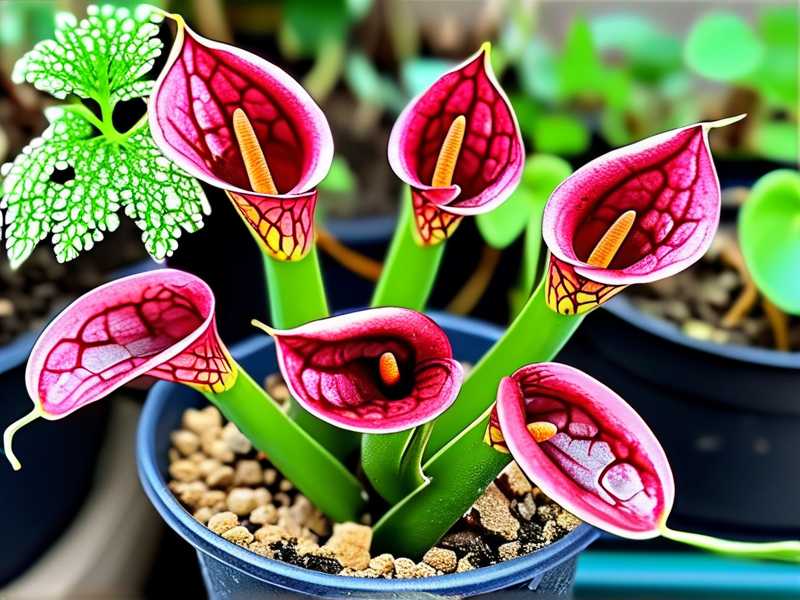
I've killed three pitcher plants learning this. The first one drowned in tap water. The second one dried out because I thought "bog plant" meant "swamp mud." The third one got scorched because I put it in full afternoon sun with a black plastic pot. By the fourth, I finally figured out a routine that works, and I've been running it for two full seasons now with plants that actually produce new pitchers every spring.
So let me walk you through the six things that matter most. I'll share my real timeline, my mistakes, and the exact steps I use now.
Why Sarracenia Watering Is Different From Every Other Houseplant
Most houseplant advice tells you to let the top inch of soil dry out before watering again. Forget all of that. Sarracenia evolved in nutrient-poor bogs along the southeastern United States, where their roots sit in constantly saturated, acidic, mineral-free water.
According to the RHS, carnivorous plants like Sarracenia are adapted to waterlogged, nutrient-poor conditions and should never be allowed to dry out completely. The AHS backs this up too — these are bog plants, not desert succulents. Treating them like a pothos or a snake plant is the fastest way to kill them.
That means three things are non-negotiable:
- The soil stays wet.
- The water is mineral-free.
- The roots never sit in stagnant, smelly water for weeks on end.
Get those three right and you're already ahead of 90% of beginners.
Speaking of that statistic — you'll hear it everywhere, but it's worth repeating: "90% of indoor plants die from overwatering." With Sarracenia it's a little different, because they actually want to be wet. They die from the wrong kind of overwatering — tap water, stagnant trays, no drainage, fertilizer buildup. It's not the quantity. It's the quality and the setup.
Mistake #1: Using Tap Water
This was my first kill.
I filled a watering can from the kitchen sink and poured it in. The plant looked fine for about ten days. Then the tips of every pitcher turned crispy brown, like someone had taken a lighter to them.
Tap water contains dissolved minerals — calcium, magnesium, chlorine, fluoride — and Sarracenia roots absorb those minerals because they've never evolved a way to filter them out. Over time, minerals accumulate in the soil and burn the roots. Once that happens, the plant can't recover without a full soil flush or repotting.
What I do now: I collect rainwater in a plastic bucket on my back porch. If it hasn't rained in a while, I buy distilled water from the grocery store — it's about a dollar a gallon and lasts me two weeks for a single plant. Reverse-osmosis water works too if you have a system. Never use softened water either, because the softening process adds sodium.
If you absolutely must use tap water in an emergency, let it sit out for 24 hours to off-gas chlorine. But that won't remove fluoride or dissolved solids. It's a band-aid, not a solution.
Mistake #2: Letting the Soil Dry Out (Even for a Day)
I made this mistake with my second plant because I overcorrected. I thought, "Okay, no tap water, and I'll water it like a normal houseplant so I don't rot the roots."
Bad idea. Sarracenia roots are basically sponges that need constant moisture. If the soil dries out even for 48 hours during the growing season, the pitchers start to wilt and the growth tips stall. I watched mine go from pushing up two new pitchers to doing absolutely nothing for three weeks. It never fully bounced back that season.
What I do now: I use the tray method. I sit the pot in a shallow plastic tray and keep about half an inch to one inch of water in it at all times during spring and summer. The soil wicks that water up from the bottom. I top-water occasionally to flush the soil, but the tray does the daily work.
During winter dormancy, I cut back to just keeping the soil barely damp — not soggy, not bone dry. That's when Sarracenia rest, and sitting in cold, wet water for months can rot the rhizome.
Mistake #3: The Wrong Pot and the Wrong Soil
My third plant died in a black plastic pot sitting in full sun on my south-facing patio. The pot heated up like an oven, cooked the roots, and the whole thing collapsed in about five days during a July heatwave.
Pots matter more than people think.
What I use now: A tall, light-colored plastic pot or a glazed ceramic pot with drainage holes. Light colors reflect heat. Tall pots give the long taproots room to stretch. I've also had good luck with undrained glass or plastic containers used as miniature bog gardens, but only when I can control the water level carefully and change it out regularly.
Soil matters too. Standard potting mix is loaded with fertilizer, and fertilizer kills Sarracenia. I mix equal parts peat moss and perlite, sometimes with a handful of washed sand. No Miracle-Gro. No compost. No slow-release pellets. That's it.
My 2-Week Observation Timeline
Here's what happened when I switched my fourth plant to the tray method with rainwater, a light-colored tall pot, and a peat-perlite mix.
Days 1–3: Nothing visible. The plant looked the same. I was honestly nervous I'd made another mistake.
Days 4–7: The soil stayed uniformly moist. No crispy tips forming. One older pitcher that had been browning stopped getting worse. That was my first sign things were heading in the right direction.
Days 8–10: A tiny new pitcher nub pushed up from the rhizome. I nearly took a photo and texted it to my sister, who does not care about plants.
Days 11–14: The new pitcher gained about half an inch. The older pitchers perked up slightly. No mold, no smell, no root rot.
By week six, that plant had three new pitchers and was easily the healthiest Sarracenia I'd ever owned. The difference wasn't some secret fertilizer or special light setup. It was just correct water, correct pot, correct tray.
My 6 No-Mistake Watering Rules (The Routine I Actually Follow)
-
Use only rainwater, distilled, or RO water. No tap, no softened, no bottled "mineral" water. Rainwater is free and my plants respond to it best.
-
Keep a shallow tray under the pot during growing season. Half an inch to one inch of water, refilled every one to two days in summer. Let it dry out for a few hours between refills so it's not permanently stagnant.
-
Top-water once a week to flush the soil. This prevents mineral buildup and keeps the medium from going sour. I use the same rainwater for this.
-
Cut back in winter. During dormancy, keep soil barely moist. No standing water. If you live somewhere with freezing winters, move the plant to a cool garage or unheated porch.
-
Never fertilize. Sarracenia get nutrients from the insects they catch, not from you. Fertilizer burns the roots and kills the plant faster than bad water.
-
Repot every two to three years with fresh peat-perlite mix. Old soil breaks down, compacts, and holds onto minerals. Fresh mix resets the growing environment.
What About Humidity and Misting?
I used to mist my pitcher plants every morning because it felt like the right thing to do. It wasn't. Misting doesn't raise humidity meaningfully, and it can encourage mold on the pitchers if air circulation is poor.
If your indoor humidity is below 40%, group your Sarracenia with other plants or run a small humidifier nearby. But honestly, as long as the soil stays wet and the plant gets good light, most homes are fine. I've grown Sarracenia on a sunny windowsill in a dry apartment with zero issues.
Frequently Asked Questions
Can I use aquarium water or pond water? I wouldn't. Aquarium water often contains dissolved minerals from fish waste and water treatments. Pond water can carry algae and pathogens. Stick with rainwater, distilled, or RO.
How often should I change the water in the tray? Every one to two days in summer. If it starts looking cloudy or smells off, dump it immediately and rinse the tray. Stagnant water breeds bacteria and fungus gnats.
My Sarracenia is turning brown in winter. Is it dying? Probably not. Sarracenia are temperate perennials and they go dormant in winter. The pitchers die back naturally. As long as the rhizome is firm and the soil stays barely damp, it will send up new growth in spring.
Watering Sarracenia correctly really comes down to three things: the right water, a consistent tray setup, and the discipline to leave it alone otherwise. I wasted three plants and two full seasons figuring that out. You don't have to. Start with rainwater, a light-colored pot, and a shallow tray, and give it two weeks. You'll see the difference.





