 bluename
How to Get Sarracenia to Trap More Insects: 6 Practical Tricks
If your pitcher plants look healthy but the traps stay empty, you are not alone. I have grown Sarracenia for years, and I can tell you the fastest fix is not more fertilizer or fancy gadgets. It is light, water, and the right container. Get those three right and you will see more insects in the pitchers within two weeks. This guide covers six practical tricks to get your Sarracenia to trap more insects, plus the three mistakes that quietly sabotage most new growers.
I killed my first two pitcher plants before I figured this out. One drowned in a saucer of stagnant water. The other sat in a shady corner and produced thin, floppy pitchers that never caught a thing. Once I fixed my setup, my Sarracenia leucophylla started filling up with flies, wasps, and even a few beetles. The difference was obvious in about ten to fourteen days.
Why Your Sarracenia Is Not Catching Insects
Sarracenia are not like typical houseplants. They evolved in nutrient-poor bogs in North America. They get energy from sunlight and nutrients from the insects they digest. If either piece is missing, the plant survives but stops producing the big, colorful traps that actually catch prey.
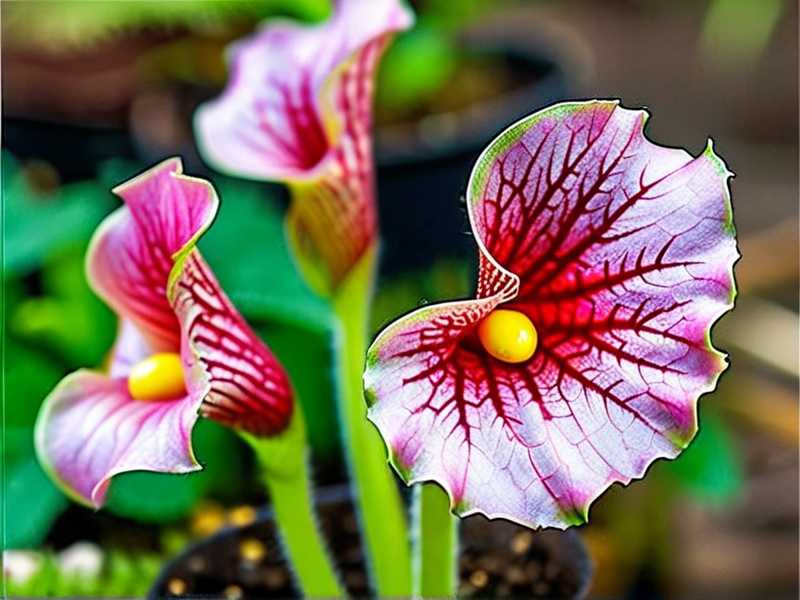
The pitcher is a leaf. A stressed plant puts its energy into staying alive, not into building new traps. So the real question is not "how do I attract more bugs?" It is "why is my plant too stressed to build good traps?" Fix the stress and the insects follow.
Trick 1: Give It Full, Direct Sunlight
This is the single biggest factor. Sarracenia need at least six hours of direct sun, and honestly, more is better. I used to keep mine on a shaded porch because I worried about leaf burn. Bad move. The pitchers came in pale and small.
When I moved the pots to a spot with eight hours of direct sun, everything changed. New pitchers grew taller and the colors deepened. More importantly, they actually caught insects.
A pitcher in shade may still look green, but it will not produce the nectar or the deep red veining that lures prey. Think of the trap as a billboard. No light means a faded billboard that bugs ignore.
Watch for Leggy, Pale Pitchers
If your pitchers are long, thin, and washed out, that is a light problem. Move the plant gradually over about a week so it does not scorch. I burned a few leaves the first time I rushed this. Lesson learned.
Indoor Growers, This Means You
A sunny south-facing window can work, but it is often not enough. I run a strong LED grow light for twelve to fourteen hours a day in winter. The Royal Horticultural Society notes that Sarracenia need bright light year-round to thrive, and I have found that true in my own collection. You can read more at RHS.
Trick 2: Use the Right Water and Never Let It Dry Out
Sarracenia come from bogs. They want wet feet, constantly. But here is the twist that trips people up. They need clean, mineral-free water.
Tap water in many cities contains dissolved minerals and chlorine. Over months, these build up in the soil and slowly poison the plant. I learned this the hard way with a beautiful S. purpurea that declined for no obvious reason.
Use rainwater, distilled water, or reverse-osmosis water. Set the pot in a tray with an inch or two of water and top it up as it evaporates. During summer, my plants drink a surprising amount. I check the tray almost every day.
The Overwatering Trap
Now, a warning. "Wet" does not mean "swampy and stagnant." This is where most beginners go wrong.
90% of indoor plants die from overwatering, and carnivorous plants are no exception. If you leave a pot sitting in old, smelly water with no drainage, the roots rot. I lost a plant this way in my first year. The soil turned sour and the rhizome went soft.
The fix is simple. Use a tray, not a sealed container. Refresh the water. Let the top of the soil breathe between top-ups. Wet roots need oxygen too.
Trick 3: Pick the Right Pot and Soil
This one surprises people, but container choice matters a lot for insect capture. A stressed root system means no new traps.
Use a tall pot, at least six to eight inches deep. Sarracenia have deep roots and a long rhizome. Shallow pots cramp them and dry out too fast. I switched from a shallow bowl to a tall terracotta-colored plastic pot and the root growth alone was dramatic.
For soil, skip regular potting mix. It is too rich and holds the wrong minerals. Use a mix of sphagnum peat moss and perlite, roughly two to one. Some growers add a little sand. I have had good luck with plain long-fiber sphagnum moss too.
Avoid These Pot Mistakes
Do not use a pot with a tiny drainage hole that clogs. Do not use glazed ceramic that leaches minerals. And do not bury the rhizome too deep. The growing point should sit just at the surface.
I once planted a rhizome an inch too low. It rotted within three weeks. Now I plant them shallow and let the crown sit almost exposed.
Trick 4: Skip the Fertilizer and Let the Plant Hunt
Here is a counterintuitive tip. Do not feed your Sarracenia fertilizer. This is one of the top three beginner errors, along with overwatering and bad light.
The three deadly mistakes for new growers are: overwatering, light in the wrong place, and the wrong pot. Fertilizer is a close fourth.
Sarracenia evolved to get nutrients from insects, not from the soil. Fertilizer salts burn the roots and can kill the plant. I made this mistake early on, thinking a little plant food would help. The leaves yellowed and the plant stalled for months.
Just give it clean water and sunlight. Let it catch its own food. You will get better traps and a healthier plant.
Trick 5: Boost Humidity and Airflow Around the Traps
Insects find pitchers partly by scent and partly by the nectar trail. Humidity helps the plant produce that nectar and keeps the trap rim slippery.
If you grow indoors in dry air, group your plants together or use a humidity tray. I keep a shallow tray of pebbles and water under my indoor pots. It raises local humidity without soaking the soil.
Outdoors, this is rarely an issue in summer. But do not crowd pots so tightly that air cannot move. Stagnant, humid air invites mold. I space mine a few inches apart and never had a rot problem since.
A Little Wind Helps
Air movement also spreads the plant's scent, which draws more insects. A gentle breeze from a fan for a couple of hours a day can help indoor setups. I run a small clip fan near my grow-light shelf. It made a difference I could see in trap counts.
Trick 6: Leave the Traps Alone and Let Them Age
New growers often "help" by poking traps open or dropping in dead bugs. Please do not. You can damage the trap and cause it to rot.
Let the pitchers age naturally. An older pitcher that has darkened and filled with insects is working exactly as it should. The plant is digesting. Do not empty it or flush it out.
I used to clean my pitchers because I thought they looked messy. That was a mistake. The digesting fluid and trapped insects are the whole point. Now I leave them be until they dry out completely, then I trim them.
The American Horticultural Society notes that healthy pitcher plants can live for decades with minimal fuss, and I believe it. The less you meddle, the better they do. You can learn more at AHS.
My Two-Week Observation
When I fixed my light, water, and pot setup, I tracked the change. Within about ten days, new pitchers started opening with deep color and visible nectar. By the two-week mark, most traps held at least one insect. Some had several.
Before the fix, I might have seen one bug a week, if that. After, the traps filled steadily. The plants looked stronger and the pitchers lasted longer. That told me the whole system was healthier, not just the traps.
A Quick Recap of the Six Tricks
- Give full, direct sunlight for most of the day.
- Use mineral-free water and keep the tray topped up.
- Choose a deep pot with a peat and perlite mix.
- Skip fertilizer entirely.
- Raise humidity and keep air moving.
- Leave the traps alone and let them age.
Do these and your Sarracenia will reward you. It is not about forcing the plant to catch bugs. It is about removing the stress that stops it from doing what it already knows how to do.
Frequently Asked Questions
How long does it take to see more insects in the traps?
In my experience, about ten to fourteen days after you fix the light and water. New pitchers have to grow and open first. Once they do, the traps start working fast.
Do I need to feed my Sarracenia insects by hand?
No, not usually. Outdoors, they catch plenty on their own. Indoors, they may need a little help, but I would only do this occasionally and carefully. Never use fertilizer as a substitute.
Why are my pitchers turning brown and empty?
Brown, dry pitchers are usually old and spent. That is normal. But if new pitchers brown at the top, check your water quality and light. Mineral buildup and too much shade are common culprits.
Give your plants the basics and a little patience. Sarracenia are tougher than they look once you stop fighting their nature. Mine went from sad and bug-free to thriving in a single season, and yours can too.





