bluename
 How to Display Sarracenia Varieties: 6 Arrangement Tricks for a Stunning Carnivorous Garden
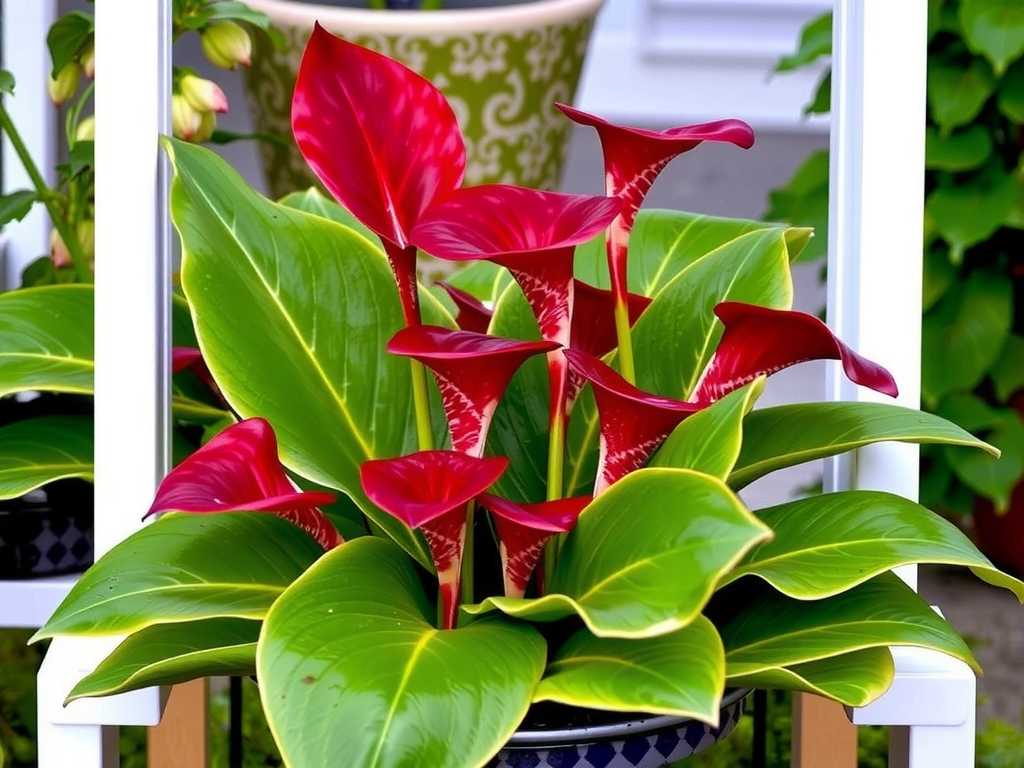
If you're like me, the moment you fell for Sarracenia, or North American pitcher plants, it wasn't just about their insect-trapping prowess. It was about their sculptural beauty, their wild array of colors, and that deep-seated desire to show them off not as curiosities, but as the living art they are. But here's the painful truth I learned the hard way: plopping these magnificent plants in a haphazard row is a disservice to their drama. For years, my collection looked more like a botanical holding cell than a curated display. The tall ones shaded the short, the vibrant colors clashed, and the overall effect was… messy. The real problem wasn't my love for the plants; it was my lack of a thoughtful arrangement strategy.
That all changed when I decided to treat my Sarracenia not just as specimens, but as elements of design. I dedicated two intensive weeks to experimenting with different display principles, carefully observing how each arrangement affected not only aesthetics but also plant health and growth. What follows are the six transformative tricks I developed through trial, error, and countless observations. This guide is built on my firsthand experience, the pitfalls I stumbled into, and the solutions that finally made my carnivorous plant shelf the centerpiece it was meant to be.
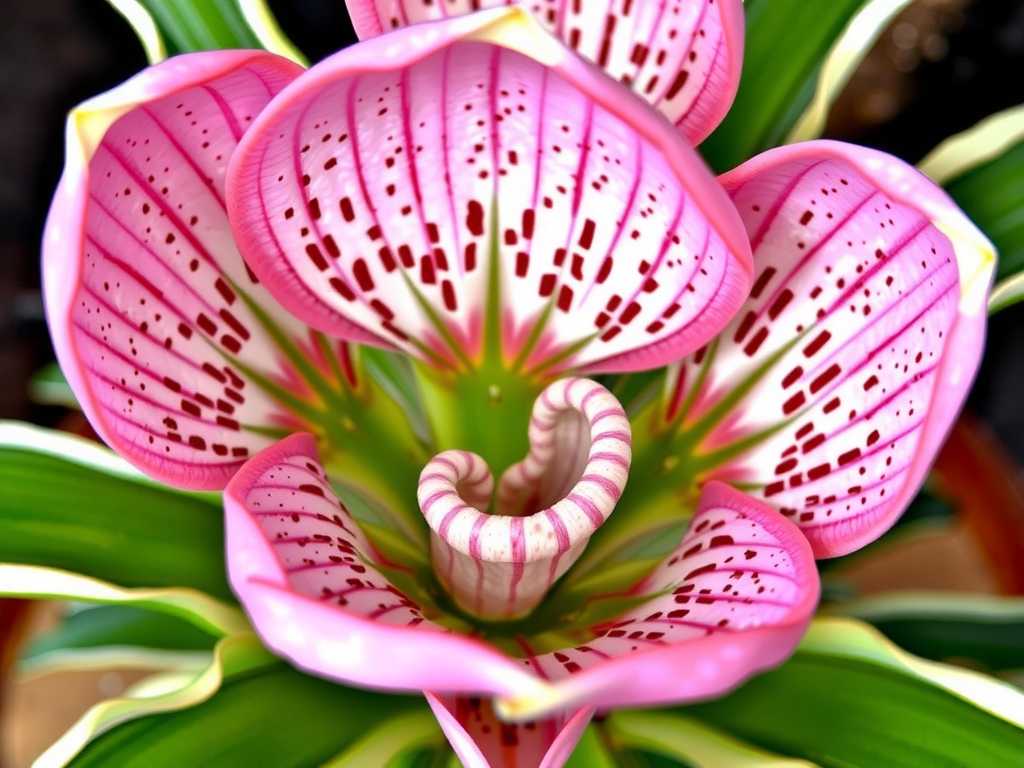
Trick 1: Master the Art of Height and Layering
The most common mistake is treating all pitcher plants as equals in stature. A flat display squanders their architectural potential.
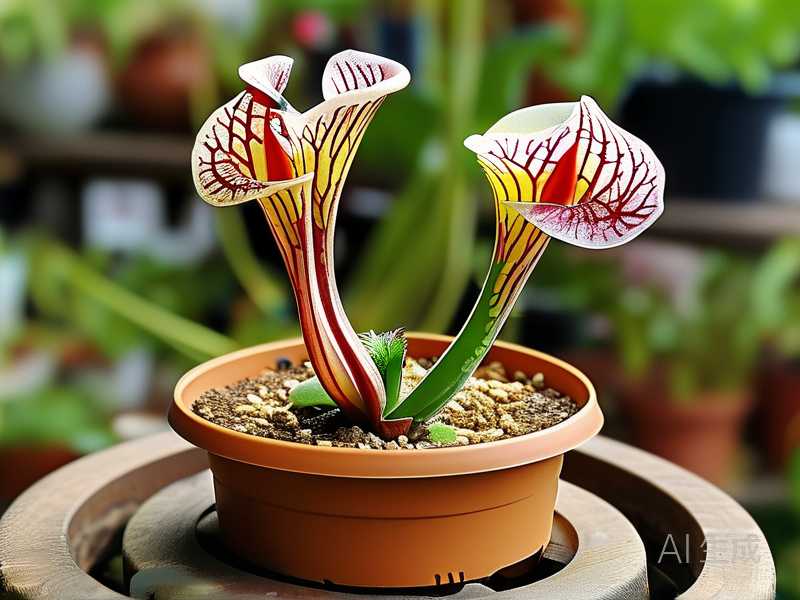
My Process and 2-Week Observation: I started by inventorying my varieties by their mature height. I placed my towering Sarracenia flava and robust Sarracenia moorei hybrids at the back of my deep, south-facing windowsill. In the middle ground, I positioned medium-height beauties like Sarracenia rosea and Sarracenia psittacina. For the front, I used the charmingly short Sarracenia purpurea venosa and some young seedlings.
The Pitfall I Hit: Within three days, I noticed the back-row giants were leaning toward the light, their pitchers curving awkwardly over the middle plants. I had created a light-stealing canopy.
The Solution: I elevated the entire back row. Using inverted terracotta pots as sturdy, breathable stands, I created a tiered effect. This simple lift ensured every plant, from the back flava to the front purpurea, had direct, unfiltered access to the sun. After two weeks, the leaning corrected itself. New pitchers grew straight and tall, and crucially, the dappled light pattern on the middle-tier plants was eliminated, promising stronger growth for all.
Trick 2: Conduct a Color Symphony (Don’t Just Make Noise)
Sarracenia offer a fiery palette: deep reds, vibrant yellows, pure greens, and intricate veining. Throwing them together randomly can be visually overwhelming.
My Process and 2-Week Observation: I decided on two thematic arrangements. The first was a "Firedance" theme, grouping deep red Sarracenia ‘Judith Hindle’, copper-toned Sarracenia ‘Ladies in Waiting’, and a veined Sarracenia ‘Scarlet Belle’. The second was a "Sunlit Meadow" theme, featuring golden Sarracenia flava, bright green Sarracenia oreophila, and a lime-hued Sarracenia minor.
The Pitfall I Hit: The "Firedance" group, while stunning close-up, looked like a dark, indistinct blob from across the room. I’d lost definition.
The Solution: I introduced a single, starkly contrasting plant as a "spacer." Into the red group, I placed one vibrant, all-green Sarracenia flava. This one plant provided the necessary visual break, making the reds appear richer and more defined. As noted by the American Sarracenia Society for plant conservation, while focused on habitat, thoughtful grouping in cultivation can enhance both appreciation and individual plant character. After two weeks, this deliberate contrast didn’t just please my eye; it made me study each plant's unique coloration more closely.
Trick 3: Play with Texture and Pitcher Form
Beyond color and height, the shape of the pitchers themselves is a key design tool. Contrast is your friend here.
My Process and 2-Week Observation: I paired the tall, trumpet-shaped pitchers of Sarracenia leucophylla with the low, bulbous, frog-mouthed pitchers of Sarracenia psittacina. In another spot, I juxtaposed the upright, slender tubes of Sarracenia rubra with the sprawling, ground-hugging pitchers of Sarracenia purpurea.
The Pitfall I Hit: The S. psittacina (parrot pitcher plant), being a shorter, spreading species, began to get slightly buried by the falling older leaves from the tall leucophylla behind it, hinding its light capture.
The Solution: I increased the physical distance between these two plants slightly and placed a flat, decorative stone in front of the psittacina. This stone acted as a barrier for debris and, being a dark slate, beautifully framed the rosette form of the low-growing plant. This small tweak protected the plant's structure and accentuated the textural difference I was aiming for.
Trick 4: The Power of the Right Container
The pot is the frame for your living masterpiece. Uniformity can create cohesion, while eclectic choices can highlight uniqueness.
My Process and 2-Week Observation: I tested two approaches. For a collection of similar-sized Sarracenia alata hybrids, I used identical, deep white ceramic pots. The uniformity made the subtle differences in the plants themselves the star. For my showcase specimen, a magnificent Sarracenia ‘Royal Ruby’, I chose a wide, shallow azalea pot in a muted terracotta, which complemented its red veins and emphasized its radial growth.
The Pitfall I Hit: The identical white pots were aesthetically clean, but they dried out at slightly different rates due to minor variations in soil volume and plant size, making watering schedules tricky.
The Solution: I implemented a simple "lift test" every other day. By lifting each pot to feel its weight, I could water individually based on need, not a rigid calendar. This two-week habit honed my watering skills and ensured no plant was stressed. The Royal Horticultural Society (RHS) emphasizes the importance of monitoring moisture for healthy carnivorous plants, rather than sticking to a fixed routine—a principle my experiment proved vital.
Trick 5: Create a Themed Bog Dish Garden
For a truly immersive display, a single container housing multiple varieties is unbeatable. This mimics their natural wetland communities.
My Process and 2-Week Observation: I took a large, water-tight glazed tray and planted a dwarf Sarracenia purpurea, a clump of Sarracenia psittacina, and a single, slender Sarracenia rubra subsp. gulfensis. I filled the spaces with live sphagnum moss and kept a quarter-inch of distilled water in the tray at all times.
The Pitfall I Hit: By the end of the first week, the faster-growing S. rubra began to dominate visually, and the psittacina started to send its runners under the moss, threatening to engulf the smaller purpurea.
The Solution: I carefully inserted thin, plastic garden edging (cut from a nursery pot) vertically into the soil between the plants. This invisible barrier contained the psittacina's spread. I also pruned one of the older, taller pitchers from the S. rubra to maintain visual balance. Over the next week, the community stabilized, and the moss flourished, creating a breathtaking, self-contained miniature ecosystem.
Trick 6: Incorporate Complementary Companions
While Sarracenia are the stars, supporting actors can elevate the scene without competing.
My Process and 2-Week Observation: Around the bases of my taller Sarracenia, I planted non-invasive, moisture-loving companions like Drosera capensis (Cape sundew) and a small patch of Viola lanceolata (white bog violet). Their fine, dewy leaves and delicate flowers provided a soft, textural understory.
The Pitfall I Hit: The Drosera capensis, a prolific self-seeder, began sprouting tiny seedlings inside the pitchers of my Sarracenia, which was neither healthy for the seedling nor attractive.
The Solution: I became diligent about deadheading the sundew's flower stalks before they could set seed. This simple maintenance step preserved the clean lines of the arrangement. The contrasting forms remained, but the messy, invasive seeding was controlled, proving that successful companion planting requires active management.
Will these arrangements harm my Sarracenia? Not if their core needs are met first. Every trick here is secondary to providing full sun, mineral-free water (rain, distilled, or reverse osmosis), and the proper acidic, nutrient-poor soil (a mix of peat moss and perlite/sand). Display follows health.
How often should I rearrange my plants? Minimally. Sarracenia appreciate stability, especially during their active growing season (spring-fall). The best time to implement or tweak these arrangements is in late winter, just before the spring growth surge. My two-week experiment was for observation; once you find a layout that works, let them thrive in it.
Can I use these tricks for outdoor garden beds? Absolutely. These principles are scalable. Use height layering on a mound in a bog garden, create color-themed groupings, and use low-growing companion plants like native mosses at the edges. The key for outdoor displays is ensuring the entire planting area maintains consistent moisture.
Arranging Sarracenia is the final, joyful step in mastering their care. It transforms a collection into a composition, where each plant’s unique form, color, and habit are highlighted in concert with others. It’s about creating a display that makes you pause every time you walk by, noticing new details and relationships. By thinking like a designer as well as a cultivator, you give these extraordinary carnivorous plants the stage they deserve. The result is more than just beauty; it’s a deeper connection to the fascinating world you’re nurturing on your windowsill or in your garden.