bluename
 How to Choose Sarracenia for Decoration: 6 Ornamental Variety Tricks
I’ve always loved the idea of having a living piece of art in my home. Something that sparks conversation, adds a unique aesthetic, and feels alive. That’s what drew me to Sarracenia, the North American pitcher plants. Their elegant, trumpet-shaped pitchers are nature’s own sculptures. But when I first decided to use them as decorative houseplants, I hit a wall. I bought a beautiful, tall Sarracenia flava on impulse, placed it in my dim living room corner because it looked “right,” and watched it become a sad, etiolated shadow of itself within weeks. It wasn’t just dying; my decoration was failing. I realized then that choosing a Sarracenia isn’t like picking a vase. You’re choosing a living being with non-negotiable needs, and its health is the foundation of its beauty. This guide is the result of my journey from that failure to successfully integrating these stunning carnivores into my home decor. I’ll share the six key tricks I learned, born from two weeks of intense observation, adjustments, and finally, success.
Understanding the Canvas: Light as Your Primary Design Tool
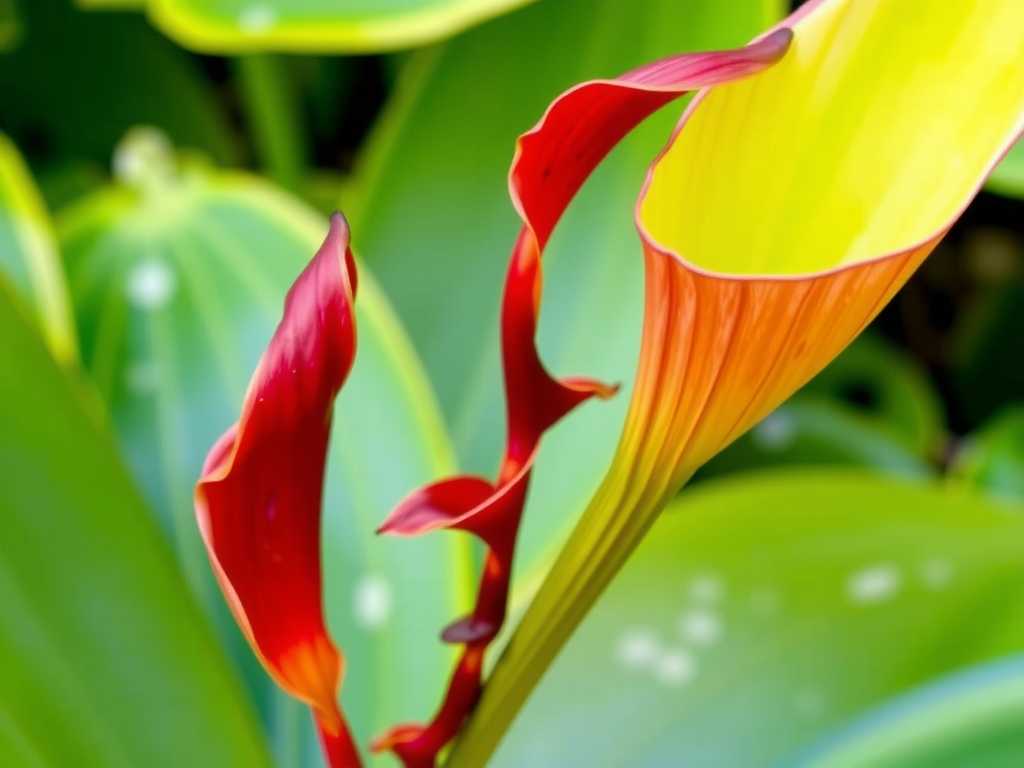
My biggest mistake was treating light as an afterthought. For Sarracenia, light is not just a need; it’s the brushstroke that defines their color and form. Most varieties demand full, blazing sun—at least 6 hours of direct sunlight daily. Without it, they grow weak, green, and floppy, losing all their decorative appeal.
During my two-week observation period with a new Sarracenia leucophylla (the white-topped pitcher plant), I conducted an experiment. I placed it on a south-facing windowsill that received about 5 hours of direct sun and dappled light for the rest of the day. For the first week, it seemed okay. But by day ten, I noticed the brilliant white and red venation on the new pitcher was less intense, more washed-out green. The pitcher itself was leaning heavily toward the light source. This was my “aha” moment, confirming what experts at the Carnivorous Plant Society constantly emphasize: light is paramount.
The fix was immediate but required a decor shift. I moved it outdoors to my sunny balcony. Within the remaining four days of my observation, the lean stopped, and the newest emerging pitcher showed a deeper hue. The lesson? Your decorative placement must start with a sunny spot. A sun-drenched conservatory, a south-facing bay window, or a bright patio is non-negotiable for most species. If you lack natural light, investing in a powerful, full-spectrum grow light is not just helpful; it’s essential for maintaining their ornamental value. This aligns perfectly with the Royal Horticultural Society (RHS) guidelines, which state Sarracenia require “full light” and should be grown in a “sunny, sheltered spot” for optimum growth and coloration.
Trick 1: Select for Your Space – Height and Form Factor
Not all Sarracenia are created equal for interior design. Their height and growth habit should complement your space.
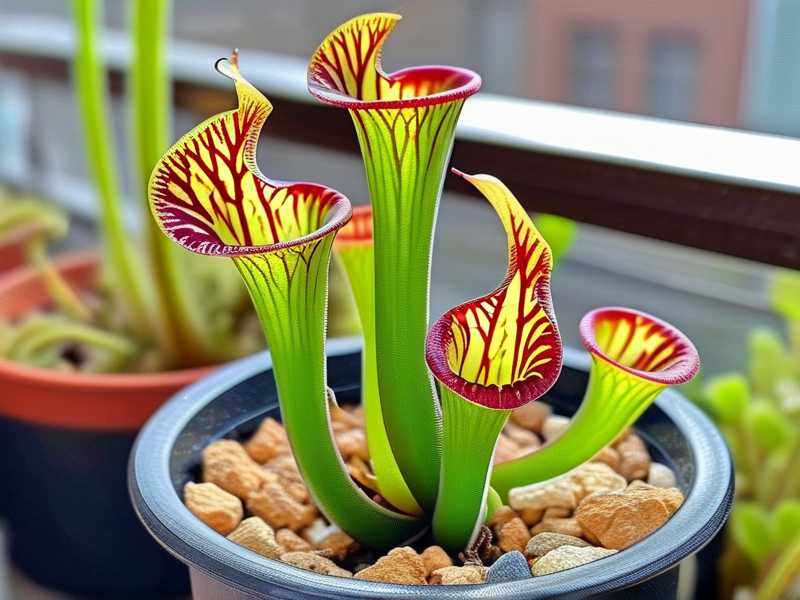
- Tall & Dramatic (Sarracenia flava, S. leucophylla): These can reach over 2 feet. They are stunning as solitary focal points on a bright floor corner or as a centerpiece on a large, sunny table. My S. flava now thrives in a tall, simple ceramic pot on my sunroom floor, creating a vertical accent.
- Compact & Clumping (Sarracenia purpurea, S. psittacina): Perfect for shelves, windowsills, or terrariums (with adequate ventilation). S. purpurea, with its low, sprawling, ground-hugging pitchers, offers a unique texture. I’ve successfully used one in a shallow, wide bonsai pot on a bright kitchen windowsill.
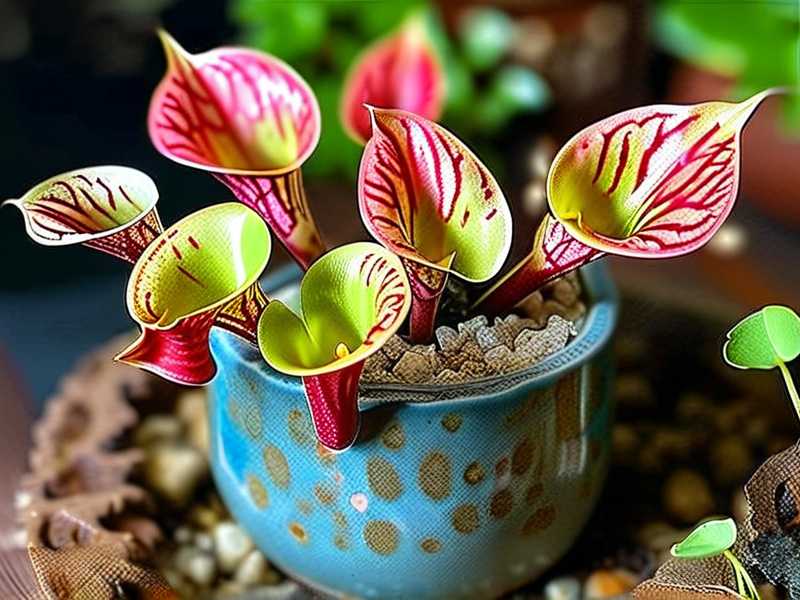
- Upright & Varied (Sarracenia rubra subspecies, hybrids): Many hybrids like ‘Scarlet Belle’ stay a manageable 8-12 inches, offering vibrant color in a modest footprint. These are ideal for creating grouped displays.
Trick 2: Harness the Color Palette – It’s All in the Genetics
This is where choosing ornamental Sarracenia varieties becomes an artist’s delight. Color is genetically wired and amplified by light. I learned to look for specific varieties known for their pigmentation:
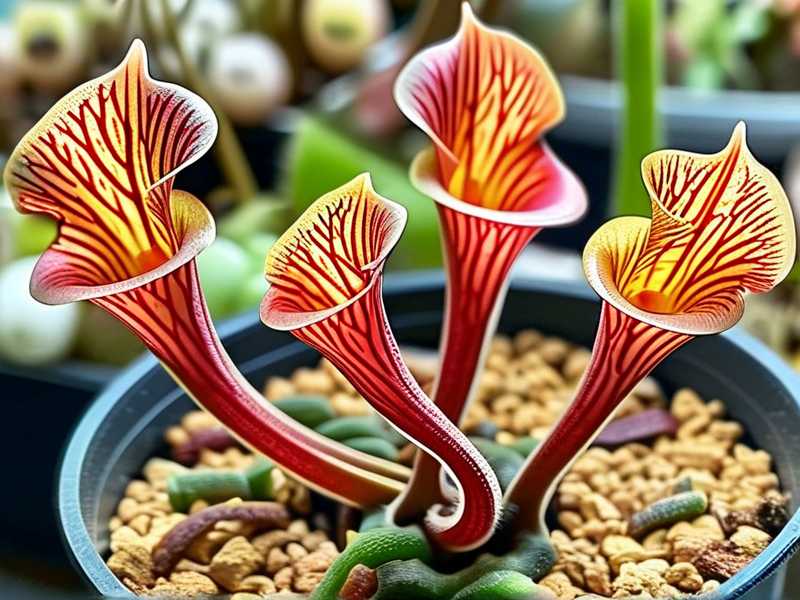
- Reds & Purples: Varieties like Sarracenia leucophylla ‘Hurricane Creek White’ often have intense red veining. Hybrids such as ‘Ladies in Waiting’ or ‘Adrian Slack’ are bred for deep, almost solid red pitchers.
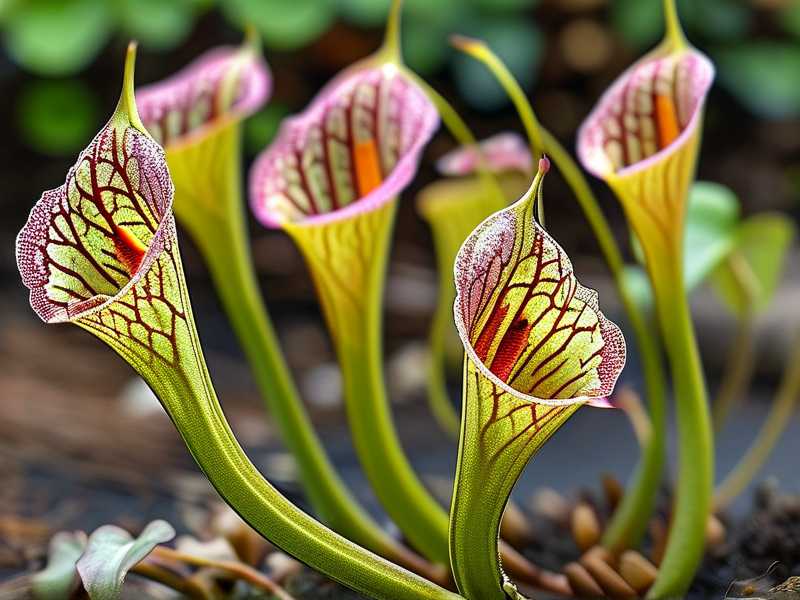
- Yellows & Greens: Sarracenia flava var. flava offers bright yellow flowers and pitchers. S. flava var. cuprea has beautiful coppery lids.
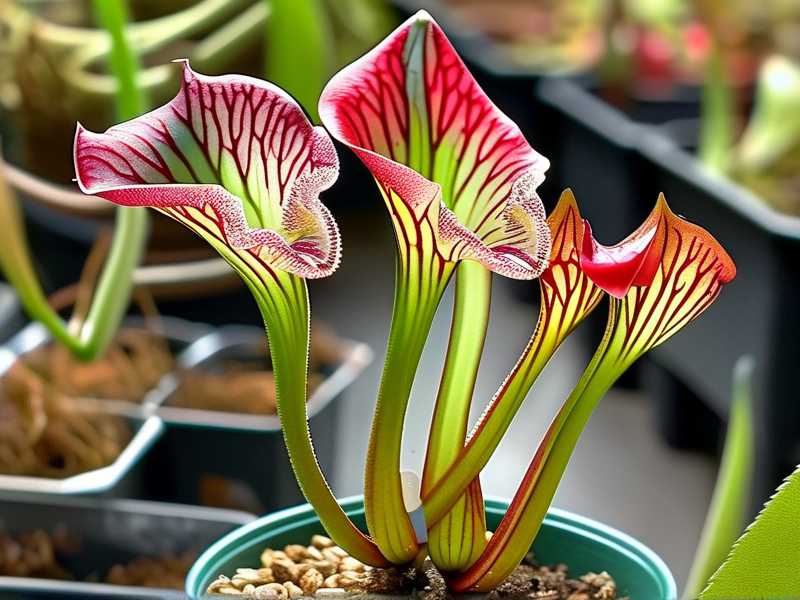
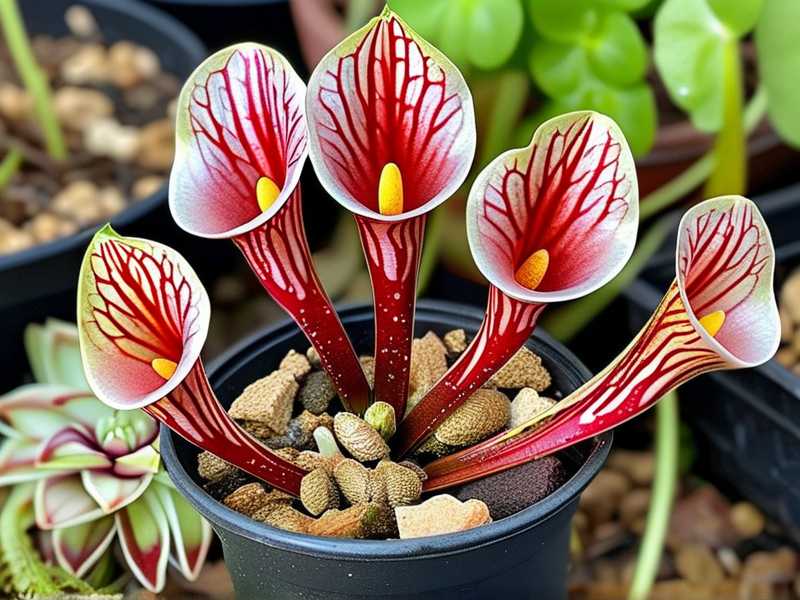
- Whites & Patterns: Sarracenia leucophylla is famed for its snow-white pitchers with intricate red veining, especially stunning in fall.
I chose a hybrid called ‘Juthatip Soper’ for my second attempt. Its promise of robust form and red-veined, white pitchers was my decorative goal. Under the strong balcony sun, it delivered spectacularly.
Trick 3: The Foundation – Potting Mix and Water Are Part of the Display
A beautiful plant in the wrong medium is a doomed decoration. Never, ever use regular potting soil. It will kill your Sarracenia. They require a nutrient-free, acidic, and well-draining mix. My standard recipe, endorsed by the American Sarracenia Society of America (ASSA), is a 50/50 blend of sphagnum peat moss and perlite. This mix is visually clean and light.
Here’s the critical decorative-care step: water management. Sarracenia are bog plants. They need to sit in a saucer of 1-2 inches of water at all times. I use distilled water, rainwater, or reverse osmosis water exclusively. Tap water, with its minerals, will build up and slowly poison the plant. To make this practical and neat, I place my decorative cache pot (with drainage holes) inside a slightly larger, water-tight ceramic container. I keep water in the outer container, creating a hidden reservoir. It’s functional, maintains humidity, and looks intentional.
Trick 4: Embrace Dormancy – The Secret to Long-Term Beauty
This was my most surprising lesson. To keep your Sarracenia alive and beautiful for years, you must let it “go ugly” for a while. In late fall, they enter a winter dormancy. Growth stops, and some pitchers may brown. This is not failure; it’s a necessary rest. I moved my plants to an unheated but frost-free garage for 10 weeks, where temperatures stayed between 35-50°F (2-10°C). I reduced the water in the saucer but never let the soil dry completely. Come spring, I brought them back into full sun, and the flush of new, vibrant growth was more vigorous than ever. Planning for this dormant period is part of a responsible long-term decorative strategy.
Trick 5: Strategic Grouping and Companion Planting
A single Sarracenia is a statement. A group is a masterpiece. You can create stunning displays by grouping different varieties with complementary colors and heights. Ensure they all have the same light and water needs. Suitable companions are other carnivores like Venus flytraps (Dionaea muscipula) or sundews (Drosera). I created a shallow “bog bowl” with a small S. purpurea, a red-form Venus flytrap, and a cape sundew. It’s a fascinating and beautiful miniature ecosystem on my desk under a grow light.
Trick 6: Acquisition with Intention – Source Responsibly
Where you buy your plant matters. Always purchase from reputable nurseries that propagate their plants in cultivation. This protects wild populations and ensures you get a healthy, acclimated plant. Avoid sellers who might be poaching from the wild. A healthy plant from a good nursery will establish faster and become a resilient part of your decor.
My Two-Week Turnaround: A Case Study
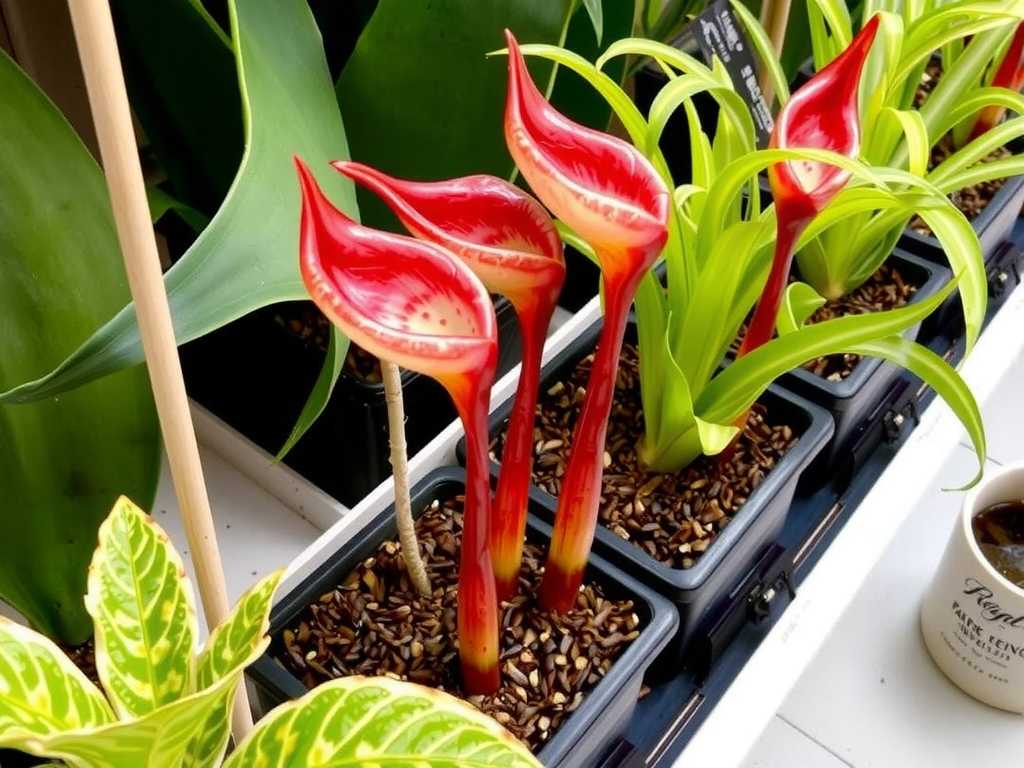
After my initial failure, I started over with a Sarracenia ‘Juthatip Soper’ from a specialty nursery. Day 1-3: I potted it in the 50/50 peat/perlite mix, placed it in a deep saucer with distilled water, and set it on my full-sun balcony. Day 4-7: I monitored water levels daily. A slight wilting on day 5 indicated transplant shock; I ensured consistent water and it perked up by day 7. Day 8-14: I observed the existing pitchers firm up and a new pitcher begin to emerge from the center. The new growth was straight and showed stronger red venation than the older pitchers, confirming the light was sufficient. By the end of the two weeks, the plant was not just alive but visibly thriving and becoming more colorful—a true decorative success.
Frequently Asked Questions
Can I keep a Sarracenia in a terrarium or glass cloche? Very cautiously, and only with major modifications. They need massive airflow to prevent fungal issues and intense light. A large, open terrarium with powerful LED grow lights and a small fan for circulation can work, but a sealed cloche is a death sentence. Outdoors or on a sunny windowsill is almost always better.
Do I need to feed my decorative Sarracenia insects? No. If grown outdoors or near an open window, they will catch prey naturally. This is a fascinating decorative feature to observe. If kept indoors in a sealed environment, you can occasionally offer a small, dead insect (like a dried fly) into a pitcher, but it’s not required. Their primary energy comes from the sun, not insects.
The pitchers are turning brown at the top. What am I doing wrong? Individual pitchers have a lifespan of several months to a year. Browning of an older pitcher is natural senescence; simply trim it off at the base with clean scissors. If all pitchers are browning quickly, it’s likely a cultural issue: using tap water, insufficient light, or lack of water in the saucer. Re-check your core care steps.
Choosing a Sarracenia for decoration is a rewarding partnership with nature. It moves beyond static ornament to dynamic, living art. By prioritizing their needs for intense light, pure water, and proper dormancy, you unlock their full ornamental potential. The six tricks—selecting for space, harnessing color, mastering the potting mix, respecting dormancy, creative grouping, and responsible sourcing—transform a challenging plant into a resilient and breathtaking focal point. Start with the right light, choose a variety that speaks to you, and enjoy the process of cultivating a decoration that is truly alive.