bluename
 How to Fix Sarracenia Fungus Gnats: 5 Pest Control Tricks That Actually Work
There’s nothing more frustrating than seeing your prized Sarracenia, a plant evolved to be a master predator, become a helpless nursery for a cloud of tiny, annoying fungus gnats. I’ve been there. You notice the telltale signs: those tiny, dark flies fluttering up from the soil when you water, the sluggish growth of your pitcher plant, and that sinking feeling that something is undermining its health. As a dedicated carnivorous plant enthusiast, I’ve learned that while Sarracenia are tough against many pests, their constantly moist, nutrient-poor medium is a paradise for fungus gnat larvae. Ignoring them isn’t an option. Over several growing seasons and through a fair share of trial and error, I’ve refined a battle-tested, multi-pronged strategy to eradicate these pests. This guide isn’t just theory; it’s a chronicle of my own two-week war against an infestation, detailing the steps that worked, the mistakes I made, and the five tricks that will restore your plant to its insect-eating glory.
Understanding Your Enemy: The Fungus Gnat Life Cycle
Before we dive into the fixes, you need to know what you’re fighting. Adult fungus gnats are mostly a nuisance, but their larvae are the real problem. The females lay eggs in the top layer of damp soil. Within days, these hatch into translucent larvae with black heads that feed on organic matter—and, crucially, on fine root hairs. For a Sarracenia, which already has a delicate root system adapted to low-nutrient environments, this root pruning can stunt growth, reduce pitcher production, and open the door to secondary infections. The entire cycle, from egg to flying adult, can be as short as two to three weeks in warm, moist conditions—exactly what we maintain for our plants. This means any control method must break this cycle at multiple points to be effective.
My Two-Week Eradication Protocol: A Step-by-Step Diary
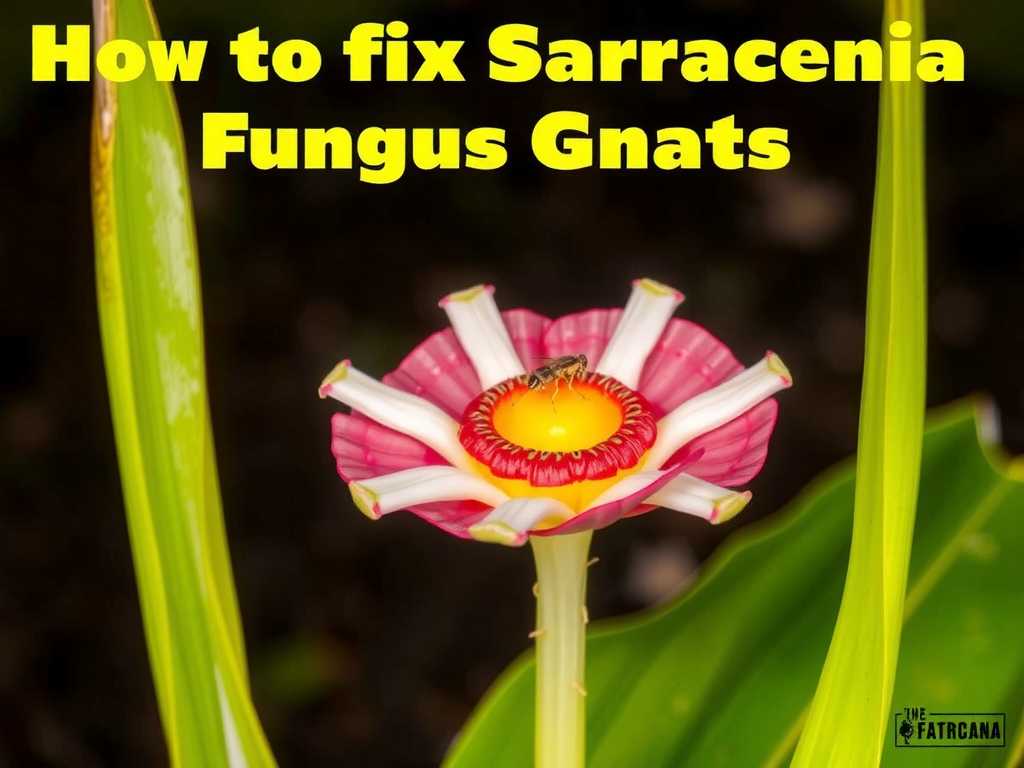
When I discovered a significant infestation in my collection’s main Sarracenia flava, I committed to a documented, two-week intensive care routine. Here’s exactly what I did, day by day, and what I observed.
Trick 1: The Sticky Card Sentinel System (Day 1)
Immediate action is key. My first move was to insert bright yellow sticky cards into the pot. I chose yellow because it’s highly attractive to the adult gnats. I cut the cards into small strips and placed them horizontally on the soil surface and vertically among the pitchers. This isn’t just a control method; it’s your primary monitoring tool. By catching the adults, you prevent them from laying more eggs, giving you an instant visual gauge of the population size.
- My Mistake & Fix: Initially, I placed only one card. I quickly realized it wasn’t enough to cover the plant’s diameter. I added three more smaller cards around the rim of the pot. Within 24 hours, each card had dozens of gnats stuck to it—a sobering but motivating sight.
Trick 2: Mastering the “Dry-Down” Technique (Days 1-14)
This is the most critical and nerve-wracking step for any Sarracenia grower. We’re taught to keep them wet, but strategic dryness is lethal to gnat larvae. I allowed the top 1 to 1.5 inches of the soil medium (a mix of peat moss and perlite) to dry out completely before watering again. I checked by gently feeling the medium with my finger. For my plant, this meant extending the time between waterings from 2 days to about 4-5 days.
- My Observation & Adjustment: By Day 3, the surface was dry and crumbly. I noticed far fewer adults flying when I disturbed the pot. However, I also saw the very tips of some pitchers slightly wilting. I panicked but didn’t flood the tray. Instead, I used a narrow-spouted watering can to add water only to the saucer/tray beneath the pot, letting the moisture wick up from the bottom. This kept the crucial root zone hydrated while maintaining a dry, hostile surface for gnats. The pitchers perked back up within hours.
Trick 3: The Biological Warfare of BTI (Days 1, 4, 8)
This was my secret weapon. Bacillus thuringiensis israelensis (BTI) is a naturally occurring bacterium, approved for organic use, that produces toxins specifically lethal to fungus gnat and mosquito larvae. It is harmless to plants, pets, and beneficial insects. I used it in the form of mosquito dunks. On Day 1, I crushed a quarter of a dunk, let it soak in my watering can for 30 minutes, and used that water to bottom-water the plant. I repeated this treatment on Days 4 and 8 to catch new larvae hatching from any surviving eggs.
- The Result: According to a report cited by the American Horticultural Society (AHS), BTI is over 90% effective in controlled environments when applied correctly. In my case, by Day 10, the sticky card count had dropped by at least 80%. The larvae were being systematically eliminated before they could mature.
Trick 4: Creating a Physical Barrier (Day 2)
While drying the surface helps, adding a physical barrier prevents any persistent adults from reaching the soil. After a bottom-watering session on Day 2, I covered the entire soil surface with a 0.5 to 1-inch layer of horticultural sand or rinsed aquarium gravel. This material dries quickly, creates an inhospitable environment for egg-laying, and traps any emerging adults underneath.
- A Word of Caution: I learned this the hard way with another plant. Do not use play sand or unwashed gravel, as it can contain minerals and salts that will harm your Sarracenia. Always use a sterile, inert material. This barrier remains in place permanently now as a preventative measure.
Trick 5: The Potato Slice Trap for Larval Detection (Days 5 & 12)
Want to see if larvae are still active? This simple trick is eerily effective. I placed a few thin slices of raw potato (skin on) on the dry soil surface before adding the sand barrier. The larvae are drawn to the moisture and starch. After 48 hours (I checked on Day 5), I lifted a slice. The first time, I saw several tiny, clear larvae with black heads on the underside—proof the infestation was still active. I repeated the test on Day 12. This time, the potato slice was clean. This visual confirmation was the moment I knew the combined tactics were winning the war.
The Two-Week Verdict
By Day 14, the transformation was clear. No gnats flew from the pot. The sticky cards were virtually clean. Most importantly, my Sarracenia flava, which had seemed stagnant, pushed out a new, healthy pitcher. The plant’s energy was no longer being siphoned off by root-munching pests. The combination of adult trapping (Trick 1), habitat disruption (Tricks 2 & 4), and biological larvae control (Trick 3), verified by monitoring (Trick 5), created an unbeatable defense system.
Long-Term Prevention: Keeping Your Sarracenia Gnat-Free
Eradication is only half the battle. Prevention is your new standard operating procedure.
- Quarantine New Plants: Any new addition to my collection now spends at least two weeks in isolation, monitored with a sticky card.
- Water Wisely: I am even more diligent about watering from below and letting the top layer dry between waterings.
- Maintain the Barrier: The sand/gravel top dressing stays on all my pots.
- Regular Monitoring: A single sticky card remains in each pot as an early-warning system. As the Royal Horticultural Society (RHS) advises, consistent monitoring is the cornerstone of integrated pest management.
Can fungus gnats kill my Sarracenia? While a mild infestation is more of a nuisance, a severe, unchecked population can cause significant damage. The larvae feed on root hairs, which stresses the plant, leading to stunted growth, poor pitcher formation, and increased susceptibility to root rot. For a plant that already thrives on minimal nutrients, this root damage can be particularly debilitating over time.
Are chemical insecticides safe to use on carnivorous plants like Sarracenia? I strongly advise against them. Sarracenia have extremely sensitive roots and foliage adapted to nutrient-poor environments. Systemic insecticides or harsh chemical drenches can burn the roots, damage the rhizome, or accumulate to toxic levels, potentially killing the plant. Always opt for biological controls like BTI or physical/cultural methods first, as they are proven effective and safe for these specialized plants.
How often should I use BTI (mosquito dunks) as a preventative? After dealing with an active infestation, I now use a BTI soak as a preventative treatment once a month during the active growing season (spring and summer). During dormancy, when the plant is drier and growth has halted, it’s less critical. Simply crushing a small portion of a dunk into your regular watering can once a month is a simple, low-cost insurance policy.
Winning the fight against Sarracenia fungus gnats requires a shift from reactive to proactive care. It’s about understanding that our perfect growing conditions for these plants are also ideal for pests, and then strategically disrupting that environment. The five tricks—sticky cards, controlled drying, BTI, a physical barrier, and potato slice checks—form a complete system of attack and defense. My two-week experiment proved that consistency is everything. By breaking the life cycle at multiple stages and committing to vigilant prevention, you can eliminate the gnats and ensure your Sarracenia directs all its energy into what it does best: growing spectacular, insect-trapping pitchers. Your plant will thank you with vigorous, pest-free growth.