bluename
How to Grow Sarracenia Varieties in Terrariums: 4 Closed-System Tips
I love my Sarracenia. Their elegant, pitcher-shaped traps and vibrant colors are a constant source of fascination on my windowsill. But as a dedicated plant enthusiast living in a less-than-ideal climate, I often struggled to provide the high humidity and consistent moisture these carnivorous plants crave. My home’s dry air meant constant misting and worrying about the water tray running dry. That’s when I turned to a terrarium. The idea of creating a self-sustaining, miniature bog ecosystem was incredibly appealing. However, the journey from concept to a thriving, closed-system Sarracenia display was filled with trial, error, and valuable lessons. If you’ve ever wondered how to grow Sarracenia in a terrarium successfully, especially a sealed one, you know the core challenge: balancing their need for bright light and airflow with the humid, still environment of a glass container. Through two weeks of meticulous observation and adjustment, I cracked the code. Here are my four essential tips for creating a healthy closed terrarium for your pitcher plants.
Understanding the Unique Needs of Sarracenia
Before we dive into the setup, it’s crucial to acknowledge that Sarracenia are not typical tropical terrarium plants. They are temperate bog natives, requiring a specific set of conditions that a closed system must carefully replicate. According to the International Carnivorous Plant Society, while many carnivorous plants enjoy terrarium life, Sarracenia need strong light and a distinct winter dormancy period, which can be tricky to manage in a sealed environment. My goal was to create a system that maintained high humidity without sacrificing light intensity or causing fungal issues, a common pitfall for beginners attempting closed terrarium Sarracenia care.
Tip 1: The Foundation – Substrate and Drainage Are Everything
My first attempt was a disaster. I used a standard potting mix, thinking a layer of pebbles at the bottom would suffice for drainage. Within days, the soil became waterlogged, the base of my Sarracenia purpurea started to blacken, and a foul smell emerged. I learned the hard way that proper aeration at the root level is non-negotiable.
- My Successful Recipe: I started over with a deep false bottom. I used a 2-inch layer of sterilized aquarium gravel, followed by a thin sheet of horticultural mesh to prevent soil from sifting down. The substrate itself was a 1:1 mix of sphagnum peat moss (with no additives) and perlite. This mix is acidic, moisture-retentive, yet incredibly well-draining—perfect for mimicking their natural bog soil.
- The Two-Week Observation: After replanting, I monitored the substrate moisture daily. In the closed terrarium, condensation cycled beautifully—evaporating during the light period and dripping back down at night. The key was that the false bottom acted as a reservoir, keeping humidity high around the plant without saturating the root zone. After 14 days, the previously distressed S. purpurea showed signs of new, firm growth at its base. The lesson? Invest time in your base layers. It’s the most critical step for growing healthy pitcher plants in glass containers.
Tip 2: Light – It’s Non-Negotiable and Often Underestimated
Sarracenia are sun worshippers. In my sunny window, they did okay, but inside a glass tank, light intensity drops significantly. My initial placement led to etiolated, weak pitchers that couldn’t develop their full color.
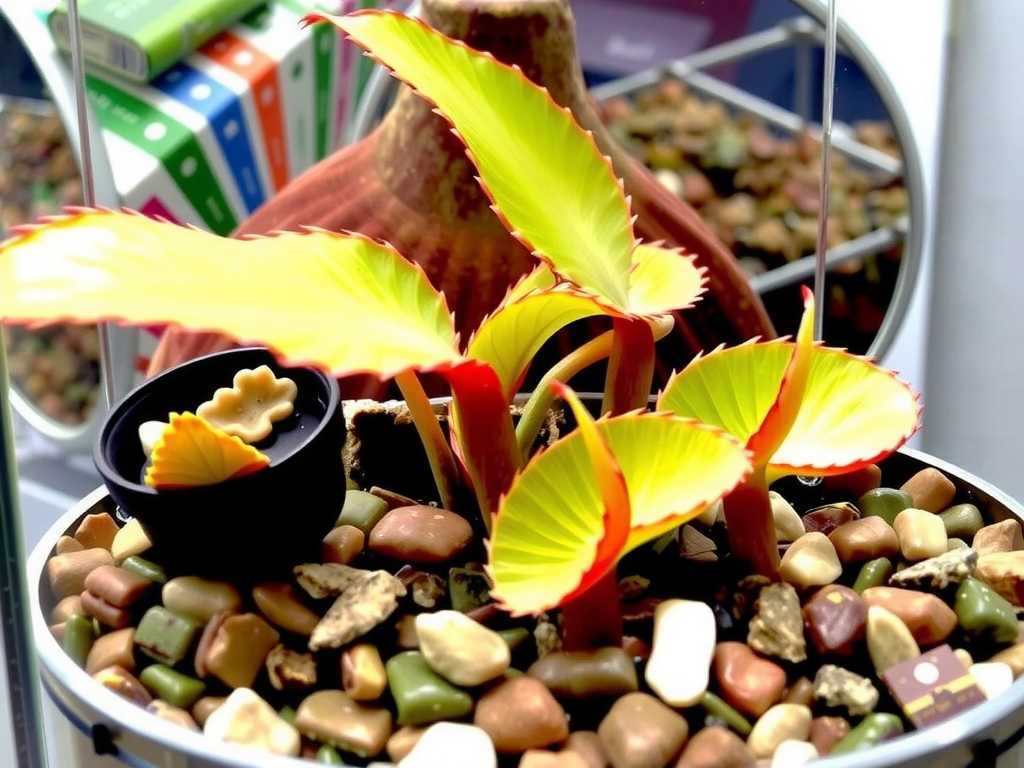
- The Solution – Artificial Boost: I moved the terrarium to a spot receiving direct morning sun but supplemented it with a full-spectrum LED grow light. I chose a bar-style light that could sit across the top of my aquarium-style tank, providing even coverage. I set a timer for 14 hours of light per day.
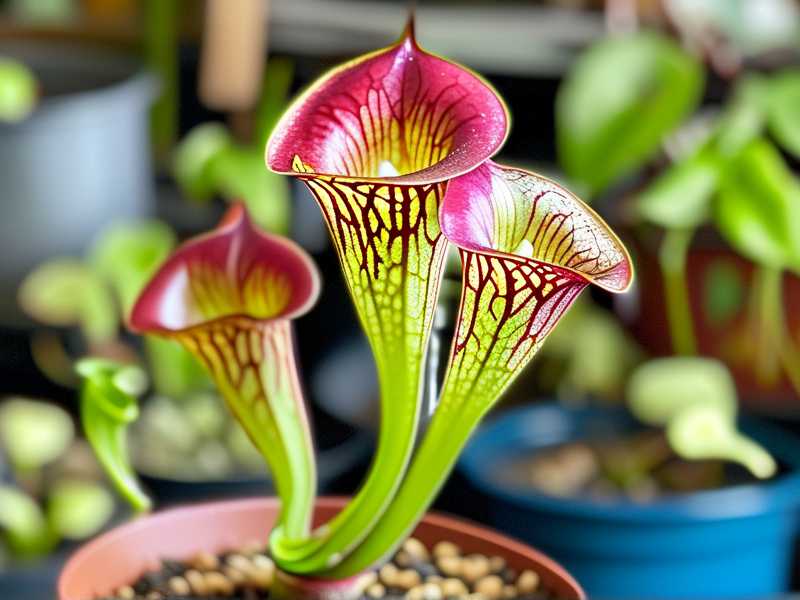
- Observing the Change: The difference within two weeks was stark. My Sarracenia flava began producing a new pitcher. This new growth was noticeably sturdier and started developing a richer yellow-green hue with more pronounced veining, a direct response to the increased Photosynthetically Active Radiation (PAR). The terrarium glass also stayed clearer of algae for longer, as the consistent light schedule reduced prolonged periods of warm, damp conditions that algae thrive on. Never assume a bright room is bright enough for a closed terrarium Sarracenia.
Tip 3: Mastering the Moisture and Ventilation Balance
This was my biggest hurdle. A completely sealed lid created 95%+ humidity, which was great for moisture but caused condensation to completely obscure the view and led to the first signs of mold on a decaying leaf.
- The Adjustable Ventilation Method: Instead of a solid lid, I crafted a hybrid cover. I used a pane of glass but placed small, stackable plastic risers (like those used for furniture) at the corners to create a tiny, consistent gap. This allowed for minimal, passive air exchange.
- Two Weeks of Fine-Tuning: I observed the condensation cycle daily. My target was for the glass to fog up lightly at night and clear by mid-morning. If it stayed completely clear, I knew the gap was too large and humidity was escaping. If it remained fully fogged, I reduced the gap. After about 10 days of minor adjustments, I found the sweet spot. The mold on the old leaf died back without spreading, and the pitchers remained plump and hydrated. This controlled airflow is the secret to preventing stagnation and disease in a permanent terrarium setup for pitcher plants.
Tip 4: Selecting the Right Varieties and Long-Term Care
Not all Sarracenia are created equal for a closed-system life. My tall, sun-loving Sarracenia leucophylla always seemed cramped and unhappy. I consulted resources from experienced growers and switched my focus to more compact, humidity-tolerant species and hybrids.
- My Top Picks for Terrariums: Sarracenia purpurea subsp. purpurea and its hybrids (like S. x mitchelliana) have been stellar performers. Their low-growing, rosette form and shorter pitchers adapt well to the space. I also had success with smaller Sarracenia psittacina (Parrot Pitcher Plant), whose unique, lobster-pot traps thrived in the constant humidity.
- Ongoing Maintenance Observations: Over the 14-day period, I did not water the substrate once, thanks to the efficient closed-loop water cycle. My only intervention was removing one completely brown, old pitcher to prevent it from becoming a mold source. I also noted that feeding was unnecessary; the terrarium attracted tiny gnats on its own, which the plants captured efficiently. For long-term health, I know I will need to simulate winter dormancy by moving the entire terrarium to a cooler, brighter location (like an unheated garage window) for 3-4 months, reducing the photoperiod from my lights.
Addressing Your Sarracenia Terrarium Questions
Can I keep my Sarracenia terrarium sealed forever? Not permanently. While my tips help create a stable closed system, periodic opening is healthy. I open mine for about 30 minutes every week to allow a complete air exchange, check for any issues, and remove any debris. This mimics natural breezes and prevents gas buildup.
What’s the biggest mistake to avoid? Using nutrient-rich soil or tap water. Sarracenia roots are adapted to nutrient-poor, acidic conditions. Fertilizers or minerals in potting mix or water will burn their roots and likely kill them. Always use mineral-free water (rain, distilled, or reverse osmosis) and the correct peat/perlite substrate.
Do I need to feed the plants inside the terrarium? No, you should not manually feed them. A healthy, balanced terrarium will attract small insects naturally, or the plants will recycle nutrients from captured prey. Over-feeding can cause pitchers to rot. They are adapted to catch their own food.
Creating a thriving Sarracenia terrarium is a deeply rewarding project. It’s a lesson in observation, patience, and replicating a slice of an ecosystem. By focusing on a deep, draining substrate, providing intense and consistent light, engineering subtle ventilation, and choosing compact plant varieties, you can overcome the inherent challenges of a closed system. My two-week journey from soggy failure to vibrant, self-regulating bog garden proved that with the right approach, these magnificent carnivorous plants can not only survive but truly flourish under glass. The sight of a dewdrop forming at the lip of a newly opened pitcher, all within the miniature world you’ve curated, makes every bit of the effort worthwhile.