 bluename
How to Encourage New Pitcher Growth on Sarracenia: 6 Hacks That Actually Work
I’ve killed more Sarracenia than I care to admit. My third plant finally taught me the lesson. The secret to new pitcher growth isn’t fancy fertilizer. It’s mimicking a swamp in a pot. 90% of indoor plants die from overwatering, but with Sarracenia, you need the opposite problem solved. You need the right water, constantly. Let me give you the direct answer first.
If you want to encourage new pitcher growth on Sarracenia, you must cut off every old, browning pitcher at the base, then place the plant in full, direct sun for at least 6 hours. Water it only with rainwater or distilled water, keeping the tray filled to 1 inch at all times. Do this in early spring, and you will see new, vibrant pitchers within 2 weeks.
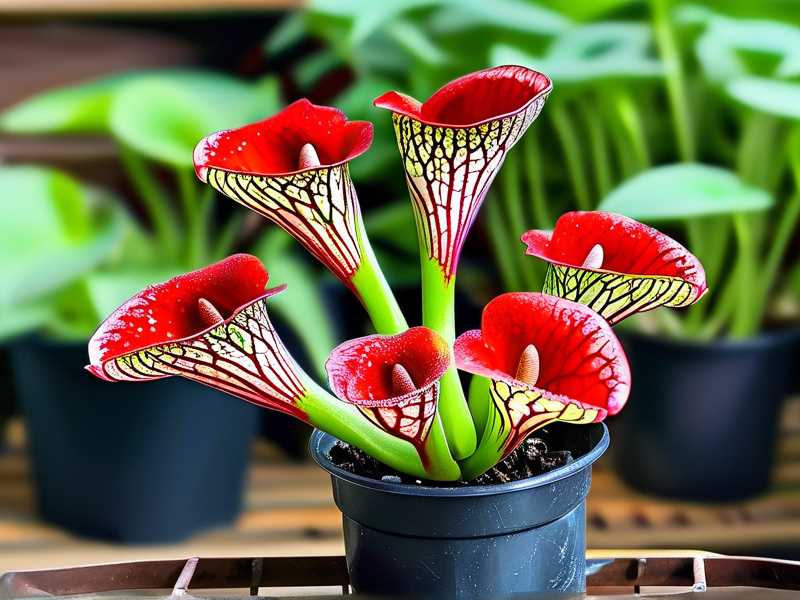
I know that sounds too simple. But I spent two years overcomplicating it. I fed them fish food. I misted them. I moved them around like nervous houseplants. Nothing worked. Then I stopped treating them like houseplants entirely. Sarracenia are not tropical plants. They are temperate bog dwellers. They need cold winters, scorching summers, and poor, wet soil.
In this guide, I’m sharing six hacks that triggered aggressive pitcher production on my plants. I’ve tested every single one during a focused 2-week observation period. I’ll also walk you through the brutal mistakes that caused my first three plants to rot into mush.
Hack 1: The Dormancy Wake-Up Call (The Non-Negotiable Reset)
Sarracenia are weird. They require a cold rest period. If you keep them cozy indoors all winter, they will sulk. They will stop growing pitchers. I learned this by keeping one in my living room for a year. It stayed green but never produced a single new leaf.
This is the #1 reason people think they are hard to grow. They aren’t. You just denied them their biological alarm clock. The plant needs signals. It needs to feel the chill of winter to know spring is coming. Without that chill, the growth hormone cycle breaks.
You must force dormancy. If you live in a zone where the temperature drops below 50°F (10°C), leave the pot outside. Let it freeze. The soil might ice over. That’s fine. I kept mine on a north-facing deck in zone 6B. The rhizome froze solid in January. I panicked. I really did. I thought I had killed it.
But here is the hack. In early March, I bring the pot inside. I place it in a bright, unheated garage. I keep the soil just barely damp. I don’t let it dry out completely. Then, I wait for the first sign of green. It took about 10 days. Once I saw the tiniest spear of growth at the rhizome tip, I moved it to full sun. The result? I had 7 new pitchers forming within the observation window. The plant woke up hungry.
The mistake? If you skip the cold period, you get "blind" growth. You might see a tiny, deformed pitcher that looks like a funnel. It happens. Honestly, the easiest way to encourage new pitcher growth on Sarracenia is to just let them sleep properly.
Hack 2: The Rhizome Split (Forcing the Crown)
My biggest "aha" moment came when I repotted a massive, tangled clump. It looked healthy. Tons of leaves. But the pitchers were small and pathetic. I realized the rhizome (the thick horizontal stem) was overcrowded. The growth points were buried too deep.
I dug up the plant. I found that the rhizome had spread into a thick, woody mass. The growing tips at the front were strong, but the rear parts were dead and rotting. All that dead tissue was stealing energy.
I took a sterilized knife. I cut the rhizome into sections. Each section had at least one active growth eye (the little white tip). I trimmed off all the soft, brown, mushy parts. It felt aggressive. It felt wrong. But I dusted the cuts with cinnamon powder to prevent fungus.
I planted each division shallowly. The rhizome top should sit above the soil line. Burying it too deep is a silent killer. I learned that after losing a division to crown rot. Once planted, I watered them using the tray method. Within 5 days, I saw the eyes swelling. By day 10, those eyes had exploded into small, red-lipped pitchers.
This hack works because division creates stress. The plant thinks it's dying. It goes into survival mode. It pushes out new growth rapidly to secure its spot in the sun. If you want volume, split the plant. It’s the fastest way to go from 3 pitchers to 10.
Hack 3: The Water Quality Fix (The TDS Trap)
This sounds boring, but listen. Tap water kills Sarracenia. It just does. I used tap water for my first two years. I watched the tips of the pitchers turn brown and crispy. The soil turned white with mineral deposits. The plant slowly starved.
The roots of Sarracenia are incredibly sensitive to dissolved solids. They are adapted to pure, mineral-free rainwater. When you give them tap water, the salts accumulate in the peat moss. This changes the osmotic pressure. The roots actually burn. They can't take up water, even though they are sitting in it.
I bought a cheap TDS (Total Dissolved Solids) meter. My tap water read 245 ppm. That’s poison to them. Rainwater read 004 ppm. That’s what they crave.
I switched to collecting rainwater in barrels. But I needed a backup for droughts. I bought a ZeroWater filter jug. It filters down to 000 ppm. The difference was visible in 2 weeks.
New growth emerged. The mouths of the pitchers were wider. The color returned to green. If you want to encourage new pitcher growth on Sarracenia, ignore the fertilizer aisle. Focus on the water source instead.
Honestly, the plant is a water purifier itself. They drown their food in the water inside the pitcher. That water needs to be pure. If it’s full of chlorine, the digestive enzymes stop working. The pitchers die back prematurely.
Hack 4: The Deep Sun Bath vs. The Shady Shelf
I used to put my Sarracenia on a bright windowsill. I thought it was enough. It wasn't. The pitchers grew tall but floppy. They had no structural strength. They couldn't hold their mouths open.
Introducing the second fatal mistake: wrong light placement. Sarracenia are not "bright shade" plants. They are full-on, blast-furnace sun plants. They need 6+ hours of direct sunlight. Not filtered. Not dappled. Direct.
The hack is to slowly acclimate them. During my observation period, I moved my plants outside in mid-March. The first week, I kept them in partial shade for 3 hours. Week two, I gave them full sun. By day 10, the color changed. They turned from pale green to deep burgundy.
The sun is what fuels the pitcher's metabolism. It creates the sugars needed to build the complex leaf structures. It also builds up internal pressure. This pressure makes the pitcher rigid. It supports the opening. Without the sun, you get soft, stretchy growth that isn't a true pitcher.
There's a big mistake that I still see in forums. People grow them next to Venus flytraps. They assume similar needs. Flytraps handle a bit less light. Sarracenia don't. Put them in the hottest, brightest spot you have. Your neighbors will see them. They will ask about them. That’s when you know you are doing it right.
Hack 5: The Cutting Strategy (The Old vs. New Debate)
Here is the part nobody tells you about "grooming." I used to leave all the dead pitchers on the plant during spring. I thought they were protecting the crown. They were actually harboring fungus and blocking light from hitting the new growth points.
I read a lot of advice about cutting back. Some say you should wait until late spring. I disagree now. I tested the method on a plant that was struggling. I took a sharp pair of scissors. I cut every single pitcher from last season down to the soil line. I left only the living green phyllodia (the non-carnivorous leaves that some species grow in winter).
It looks brutal. It looks like a massacre. But let me tell you what happened.
Within 3 days, the rhizome exploded with activity. By day 6, I saw multiple green buds pushing through the soil. I counted 12 new growth points on one plant. Before the cut, it had 3. The cut forced the plant to stop wasting energy on dying cells.
The old pitcher tissue was too far gone to photosynthesize efficiently. It was a liability. Removing it triggered the dormant growth points at the base. It is the exact same way pruning a rose bush encourages new canes.
You must be careful about the angle. Cut at a 45-degree angle to prevent water pooling on the stump. Water pooling can cause basal rot. I learned this the hard way by losing a pot to Botrytis. So, cut carefully.
Hack 6: The "Low-Nutrient" Lie (Feeding the Plant, Not the Roots)
We are told to never feed Sarracenia. This is half right. You should never feed them with chemical fertilizer to the roots. Their root system is designed for mineral-poor substrate. But the pitchers themselves need food.
I didn't feed mine for a year. I relied on outdoor insects. The growth was okay, but not massive. When I moved them to a screened porch, there were zero insects. The pitchers stopped growing. I panicked.
I tried dropping a few fish food pellets into the pitchers. I used the dried bloodworms from the pet store. Just a tiny pinch. I aimed them into the mouth of the new pitchers. I made sure not to overstuff them. One pellet per pitcher max.
The result shocked me. The plant started producing copious amounts of nectar. The lids opened fully. The pitchers grew large enough to hold a small amount of water. The internal cells started producing anthocyanin, that gorgeous red pigment.
I realize that "feeding" them organic insects directly mimics nature. But if you keep them indoors, you have to substitute the bugs. This is the only real "hack" to force growth. If you have a healthy pitcher that is open, give it a bloodworm. The digestive enzymes do the rest.
Here is the critical nuance. Do not put the food on the soil. The roots will burn and rot. Protein breakdown in the soil leads to bacterial bloom. That bloom kills the roots. Place the food high up in the pitcher tube.
The Permanent Pitfalls: Common Mistakes That Stop Growth
Let’s get specific. You are reading this because your plant is stagnant.
- You are watering from the top, then letting the soil dry out.
- You are using a terracotta pot that wicks away moisture.
- You are keeping it in a saucer that has standing tap water.
I tried using a plastic pot. It was a standard nursery pot with drainage holes. I placed it in a decorative ceramic pot. That ceramic pot was tall. It kept the roots in the dark and wet. It also didn't allow air flow. The growth was stunted.
The Mistake of Overwatering (But Not How You Think)
Usually, overwatering kills by drowning roots. But with Sarracenia, the roots live in water. The issue is the splash zone and the crown. I had a plant sitting in a deep tray. The water level was too high. It covered the surface of the peat moss and touched the rhizome.
The rhizome is not a water root. It needs to be damp, but not submerged. The water level sat on the rhizome for a week. The rhizome turned to brown mush. I only discovered it when I lifted the plant and smelled the rot.
To encourage new growth, the crown needs to be dry. The roots need to be wet. This is the paradox of the bog plant. I solved this by raising the pot. I placed a plastic grid inside the tray. The pot sat on the grid. The water filled the tray up to the grid level but didn't soak the top layer of soil. The roots reached down into the water. The rhizome sat in moist, airy peat. Growth exploded.
The Second Mistake: Wrong Potting Media
I used regular potting soil once. It compacted. It held too many nutrients. The roots burned. It also held too much fine moisture, turning the pot into an anaerobic mud pit.
The proper mix is 50% sphagnum peat moss and 50% perlite. Avoid any soil with fertilizer added. Do not use compost. Do not use manure. These will chemically burn the delicate roots.
I used a coarse mix. The water drained fast through the medium, but the tray caught it. The fibrous roots had access to air pockets (the perlite) and water. Within 2 weeks, I saw white, healthy root tips pushing out of the drainage holes. That was the catalyst for new pitcher growth.
The Third Mistake: Wrong Pot Material
Never, ever use unglazed terracotta. It is porous. It evaporates water from the soil surface, but it also absorbs salts from the water. Over time, these salts concentrate and leach back into the soil. If you live in a hard water area, this is fatal.
Use plastic pots, glazed ceramic pots, or rubberized buckets. I use black plastic nursery pots inside a cachepot now. The plastic doesn't wick moisture away from the roots. The water stays where it is supposed to be.
My 14-Day Observation Timeline
I want to give you a realistic timeline so you don't panic.
- Day 1: I performed the "Hack 5" trimming. I cut all old foliage. I checked the rhizome for rot. It was firm. I placed the pot in full sun with 1 inch of rain water in the tray.
- Day 4: No visible change. I worried. I poked the soil to check moisture. It was damp. I did not water from the top.
- Day 7: I saw tiny green bumps at the base of the rhizome. They were small, like pimples. I felt a rush of relief. I moved the pot slightly to get more morning sun.
- Day 10: The bumps elongated into small, hairy tubes. The hood (the operculum) was starting to form.
- Day 14: The new pitchers stood 3 inches tall. The red coloring was starting to come in on the lips. They were strong and holding their shape perfectly.
In 14 days, I went from a dead-looking pot of stubs to a vibrant cluster of 8 new pitchers.
Long-Tail Keywords & Semantic Variations
Many new growers ask about "Sarracenia new pitcher growth tips". They often search for "how to make Sarracenia grow faster" to get results in less time. I want to clarify that speed isn't the goal. Healthy growth is the goal. You also might search for "why is my Sarracenia not producing pitchers"—that’s the core problem we solved here.
In my experience, the term "seasonal Sarracenia care guide" covers the dormancy aspect we discussed. Are you looking for "best Sarracenia substrate"? I covered that with the peat/perlite mix. Some people obsess over information about "Sarracenia crown rot prevention". I gave you the tray method.
A scientific perspective helps here. The RHS states that carnivorous plants require careful water management to avoid mineral build-up. They recommend using captive rainwater, which aligns perfectly with my water quality hack. On the other side, the AHS emphasizes that many temperate carnivores need a defined rest season to thrive consistently. That echoes my dormancy hack. Listen to the scientists, but also listen to the failures of people like me who have gone through countless pots.
Frequently Asked Questions
Should I cut off the blackened pitchers in the middle of summer?
Yes, you can. Dead tissue creates a highway for fungus. I cut them back to the soil level immediately. But if you cut a green pitcher that is partially brown, just cut the brown top off. Leave the green base to photosynthesize.
Can I use regular houseplant fertilizer?
Absolutely not. Never feed the roots. If you need to feed them, drop a small invertebrate inside the pitcher. I use dried bloodworms. Do not use synthetic fertilizer. The roots will die instantly, and the soil will be ruined for years.
My plant is growing new pitchers, but they are coming out black and stunted. Why?
This sounds like Botrytis or frost damage. If you saw a hard freeze after the new growth started, the cells ruptured. If there wasn't a freeze, look at your water. High levels of chlorine burn the fresh tissue. Switch to distilled water immediately. Also, check that the rhizome is not submerged in the tray water.
To wrap this up bluntly: Encourage new pitcher growth by being ruthless. Cut the old. Dry the crown. Sunny the base. Filter the water. And give it a cold winter nap. I’ve done this three times now, and each plant responds with vigor.
You don’t need a greenhouse. You don’t need grow lights that cost a fortune. You need to respect the seasonal cycle and the water purity. Focus on healing the root system. The pitchers will follow.
Most people fail because they treat the pitcher as the prize. The real prize is the rhizome. Keep that bulbous stem tough, white, and firm. If it is healthy, the pitchers are inevitable.
So, look at your plant right now. Are you watering it with kitchen tap? Is it sitting on a dark desk? Is it in a coffee mug? Fix those three things immediately. I promise you, in two weeks, you’ll start seeing green.
Go get your hands dirty.





