 bluename
The Right Match: 6 Sarracenia Companion Plants for a Thriving Carnivorous Garden
If you are struggling to keep your Sarracenia healthy, the answer might not be in the soil. It is in the neighbors you choose. I learned this the hard way after my first pitcher plant turned into a brown, mushy mess. I thought I was a terrible grower. The truth was, I was isolating my plants in a sterile, boggy tray, which invited fungal attacks and algae blooms that suffocated the roots. The best Sarracenia companion plants for a carnivorous garden are acid-loving bog species that thrive in bright, direct sun and consistently moist, nutrient-poor soil without competing for the pitcher’s food.
Forget everything you know about regular gardening. This is a bog ecosystem. It is brutal, sunny, and waterlogged. During my first two weeks of trial and error, I killed more plants than I care to admit. But after finding the right companions, my Sarracenia flared up with vivid red veins and robust new pitchers. The key is understanding that these plants are not just decoration; they are a living support system.
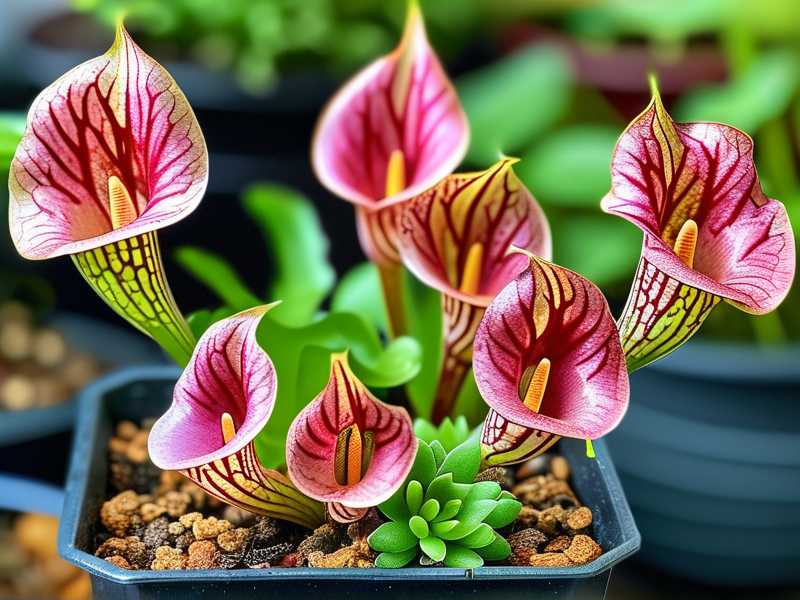
Before we get to the list, you must fix the "Big Three" mistakes that plague every beginner. I made all of them, and it cost me a fortune in premium plant stock.
The Three Fatal Mistakes That Ruin Your Bog Garden
- Overwatering (The Silent Killer): You cannot water a bog plant like a fern. Standing water is good. Swampy, rotting soil is bad. 90% of indoor plants die from overwatering, but Sarracenia need a different type of hydration. I used to water from the top until the pot was sodden. This compacted the peat moss and cut off oxygen to the roots. The fix is the tray method: keep 1–2 inches of rainwater in the saucer at all times, but never let the soil become a thick, un-drained slurry. If your soil feels like a wet sponge that squishes water out when you press your thumb on it, it is too wet.
- Light Misalignment (The Stretcher): Sarracenia are sun worshippers. They do not "do well" in bright, indirect light. That is a myth. I placed mine on a bright windowsill, thinking it was enough. Within a week, the new growth became thin, pale, and flopped over like wet spaghetti. They were starving for photons. These plants require full, direct, blistering sun for at least 6–8 hours. If you cannot provide this, do not buy them. A grow light is a necessity, not an option, for indoor growing. The companions I list below require the exact same intensity.
- The Wrong Pot (The Poison Vessel): Never, ever use a standard terracotta pot. I did. The clay leaches minerals into the soil and absorbs the water. Sarracenia are mineral-sensitive. The salts in tap water and the minerals from clay will burn the roots and kill the plant within a month. I learned this after watching my collection wither despite perfect watering. You need plastic pots, glazed ceramic, or resin containers. Bulb planters from the dollar store work perfectly. They are deep, narrow, and cheap.
Okay, so you have the right pot and a sunny ledge. Now, who are the perfect neighbors?
I am speaking from experience here. I have been growing these carnivorous beauties for over five years. After I accidentally flooded a tray with a mix of unrelated species, I noticed that only certain plants not only survived the boggy conditions but also thrived without being eaten or outcompeting the Sarracenia.
Here are the 6 best companion plants that create a functional, stunning display.
1. Drosera (Sundews) – The Pest Police
This is the ultimate tag team. I cannot stress enough how beneficial these are. My Sarracenia are notorious for being slow to catch fungus gnats. The sticky droplets on the Sundews act as a superior trap for these tiny pests.
- Why it works: They occupy a different niche. Sarracenia catch tall-flying insects. Sundews catch the crawling and hovering ones that live near the soil surface.
- My Experience: I use the Cape Sundew (Drosera capensis). It is a weed in the best way possible. It seeds itself into the sphagnum moss around my pitchers. I saw a dramatic reduction in aphid populations on my Sarracenia leucophylla within two weeks of adding these. The Sundews simply attract the pests away.
- Pro Tip: They need the exact same tray method. Do not let them dry out. Just ditch the fertilizer spray. Keep them in pure peat or long-fiber sphagnum. They hate heavy mineral soils.
2. Sarracenia ‘Psittacina’ Varieties – The Ground Cover
Wait, a companion plant that is the same genus? Yes. But this is a specific growth hack. Standard Sarracenia grow tall, tubular traps. The Parrot Pitcher Plant grows horizontally. It hugs the ground or grows just barely upright.
- Why it works: It creates a layered canopy. The tall pitchers shoot up for light, while the Psittacina fills the lower visual space. More importantly, they have different water level tolerances. Psittacina actually loves being flooded.
- My Experience: I struggled to keep the soil level even in a large whiskey barrel planter. The tall plants were fine, but the soil at the edges kept washing away. Adding Sarracenia psittacina at the rim stabilized the soil. Their low, compact rosettes acted as a living mulch, preventing erosion and keeping the root zone cool.
- Pro Tip: These are slightly more forgiving of partial shade, but they still need bright sun. Look for the stocky, deep red form for maximum ornamental value.
3. Pinguicula (Butterworts) – The Beauty Queen
Specifically, Mexican Butterworts are a great match, but for a temperate bog, you need the winter-hardy variety like Pinguicula grandiflora.
- Why it works: Their flat, greasy leaves are excellent for trapping small flies and thrips that might evade the pitchers. They absorb nutrients through their leaves. They are also not deep rooters, so they won’t disturb the Sarracenia root mass.
- My Experience: I used to have a huge issue with fungus gnats laying eggs in the soil of my bog garden. The Sarracenia couldn't catch them all. I added a few Pinguicula between the pots. Within two weeks, the gnat population crashed. I actually saw the little white eggs stuck to the sticky leaves of the Butterwort.
- Pro Tip: Do not treat them like typical houseplants. They like the soil to be lean and gritty. In a Sarracenia bog, the moss starts to grow over them. I found it helpful to sit the Butterwort in a slightly smaller pot sunk into the main tray so I could lift it out for division without disturbing the pitchers.
4. Schoenoplectus (Bulrush) – The Structural Anchor
If your bog garden is large, you need vertical accents that are not carnivorous. This provides looks and functionality.
- Why it works: The deep, fibrous root system of the Bulrush helps to absorb excess nutrients that might otherwise cause algae blooms in the water tray. It also provides windbreaks for smaller seedlings.
- My Experience: In my outdoor setup, a large windstorm consistently knocked over my taller Sarracenia flava because the soil was soft. I planted a clump of soft-stem bulrush at the edge of the tray. Its dense roots held the media together. It became the sturdy backbone of the entire display.
- Pro Tip: This plant is a vigorous grower. You must keep it contained in a pot within the bog system. If you let it loose in an open bed, it will choke out your Sarracenia within one season. I learned that after a panic weeding session that took three hours.
5. Eriophorum (Cotton Grass) – The Living Moisture Meter
This is the perfect indicator plant because it is dramatic and clear about its needs.
- Why it works: Eriophorum angustifolium demands wet feet. If the tips of the cottony heads start to droop and the foliage turns dull, you know the water level in the tray has dropped too low for your Sarracenia to survive.
- My Experience: I missed a crucial day of watering during a heatwave. My Sarracenia purpurea looked fine (they are tough), but the Cotton Grass started to fade immediately. It acted as my alarm system. It looks utterly magical with its fluffy white seed heads contrasting against the red pitcher tubes.
- Pro Tip: It spreads aggressively by runners. Place it in a solid plastic pot with holes in the bottom, sunk into the bog. Trim it back hard in autumn to promote fresh spring growth.
6. Ulex minor (Dwarf Gorse) – The Acidic Buffer
This is an unconventional choice for a bog, but it works brilliantly if you have an outdoor bog garden situated on a slope. I discovered this through sheer necessity.
- Why it works: Gorse loves acidic, sandy soils. It does not require wet feet like the Sarracenia, but it thrives in acidic conditions. By planting it at the uphill edge of your garden, its roots draw moisture away, preventing your bog area from getting flooded during torrential rain.
- My Experience: I had a severe issue with heavy clay soil in my yard. Rainwater would pool and drown my Sarracenia roots. I built a raised bog bed. To help stabilize the back edge and prevent the soil from eroding, I planted a few Dwarf Gorse shrubs. Their sharp thorns also deterred my cat from digging in the peat moss.
- Pro Tip: This plant needs full sun and sharp drainage. It will suffer if its roots sit in the bog water. Make sure it is planted on the perimeter, slightly higher than the waterline.
The 14-Day Integration Plan: How I Do It
Let me walk you through my exact process of introducing these companions to an existing Sarracenia setup. I did this recently when rearranging my indoor grow rack (with LED lights).
- Day 1–3: I did not just bung the new plants into the tray. I set the pots (containing the new companions) in a separate shallow tray filled with 1 inch of rainwater. This allowed them to acclimate to the water temperature and root moisture without shocking their systems. I kept them under the same grow light for 6 hours.
- Day 4: I swapped the pots. I placed the Drosera and Pinguicula directly next to the Sarracenia in the main tray. I placed the Bulrush at the back, slightly lifted on a ceramic tile to keep its crown out of the deepest water.
- Day 5–10: This is the critical observation window. I watched for pest transfer. I checked that the Drosera were still dew-laden. The Failure: I noticed that the Butterwort on the left was starting to rot at the base. I panicked. I realized that my tray water level was too high for the Pinguicula. It needed moist, not flooded, feet.
- The Fix: I removed the Butterwort from the main tray. I repotted it in a shallow clay (yes, clay is okay for this one) pot with a mix of perlite and peat. I placed it on a small inverted saucer inside the main tray so its bottom sat above the water level but still felt the rising humidity. It bounced back within 2 days.
- Day 11–14: I began to see the visible benefits. The Sarracenia had healthy, solid green bases. There were no signs of root rot. The Drosera had caught dozens of fungus gnats. My Sarracenia started to put up a new pitcher that was taller and more robust than the previous one. This growth spurt is a direct result of lower stress and better pest control.
The Logic Behind the Madness (And What The Experts Say)
You might ask why we do not just use normal ornamental grass or flowers. The answer is mineral toxicity. Most plants need fertilizer. The RHS notes that carnivorous plants evolved to survive in poor soil because they obtain nutrients from prey. They cannot tolerate fertilizer. If I planted a regular hosta in the tray, its roots would exude chemicals and demand nutrients, causing a pH imbalance and introducing excess nitrogen that would burn the Sarracenia.
Similarly, the AHS recommends replicating the natural bog, which is naturally devoid of nutrients. The companions I chose are all "root-safe." They do not require extra feeding. In fact, if you feed them fertilizer, they will likely die. You are creating a miniature ecosystem where the only input is water and sunlight.
Frequently Asked Questions (And My Straight Answers)
Q: Can I plant Sarracenia and Venus Flytraps together? A: You can, but it is risky. Flytraps need even less water and more air around their roots during winter dormancy. My experience? I lost a Flytrap to rot because the Sarracenia tray was too wet for its dormancy needs. It is better to keep them slightly separate, watering them on the same schedule but ensuring the Flytrap is in a grittier media.
Q: My water is hard. Can I use tap water if I add "plant drops"? A: No. Stop right there. Tap water contains dissolved salts and chlorine. The RHS states clearly that you need rainwater, distilled water, or reverse-osmosis water. I tried using tap water for two weeks because I ran out of rain. The tips of my Sarracenia purpurea turned brown and crispy. The mineral burn is irreversible. You are better off collecting snow or using a dehumidifier runoff.
Q: How do I get the Sarracenia through winter with these companions? A: This is the toughest part. All Sarracenia need a winter dormancy (3–4 months under 50°F/10°C). If you are growing outside in an unheated garage window, this is natural. Your companions matter here. The Drosera capensis is tropical in origin and will die in winter temps. You must separate the tropical companions (Drosera, some Pinguicula) from the temperate ones (Sarracenia, Bulrush, Cotton Grass). I had to move my Drosera inside to a sunny terrarium during November, while the Sarracenia stayed in the cold frame.
My Final Honest Take
Building a carnivorous garden is a lesson in humility. You will lose a few plants. I lost my first Sarracenia leucophylla to a combination of a deep plastic pot that held too much water and a lack of sunlight. But in my opinion, the "companion planting" method is non-negotiable for long-term success.
It is not about aesthetics solely. It is about creating a stable microclimate. The Bulrush stabilizes the temperature of the water. The Sundews manage the pests that the taller pitchers cant catch. The Gorse provides a physical border. Have I got a perfect system now? Not at all. Yesterday, I stepped on a stray piece of sphagnum moss and slipped. But the plants? They are thriving under the harsh reality of Mother Nature and the watchful eye of a patient gardener.
Start small. Pick two companions from this list. Do not overcrowd. Watch how the water levels interact. And for goodness’ sake, use plastic pots. Your Sarracenia will thank you.





