bluename
 How to Fix Sarracenia Water Quality Problems: 5 Water Treatment Tricks
Is your Sarracenia looking a little worse for wear? Are the pitchers turning brown, growth seems stunted, or that vibrant, healthy sheen is just missing? More often than not, the culprit isn't the soil, sunlight, or fertilizer—it's the water. Sarracenia, or North American pitcher plants, are incredibly sensitive to the minerals and chemicals commonly found in tap water. Using the wrong water is the single most common mistake growers make, leading to a slow decline in plant health. This guide is dedicated to solving that exact problem. We will walk you through five effective water treatment tricks to provide the pristine, low-mineral water your carnivorous plants crave, ensuring they thrive for years to come.
Understanding the "Why": What Makes Bad Water for Sarracenia?
Before we dive into the solutions, it's crucial to understand the enemy. Sarracenia evolved in nutrient-poor bogs and seepage slopes. Their roots are adapted to absorb water that is essentially "pure," with very low levels of dissolved salts and minerals, known as Total Dissolved Solids (TDS).
Tap water, even if it's safe for humans, is usually terrible for these plants. It often contains chlorine, chloramines, fluoride, and high levels of calcium, magnesium, and other salts. These minerals accumulate in the potting medium over time, creating a toxic environment for the roots. This mineral buildup prevents the plant from absorbing water properly, leading to dehydration, nutrient lockout, and eventually, root burn and plant death. The goal of all our water treatment tricks is to remove or neutralize these harmful elements.
Trick 1: Harvesting and Using Rainwater (The Gold Standard)
For many growers, this is the ideal and most natural solution. Rainwater is naturally soft, low in minerals, and free of the treatments found in municipal water supplies.
Setting Up a Simple Rain Barrel System: You don't need a complex setup. A clean food-grade barrel or a dedicated rain collector placed under a downspout is sufficient. Ensure it has a secure lid to prevent mosquitoes and debris. A spigot at the bottom makes filling your watering can easy. Important Considerations: The main catch with rainwater is availability and storage. During dry spells, you need a backup method. Also, be mindful of air pollution; if you live in an area with heavy industrial pollution, the rainwater quality might be compromised. Always use the water within a few months to prevent stagnation and algal growth.
Trick 2: The Reliable Workhorse – Reverse Osmosis (RO) Water
If rainwater isn't practical, Reverse Osmosis water is the next best thing. A home RO system is an excellent investment for the serious carnivorous plant enthusiast. It forces water through a semi-permeable membrane, filtering out 95-99% of dissolved solids, resulting in water nearly as pure as distilled.
Choosing and Maintaining an RO System: For personal plant use, a small under-sink or countertop unit is perfect. Remember that RO systems produce wastewater, so they are less efficient in terms of water use. Regular maintenance, like changing pre-filters and the membrane as recommended, is essential to keep water purity high. You can easily test the output with a TDS meter; you're aiming for a reading below 50 ppm (parts per million), and ideally under 10 ppm for Sarracenia.
Trick 3: The Convenience of Distilled Water
Distilled water is widely available at grocery stores and pharmacies and is a perfectly safe, immediate solution. The distillation process involves boiling water and condensing the steam, leaving minerals and impurities behind.
When to Use It: This is a fantastic option for those with a small collection of plants or as a temporary solution while setting up a rainwater or RO system. It's pure and reliable. The Drawback: Cost and plastic waste are the significant downsides. Buying enough distilled water for a large collection of thirsty Sarracenia, especially in summer, can become expensive and generate a lot of plastic jugs. For larger collections, one of the other methods becomes more economical and sustainable.
Trick 4: The Power of Filtration – ZeroWater® and Similar Pitchers
For growers with moderately hard tap water, a specialized filtration pitcher can be a good middle-ground solution. Standard carbon filter pitchers (like Brita) are NOT sufficient, as they primarily improve taste and odor but do not remove enough minerals.
How ZeroWater® Differs: Pitchers like ZeroWater® use a five-stage filter that includes an ion-exchange resin, similar to a water softener. This actively removes dissolved solids. These pitchers come with a TDS meter, allowing you to test your tap water and the filtered result. You can use it when the meter reads 006 or lower. Best Use Case: This trick is effective for small to medium collections where the tap water TDS isn't extremely high (e.g., under 300 ppm). Monitor the filter life closely with the TDS meter, as the resin depletes and will stop working effectively, requiring replacement.
Trick 5: The Flushing Technique – Managing Mineral Buildup
No matter how pure your water source is, a small amount of mineral can accumulate over a very long period. Proactively flushing the pot is a critical maintenance trick that complements your pure water regimen.
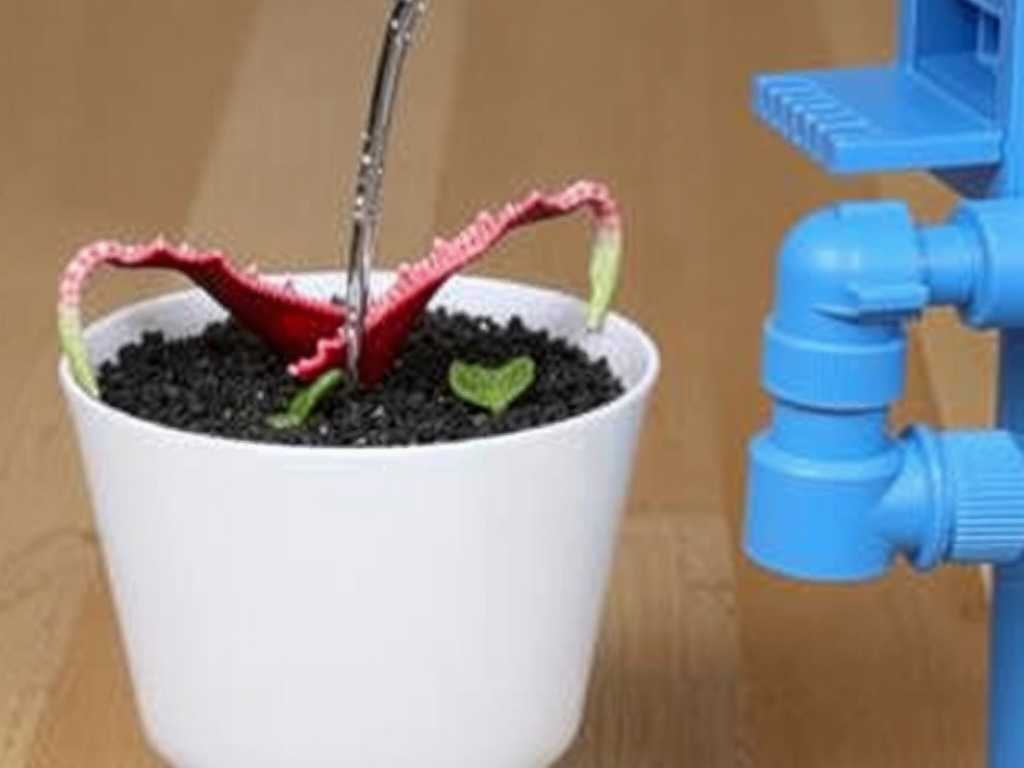
How to Perform a Pot Flush: Take your potted Sarracenia to a sink, basin, or outdoors. Slowly pour a large volume of your pure water (rain, RO, or distilled) through the soil. Use an amount equal to at least two to three times the volume of the pot. This helps dissolve any mild mineral salts that may be starting to concentrate and washes them out of the drainage holes. Doing this once or twice a year, perhaps during spring repotting and mid-summer, can significantly promote long-term root health.
Testing Your Water: The TDS Meter is Your Best Friend
You can't manage what you don't measure. A Total Dissolved Solids (TDS) meter is an inexpensive, essential tool for any Sarracenia grower. This small, pen-like device gives you a digital readout in ppm.
How to Use It: Simply turn it on and immerse the tip in your water sample. Test your tap water first—you might be shocked at the reading. Then, test your treated water (rain, RO, filtered). For healthy Sarracenia, you want your watering water to be below 50 ppm. As noted by renowned horticulturist and author Barry Rice in his book Growing Carnivorous Plants, "The single most important thing you can do for your carnivorous plants is to give them low-mineral water. A TDS meter takes the guesswork out of it."
What About "Sitting" Tap Water to Remove Chlorine? Letting tap water sit for 24-48 hours will allow chlorine (a gas) to evaporate. However, this does nothing to remove chloramines (which many municipalities now use), fluoride, or the dissolved mineral salts that cause long-term harm. While dechlorinating is a step, it is wholly insufficient for Sarracenia. You must address the mineral content.
Can I Use Softened Water from a Home Softener? Absolutely not. Water softeners work by exchanging calcium and magnesium ions for sodium ions. While this prevents scale, it results in water with very high sodium content, which is extremely toxic to Sarracenia roots. Softened water is often worse than untreated hard tap water for these plants.
My Plant Has Been in Bad Water. How Do I Save It? First, immediately switch to a pure water source (rain, RO, or distilled). If the plant is severely declined, the best course of action is to unpot it, gently rinse all the old soil from the roots, and repot it into fresh, appropriate medium (a mix of peat moss and perlite/sand). Place it in bright light and keep the soil consistently moist with pure water. Be patient; recovery can take a full growing season. The key is removing the source of toxicity and giving the roots a fresh start.
Providing the correct water is non-negotiable for thriving Sarracenia. By implementing one of these five water treatment tricks—harvesting rainwater, installing an RO system, using distilled water, employing a ZeroWater® filter, or diligently flushing your pots—you eliminate the primary threat to your plant's health. Pair this knowledge with a simple TDS meter to monitor your success. When you see your pitcher plants producing vibrant, robust pitchers full of digestive fluids, you'll know your attention to water quality has paid off. Consistent, pure water is the foundation upon which all other aspects of Sarracenia care are built.