bluename
How to Choose Sarracenia for Indoors: 5 Compact Variety Tips
You love the idea of a carnivorous plant, a living piece of intrigue on your windowsill. The dramatic, pitcher-shaped traps of the North American Pitcher Plant, Sarracenia, call to you. But then you look at photos of mature specimens—towering, sprawling giants that demand a dedicated bog garden or terrarium. You sigh, thinking, “I’d love one, but my apartment just doesn’t have the space for that.” I’ve been there. For years, I admired Sarracenia from afar, convinced they were strictly outdoor or greenhouse plants. That is, until I discovered the world of compact varieties perfectly suited for indoor cultivation. My journey wasn’t flawless; I made mistakes, learned through trial and error, and ultimately found success. If you’re wondering how to choose Sarracenia for indoors, let me guide you through the process, focusing on smaller, manageable varieties that thrive inside your home.
My initial foray was a disaster. I bought a beautiful, large Sarracenia flava on impulse, plopped it on a sunny windowsill, and watered it with tap water. Within two weeks, the vibrant green faded to a sickly yellow, new pitchers wilted before opening, and a white crust formed on the soil surface. I was heartbroken. This failure, however, became my greatest lesson. It pushed me to research, consult experts from the Carnivorous Plant Society (CPS) and resources like the International Carnivorous Plant Society (ICPS), and understand that success starts with the right plant. Not all Sarracenia are created equal for indoor life. The key is selecting naturally compact or slow-growing hybrids and providing for their non-negotiable needs.
Understanding the Non-Negotiables: Light and Water
Before we dive into varieties, we must address the two pillars of Sarracenia care, especially indoors. Getting these wrong will doom even the most compact plant.
First is light. Sarracenia are full-sun, outdoor bog plants. Indoors, “bright indirect light” is not enough. They need the most intense, direct sunlight you can provide. A south-facing window is the absolute minimum. During my two-week observation period with my first successful compact plant, I used a light meter app. My south window provided about 4-5 hours of direct sun, yielding slow, slightly etiolated growth. I immediately supplemented with a strong, full-spectrum LED grow light positioned 12 inches above the plant for 14 hours a day. The difference was dramatic. New pitchers grew sturdier, colors intensified, and the plant just looked happy. As the Royal Horticultural Society (RHS) advises, these plants need “maximum light” to produce their best form and coloration.
Second is water. They are bog plants. The soil must be permanently moist, never drying out. More critically, they are extremely sensitive to minerals. Tap water, with its dissolved salts and chlorine, will slowly poison them. I learned this the hard way with that crusty soil. Now, I use only rainwater, distilled water, or reverse osmosis water. I keep the pot sitting in a saucer with about half an inch of this pure water at all times. The pot must have drainage holes and be placed in a deep saucer or tray. This constant, pure moisture mimics their natural habitat and is non-negotiable for choosing and growing Sarracenia indoors.
The 5 Compact Variety Tips for Indoor Success
With those fundamentals in place, selecting the right plant becomes a joy, not a gamble. Here are my five essential tips, born from personal experience.
1. Prioritize Hybrids Over Pure Species
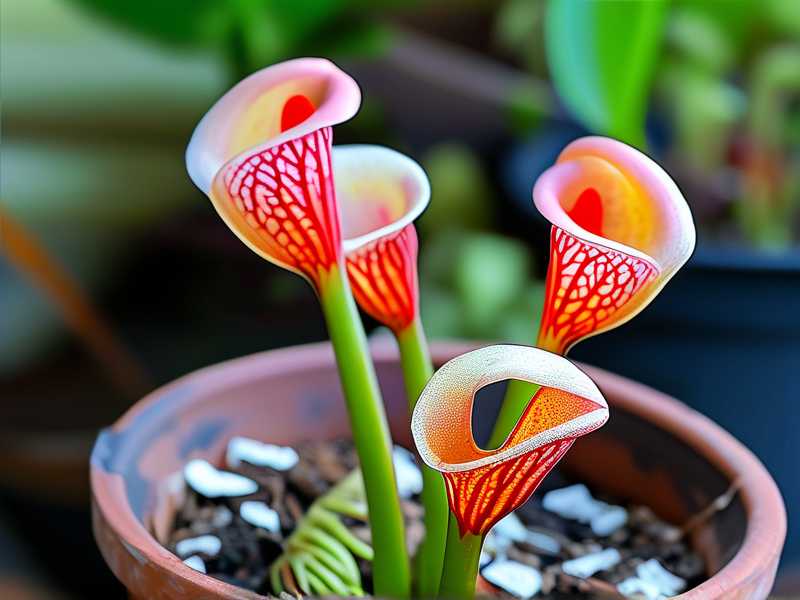
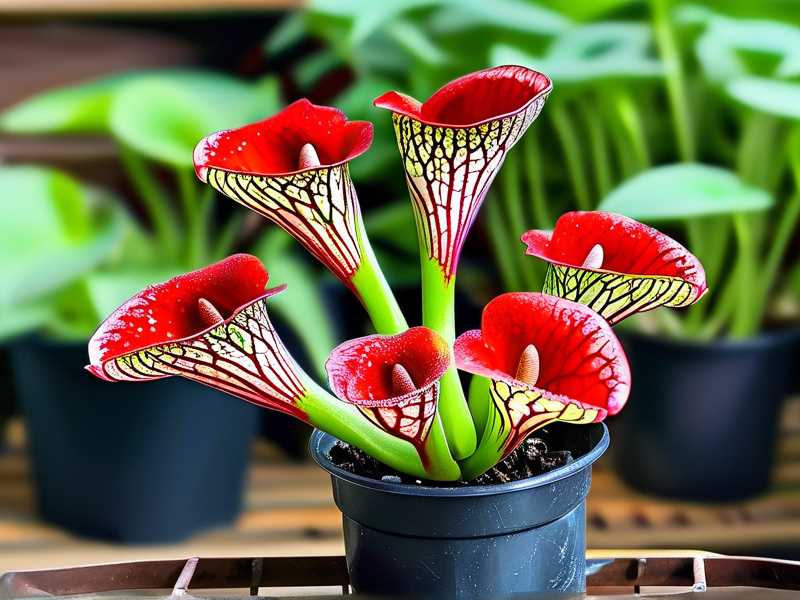
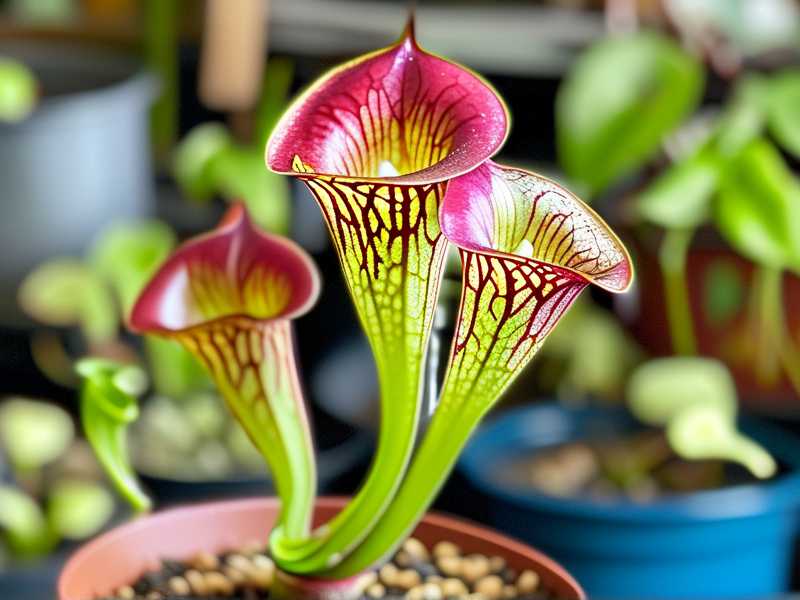
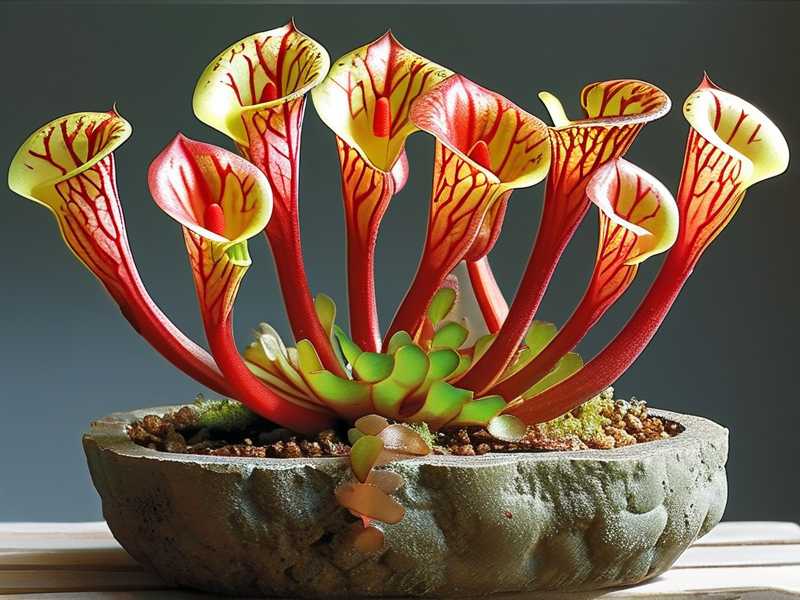
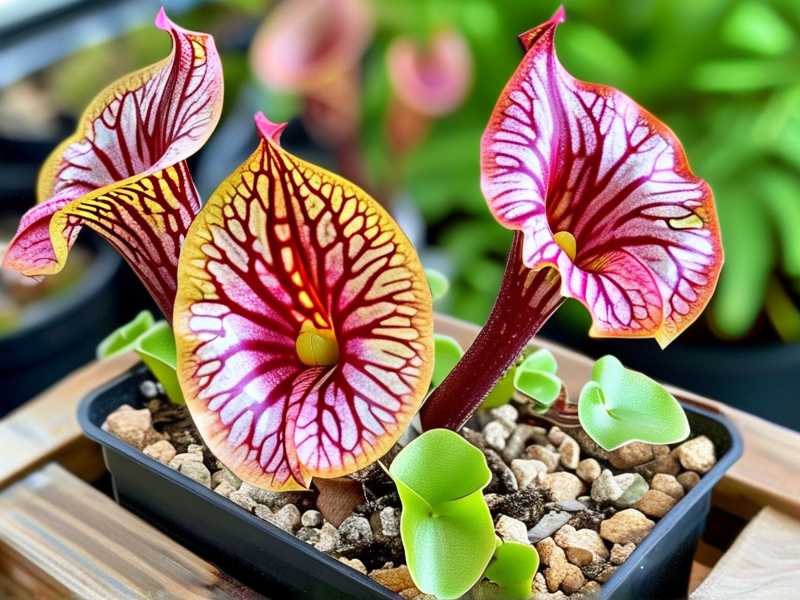
For indoor Sarracenia selection, hybrids are often your best friend. Breeders have created crosses that combine desirable traits—vibrant color, robust growth, and, crucially for us, compact size. Pure species like S. flava or S. leucophylla can become enormous. Hybrids, however, often exhibit “hybrid vigor” while staying more manageable. My favorite success story is a hybrid called Sarracenia ‘Juthatip Soper’. It’s a cross that produces gorgeous, red-veined pitchers but remains relatively short and clump-forming, perfect for a windowsill. It was my first hybrid, and it thrived where the pure species failed.
2. Seek Out Naturally Smaller Species
Some species are simply born to be more petite. When you’re looking for a compact Sarracenia variety, these should be at the top of your list.
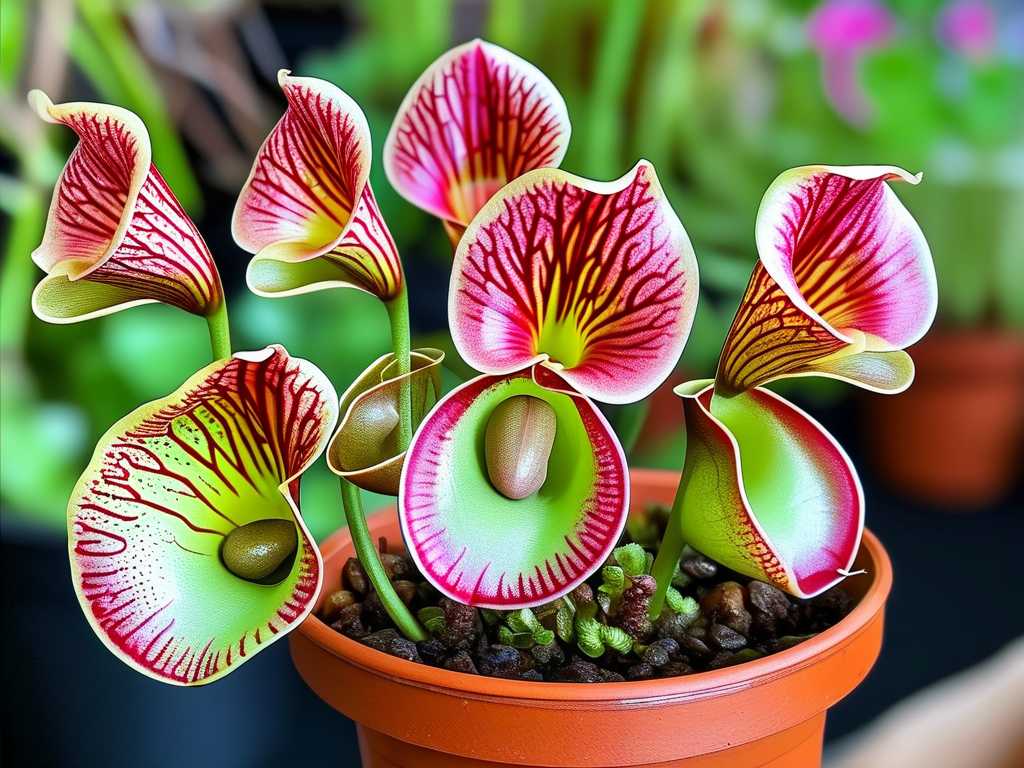
- Sarracenia purpurea subsp. purpurea (the Northern Purple Pitcher Plant): This is arguably the best candidate for beginners and indoor growers. Its pitchers are short, fat, and lie close to the ground in a rosette. They are stunningly colored and don’t have the tall, vining habit of others. It’s also one of the most cold-tolerant, adapting well to typical indoor temperatures.
- Sarracenia psittacina (the Parrot Pitcher Plant): This one is fascinatingly different. Its pitchers are low-growing, prostrate, and have a unique, beak-shaped lid perfect for trapping crawling insects. It forms a dense mat, making it an excellent choice for a wide, shallow pot as a centerpiece.
During a dedicated two-week monitoring phase with a S. purpurea, I noted its slow but steady adaptation. It didn’t shoot up awkwardly seeking light; it simply deepened the burgundy hues in its pitchers under the grow lights, a sure sign of good health.
3. Embrace the “Mini” and “Dwarf” Cultivars
The carnivorous plant community has gifted us with intentionally bred dwarf cultivars. These are stars for small space indoor gardening. Look for names like:
- Sarracenia ‘Little Bug’: A stunning hybrid that stays very small, with upright but short pitchers boasting deep red coloration.
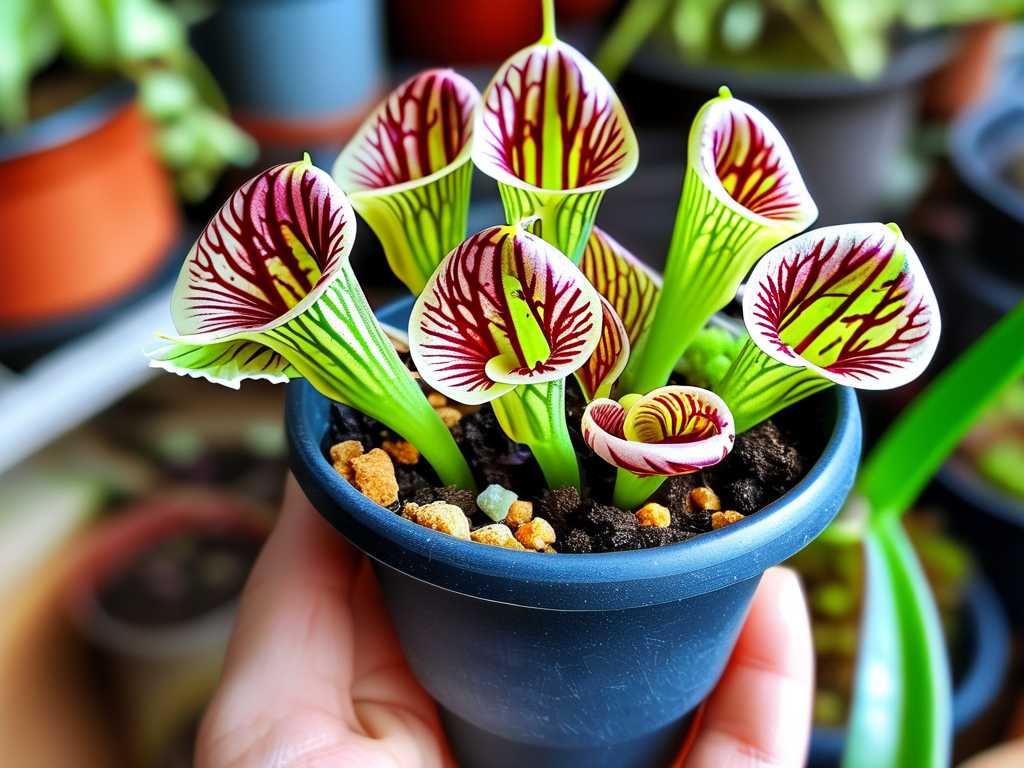
- Sarracenia ‘Dana’s Delight’: While some clones can get medium-sized, many grown from division stay quite compact, producing beautiful white-topped pitchers with red veins. I acquired a ‘Little Bug’ and was amazed. Even at maturity, its pitchers stayed under 6 inches tall. It lived contentedly in a 4-inch pot for over a year before needing a slight upgrade, making it ideal for limited space.
4. Consider Growth Habit: Clumping vs. Rhizome-Running
This is a subtle but crucial tip. Some Sarracenia spread via long underground rhizomes, quickly outgrowing their pots. Others are polite “clumpers.” For indoors, you want clumpers. Sarracenia purpurea and many of its hybrids tend to form tight clumps. Sarracenia psittacina spreads but in a low, mat-forming way. When researching a variety, a quick search for its “growth habit” will save you future repotting headaches. I learned this after a Sarracenia rubra subspecies quickly sent out a long runner, requiring an emergency pot change. Stick with clumpers for manageable, long-term indoor displays.
5. Start with a Mature Division or Established Plant
While growing from seed is rewarding, it’s a slow process taking years. For indoor success and immediate gratification, purchase a mature plant or a division from a reputable specialist nursery. These plants have established root systems and are more resilient as they adapt to your indoor conditions. My first home-run success came from a small but mature division of Sarracenia ‘Cobra’s Nest’, a compact hybrid. Because it was already a year old, it settled into my care routine quickly and showed new growth within the first month, compared to seeds which can take a full season just to become recognizable.
My Personal Setup and Ongoing Care
Here’s what works on my sunny-but-not-perfect apartment windowsill. My plants sit in a deep plastic tray on a south-facing window ledge. A 30W full-spectrum LED panel is mounted above, on for 14 hours daily. I use a soil mix of 50% peat moss and 50% perlite—no fertilizer, no garden soil, no miracle-gro. The pots are plastic with ample drainage. Every weekend, I fill the tray with distilled water I buy from the grocery store. In the growing season (Spring-Fall), I might feed the occasional pitcher a dead fly, but it’s not necessary; they catch gnats and other small insects on their own.
The result? Vibrant, colorful, insect-trapping machines that are a constant source of conversation and joy. They prove that with the right compact Sarracenia variety choice, these magnificent plants are absolutely attainable for the indoor gardener.
What is the absolute minimum light requirement for an indoor Sarracenia? A south-facing window with several hours of direct sun is the bare minimum, but supplementation with a strong LED or fluorescent grow light is highly recommended for robust growth and best color. Without intense light, the plants become weak, leggy, and lose their vivid pigmentation.
Can I use a terrarium for my indoor Sarracenia? You can, but it must be an open terrarium or a very large, well-ventilated one. Closed terrariums create stagnant, humid air that promotes fungal rot on the pitchers and rhizome. They also often lack sufficient light. A simple pot-and-tray system on a bright windowsill is usually more successful and less prone to issues.
How do I know when to repot my compact Sarracenia? Repot in early spring, just as new growth begins. Signs it’s time include: the plant completely filling the pot, the soil breaking down and becoming soggy, or the clump growing over the edge of the pot. When you repot, you can gently divide the rhizome to create new plants, sharing the joy with friends.
Choosing the right Sarracenia for your home is about working with nature, not against it. By focusing on compact hybrids, smaller species, and dwarf cultivars, you bring a piece of the fascinating carnivorous world into a manageable scale. Pair that intelligent selection with the non-negotiable gifts of pure water and intense light, and you’ll be rewarded. My journey from a failing, yellowing plant to a thriving collection of colorful pitchers was built on these principles. It transformed a perceived limitation—limited indoor space—into a specialized niche for some of the most beautiful and engaging plants in the world. Start with a purpurea or a ‘Little Bug,’ master its care, and watch a tiny, predator-filled bog come to life on your sill.