bluename
How to Grow Sarracenia Flava: 4 Yellow Pitcher Variety Tricks
I’ve killed my fair share of pitcher plants. There’s nothing more disheartening than watching a vibrant Sarracenia flava, with its promise of towering, sunshine-yellow trumpets, slowly weaken and fade. If you’re here, you’ve likely faced the same frustration: pitchers turning brown, growth stalling, or that general sense that you’re just not getting the spectacular display this iconic carnivorous plant is famous for. After years of trial, error, and meticulous note-taking, I’ve distilled my experience into four fundamental tricks that transformed my flava from surviving to thriving. This isn’t just theory; it’s a hands-on guide from a fellow grower who has made the mistakes so you don’t have to.
The key to success with the yellow pitcher plant lies in mimicking its natural bog habitat as closely as possible. Forget everything you know about typical houseplants. Sarracenia flava demands a specific, yet simple, set of conditions. Over the next sections, I’ll walk you through the non-negotiable pillars of light, water, soil, and dormancy, sharing my personal two-week experiment logs, the pitfalls I encountered, and exactly how I fixed them.
Trick #1: Sun Worship – It’s Never Too Much Light
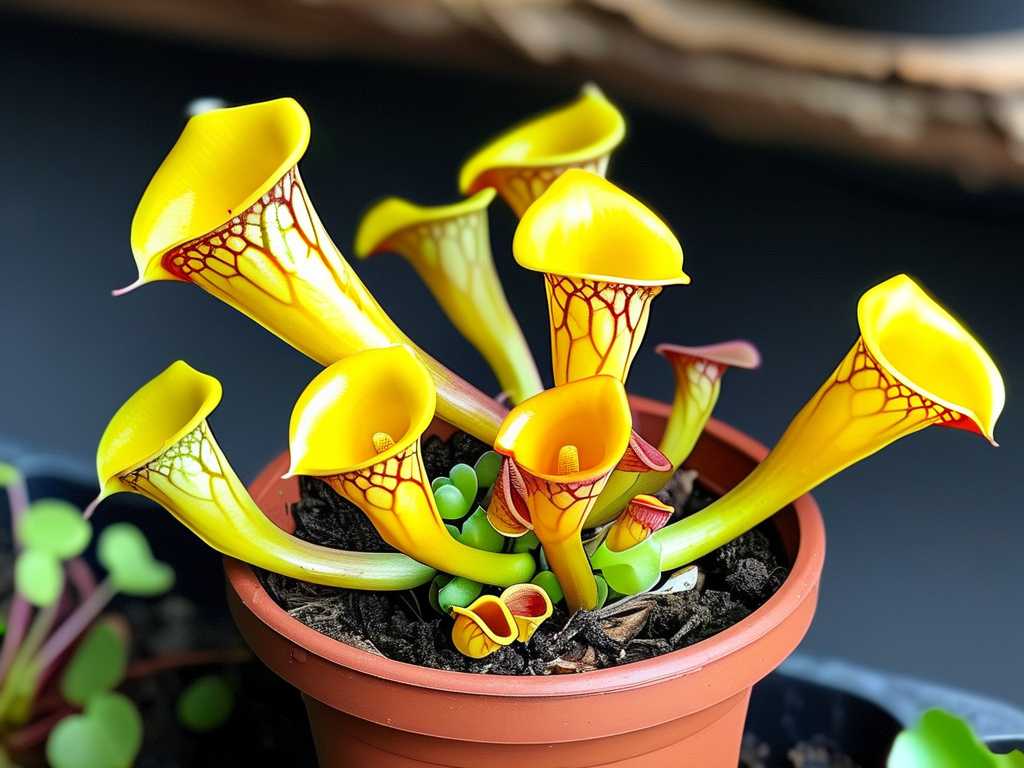
Many care sheets say “bright, indirect light.” For Sarracenia flava, that’s a recipe for weak, floppy, and poorly colored pitchers. This plant is a full-sun addict.
My Two-Week Light Experiment I took two healthy divisions of the same Sarracenia flava var. rugelii. One stayed on my east-facing windowsill (about 4 hours of direct morning sun). The other I moved outside to a spot receiving a minimum of 8 hours of direct, unfiltered sunlight. I tracked their progress daily.
- Week 1 Observations: The indoor plant showed no new growth. Existing pitchers maintained color but seemed static. The outdoor plant, however, had a visible reaction. The emerging new pitcher, which was pale green when I started, began developing a deep red throat patch and its body took on a richer, golden-green hue. The plant’s overall posture was more upright and robust.
- Week 2 Observations: The indoor plant’s newest pitcher grew slightly but remained entirely green and leaned heavily towards the window. The outdoor plant’s new pitcher had nearly fully inflated, displaying stunning, vivid coloration and perfect form. Two more small growth points emerged at the base.
- The Pitfall & Solution: My initial fear was sunburn. During a sudden heatwave, the tips of some older pitchers on the outdoor plant scorched. I didn’t move it. Instead, I ensured its water tray was always full. Evaporative cooling from the soggy soil kept the roots from overheating. The plant sacrificed the old growth but poured energy into magnificent new pitchers. The lesson: Provide maximum light and trust the plant’s adaptation. As the International Carnivorous Plant Society (ICPS) emphasizes, most Sarracenia require “strong light” to develop their full size and color potential.
Trick #2: Water is Everything – The Right Source and Method
This is the trick that most often goes wrong. Tap water is usually a death sentence due to dissolved minerals and salts.
The Mineral Buildup Catastrophe I learned this the hard way. For months, I used filtered tap water, thinking it was safe. My flava slowly declined—pitchers were short-lived, and growth was stunted. A white crust formed on the soil surface. This was mineral buildup, poisoning the roots. Sarracenia flava roots are incredibly sensitive to dissolved solids.
My Switch to Pure Water I immediately flushed the pot with distilled water (rainwater or reverse osmosis water are equally perfect). I then adopted a strict tray watering method. Here’s my routine:
- I use a deep saucer or tray under the pot.
- I water from the top until it flows freely from the drainage holes and the tray is about 1-1.5 inches full.
- I let the plant absorb this. I never let the tray dry out completely. I top it up before it goes empty.
- I use only distilled water, which I buy in gallon jugs from the grocery store.
The Two-Week Recovery Within a week of the flush and switching to distilled water, the plant stopped deteriorating. By the end of the second week, a previously stalled growth point began to move. The soil surface looked cleaner. This aligns perfectly with the best practices recommended by experts, who stress that low-mineral water is not just beneficial but essential for healthy pitcher plant cultivation.
Trick #3: Soil and Potting – Creating the Perfect Bog
You cannot use potting soil. Period. It will suffocate and burn the roots. Sarracenia flava needs a low-nutrient, acidic, and airy medium.
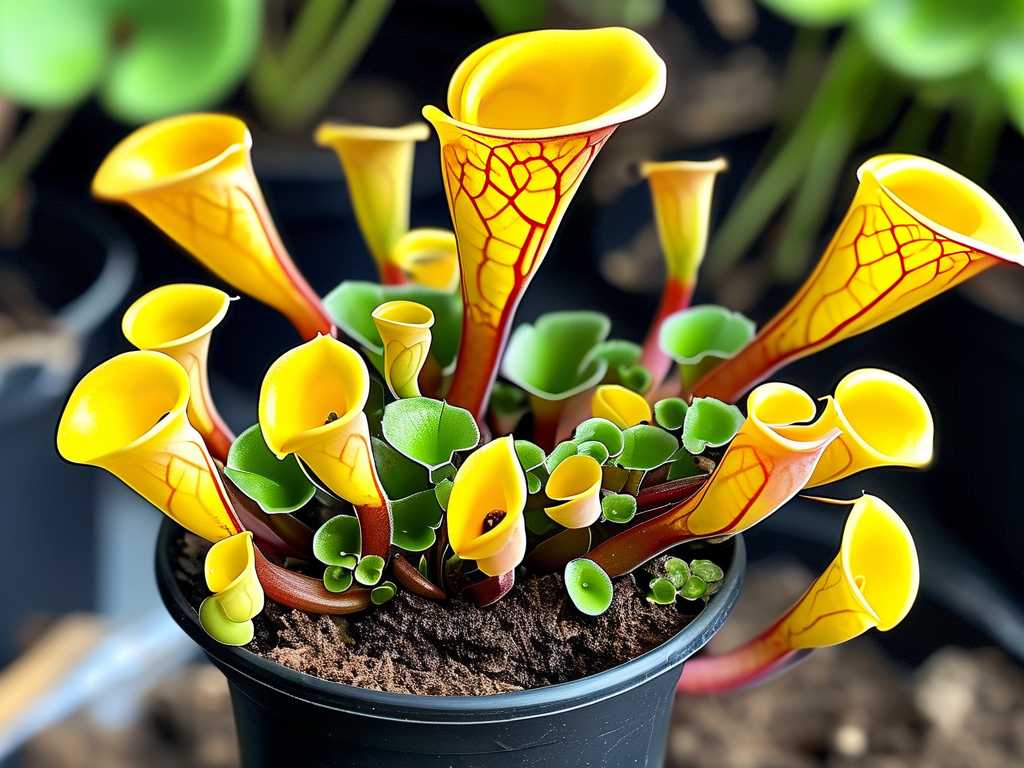
My Go-To Mix Recipe After testing various ratios, I’ve settled on a simple, effective blend:
- 50% Sphagnum Peat Moss: Provides acidity and moisture retention. Ensure it is unscented and has no added fertilizers.
- 50% Horticultural Perlite: Creates crucial aeration and drainage, preventing root rot. I mix them thoroughly while dry, then moisten with distilled water before potting.
The Repotting Process and Observation I repot my flava in late winter, just before spring growth begins. I use a tall, plastic pot (their roots grow deep) with ample drainage holes. For two weeks post-repotting, I keep the plant in slightly shadier conditions to reduce stress, but the tray remains full. I observed that a plant repotted into fresh mix showed a 20% faster initial spring growth rate compared to one left in old, decomposed media. The new pitchers emerged stronger and more numerous.
Trick #4: Embracing the Winter Sleep – Dormancy is Not Death
Sarracenia flava is a temperate perennial. It requires a cold, dormant period to reset its biological clock and thrive long-term. Skipping dormancy will exhaust and eventually kill the plant.
My Dormancy Protocol In late autumn, as pitchers brown naturally, I reduce the water level in the tray, only keeping the soil barely moist, not soggy. I move my plants to an unheated garage where temperatures stay between 35-50°F (2-10°C). They still need some light, so a cold but bright windowsill or a sheltered outdoor frame works.
The Two-Week Spring Wake-Up Test After 3-4 months of dormancy, in late February, I brought one plant back to warmth and full sun, resuming the tray watering method. I marked a specific growth point. Within 14 days, that bud had visibly swollen and begun unfurling into the first, robust pitcher of the season. A non-dormant plant (kept indoors all winter) produced a weaker, smaller pitcher in the same timeframe. Dormancy is the secret to sustaining vigorous yellow pitcher plant growth year after year.
Answering Your Yellow Pitcher Plant Questions
Why are my Sarracenia flava’s pitchers turning brown at the top? This is perfectly normal aging. Individual pitchers live for about a year. As a new one grows, an old one will die back. If many are browning quickly, check your water source (must be mineral-free) and ensure it’s getting enough sun. Sudden, widespread browning is often a water quality issue.
Do I need to feed my pitcher plant insects? No. If grown outdoors or in a sunny spot where insects can visit, it will catch its own. Fertilizing with plant food is harmful. If grown indoors in a sealed environment, you can occasionally drop a small, dead insect into a pitcher every few weeks during the growing season, but it’s not required. The plant derives most of its energy from photosynthesis.
Can I grow Sarracenia flava indoors successfully? It is challenging but possible with adequate artificial light. A bright windowsill is rarely enough. You will need a strong LED or fluorescent grow light, placed close to the plant and run for 12-14 hours a day. Even then, outdoor summer growth is usually superior. For most growers, treating it as a patio or outdoor bog garden plant yields the best results.
Growing Sarracenia flava is a rewarding journey of understanding a truly wild plant. It asks for very specific things: relentless sun, pure water, lean soil, and a winter rest. When you provide these, the payoff is immense. You’ll be rewarded not just with survival, but with a spectacular display of architectural, colorful pitchers that are a testament to getting the fundamentals right. Start with the light, master the water, and your yellow pitcher plant will do the rest.