 bluename
How to Identify Sarracenia Varieties: 6 Key Characteristics Tips
I remember standing in a nursery, utterly bewildered. Before me was a sea of pitcher plants, all labeled simply as “Sarracenia.” Some were tall and trumpet-like, others were low and bulbous, and their colors ranged from vibrant green to deep, blood-red veining. I wanted to collect them all, but how could I tell them apart? If you've ever felt that same confusion, staring at what seems like an endless array of similar-looking carnivorous plants, you're not alone. Identifying the exact species and even hybrids of Sarracenia is a common hurdle for beginners and seasoned enthusiasts alike. Without knowing what you have, providing the right care becomes a guessing game. After years of trial, error, and meticulous observation, I've distilled the process down to six key characteristics. I recently applied this system to a batch of new, unlabeled plants over a focused two-week period, and it transformed my ability to understand and care for my collection.
Let’s dive into the six pillars of Sarracenia identification.
Observing the Pitcher Shape and Structure
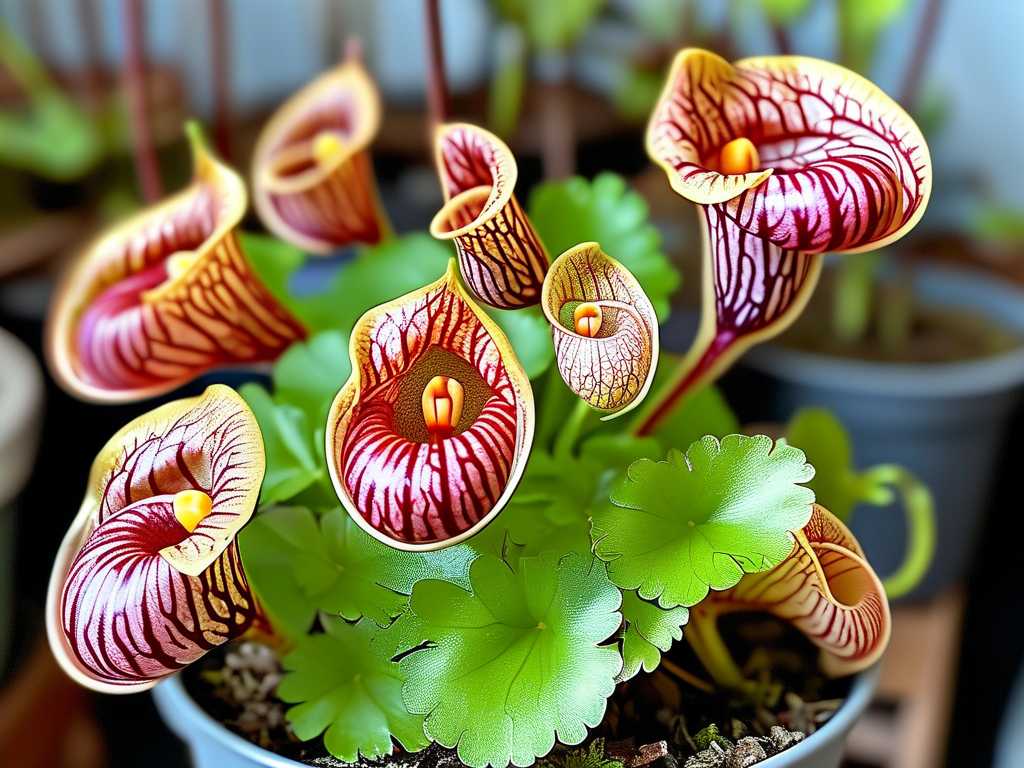
This is your starting point, the most immediate clue. Sarracenia pitchers are not all created equal; their form is a direct response to their evolutionary niche. I like to categorize them into three broad silhouettes.
First, the upright trumpet types. Sarracenia flava is the classic example here. Its pitchers are tall, slender, and elegant, forming a straight vertical tube with a prominent, often undulating hood that acts like an umbrella to prevent dilution from rainwater. Compare this to Sarracenia leucophylla, which also has tall pitchers, but they tend to be more cylindrical and topped with an expansive, white-topped hood that seems to glow.
Second, we have the low-growing or decumbent forms. Sarracenia purpurea is unmistakable. Its pitchers are short, stocky, and lie almost prostrate on the ground. They are designed to hold rainwater, creating a digestive soup. Sarracenia psittacina, the parrot pitcher plant, takes this further with pitchers that crawl along the substrate, their hoods forming a distinctive, beak-like dome that traps insects in a lobster-pot style.
Third, watch for the intermediate or curved shapes. Sarracenia rubra subsp. gulfensis often exhibits a graceful, slightly leaning pitcher. The key is to look at the overall architecture. Is it a ground-hugging rosette (purpurea), a cluster of tall sentinels (flava, leucophylla), or something in between? During my two-week observation, I initially mislabeled a Sarracenia rosea as a purpurea because of its low growth. The pitfall was not looking closely enough at the hood shape and the pitcher’s thickness. The solution was to photograph each plant daily from the same angle, which revealed subtle differences in posture and curvature that weren't obvious at a single glance.
Decoding Color Patterns and Venation
Color is more than just beauty; it's a coded language. The hues and patterns on a pitcher are critical for identification and indicate the plant's health and light exposure.
Background coloration ranges from light apple-green (common in young pitchers or shade-grown plants) to deep, sun-induced maroons and purples. Sarracenia flava often shows a bright yellow-green, while Sarracenia alata can develop a beautiful golden hue.
However, the real story is in the venation. This refers to the pattern of veins on the pitcher. Some, like many Sarracenia rubra subspecies, are covered in a fine, dense network of red veins, creating an overall “red” appearance. Others, like Sarracenia leucophylla, are famous for their stark, white areoles (window-like patches) topped with heavy, dark red veining. This stunning contrast is its signature.
I learned about light dependency the hard way. I moved a prized leucophylla to a shadier spot, and over two weeks, its brilliant white tops faded to a pale green, and the red veins diminished. I panicked, thinking it was a hybrid! Consulting resources from the International Carnivorous Plant Society (ICPS) confirmed that color intensity is highly dependent on intense, direct sunlight. The fix was simple: a gradual return to full sun, and within a new growth cycle, its true, vibrant patterns returned. This underscores the importance of giving your plants proper light before making final color-based judgments.
Analyzing the Hood (Operculum) and Its Features
The hood, or operculum, is the pitcher’s “lid,” and its variations are endless. It’s not just a rain cover; it’s a sophisticated insect lure and trap.
Examine its size and orientation. Is it large, arching over the pitcher mouth like Sarracenia flava or Sarracenia oreophila? Is it smaller, held more upright, as in Sarracenia alata? Perhaps it’s wavy or frilled, a common trait in Sarracenia leucophylla and many hybrids.
Most importantly, look underneath. The interior surface of the hood is often a masterpiece of deception. Many species have dense, downward-pointing hairs and nectar glands here. In Sarracenia purpurea, the inside of the hood is heavily veined and hairy. In Sarracenia psittacina, the interior of the “beak” is translucent, confusing trapped prey. I use a small magnifying loupe to inspect this area—it reveals a hidden world of detail crucial for ID.
Inspecting the Pitcher Mouth and Peristome
The peristome, or the rolled lip of the pitcher mouth, is a zone of deadly attraction. It’s typically slick and often brightly colored, serving as a slippery slide for insects.
Notice its width and roll. Some, like Sarracenia flava, have a pronounced, flaring peristome. Others are more subtle. The color can be a solid band of red, yellow, or green, or it can be striped. The presence of nectar glands along the rim is also a clue. They often appear as tiny bumps or shiny spots. A heavy nectar secretion here is a sign of a healthy, active trap. When I was documenting my plants, I gently touched (with a clean tool) the peristome of different species and found that some, like my Sarracenia ‘Juthatip Soper’ hybrid, had a stickier, more prominent nectar roll than others, which correlated with its complex hybrid ancestry involving sticky-peristome species.
Examining the Phyllodia and Seasonal Growth
This tip is often overlooked but is a game-changer, especially in dormancy. Phyllodia are non-carnivorous, sword-shaped leaves produced outside the main growing season, typically in late fall and winter.
Their presence or absence is a major clue. Sarracenia flava and Sarracenia oreophila are prolific producers of tall, green phyllodia in winter. Sarracenia leucophylla, on the other hand, often produces its most spectacular pitchers in autumn and may have fewer or different-shaped phyllodia. Sarracenia purpurea simply retains its evergreen pitchers year-round.
My two-week fall observation perfectly captured this shift. My S. flava began producing phyllodia while my S. leucophylla was putting out its best pitchers. Initially, I worried the flava was sick, but recognizing this as a normal species-specific trait saved me from unnecessary intervention. As noted in the American Sarracenia Society’s cultivation guides, understanding a species' growth cycle is essential for proper identification and care.
Considering the Flower and Scape
If you’re lucky enough to have a plant bloom, you hold the ultimate key. Sarracenia flowers are unique, pendulous, and appear in spring before or with the first pitchers.
The flower color is highly species-specific. Sarracenia flava has bright yellow flowers. Sarracenia purpurea has deep red-purple flowers. Sarracenia leucophylla and Sarracenia alata often have yellow petals, but their sepals (the outer part) can vary in color. The height and shape of the scape (flower stalk) also matter. Sarracenia rubra tends to have a relatively short scape, while Sarracenia flava sends up a tall one.
Here’s a critical pitfall I encountered: hybrid plants. Their flowers can be intermediate or unpredictable. I had a plant that I thought was S. leucophylla based on its pitchers, but its flower was a pale yellow, not the typical deeper hue. This was the clue that it was likely a hybrid. The solution was to embrace the mystery and use hybrid registration databases to find potential parentage. This experience, supported by the Royal Horticultural Society’s (RHS) guidelines on plant nomenclature, taught me that flowers provide definitive evidence for pure species but can introduce complexity with hybrids.
Putting It All Together: A Practical Identification Workflow
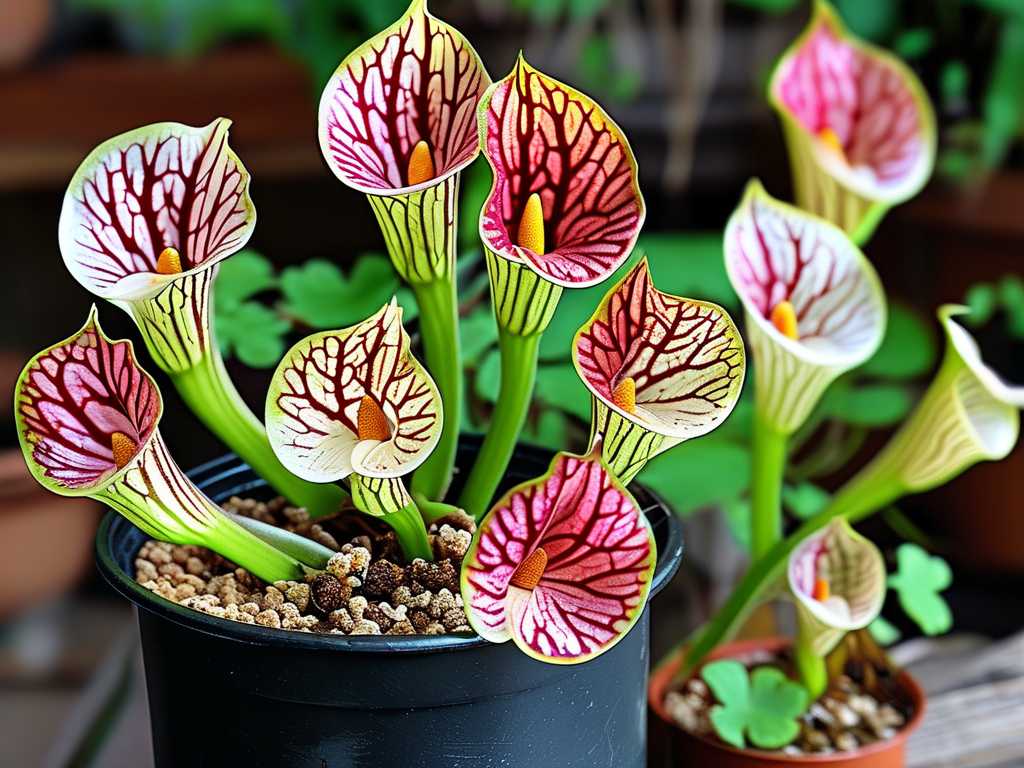
Don't try to use just one characteristic. Create a checklist:
- Overall Form: Upright, low, or curved?
- Hood & Mouth: Shape, size, and underside details.
- Color & Veins: Background color and pattern type.
- Seasonal Cues: Does it make phyllodia? When does it pitcher best?
- Flower: If available, note color and scape.
- Cross-Reference: Use trusted resources like the ICPS species galleries or The Savage Garden by Peter D'Amato.
Over my two-week deep dive, I took photos, kept a journal, and compared my notes to these authoritative sources. What seemed like a jumble of green tubes at the start resolved into distinct individuals: a statuesque S. flava, a breathtaking S. leucophylla, a hardy S. purpurea, and a couple of fascinating, complex hybrids. The process turned confusion into connection.
Common Questions from Fellow Growers
Can I identify a Sarracenia by pitcher color alone? Rarely. While color is a major hint, it is the most variable characteristic due to sunlight, age, and genetics. A sun-starved S. leucophylla will lose its white tops, and a sun-stressed S. flava can turn entirely red. Always use color in conjunction with shape, hood structure, and other fixed traits.
My plant doesn’t perfectly match any species description. What is it? You likely have a hybrid. Sarracenia hybridize readily in cultivation and sometimes in nature. Hybrids exhibit a blend of traits from their parents. Don’t see this as a failure! Hybrids are often spectacular and vigorous. Enjoy it for its unique beauty, and you can sometimes deduce its parentage by which species' traits are most dominant.
Is it necessary to identify the exact subspecies or variety? For general care, knowing the primary species (e.g., rubra, flava) is usually sufficient, as their core needs are similar: full sun, mineral-free water, and appropriate dormancy. However, precise identification deepens your understanding, helps in sourcing authentic plants, and is deeply satisfying for the collector’s spirit. It connects you to the plant’s natural history and specific adaptations.
Identifying Sarracenia is a journey of continuous learning and observation. It starts with overcoming the initial overwhelm by breaking down the plant into its constituent parts. By patiently examining the pitcher's shape, the artistry of its colors, the intricacies of its hood, and the clues in its growth cycles, you move from seeing a generic "pitcher plant" to appreciating a specific, remarkable organism. My two-week immersion taught me that the tools for identification are always at hand—a keen eye, a bit of patience, and the willingness to look closer. The reward is a richer, more informed relationship with these captivating carnivorous wonders.





