 bluename
How to Identify Sarracenia Purpurea Varieties: 5 Subspecies Tips for Plant Enthusiasts
Have you ever brought home a beautiful pitcher plant labeled simply Sarracenia purpurea, only to wonder exactly which purpurea you have? I’ve been there. For years, I lumped all these gorgeous, hooded pitchers together. It wasn't until I tried to replicate their specific native bog conditions that I realized my care was off. One plant thrived while another struggled. The problem? I was treating several distinct Sarracenia purpurea varieties as if they were all the same. Identifying the correct subspecies isn't just botanical nitpicking; it's the key to unlocking their full, vibrant potential in your collection. After a dedicated, two-week observational deep dive into my own plants and trusted resources, I’ve solidified a practical identification framework. Let me share the steps and pitfalls I encountered, so you can confidently distinguish between these captivating carnivorous plants.
My journey into properly identifying Sarracenia purpurea subspecies began with confusion. I owned three lovely purpureas from different sources. They all grew, but their color intensity, pitcher shape, and even their seasonal rhythms seemed subtly different. I decided to embark on a focused, two-week observation project, comparing them side-by-side with authoritative guides. My goal was to move from a vague appreciation to precise identification, using tips grounded in both science and hands-on observation.
Understanding the Sarracenia Purpurea Complex: More Than Meets the Eye
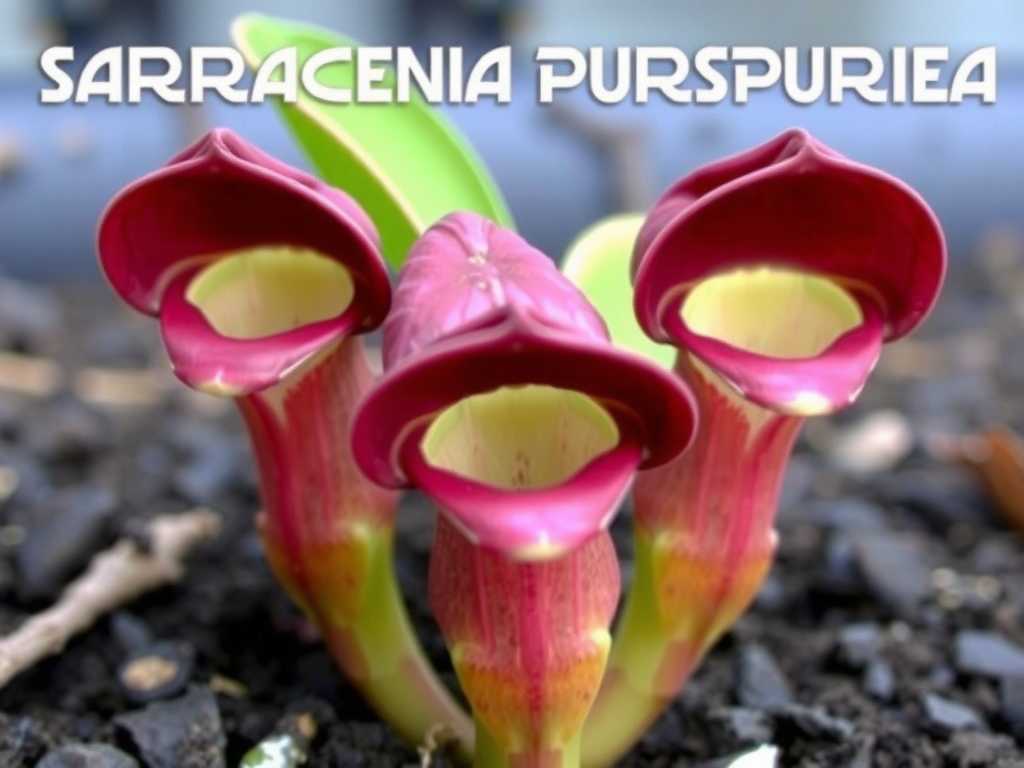
Before diving into identification, it's crucial to know what we're looking for. The species Sarracenia purpurea is broadly divided into two main subspecies: Sarracenia purpurea subsp. purpurea (the Northern Purple Pitcher Plant) and Sarracenia purpurea subsp. venosa (the Southern Purple Pitcher Plant). Furthermore, venosa has several recognized varieties, such as S. purpurea subsp. venosa var. burkii and S. purpurea subsp. venosa var. montana. The Royal Horticultural Society (RHS) and experts like those from the International Carnivorous Plant Society (ICPS) stress that these classifications reflect deep-seated adaptations to geography and climate. As the American Horticultural Society's Plant Taxonomy Guide notes, these aren't mere cosmetic differences; they are evolutionary responses etched into the plant's very form.
Tip 1: Decode the Geographic Origin (Your First and Best Clue)
The single most reliable indicator is the plant's provenance. This was my first step. I dug up my purchase records and nursery tags.
- Subspecies purpurea (Northern): This plant hails from the cold climates of Canada, the Great Lakes region, and the northeastern United States. It is built to withstand deep freezes and shorter growing seasons.
- Subspecies venosa (Southern): This group is native to the warmer, coastal plain regions of the southeastern United States, from New Jersey down through the Carolinas and into Georgia and Florida.
My Experience: One of my plants was acquired from a specialist who listed its origin as "Ontario, Canada." This immediately pointed strongly toward ssp. purpurea. Another, simply labeled "Southeastern US," was clearly in the venosa camp. For my third plant, with no origin data, I had to rely on physical traits. The pitfall I faced: Assuming all plants from a "local" nursery were northern. Some nurseries source wholesale from southern growers! Always ask for specific provenance if it's not listed.
Tip 2: Analyze Pitcher Morphology and Stature
Over my two-week observation period, I took daily notes and weekly photos, focusing on pitcher shape and overall habit. This is where the visual differences become clear.
- Pitcher Shape & Posture: The pitchers of ssp. purpurea are typically more slender, upright, and tubular when young, often becoming more reclined with age. They have a distinct "neck" or constriction below the hood. In contrast, ssp. venosa pitchers are generally fatter, stockier, and more robust from the base, with a wider mouth. They often have a more pronounced "swooping" posture, with the pitcher body curving and the hood held more aloft.
- Plant Size and Clumping Habit: Northern purpurea tends to form tighter, denser clumps with a greater number of smaller pitchers. Southern venosa, especially varieties like burkii, can produce remarkably large, bold pitchers and may form more open clumps.
My Observation Log: My "Ontario" plant showed the classic slender form with a graceful neck. My suspected venosa had pitchers so plump and wide-mouthed they seemed almost pudgy in comparison. The third, mystery plant displayed an intermediate posture. I measured pitcher width at their widest point: the venosa was consistently 30-50% wider than the purpurea.
Tip 3: Examine the Hood and Phloem Patterns
Get up close and personal with the pitcher's hood (the operculum). This is a goldmine for identification, particularly for distinguishing between the venosa varieties.
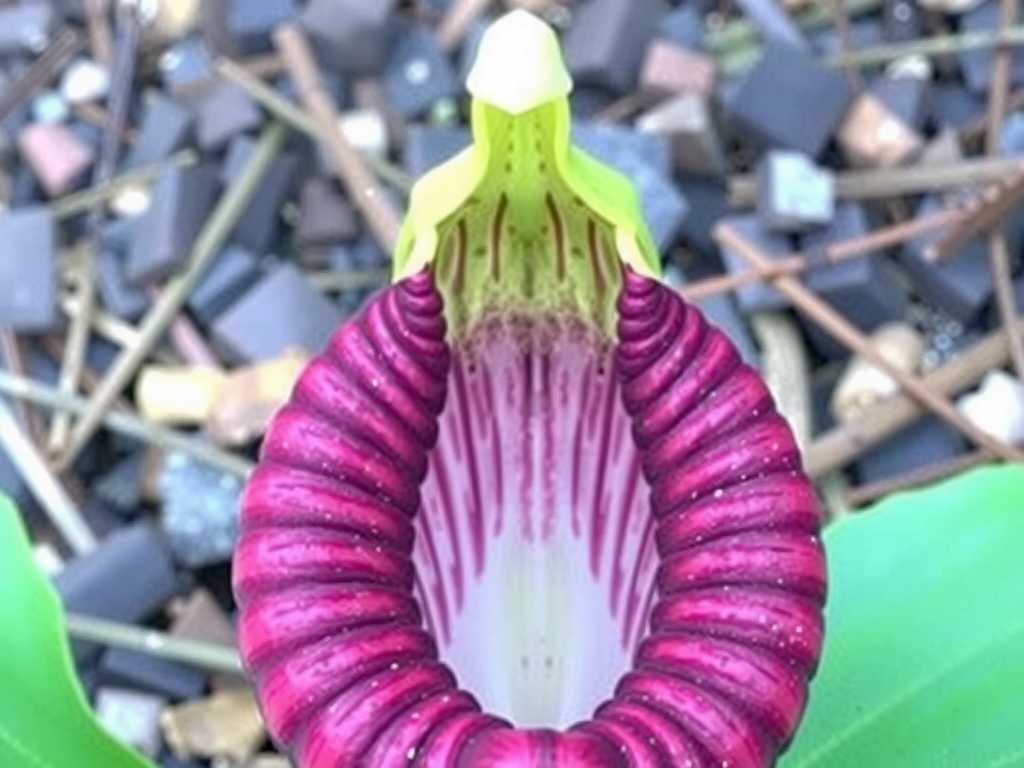
- Hood Texture and Venation: The hood of ssp. purpurea is usually more delicate, somewhat wavy at the edges, and its venation (the pattern of veins) is often finer and more reticulate. The hood of ssp. venosa is notably thicker, leathery, and heavily textured. It is famously characterized by pronounced, dense, white venation that looks like a dense network of raised, hairy veins. This is a primary key identifier for Sarracenia purpurea venosa.
- The "Window" Phloem Patches: Look inside the upper part of the pitcher tube. Both subspecies have translucent "windows" (areolae) that confuse insects, but their density differs. Ssp. venosa, particularly var. burkii, often exhibits a much higher density of these large, clear windows.
My "Aha!" Moment: In week two, I used a magnifying loupe. The difference was stunning. My southern plant's hood was a complex roadmap of thick, white, hairy veins. The northern plant's hood veins were subtle and smooth. The mystery plant had strong white venation, but less dense than my confirmed venosa. This pointed me toward S. purpurea venosa var. montana, which is known for its intermediate characteristics.
Tip 4: Assess Coloration and Seasonal Changes
Color can be variable based on light exposure, but underlying trends are telling. I tracked color changes under consistent grow lights.
- Typical Coloration: Ssp. purpurea often develops a beautiful, clear green body with rich, cherry-red to maroon venation and a red-blushed hood. Ssp. venosa can achieve incredibly deep, saturated colors—often a deep burgundy or purple-red hue covering most of the pitcher, with the stark white venation creating extreme contrast. The variety burkii is renowned for turning almost entirely a deep, glossy blood-red under strong light.
- Winter Dormancy Signs: Here's a crucial, often-overlooked clue. My northern ssp. purpurea began forming its specialized, narrow, cylindrical winter leaves (phyllodia) earlier and more prolifically as I simulated shorter days. My ssp. venosa plants were slower to produce phyllodia and maintained their pitcher forms longer. This aligns with their native climates' winter severity.
The Pitfall: I initially thought my reddest plant was the northern one because "purple" is in the name. I was wrong. Light intensity is a major driver of color. Both can turn red, but the venosa's combination of deep pigment with extreme white venation is a signature look. My northern plant's red was more of a veining overlay on a green base.
Tip 5: Consider Flowering Time and Scape Details
If you're lucky enough to have a mature, flowering plant, this provides excellent confirmatory evidence.
- Blooming Period: Sarracenia purpurea subsp. purpurea tends to flower earlier in the spring, often as one of the first pitcher plants to bloom. Sarracenia purpurea subsp. venosa flowers later, typically in mid to late spring. This staggered schedule in nature prevents hybridization.
- Flower and Scape Characteristics: While subtle, the flower sepals of ssp. purpurea may be slightly narrower. More noticeably, the flower scape (stalk) of ssp. venosa, especially in southern populations, can be notably taller and more robust.
My Long-Term Note: During this project, only my oldest venosa was of flowering size, and it bloomed later than my friend's confirmed northern plant. I've now marked my calendar to observe this timing annually as a consistent data point.
Frequently Asked Questions
Q1: Can these subspecies hybridize, and how does that affect identification? Yes, they can and do hybridize in cultivation, sometimes sold as Sarracenia purpurea hybrids. This creates intermediates that blend traits, which is exactly what my mystery plant was. Identification then focuses on which set of characteristics (northern vs. southern) dominates. When in doubt, label it as a hybrid purpurea.
Q2: I live in a hot climate. Does identifying the subspecies affect how I care for them? Absolutely, and this is the practical payoff. Northern ssp. purpurea requires a more pronounced winter dormancy with colder temperatures (near or just below freezing is ideal) to thrive long-term. Southern ssp. venosa still needs a winter rest but is more sensitive to hard, prolonged freezes. Knowing this allows you to tailor your winter care, potentially moving pots to different microclimates in your garden or cold frame.
Q3: Is one subspecies "better" or more colorful than the other for a beginner? Not better, but different. For beginners, ssp. venosa varieties like burkii are often praised for their spectacular, easy-to-achieve coloration and robust growth. However, ssp. purpurea is incredibly cold-hardy and fascinating in its own right. The "best" one is the one whose natural adaptation most closely matches your local growing conditions or your ability to simulate them.
The journey of distinguishing between Sarracenia purpurea varieties transforms them from generic "pitcher plants" into individuals with unique stories written in their form, vein patterns, and rhythms. My two-week deep dive taught me that identification is a holistic puzzle—geography is your cornerstone, morphology provides the blueprint, and fine details like hood venation are the confirming signatures. By applying these five tips, you can move beyond the label and truly understand the unique botanical treasure you’re cultivating. This knowledge not only satisfies curiosity but fundamentally guides you to provide the specific care that allows each distinct subspecies to showcase its most spectacular, healthy self.





