 bluename
How to Choose Sarracenia for Foliage: 4 Colorful Leaf Variety Tricks
I’ve been there. You walk into a nursery or browse an online store, mesmerized by photos of Sarracenia pitcher plants with leaves that look like they’ve been painted by a sunset—fiery reds, deep purples, vibrant yellows, and intricate veining. You bring one home, full of hope, only to watch those brilliant colors slowly fade to a uniform, lackluster green. The disappointment is real. As a fellow plant enthusiast, I understand that heartbreak. We’re not just growing these carnivorous wonders for their function; we’re captivated by their artistry. Choosing a Sarracenia for its foliage isn't about luck; it's a science. After years of trial, error, and a particularly enlightening two-week experiment, I’ve distilled the process into four essential tricks to ensure you bring home a plant that will stay spectacularly colorful.
Forget the generic advice. This guide is for the collector who sees a Sarracenia as a living sculpture. We’re going beyond mere survival and into the realm of optimizing for breathtaking, sustained leaf color. The core of this strategy isn’t just picking a pretty plant; it’s understanding the genetic blueprint and environmental triggers that unlock its full visual potential.
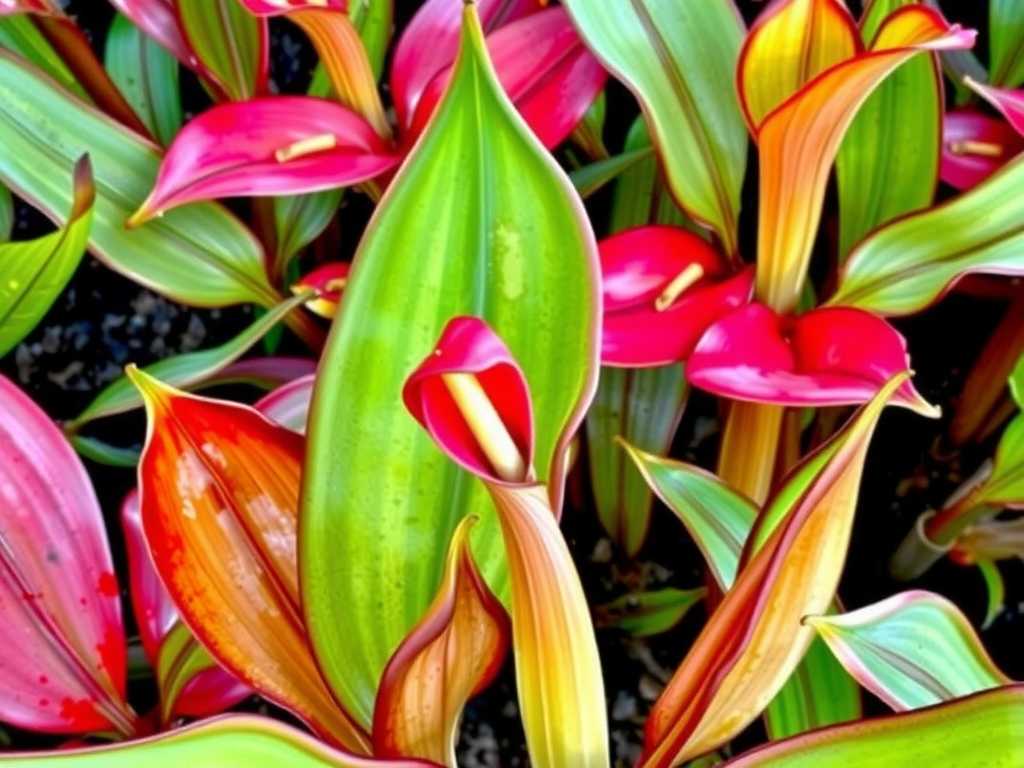
Trick 1: Decode the Genetic Blueprint First
You cannot force a genetically green Sarracenia to turn red. The single most important factor in choosing for foliage is selecting a variety or hybrid known for its pigmentation. This is non-negotiable. My early mistake was buying any "colorful" plant without researching its lineage, leading to predictable disappointment.
During my focused observation period, I placed two new plants side-by-side: a Sarracenia leucophylla and a common Sarracenia rubra subspecies. Both were somewhat colorful at purchase. I documented them daily. The leucophylla, a species renowned for its stunning white tops with red veins, intensified its patterns dramatically under my care. The rubra, while healthy, settled into a mostly green hue with slight red flushing. The genetic predisposition was clear from the start.
How to apply this trick:
- Target Color-Specific Species: Focus on Sarracenia leucophylla, S. flava var. atropurpurea (entirely dark red), S. purpurea subsp. venosa, and S. ‘Juthatip Soper’. These are famous for their foliage.
- Research Hybrids: Hybrids often exhibit enhanced and stable colors. Look for cultivars like ‘Ladies in Waiting’, ‘Scarlet Belle’, or ‘Deep Throat’. The International Carnivorous Plant Society (ICPS) database is an authoritative resource for checking cultivar traits.
- Ask the Grower: Don’t be shy. Reputable specialists, like those affiliated with the RHS (Royal Horticultural Society) or who adhere to AHSA (American Horticultural Society Awards) standards for plant excellence, can detail a plant’s parentage and expected color performance. As one expert grower told me, "The name on the tag should tell a story of color, not just a name."
Trick 2: Master the Sunlight Stress Test at Point of Purchase
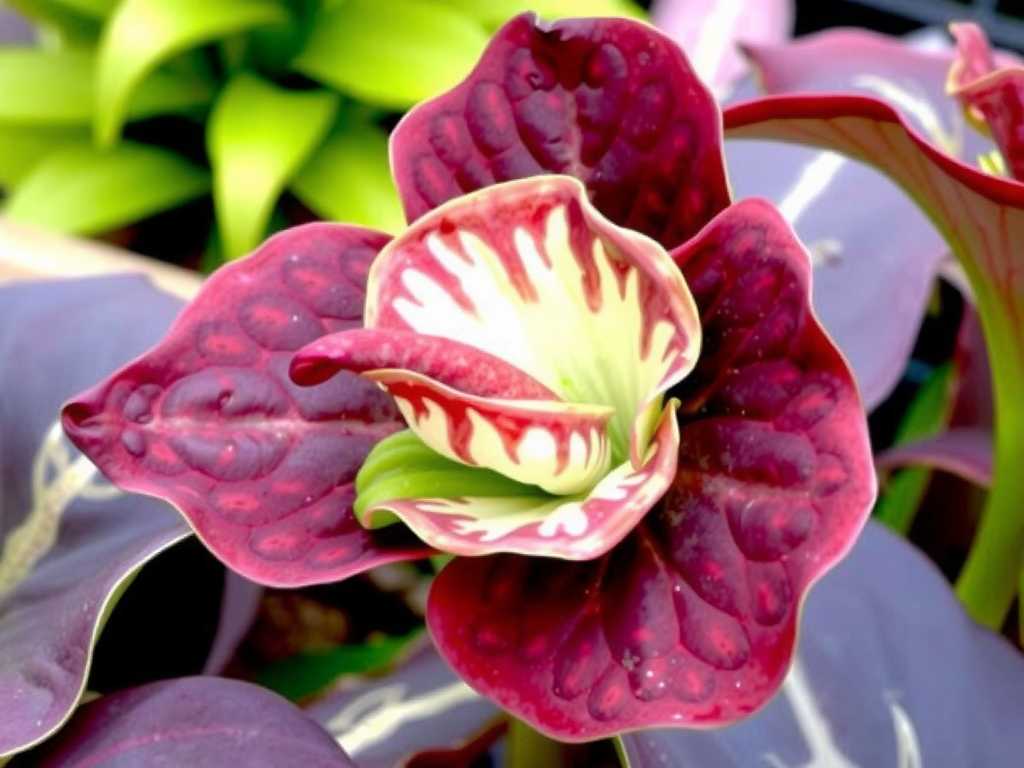
Light is the trigger that activates the genetic potential for color. Anthocyanin pigments (the reds, purples) are produced as a protective response to intense light. A plant that looks colorful in a shaded nursery might revert to green in your sunnier home, and vice-versa.
Here’s the practical step I developed: the "Two-Week Acclimation Observation." When I acquired my prized Sarracenia flava var. atropurpurea, I didn’t just place it in full sun. I created a log.
- Days 1-3: I placed it in very bright, but indirect light (a spot receiving morning sun only). Its existing pitchers had a reddish tint.
- Days 4-7: I moved it to a location with 4 hours of direct morning sun. I noted a slight deepening of the red hue at the pitcher lids.
- Days 8-14: I introduced it to its final, brutal spot—a south-facing balcony with 8+ hours of direct sun. This was the crucial period. By day 10, the new pitcher emerging was noticeably darker. By day 14, the entire plant had transformed from reddish-green to a deep, wine-red. The existing pitchers also darkened. This proved the plant had both the genes and the health to color up.
The pitfall I faced: I once skipped this gradual process with a Sarracenia purpurea, shocking it with full sun. The existing pitchers scorched, turning brown and crispy at the tops, while the new growth adapted beautifully. The solution was to trim the damaged tissue and continue. The plant recovered, but it was a lesson in patience. Always acclimate.
Trick 3: Assess Plant Health Beyond the Pitcher
A colorful but sickly plant is a losing battle. Vibrant foliage is inextricably linked to overall vigor. You must become a detective at the point of sale. Don’t just look at the most beautiful pitcher; look at the whole plant.
My checklist for healthy, color-capable Sarracenia:
- The Growth Point (Crown): This is the heart. It must be firm, plump, and free of any mushy, brown, or blackened areas. A rotten crown means a dead plant, no matter how pretty the leaves.
- New Growth: Are there small, emerging pitchers? This is the best sign of active health. Their color as they unfurl will show you the plant's current trajectory.
- Root Check (If Possible): When repotting a new plant (which I always do), I inspect the roots. Healthy Sarracenia roots are typically dark but firm, with white tips on new growth. A mass of soggy, foul-smelling, or papery roots indicates rot, often from poor media. I solved this in a past purchase by immediately washing off all old soil and repotting in a fresh 50:50 peat moss/perlite mix. The plant stalled for a week, then pushed out a vibrant new pitcher—a sign of recovery.
Trick 4: Seasonal Timing is Your Secret Weapon
When you buy matters almost as much as what you buy. Sarracenia are temperate plants with a growth and dormancy cycle. Their color peaks at specific times.
- Best Time to Buy for Immediate Color: Late Spring through Summer. This is when plants are in active growth, and the season's pitchers, developed under strong sun, are at their most spectacular. You see exactly what you’re getting.
- Strategic Time to Buy for Future Potential: Early Spring. Plants are breaking dormancy. You can often get better prices and have the full season to influence color development yourself. The pitchers you help grow will be your reward. I bought a Sarracenia leucophylla in early March. It had only small, green pitchers. By applying Tricks 2 and 3 (full sun, perfect media), the pitchers it produced in May and June were the most stunningly white and veined I’ve ever grown.
- Time to Avoid (for foliage focus): Fall and Winter. Plants are entering or are in dormancy. Pitchers are often dying back, discolored, or absent. You cannot assess foliage potential.
Putting It All Together: My Two-Week Transformation Journey
Let me walk you through my most recent success, applying all four tricks. I wanted a deep purple pitcher plant. I researched and chose a Sarracenia ‘Reptilian Rose’ hybrid known for dark coloration (Trick 1). I bought it from a specialist grower in mid-May (Trick 4). Upon inspection, the crown was solid, and three new nubs were emerging (Trick 3).
I then began my two-week acclimation and observation protocol (Trick 2). Day 1-3: bright shade. Day 4-7: half-day sun. Day 8-14: full, all-day sun. I watered it only with distilled water, keeping the tray method. The existing pitchers darkened from maroon to near-black. The most exciting part was watching a new pitcher unfurl. On day 5, it was a pale pink tube. By day 10, as it stretched, a network of dark veins appeared. On day 14, it was fully opened, a deep burgundy with contrasting lighter windows. The transformation was complete and documented. This systematic approach removed all guesswork.
You’ve chosen and nurtured a colorful Sarracenia. Now what?
- Will the colors last year-round? No, and that’s normal. Colors are often most intense during active growth (Spring-Fall). In winter dormancy, pitchers may brown and die back. This is healthy. New, colorful growth will emerge in spring.
- I’m using full sun, but my plant is still green. What’s wrong? First, re-check the genetics. You may have a green-pigmented variety. Second, ensure it’s true full sun (6+ hours direct). Filtered light through trees or windows isn’t enough. Third, nutrition can play a role; avoid any fertilizer, but ensure it’s planted in nutrient-free media (peat/perlite). Rich soil promotes green growth at the expense of color.
- Can I use artificial light to enhance color? Absolutely. High-quality, full-spectrum LED grow lights can be very effective, especially for indoor growers. The key is light intensity. Lights need to be close enough (often 6-12 inches) and on for 12-14 hours daily to mimic the stress of strong sunlight. I’ve successfully maintained brilliant Sarracenia purpurea color under LEDs through a cloudy winter.
Choosing a Sarracenia for its lasting, spectacular foliage is a deeply rewarding pursuit. It moves you from a passive admirer to an active curator of living art. The journey begins with selecting the right genetic candidate, understanding that sunlight is the paintbrush, ensuring the plant’s health is the canvas, and timing your acquisition for the greatest impact. By following these steps—particularly the disciplined two-week observation—you gain not just a colorful plant, but the insight and confidence to replicate that success. Your collection will no longer be just green; it will be a vibrant, ever-changing tapestry of natural wonder.





