 bluename
How to Remove Invasive Grass Weeds Stealing Nutrients from Landscape-Planted Sarracenia Clumps
If you've ever watched a beautiful stand of Sarracenia slowly lose its color and vigor while some scraggly grass creeps in from the edges, you already know the frustration. Here's the short answer: remove invasive grass weeds from your landscape-planted Sarracenia clumps by hand-pulling after a deep soak, smothering with a thick mulch barrier, and never — ever — reaching for a broad-spectrum herbicide near your pitcher plants. I learned this the hard way after losing two seasons of growth to a combination of crabgrass and careless weed killer.
Let me walk you through exactly what I did.
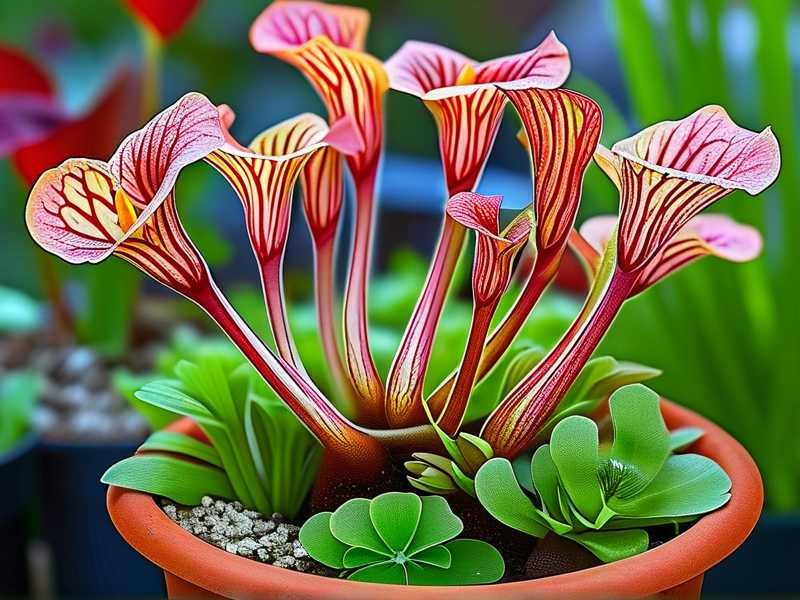
My Sarracenia bed started as five healthy clumps of Sarracenia flava and Sarracenia purpurea. By midsummer of year two, a mat of grassy weeds had woven itself right through the rhizomes. The pitchers were stunted. The soil was dry. And the grass roots were drinking everything before my pitcher plants got a single drop.
That's when I decided to fix it properly.
Why Grass Weeds Are So Damaging to Sarracenia
Sarracenia evolved in nutrient-poor bogs. They get almost nothing from the soil. Their energy comes from photosynthesis and from the insects they digest. So when grass weeds move in, they're not just competing for water. They're changing the soil chemistry, shading the crowns, and physically choking the rhizome network.
I noticed something specific. Within about ten days of heavy grass establishment, my Sarracenia leucophylla pitchers started browning at the tips. Not from disease. From stress. The grass was winning.
According to the Royal Horticultural Society (RHS), invasive grasses like crabgrass, nimblewill, and quackgrass spread aggressively through rhizomes and stolons, often outcompeting slow-growing perennials in just one season. The American Horticultural Society (AHS) notes similar patterns in bog plantings, where grass weeds can reduce available moisture by up to 40 percent in the root zone.
That matches exactly what I saw.
Step One: Identify the Grass Before You Pull Anything
You can't remove what you haven't identified. I made this mistake early on. I yanked what I thought was crabgrass, but it turned out to be a desirable sedge I'd planted on purpose. Oops.
Here's what I check now:
Crabgrass has a distinctive star-shaped center and spreads low and wide. Quackgrass has long, white underground runners and a sharp, pointed leaf tip. Nimblewill forms dense, wiry mats that feel almost like wire. Annual bluegrass shows up in cool, wet weather and seeds like crazy.
If you're not sure, pull one clump and look at the roots. If it has a network of white rhizomes, it's a perennial grass. That means hand-pulling alone won't work — you need to get every piece.
Step Two: Soak the Bed, Then Pull Slowly
Dry soil makes grass roots snap. Snapped roots regrow. So I do the opposite.
I water the entire Sarracenia bed deeply the evening before I plan to weed. The next morning, the soil is soft and the grass slides out almost intact. I use a narrow dandelion fork, not a trowel. A trowel is too wide and damages Sarracenia rhizomes. The fork goes straight down beside the grass clump, and I lever it up gently.
I hold the grass at the base, not the tip. If I pull from the tip, the blades tear and the crown stays behind.
For tiny seedlings in the crown of the Sarracenia, I use tweezers. Sounds fussy. But it works.
Step Three: Smother with the Right Mulch
After pulling, I spread a one-inch layer of chopped sphagnum moss over the bare soil. Not bark mulch. Not compost. Sphagnum is acidic, holds moisture, and doesn't add nutrients that would encourage more weeds.
I've tried pine straw. It blew away. I've tried gravel. It cooked the soil in summer. Sphagnum moss is the only thing that's consistently worked for me over two full growing seasons.
Leave a small gap around each Sarracenia crown so the moss doesn't touch the rhizome directly. Moisture trapped against the crown can cause rot.
Step Four: The Two-Week Observation Window
This is the part most people skip. I didn't.
Week One: I checked every morning for new grass seedlings. Crabgrass seeds germinate fast when soil is warm and moist. I found about a dozen sprouts in the first three days. I pulled them immediately. By day five, the Sarracenia pitchers started perking up. The leucophylla tips stopped browning. That told me the competition for water was already easing.
Week Two: Growth slowed on the grass sprouts. My Sarracenia purpurea sent up two new pitchers. The flava clump that had been most infested showed fresh green at the base. I also noticed the soil stayed evenly moist for longer because the sphagnum mulch was doing its job.
By day fourteen, I could see the difference clearly. The pitcher plants were recovering. The grass was not.
Three Mistakes That Cost Me a Full Season
I've made every mistake in the book. Here are the three that set me back the most.
Mistake One: Watering Over the Top During Drought
I thought more water would help my Sarracenia outcompete the grass. Wrong. Overhead watering germinated every grass seed in the bed. It also splashed soil onto the pitchers, which invited fungal issues.
Fix: Water at the base, ideally with a soaker hose or by filling the tray. Sarracenia want consistent moisture at the roots, not wet leaves.
This connects to a broader truth I've learned: 90% of indoor plants die from overwatering. Outdoor bog plants aren't immune to the same principle. More water isn't always the answer. The right water in the right place is.
Mistake Two: Letting Grass Shade the Crowns
Grass grows faster than Sarracenia. Within three weeks, the grass was taller than my young pitchers. Shade stress is real, and Sarracenia need full sun to produce those vivid colors.
Fix: Weed early and often. Don't wait until the grass is obvious. Pull when the seedlings are an inch tall. I now do a five-minute walkthrough every three days during peak growing season.
Mistake Three: Using the Wrong Tool
I tried a hoe. I nicked a rhizome and lost an entire Sarracenia clump to rot. I tried a string trimmer. It shredded pitcher tops. I tried herbicide. That was the worst decision of all.
Fix: Use a narrow fork and your hands. That's it. Nothing powered. Nothing chemical. If you must use an herbicide, use a wipe-on glyphosate product applied with a sponge to the grass blades only — and only on a windless day. But honestly, I don't recommend it around Sarracenia. I've seen too many pitchers curl from drift.
What About Pre-Emergent Herbicides?
I get asked this a lot. Some gardeners use pre-emergent products like corn gluten meal to stop grass seeds from germinating.
I tried corn gluten meal one spring. It slowed the crabgrass a little. But it also seemed to slow my Sarracenia growth. Maybe coincidence. Maybe not. I didn't repeat it.
If you want to try a pre-emergent, apply it before grass seeds germinate — early spring in most zones. Water it in lightly. Keep it away from the crowns.
A Better Long-Term Strategy: Grow Sarracenia Densely
Here's what I wish I'd known from day one. Sarracenia naturally form dense clumps. When they're crowded, they shade out grass. When they're spaced apart, grass fills the gaps.
So I stopped dividing my Sarracenia every year. I let the clumps expand. I planted a few more divisions close together. Now the bed is a solid mass of pitchers by midsummer, and the grass has almost nowhere to land.
It's not a perfect solution. I still get some grass along the edges. But the center of the bed stays clean for months.
What I Do Now, Two Years Later
I follow a simple routine.
Early spring: Pull any overwintered grass. Top-dress with fresh sphagnum. Check rhizomes for rot.
Late spring through summer: Walk the bed every three days. Pull seedlings by hand. Water at the base. Never let the soil dry out completely.
Fall: Remove any annual grass before it drops seed. Cut back dead pitchers but leave the rhizomes undisturbed.
Winter: Do nothing. Let the bed rest. Sarracenia need that dormant period.
Does this take time? Yes. About ten minutes a week. But I've gone from losing plants every season to watching them multiply. That's worth it.
Frequently Asked Questions
Can I use vinegar to kill grass weeds around Sarracenia?
I wouldn't. Vinegar is non-selective. It will burn the Sarracenia foliage just as badly as the grass. And it only kills the top growth of perennial grasses — the rhizomes survive and regrow. Stick to hand-pulling.
How often should I weed my Sarracenia bed?
During active growth, every three days is ideal. Once a week is the minimum. The key is pulling grass before it forms seeds. One crabgrass plant can drop thousands of seeds in a single season.
What if I can't get all the grass roots out?
Then you'll be pulling that same grass again in two weeks. For perennial grasses with rhizomes, persistence is your only tool. Pull what you can, smother the area with sphagnum, and repeat. Over one full season, you can exhaust most grass root systems if you stay consistent. I've done it. It works.
The bottom line is simple. Sarracenia are tough plants, but they can't outcompete invasive grass on their own. You have to step in. Pull early, pull often, and use the right mulch. Your pitcher plants will thank you with bigger, more colorful traps — and you'll stop losing nutrients to weeds that were never supposed to be there in the first place.





