 bluename
Sarracenia Light Requirements for Healthy Growth: 4 Key Rules I Learned the Hard Way
Getting Sarracenia light requirements right is honestly the difference between a pitcher plant that thrives and one that slowly sulks into a brown mess. I've killed three of these beauties before I finally understood what they actually need. So here's the short answer up front: most North American pitcher plants want at least 6 hours of direct sun daily, ideally more, and they will not tolerate the dim "bright indirect" spot you'd give a pothos. That's the whole game in one sentence. Everything below is how I got there, including the mistakes that cost me plants.
I'm writing this for home gardeners in the US, Canada, the UK, and Australia who grow these on windowsills, balconies, or backyard bog pots. The light rules are similar everywhere, but the workarounds change depending on your climate and how far you are from the equator. Let's dig in.
Why Light Is the One Thing Sarracenia Won't Compromise On
Sarracenia are bog plants native to open, sunny wetlands across North America. They evolved in full, unfiltered sun with wet feet and poor soil. No tree canopy. No shade cloth. Just blazing light and constant moisture.
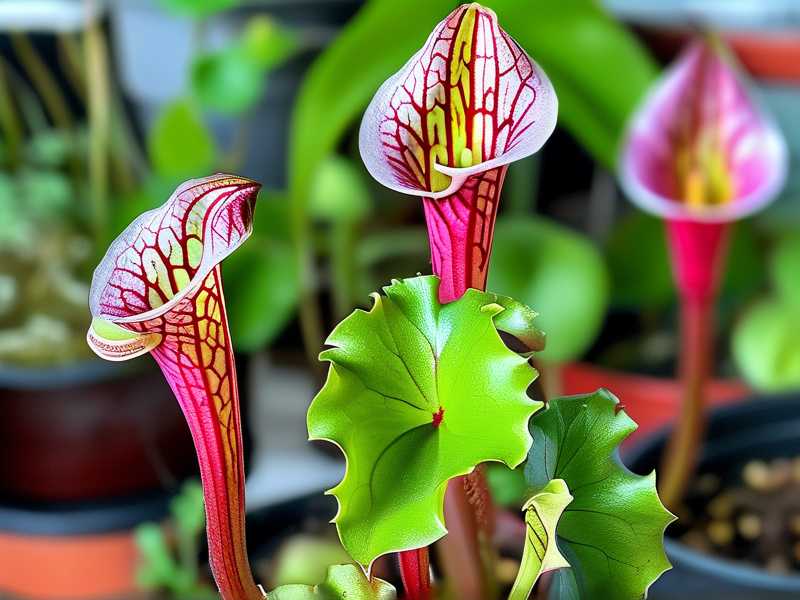
That history matters because it tells you what they expect from you. Unlike many houseplants that adapt to lower light by slowing down, Sarracenia don't really have a low-light mode. They just decline.
I learned this the slow way. My first pitcher plant sat on a north-facing windowsill because that's where my other plants were happy. Within a month the pitchers went floppy. By week six they were brown and crispy at the tips, and no amount of watering fixed it. The plant wasn't thirsty. It was starving for photons.
According to the RHS, most carnivorous plants grown indoors fail due to insufficient light and incorrect water, not disease. That matches my experience exactly.
Rule 1: Give Them Full Direct Sun, Not "Bright Indirect"
This is the big one. Sarracenia want direct sun. Not filtered. Not through a sheer curtain. Direct.
For most species, aim for 6 to 8 hours of direct sunlight per day minimum. If you can give them 10, even better. Southern species like Sarracenia flava and Sarracenia leucophylla will happily take all-day sun in summer.
Here's how I test whether a spot is actually sunny enough. I put my hand between the plant and the window at midday. If I can see a sharp, defined shadow, the light is strong enough. If the shadow is fuzzy or barely there, it's not.
Simple test. Saves a lot of guessing.
Windowsill Reality Check
A south-facing window in the northern hemisphere is your best indoor bet. In the southern hemisphere, that's a north-facing window. West-facing can work if it gets strong afternoon sun, but east-facing usually isn't enough for full vigor.
The catch is that window glass cuts intensity. Even a clean double-pane window can reduce light by 20 to 30 percent. Old glazing or a dirty pane makes it worse. So "full sun through a window" is really more like "partial sun outdoors." Keep that in mind before you pat yourself on the back.
Rule 2: Match Light to the Season, Because Sarracenia Do
Sarracenia are not static. They have a growing season and a dormancy period. Light needs shift with the calendar.
In spring and summer, during active growth, go maximum sun. This is when pitchers form, color up, and develop those stunning red veins. Weak light here means pale, leggy, disappointing pitchers.
In autumn, light still matters but the plants start winding down. I keep them as bright as possible while temperatures drop.
In winter, most temperate Sarracenia need dormancy. They'll die back to brown stubs or small phyllodia. This is normal and not a sign you killed them. During dormancy, light is less critical, but I still keep them in a cool, bright spot so they don't rot.
I made the mistake of babying my plants through winter under a grow light at full blast. They stayed green and never went dormant. The next spring they were exhausted and pushed out tiny, weak pitchers. Lesson learned: dormancy isn't optional for temperate species.
Rule 3: Supplement With Grow Lights When Nature Won't Cooperate
If you live somewhere with grey winters, like much of the UK, the Pacific Northwest, or parts of Canada, you need grow lights. No way around it.
I run a simple full-spectrum LED bar about 12 to 14 inches above my plants. On for 12 to 14 hours a day in summer, and about 10 hours in winter to support dormancy without pushing growth.
Two things I wish I'd known earlier:
Distance matters more than wattage. Too close and you cook the leaves. Too far and you're paying for a fancy nightlight. I burned a nice S. leucophylla by hanging a light 4 inches above it. The pitchers bleached and crisped.
Duration beats intensity for consistency. I tried blasting high power for 6 hours. The plants responded worse than to moderate power for 13 hours. Steady, long light mimics a real summer day better.
A cheap light meter or even a phone app can help you dial this in. You want to aim for a decent PAR reading, not just "it looks bright to me."
Rule 4: Watch the Leaves, Because They Tell You Everything
Sarracenia communicate their light status through color and posture. You just have to read the signals.
Too little light: Long, floppy, stretched pitchers. Weak green color with no red veining. New growth that's thin and pale. Slow pitcher production.
Too much light, too fast: Scorched, bleached patches on leaves. Crispy brown edges appearing within days of a move. This usually happens when you shift a shade-grown plant straight into full sun.
Just right: Sturdy, upright pitchers. Deep green with strong red or purple veining, depending on species. Compact growth. New pitchers forming regularly through summer.
I now move my plants into stronger light gradually, adding an hour or so of direct sun every few days. Two weeks of slow acclimation prevents almost all scorch.
Speaking of two weeks, that's my honest observation window. After adjusting light, I wait a full 14 days before judging results. New pitchers take time to show their true color. Don't panic on day three.
The Three Mistakes That Kill Most Sarracenia for Beginners
I want to flag these clearly, because I've made all three.
Mistake 1: Overwatering
You'll hear "90% of indoor plants die from overwatering," and honestly, carnivorous plants are a strange exception that still proves the rule. Sarracenia want wet, even soggy, soil. But "wet" doesn't mean "stagnant and rotting."
I drowned a plant by leaving it in a sealed pot with no drainage and standing water that never moved. The rhizome rotted from the bottom up. The pitchers looked fine until suddenly they didn't.
The fix: use a pot with drainage, sit it in a tray of water, and let the tray dry slightly between refills. Distilled or rainwater only. Tap water minerals will slowly poison them.
Mistake 2: Light Misplacement
This is the core of this whole article. Putting a Sarracenia in the same spot as your monstera or snake plant is a death sentence.
I tried once more to keep one on a shaded shelf because it "looked nice" there. It survived but never thrived. No new pitchers worth mentioning for an entire season.
The fix: accept that Sarracenia are sun hogs. Give them the brightest spot you have, or get a grow light. There's no clever workaround.
Mistake 3: Wrong Pot
Sarracenia have deep, thick rhizomes and long roots. A shallow, wide bowl looks tidy but cramps them.
I used a cute ceramic bowl for my first plant. The rhizome pushed against the sides and the plant stalled. When I finally repotted into a tall, deep pot, it exploded with new growth within a month.
The fix: choose a tall pot, at least 6 inches deep for small species and 10 or more for larger ones. Plastic or glazed ceramic both work, as long as there's drainage. Terracotta dries out too fast for bog plants, so I skip it.
Practical Light Setup for Different Climates
Here's what I'd do depending on where you garden.
US South and Australia: Outdoor full sun nearly year-round. Protect only during extreme heat spells if pitchers start scalding. These are your easiest conditions.
US North, Canada, UK, Northern Europe: Outdoor full sun from late spring through early autumn. Move indoors under strong grow lights for the rest of the year, and allow cool dormancy in a bright, unheated spot.
Coastal or cloudy regions: Grow lights are basically mandatory. Don't fight your climate. Supplement.
The AHS notes that matching a plant's native light and moisture conditions is the single most reliable path to long-term success. For Sarracenia, that means sun and wet, full stop.
Ongoing Care Notes That Tie Back to Light
Light doesn't work alone. A few quick related points, since they all interact.
- More light means the plant uses more water. Check trays more often in summer.
- Strong light plus good airflow keeps mold away from wet soil.
- Repot in late winter, just before new growth, so the plant can take full advantage of spring sun.
- Feed very sparingly, if at all. These plants catch their own food outdoors, and too much fertilizer burns roots.
I've found that when light is dialed in, almost everything else gets easier. The plants are simply more robust and forgiving.
Questions I Get Asked a Lot
Can Sarracenia grow under a normal LED bulb? Not really. You need a full-spectrum grow light with decent output. A standard household bulb won't cut it for healthy, colorful pitchers.
How do I know if my plant needs more light? Look for floppy, stretched, pale pitchers with no red color. That's your signal to move it somewhere brighter or add supplemental lighting.
Do Sarracenia need a dormancy period with less light? Temperate species do. They need a cool winter rest. Light can be lower during dormancy, but keep them bright enough that they don't rot in the cold and damp.
Final Thoughts From Someone Who Learned This Slowly
If I could tell my past self one thing, it would be this: stop treating Sarracenia like a delicate houseplant. They're sun-loving bog plants that want more light than almost anything else on your shelf. Give them direct sun, supplement when needed, use the right pot, don't drown the rhizome, and respect their dormancy. Do that, and they'll reward you with pitchers that are genuinely stunning.
I spent three plants figuring this out. You don't have to. Start with the brightest window you own, add a grow light if your climate is gloomy, and watch the leaves tell you the rest.





