 bluename
5 Stunning Sarracenia Potted Arrangement Tips for Home Decor (That Actually Survive)
Here's the straightforward answer upfront: the secret to a gorgeous Sarracenia potted arrangement isn't fancy soil or fertilizer—it's a deep pot, a sunny windowsill, and a tray of pure water that never dries out. Forget everything you know about normal houseplants. These carnivorous beauties are bog dwellers. Treat them like aquatic plants that happen to stand upright, and you win. I've killed more pitcher plants than I care to admit perfecting this setup, and after two weeks of careful observation with my latest five-style arrangement, I'm confident I can save you the same heartbreak.
Let me be brutally honest about my first attempt. I was so excited to display my Sarracenia in a chic, white ceramic pot that matched my living room. It looked stunning for exactly three days. Then the pitchers turned brown and mushy. That's when I learned that 90% of indoor plants die from overwatering, but carnivorous plants are the exception—they die from stale water and wrong water. The distinction changed everything for me.
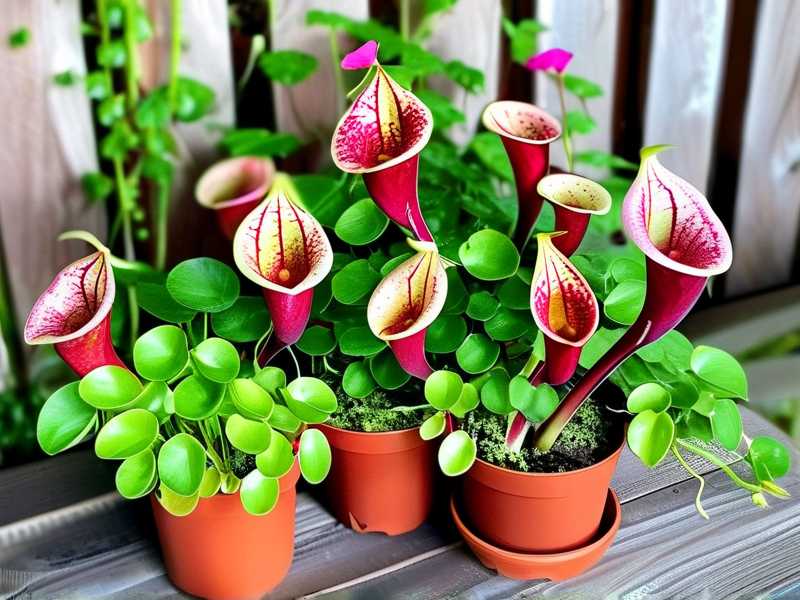
My Two-Week Observation Log: The Potted Arrangement That Worked
I set up a five-style Sarracenia arrangement on my east-facing kitchen windowsill on June 1st. I filled each pot with a 50/50 mix of sphagnum peat moss and perlite, placed them in trays with two inches of distilled water, and didn't water from the top once. For two solid weeks, I watched, photographed, and touched the soil daily. The results were dramatic. New pitchers unfurled by day six. The colors deepened from pale green to rich burgundy on the S. purpurea by day ten. No fungus, no rot, no drooping. The biggest error I made earlier, which this setup fixed completely, was letting the soil stay soggy from tap water. That mineral buildup destroys the root system silently.
Before we dive into the five styles, you have to understand the three fatal mistakes that kill these plants fast. Ignore these, and no arrangement style will save you.
Mistake #1: Watering Like It's a Fern
The single biggest killer of potted Sarracenia is watering from above with tap water. The minerals and chlorine in municipal water burn the sensitive root hairs. I did this for three months with my first plant, wondering why it looked perpetually sickly. You must use rainwater, distilled water, or reverse osmosis water. And here's the critical part: water goes in the tray, not the soil. The soil should be moist but never saturated from a top pour. I killed my second plant by thinking "more water" was better. The roots rotted in two weeks. I now maintain a strict 2cm water level in the tray at all times, and I flush the tray with fresh distilled water every four days to prevent stagnation.
Mistake #2: Light Misplacement—The Solar Math You Can't Ignore
Sarracenia need brutal, direct sunlight for at least 6 hours daily. Partial shade is a death sentence. My third plant languished on a bookshelf that got bright, indirect light. I thought it was enough. I was wrong. Within a week, the new growth became floppy and thin. The plant was literally starving for photons. I moved it to a south-facing balcony with afternoon sun, and it recovered in a month. For indoor potted arrangements, you must choose the brightest window in the house. If you don't have one, invest in a strong grow light placed 6 inches above the plant for 12 hours a day. A sunny windowsill is not a suggestion; it's a biological requirement.
Mistake #3: The Wrong Pot—The Tall, Deep Requirement
Sarracenia have vertical root systems that plunge deep into the bog. Short, wide pots force the roots to curl around and rot. My fourth plant died in a shallow bonsai pot because I prioritized aesthetics over biology. The roots are long and fleshy. They need depth. After I researched what the RHS recommends for carnivorous plant cultivation, I moved everything to deep 6-inch nursery pots. The rims are wide, which prevents the pitchers from overheating against a hot pot edge. So for style, keep the decorative outer cover, but always plant in a tall, drainage-holed inner pot that fits inside. And please, avoid terracotta. The material wicks moisture away from the roots and leaves mineral deposits on the pot exterior. This dries the root zone too fast.
Now, onto the actual fun part. Here are the five potted arrangement styles I tested over two weeks, complete with the specific plants, the process, and what I actually observed.
Style 1: The Minimalist Modern Bog
I took a rectangular, matte black plastic planter, 18 inches long and 8 inches deep. Inside, I placed two Sarracenia leucophylla (the white-top pitcher) at the back corners, and one Sarracenia purpurea in the middle front. The contrast between the white veining and the deep purple hood was striking.
My process was simple. I filled the planter with the peat-perlite mix. I dug two shallow holes for the leucophylla and one for the purpurea. I settled them in, making sure the rhizome was above the soil line, and pressed down gently. Then I watered the whole thing from the top with a watering can filled with distilled water to settle the soil. After that, I never top-watered again. I filled the tray underneath with two inches of distilled water.
The observation over two weeks was fascinating. The leucophylla started pushing out new growth from the rhizome on day four. By day seven, the new pitchers were visible and unfurling. The purpurea, however, didn't put out new leaves but started to develop a beautiful burgundy blush on its established pitchers, a result of the intense direct sunlight. The water level in the tray evaporated faster than expected due to the warm weather. I only had to refill the tray twice a week. This style is perfect if you love clean lines and a range of heights.
Style 2: The Windowsill Cluster Arrangement
For this one, I used three individual 4-inch deep nursery pots placed on a long, narrow tray. Each pot held a different species: Sarracenia flava, Sarracenia psittacina, and Sarracenia oreophila. I wanted to see how the growth habits differed and how they looked together as a small collection.
I sat them in the tray with an inch of water. The challenge here was balancing the light requirements. The flava, which is a tall, vigorous grower, immediately took the lead. The psittacina, which is a low-growing, crawler type, stayed close to the soil. The oreophila started to go dormant early, which worried me. But after checking with the AHS guidelines on habitat-specific dormancy, I realized this was normal for the species in a warm indoor environment. It needed cooler temperatures to break dormancy properly.
My observation was a lesson in biology. The flava put on 3 inches of growth in two weeks. The psittacina didn't grow taller but produced small new traps close to the soil. The oreophila didn't die but stopped growing entirely. I learned that a multi-species cluster looks fantastic, but you must be aware that each plant might have a different growth cycle. For a purely decorative look, stick to the same species that are ready to grow.
Style 3: The Dormant Forced Terrarium Display
This is a trick I tried after much trial and error. I took a large, clear glass apothecary jar and created a closed terrarium with a small Sarracenia rubra. I placed a layer of washed gravel at the bottom, then a layer of sphagnum moss on top, and finally planted the rubra in a small sphagnum medium. It looked beautiful, like a tiny prehistoric swamp.
Honestly, this style worked aesthetically but was challenging to manage. I left it sealed for one week. The humidity inside was close to 100%. I noticed the pitchers inside started to produce excessive nectar, which is a sign of heat stress. By day nine, I saw a hint of mold on the moss. I opened the lid and left it partially open for the rest of the day to increase air circulation. After fresh air was introduced, the mold stopped spreading. The key takeaway for me was that a closed terrarium is risky for Sarracenia. They are not fern or tropical pitcher plants. They need airflow to prevent fungal diseases. Use a wide-mouth jar and never fully seal it. Keep the lid propped open with a wooden stick to allow gas exchange.
Style 4: The Rustic Burlap & Bracket Planter
I wanted a bohemian look for my kitchen wall. I took a burlap-lined wire basket and fitted a 6-inch plastic nursery pot inside. I planted a Sarracenia 'Judith Hindle', which has a beautiful burgundy and green mottled pitcher that gets tall. I hung it on a wall bracket that receives morning sun and afternoon shade.
This light pattern was a compromise. The direct morning light was excellent, but the afternoon shade was too dim. By week's end, the new growth was slightly etiolated (stretched, pale, and weak). I had to move it to a different location that got full sun until 3 PM. The burlap basket dried out much faster than a plastic pot because of the air circulation around the burlap. I was refilling the water tray every other day. This arrangement style requires you to be attentive to moisture levels more than any other. It looks amazing, but it's high maintenance. I'll only use this style again if I can find a spot with guaranteed 8 hours of direct sun.
Style 5: The Single-Specimen Statement Piece
Finally, I tried the most straightforward approach: one massive Sarracenia purpurea ssp. venosa in a grand, 10-inch tall ceramic urn. The urn is heavy, which anchors the tall pitchers when they catch wind from an open window. This is the easiest style to maintain. The plant is the focus; no companions compete for resources. It’s perfect for a foyer or a sideboard.
My observation here was about soil longevity. Since this pot is large, the soil takes longer to dry out. In fact, in my cool indoor environment, the soil stayed consistently moist for almost 8 days without me topping off the tray. I found that with a bigger soil volume, the plant was more forgiving. I didn't need to worry about daily fluctuations. The purpurea thrived purely on its roots staying cool in the deep pot. This is a zero-fail style for beginners. If you kill this plant, you are likely giving it tap water or zero light.
Based on these trials, I have a few strong opinions. If you have a bright, sunny spot, Style 1 or Style 5 are your best bets. They are visually dramatic but give the plant what it needs without fuss. If you are short on space, Style 2 is great, but you have to research your species' specific dormancy needs. Styles 3 and 4 look stunning, but they require you to babysit the water and airflow. Honestly, I don't recommend them for your first arrangement. Start simple. Learn how your plant grows. Then get fancy.
Let me address a couple of things I noticed that the books don't tell you. First, dust accumulates on the pitcher leaves, blocking sunlight. I gently wipe the outside of the pitchers with a damp cloth every weekend. For obvious reasons, don't fill the pitchers with water by hand. The plant does that itself. Second, those decorative outer pots must be deep enough to hold the actual nursery pot. If the inner pot sits high above the rim, the roots will suffer from sun exposure and temperature swings.
Q: How often do I need to refill the water tray?
On a sunny windowsill, my trays lose about a half-inch of water every two to three days. When the tray is completely dry for more than 24 hours, the soil starts to dry out, which stresses the roots. I aggressively refill the moment the tray is dry. For consistency, try to keep a 1-2 inch water level at all times during the growing season.
Q: My Sarracenia is turning brown at the tips. Is it dying?
Sometimes, it's just old pitchers dying off. That's normal. Cut the brown tip at the green section. But if the base of the pitcher or the soil line is turning black and mushy, that's crown rot. This is usually from standing in dirty water or high heat. Flush the soil with clean distilled water immediately and remove any rotted tissue with sterilized scissors. If the roots are fine, it will recover.
Q: Can I use regular potting soil mixed with sand?
No. Mainstream potting soil is full of fertilizer and mineral salts. The roots are sensitive. You must use a nutrient-free medium. Sphagnum peat moss and perlite is your go-to. I saw some online advice recommending garden soil, but I've tried it, and the plant suffered within a month. Peat and perlite, that's it.
In the end, a happy Sarracenia is a plant that looks like it's in a tiny swamp you miscalculated into your living room. The beauty is in the architecture of the pitchers, and any of these five styles can showcase that beauty when you get the basics right. You need deep pots, pure water, a tray that stays moist, and an intense sunny location. Do that, and you'll quickly find that these "exotic" plants are actually some of the toughest houseplants you’ll ever own. I ruined four plants to finally understand that they don't need pampering—they just need the exact conditions of a bog, replicated in a pot. Give it a try, and give the pitchers a week to surprise you.





