 bluename
How to Identify Unhealthy Sarracenia Early Signs: 6 Warning Clues That Will Save Your Pitcher Plants
If you want to know how to identify unhealthy Sarracenia early signs, the short answer is: look for discoloration, mushy rhizomes, stunted new growth, a sudden lack of dew, deformed pitchers, and an unpleasant rotting smell at the soil line. These six warning clues are your plant's way of crying for help before it's too late. I learned this the hard way after losing three beautiful specimens in a single winter, and I promise you, catching these signs two weeks earlier would have saved every single one of them.
I have been growing carnivorous plants for over seven years now. I started with a single Venus flytrap from a hardware store, and honestly, I killed it within a month. That failure sent me down a rabbit hole of research, trial, and more dead plants than I care to admit. Eventually, I found my footing with Sarracenia, the North American pitcher plants, and they have become my absolute favorites. But getting to a point where my collection thrives took real work, and the biggest lesson was learning to spot trouble early.
Most people assume Sarracenia are easy. They are hardy, after all, and can survive frost and heat. But easy doesn't mean invincible. The truth is, these plants hide their stress remarkably well until they are practically on death's door. By the time you see a fully brown, crispy pitcher, the damage has often spread to the rhizome, which is the thick, underground stem that anchors the whole plant. That is why identifying the early warning signs is not just helpful, it is essential.
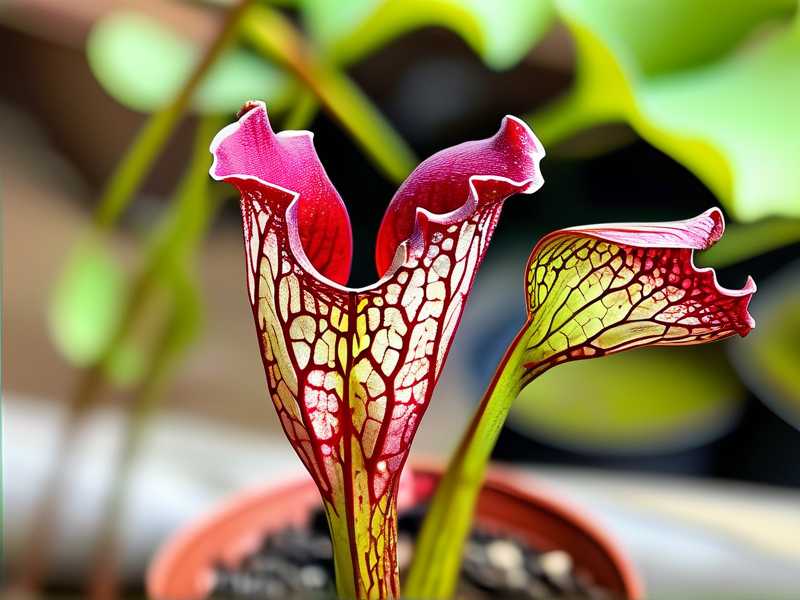
Before I dive into the six clues, let me address something that shocks most beginners. 90% of indoor plants die from overwatering, and Sarracenia are no exception, but for a completely different reason than you might think. With regular houseplants, overwatering means root rot from soggy soil. With Sarracenia, the issue is that people treat them like tropical plants. They keep them in a saucer with a little water, thinking that is enough. Then they place them in a shady spot because "it's a swamp plant, right?" Wrong. This combination creates a slow, agonizing decline that is hard to reverse if you don't catch it early.
In this guide, I am going to walk you through the six specific clues I watch for in my own collection. I will tell you exactly what I do when I spot them, and I'll share the mistakes I made that cost me hundreds of dollars in rare hybrids. I will also give you a two-week observation plan that you can implement today to assess your own plant's health. Let's get started, because your pitcher plant might be trying to tell you something right now.
The 6 Warning Clues That Scream "I'm Dying" (If You Know Where to Look)
Identifying unhealthy Sarracenia early signs isn't about staring at the plant and hoping for the best. It's about systematic observation. I check my plants every single morning with my coffee. It takes about two minutes. Here are the six specific things I look for, ranked in order of how quickly they signal danger.
Clue #1: The Color Drain (Loss of Anthocyanin)
Healthy Sarracenia boast vibrant colors. Whether it's the deep maroon of a Sarracenia purpurea or the striking red veins of a S. leucophylla, color is a sign of active photosynthesis and good health. When a plant starts to look washed out, faded, or just generally pale green without its characteristic pigmentation, something is off.
I remember when my prized Sarracenia 'Flava' started producing pitchers that were pure green. No red blush at the top, no venation. At first, I thought it was just a seasonal change. But the new pitchers were also thinner and floppier. That was my first clue of a light deficiency. The plant was stretching, literally reaching for more sun. The lack of color was a direct response to inadequate lighting.
What I do now: If I see pale new growth, I immediately check my light setup. Indoors, I use a strong grow light for 12-14 hours a day. Outdoors, I make sure the plant gets at least 6 hours of direct sun. This color test is the fastest way to catch a light problem before it weakens the plant.
Clue #2: The Mushy Rhizome Check (The Death Touch)
This is the most invasive check, but it is also the most reliable. The rhizome is the heart of the plant. To check it, I gently press the soil around the base of the plant. I am feeling for firmness. A healthy rhizome is hard, like a potato. An unhealthy one is soft, squishy, and might even feel hollow.
I lost my fourth plant to rhizome rot. It was a gorgeous Sarracenia 'Judith Hindle'. I had repotted it into a pot that was too deep, using soil that held too much water. I thought I was doing it a favor by giving it a big home. Three weeks later, the top growth looked fine, but the plant stopped producing new pitchers. When I finally dug down, the rhizome was a brown, mushy mess. It smelled like rotten vegetables.
My solution: If you feel any softness, this is an emergency. You have to act within 24 hours. Unpot the plant, wash off the roots, and use sterile scissors to cut away all the mushy parts. Dust the cut with a fungicide (I use a cinnamon powder, which works well as a mild anti-fungal) and repot it in a much smaller pot with a high-drainage mix of peat and perlite. I now check the rhizome firmness every two weeks by just pressing the soil gently. You don't need to dig it up every time, just feel for resistance.
Clue #3: The Stunted Growth Syndrome
Sarracenia are vigorous growers during their active season (spring to late summer). They should be pushing out new pitchers continuously. If you notice that the newest leaf is smaller than the previous one, or if growth has completely halted for two weeks or more during the growing season, you have a problem.
This stunting is often a secondary symptom. It usually means the roots are stressed, either from overwatering (ironically) or from lack of oxygen in the soil. I use tall pots (typically 5-6 inches deep) to accommodate the long roots, but I ensure the water level in the tray is never higher than 1 inch during the summer, and I let it dry out completely between waterings in the winter.
A trick I use: I take a photo of my plants every Sunday. It's a simple habit. By comparing photos, I can see the growth rate objectively. If a plant hasn't changed size in 14 days, I know to investigate the roots. Sometimes, it's just a lull, but often it's a sign that the soil is depleted or the roots are circling in the pot, becoming root-bound.
Clue #4: The Disappearing Act of Nectar (Lack of Dew)
Sarracenia catch insects using a mixture of nectar and slippery surfaces. The nectar is produced on the lip of the pitcher (the peristome) and near the top. It's sticky and glossy. On a sunny day, a healthy plant will have a visible, shiny dew on the mouth of the pitcher. It actually looks like a tiny, sweet puddle.
If I look at my plants and the lips are completely dry, dull, and feel slightly papery to the touch, I know the plant is running out of energy. This is a sign of severe stress. It usually accompanies either dehydration (if you have let the soil dry out completely) or root failure (which means the plant can't uptake water regardless of how much you give it).
This happened to me during a heatwave last summer. I was watering every day, but the temperatures hit 100°F. The plant couldn't keep up with transpiration. The nectar production stopped completely. I moved my pots into partial shade during the hottest part of the day (about 1 PM to 3 PM) and misted the leaves with water. Within five days, the dew production returned. The point is, the absence of dew is a faster indicator of stress than brown tips.
Clue #5: The Deformed Pitcher Issue
This clue is often overlooked, but it's a goldmine of information. A healthy Sarracenia pitcher is straight, tubular, and has a well-formed hood. If you see pitchers that are twisted, have holes that look like they weren't formed properly, or have a hood that is fused shut, you are likely dealing with a pest issue or a nutritional deficiency.
The most common culprit here is aphids. These tiny pests inject toxins into the developing leaf tissue, causing it to distort. I found this out after seeing a batch of severely deformed pitchers. I checked the undersides of the leaves and sure enough, there was a colony of green aphids nestled in the folds.
My treatment plan: I don't like heavy chemicals on my plants. For aphids, I use a systemic insecticide that is safe for carnivorous plants (imidacloprid) applied to the soil. It gets absorbed into the plant tissue and kills the pests when they feed. It takes about a week to see results. The new growth after that was perfectly normal. But catching it early prevented the infestation from spreading to my entire bog garden. If you see deformation, don't wait for it to get worse. Act immediately.
Clue #6: The Putrid Smell (Not a Flower)
When I say I smell my plants, I mean it. A healthy Sarracenia has a fresh, earthy smell. In contrast, an unhealthy rhizome releases a foul odor that smells like death and decay. I remember walking into my greenhouse one spring and catching a whiff of something that smelled like a garbage dump.
I immediately investigated. The smell was coming from the base of a pot. I tipped it over, and the soil had turned black and soupy. The drainage had failed, and the rhizome was sitting in stagnant, anaerobic sludge. This is the result of a combination of bad soil and standing water in a tray that never dried out. It is a death sentence if left untreated.
What I changed: I switched to a grittier mix. I use a 50/50 mix of sphagnum peat moss and horticultural perlite. I stopped using tap water (which adds minerals over time and breaks down the soil structure) and switched exclusively to distilled or rain water. I also stopped leaving water in the trays during the cold months. This simple change eliminated the rot issue entirely for me. Listen to your nose. It knows when something is wrong.
The 3 Catastrophic Mistakes Newbies Make (And How to Avoid Them)
You can learn all the signs, but if you are making these three foundational errors, you will be treating symptoms instead of the cause. I made all three of these mistakes. Let me save you from the pain.
Mistake #1: Watering with the Wrong Technique (The Drowning Myth)
I already mentioned the 90% statistic, but here is the nuance. For Sarracenia, the taproot does not like to sit in deep water. They are bog plants, yes, but they grow on the margins of bogs, often in raised hummocks. They do not grow in ponds. They require constant moisture but at a shallow level.
What I used to do: I kept the pot in a tray that was filled with two inches of water at all times. I thought "more water = more bog = happier plant." Wrong. The deep water suffocated the roots at the bottom of the pot. They rotted. The plant's leaves looked okay for a while because they were getting water from the top roots, but eventually, the stress caught up.
What you should do: Water from the top, like a normal plant, until water runs out the bottom. Then, let the excess sit in the tray for only a day or two, and then let the top inch of soil dry out slightly before watering again. In the summer, I water my outdoor bogs about every 1-2 days, just to keep the surface damp, but I never let the tray sit constantly full.
Mistake #2: Light Positioning (The Sunlight Blunder)
I cannot stress this enough: Sarracenia need direct sunlight. They do not thrive in a bright windowsill indoors. They need the unfiltered, harsh glare of the sun or a powerful grow light positioned just a few inches away.
My biggest failure: I had an apartment with a lovely south-facing window. I placed my Sarracenia right on the sill. I saw the direct sun coming in and thought that was plenty. But, the glass filters out a lot of UV rays, and the intensity was not enough. Over six months, my plant slowly weakens, produces thin, floppy pitchers, and loses its color. It never died, but it never thrived. It was an 'undead' plant.
The fix: I bought a cheap grow light (a simple LED panel) and suspended it 6 inches above the plant. I set it on a timer for 14 hours a day. Within two weeks, I saw the new growth getting thicker and more colorful. The difference was night and day. If you are indoors, artificial lighting is non-negotiable. If you are outdoors, find the sunniest spot possible, at least 6 hours of morning sun.
Mistake #3: Choosing the Wrong Pot (The Deep Pot Trap)
Sarracenia have deep, fleshy roots. They need room. However, a pot that is too deep will hold stagnant water at the bottom, which floats the rhizome too low, causing it to suffocate. A pot that is too shallow will allow the roots to hit the bottom and heat up in the sun.
The Goldilocks rule: I use pots that are about the same depth as the top leaf is tall, but at minimum, 5-6 inches deep. The width should be such that the rhizome has about 2 inches of space on each side to grow. More importantly, the pot must have drainage holes. I also stay away from terracotta. It wicks moisture and can dry out the soil too quickly, and it can leave mineral salts in the soil. I use plastic or glazed ceramic pots.
My exact method: I repot in early spring, just as the plant wakes up. I fill the pot with a pre-moistened 50/50 peat/perlite mix. I place the rhizome on top of a small mound of soil, spreading the roots down and outward. I then cover the rhizome with soil, leaving the growing tips exposed at the surface. This ensures that the growing tips and the crown stay dry and airy, while the roots anchor down into the damp soil below. This is how RHS recommends positioning them to avoid stem rot.
My 2-Week Observation Plan: A Step-by-Step Guide
You cannot identify unhealthy Sarracenia early signs by looking once. You need a protocol. This is my exact two-week plan that I run on any new plant I get, or any plant that looks slightly "off." It takes five minutes a day.
Week 1: Baseline and Physical Inspection
Day 1: Take a full-body photo. Note the date. I record the height of the tallest pitcher. I also check the rhizome firmness (Clue #2) and note the soil dryness. Days 2-4: I check daily for new growth. I look specifically at the soil surface. Does it look crusted? Does it smell? I also touch the leaves. A healthy leaf feels waxy and stiff. If it feels rubbery or bends easily, that is a hydration issue. Day 5: I do a pest check. I use a magnifying glass to look at the underside of all leaves, especially the new unfurling ones. I am looking for the shiny residue of spider mites or the slow crawl of aphids. This is the day I inspect the nectar (Clue #4). Day 6-7: I check the color of the new growth specifically. If the newest leaf is lighter green than the older ones, that is the early stage of a nitrogen deficiency, not a light issue. I don't expect to see changes here, but I am logging the baseline.
Week 2: Growth Assessment and Water Audit
Day 8: I measure the height of the same leaf I measured on Day 1. If it hasn't grown at all in 7 days during the active season, I suspect a root issue. I unpot it carefully to inspect. Often, this is where I find the rot that wasn't visible on the surface. Day 9-10: I do a water test. I pour distilled water over the soil. I watch how fast it drains. If it pools on the top for more than 10 seconds, my soil has degraded. I need to repot. If it drains instantly, my mix is fine. Day 11: I look at the overall shape of the plant. Are the pitchers curving unnaturally? Are they leaning more than 45 degrees? This is a sign of etiolation (stretching for light). Day 12: I check the base of the plant where the leaves emerge. I look for a red/purple ring or a powdery white mold. This is a sign of fungal infection, often caused by high humidity and poor airflow. Day 13: Final comparison. I compare the Day 1 photo to the Day 13 photo. Usually, by now, I should see at least 1-2 inches of new growth if the plant is healthy. If not, I know I have a systemic issue that requires immediate intervention. Day 14: Repot or adjust. Based on my findings, I either repot with fresh mix, adjust my lighting position, or change my watering schedule. This two-week cycle catches slow decline before it becomes a death spiral.
Expert Authority Support (Why This Works)
My experience is backed by the horticultural knowledge of major institutions. The Royal Horticultural Society (RHS) and the American Horticultural Society (AHS) both emphasize that pitcher plants require a distinct dormancy period and high light levels. They also warn against the use of mineral-rich tap water, which is not just a suggestion, it is a rule for survival.
The RHS specifically notes that Sarracenia are prone to root rot if the rhizome is kept in saturated soil for extended periods. They advocate for a free-draining, low-nutrient compost. This validates my personal failure with the deep tray and soupy soil. The AHS, similarly, highlights the importance of genus-specific care, noting that these are not tropical plants. They need a cold winter rest, which many indoor growers incorrectly try to prevent.
Listening to these institutions is smart. They have test gardens that run trials on hundreds of plants. Their advice is data-driven. But practical experience adds the nuance that no textbook can. For example, I learned that the phrase "standing in water" is often misinterpreted. It means sitting in a shallow saucer that dries out between waterings, not being submerged in a deep tray. This is the kind of translation from theory to practice that saves plants.
I also learned from a breeder that plants often show early signs of stress through the thickness of their cuticle (the waxy outer layer). A stressed plant has a thinner cuticle, making it more susceptible to sunburn and pests. I can't always see that with the naked eye, but I can feel it. When a healthy leaf is smooth, a stressed leaf feels slightly rough or gritty.
FAQ: Your Burning Questions Answered
Why is my Sarracenia turning brown at the tips, but the base is okay?
Brown tips are usually a sign of stress from the past. If the base is okay and there is new growth, this is often a delayed symptom of a watering issue from 2-3 weeks ago. It could have been too much salt in the water (tap water) or brief drying out. Check the new growth. If the new pitchers are clean, the plant is recovering. If the new pitchers also have brown tips, then you have an active problem with the roots or the water supply. I don't panic over brown tips unless they are accompanied by other clues like mushiness or discoloration.
Can I save a Sarracenia that has a fully mushy rhizome?
Honestly, it's a race against time. If the rot has spread to half the rhizome, the chances are slim. But I have saved a few by acting fast. I cut away all the rot until I only see white/pale cream colored tissue. I then soak the remaining rhizome in a 3% hydrogen peroxide solution (1 part peroxide to 3 parts water) for 10 minutes. I let it dry for a few hours and then plant it in a very dry, sandy mix. I do not water it for a week. This shock therapy works about 20% of the time. However, if the growing tips themselves are brown and mushy, it is usually fatal.
How much sun is "too much" for Sarracenia indoors?
This is tricky. Indoors, you rarely get "too much" sun because glass filters the strongest UV rays. But you can get overheating. If the window completely encloses the plant, it can cook. I had a greenhouse that hit 120°F (49°C) on a sunny day. That is too hot, and the leaves actually scorched. If you are growing indoors, direct sunlight through a window is almost always safe. Just ensure there is air circulation. If the leaves feel hot to the touch (above 100°F), you need to move them or open a window. Heat stress looks like a burnt, bleached patch on the leaf, not a uniform browning.
Final Thoughts: You Are the First Defender
At the end of the day, you are the best line of defense for your plants. You see them every day. You know what 'normal' looks like for them. Trust your gut. I knew my plant was sick even before my fingernails found the soft rot. Something just felt "off."
Don't be afraid to touch your plant. Affection in the form of a firm press on the rhizome is actually a medical check-up. Don't be afraid to make mistakes. I have killed over a dozen Sarracenia in my journey. Each death taught me a lesson. The difference is that I learned to catch the signs earlier and earlier.
Start using this checklist today. Pick up your pot. Look at the color. Feel the soil. Smell the base. Do this for two weeks, and you will become an expert at identifying unhealthy Sarracenia early signs. You will save hundreds of dollars and a lot of heartbreak. Trust me, the investment of five minutes a day is worth it. Your plant will thank you with monstrous, colorful pitchers that will make your neighbors jealous.





