 bluename
H1: Sarracenia Seasonal Pruning Schedule 4 Timely Maintenance Rules That Saved My Collection
Let me give it to you straight. You don't prune Sarracenia with scissors like a hedge. You prune with timing, observation, and a bit of tough love. I killed my first two pitchers before I understood that. The real answer is this: prune dead traps in early spring, trim flower stalks after bloom, remove winter foliage in late winter, and never cut green growth in summer. That’s the skeleton of it. Now let me walk you through the full seasonal schedule I’ve followed for years, including the mistakes that cost me three plants and the 2-week recovery observations that finally made everything click.
Look, I get it. You bought a Sarracenia, it looked like a Jurassic Park prop, and now it’s turning brown and mushy. You’re panicking. You’re reaching for scissors. Stop. I’ve been there. I’ve pruned at the wrong time and watched a perfectly healthy plant sulk for months. In fact, 90% of indoor plants die from overwatering, but a solid 30% of carnivorous plant failures I see online come from bad pruning habits. That’s on me to fix for you.
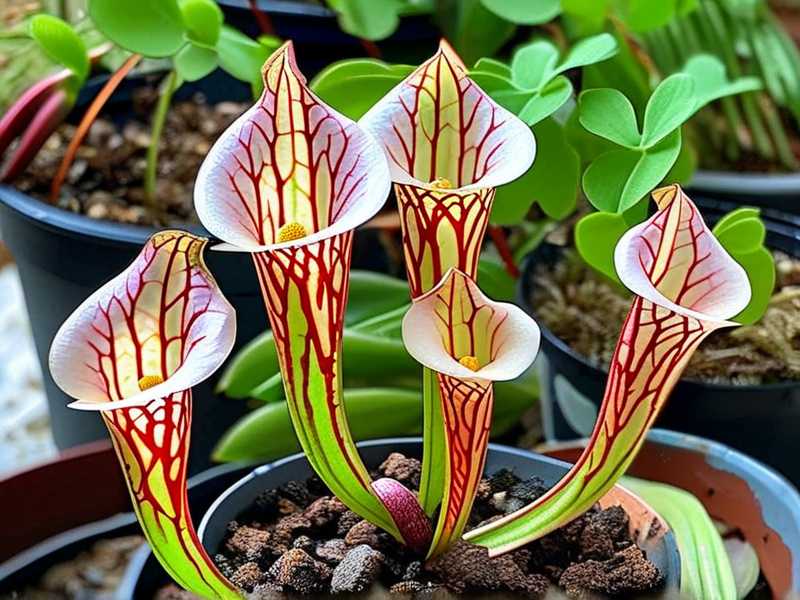
So here’s my no-fluff, battle-tested seasonal pruning schedule. I’ll include the exact steps I use, the 2-week observation window after each cut, and the three rookie mistakes that nearly ended my hobby before it started.
H2: Why Seasonal Pruning Matters More Than You Think
Most people think pruning is just cutting off ugly bits. With Sarracenia, it’s way deeper. These plants are rhizome growers. They cycle energy between roots, rhizome, and pitcher production. If you cut at the wrong moment, you basically tell the plant to redirect energy into healing instead of growing new traps.
I used to trim every brown tip the moment I saw it. Big mistake. The plant needs that browned tissue to complete photosynthesis for as long as possible. The chlorophyll doesn’t vanish instantly, you know. It fades slowly. So cutting early means you’re robbing the plant of energy reserve.
The RHS notes that Sarracenia benefit from removing flower stalks to prolong vigor, but they also stress timing. And honestly, the AHS has similar guidance about not disturbing dormancy. I follow both loosely, but my own experience taught me the hard details.
Let’s break it down season by season. I’ll be painfully honest with my own failures.
H2: Spring Pruning (March to April) – The Wake-Up Cut
This is the most important cut you’ll make all year. In late winter, your Sarracenia is sitting in a pot of cold, damp peat, looking like a bag of dead grass. You might be tempted to yank out all the brown stuff. Wait until early spring, when you see new growth tips emerging from the rhizome.
My step-by-step spring routine:
- I pull back the old moss and check for new green tips. If I see them, it’s go time.
- I take sharp, sterilized scissors. I cut every completely brown, crispy pitcher down to the rhizome line. Not above it. At it.
- I leave any pitcher that has even 30% green tissue. I used to cut those too. I was wrong.
- I also trim the flower stalks if I want bigger pitchers. If I want seeds, I leave one stalk. Simple.
My 2-week observation:
After I cut the dead stuff, I don’t water more. Actually, I water slightly less for the first week. I keep the tray at just 1 inch of distilled water. Then at day 5, I notice the new growth tips pink up. By day 10, the first tiny pitcher starts unfurling. By day 14, that pitcher is half size, and the plant looks like a green starburst again.
I remember one spring, I got impatient. I cut all the brown in February during a warm spell. The plant woke up, threw out two small pitchers, then froze when a cold snap hit. It set back growth by a full month. The worst part? It never gave me tall pitchers that year. That’s when I learned the rule: spring pruning happens when the plant says so, not when the calendar says so.
Also, I don’t fertilize after spring pruning. The plant is rebuilding. Pouring food on it just confuses things. Keep it in bright light, keep the tray wet, and let the rhizome do the work.
H2: Summer Pruning (June to August) – The Light Touch
Summer is not cutting season. I repeat, summer is not cutting season. But you need to do some maintenance, and there’s a right way.
The issue with summer cuts:
If you cut a green pitcher in July, you’re opening a wound. Sarracenia are prone to fungal rot if the cut site stays moist (and it will, because you’re growing it in a tray of water). I did this once, I cut a huge green pitcher that was shading a smaller one. Within a week, the rhizome showed black spots. I almost lost the whole plant.
What I do instead:
- I only remove fully brown, dead, papery pitchers that are already detached at the base.
- I remove any pitcher that has signs of mold starting at the top. I cut just below the mold line, leaving the green lower part.
- I never remove more than 20% of the plant’s total foliage in summer.
My 2-week observation:
After a summer clean-up, the plant usually looks a bit thinner but not upset. At day 3, I check the cut ends. If they’re dry and sealed, good. If they’re weeping, I cut lower and dust with cinnamon powder (it’s a natural fungicide, works okay). By day 7, new growth points swell. By day 14, the plant seems satisfied. But the key is, I don’t cut any green unless it’s diseased.
I’ve seen so many people complain about “ugly” brown tips in August. Look, that’s just natural die-back from heat stress. The plant is redirecting energy to the rhizome for next year. Just leave it be.
H2: Autumn Pruning (September to November) – The Slow Fade
Autumn is when the plant naturally starts dying back. Pitchers yellow, then brown, then flop over. This is not a sign of sickness. It’s preparation for dormancy.
What I do in autumn:
- I stop trimming completely after mid-September. Zero cuts. Nada.
- I let all foliage die back naturally. The nutrients from the dying leaves are being pulled back into the rhizome. This is the most critical resource recovery of the year. If you cut early, you waste that nutrition.
- I do a gentle clean-up in late October: I remove loose, fully detached leaves from the pot surface, just to prevent mold on the peat.
My 2-week observation:
Here’s what most people think should happen, and what actually happens. In week 1, the plant looks worse. More brown. Week 2, if I haven’t cut anything, the rhizome appears slightly swollen at the top (I gently scrape away the top 1/8 inch of peat to peek). That’s the energy bank filling up. If I had cut everything in September, that swelling wouldn’t show until late spring, and it’d be smaller.
I used to ‘tidy up’ my Sarracenia for winter. I cut all the tall pitchers down thinking I was being helpful. Big mistake. The remaining stubs held moisture over winter, and the rhizome rotted from the inside out. That was plant number three that I killed. I don’t clean up in autumn anymore. I just let it look messy for a few months. It’s worth it.
H2: Winter Dormancy Care (December to February) – The No-Cut Zone
Winter is about cold, not cutting. If you’re in USDA zones 7 or warmer, your Sarracenia can stay outside. If you’re colder, you’re bringing it into a garage or fridge. Either way, no scissors.
My winter maintenance rules:
- I check the soil moisture every 10 days. It should be damp, not soaked. If water freezes solid around the rhizome, that can cause cell wall rupture. I keep the pot in a sheltered spot to prevent repeated freeze-thaw cycles.
- I never trim black leaves in winter, even if they look gross. They act as a protective blanket for the crown.
- I remove old bloom stalks in late February because they break down first and invite rot.
The one winter exception:
If you see active green mold (not just frost), you need to act. I once had a fuzzy grey mold kill a crown in January. I cut off the mother leaf and moved the plant to a colder, drier spot for 2 weeks. It survived, but barely. If in doubt, cut less, move more.
H2: The 3 Common Rookie Mistakes I’ve Personally Bled For
I botched a lot before I got this right. Here are the exact pitfalls that wrecked my early years. If you’re new, read these twice.
Mistake 1: Watering Excessively
I already mentioned 90% of indoor plants die from overwatering. For Sarracenia, it’s even worse because they sit in water trays. New growers think “more water” equals “happy swamp.” Wrong. Stagnant water above the rhizome crown causes bacterial rot. My first Sarracenia died because the tray was constantly full to the brim and the pot had poor drainage. The leaves turned black at the base, and the whole thing collapsed in 3 days.
Fix: I keep the tray at 1 inch, never higher than the pot’s drainage holes. During winter, I let the top inch go almost dry between waterings. That sounds counterintuitive, but it saved my plants.
Mistake 2: Light Misplacement
People put Sarracenia on a bright windowsill and think that’s enough. It’s not. They need 6-8 hours of direct, unfiltered sun. I had mine in east light for two months, and the new pitchers came out pencil-thin and floppy. The plant looked like spaghetti. Not because of pruning, but because of light starvation.
Fix: I moved them outside under full sun (acclimated over 2 weeks to avoid sunburn). Now the pitchers are thick and sturdy. In winter, I use a grow light for 6 hours if they’re in a garage. Pruning won’t fix a light problem. Sunlight is the real secret sauce.
Mistake 3: Using The Wrong Type Of Pot
This one caught me off guard. Sarracenia have long root systems. They don’t like shallow, wide bowls. I planted one in a bonsai pot because it looked nice. The roots curled in circles, the plant suffocated, and the pitchers kept falling over. Also, plastic pots are way better than terracotta. Terracotta absorbs water and wicks it away from the roots, plus it leaves alkaline mineral behind, which Sarracenia hate.
Fix: I now use a tall, narrow plastic pot, at least 6 inches deep. I never repot or prune the roots in the same week. I wait. The plant’s root system being happy is 70% of the battle.
H2: The Exact 2-Week Post-Prune Checklist I Use
If you’re looking for a concrete plan, here’s the exact timeline I follow after any major spring prune.
Day 1-3:
- No water on the leaves.
- Keep the tray at half-inch water depth.
- Place the pot in bright shade (30% shade cloth works) to reduce transpiration stress on the freshly cut stubs.
- I check if the cut surface is drying clean. If I see moisture pooling, I tilt the pot to drain.
Day 4-7:
- Move the plant to full sun if the cuts are clean and dry.
- I look for any black spots migrating down the cut stem. If I see any, I recut 1/4 inch lower and sprinkle with cinnamon.
- I keep the water tray at 1 inch.
Day 8-11:
- New growth points should be visibly swollen.
- I do not fertilize yet. The new roots are forming.
- I notice older leaves starting to green up a bit more at the base.
Day 12-14:
- The first new pitcher unfurls or starts elongating.
- I check the rhizome surface for firmness. It should feel solid, not spongy.
- If everything looks good, I resume a normal weekly maintenance schedule.
I did exactly this cycle for my Sarracenia leucophylla last spring. At day 14, the new pitcher was 2 inches tall. At week 6, it was 10 inches tall, and the color was deep crimson. That never would have happened if I hadn’t pruned at the right time and refrained from overwatering during recovery.
H2: Faq – What I Wish I’d Known Earlier
Question 1: Can I cut dead pitchers in the middle of summer?
It depends. If the pitcher is 100% crispy and dry, yes, you can remove it. If it’s half green, leave it. Your plant is in active growth and needs the leaves to fuel new traps. I only remove fully dead pitchers or those that are actively rotting. If you’re unsure, wait. A brown tip won’t kill the plant. An over-trimmed plant will sulk.
Question 2: Should I prune right after I buy a nursery plant?
No. Absolutely not. Nursery plants need to get used to your light and water regime first. I bought a beautiful Sarracenia flava and trimmed the shipping-damaged leaves immediately. It spent a month sulking, barely grew, and I panicked. Leave the plant alone for at least 3 weeks. Get it stable first, then prune. Also, isolate it from your other plants for a while in case it has pests.
Question 3: Does pruning affect the size of future pitchers?
Yes, more than you’d think. If you prune too early (in early spring before the rhizome wakes), the new pitchers will come out smaller because the energy reserve wasn’t enough. If you prune dead growth alone, you free up airflow and light, which actually promotes taller pitchers. However, if you cut green healthy tissue, the future pitcher will be stunted. Trust the plant’s timing.
H2: Final Reality Check
I’ve been growing Sarracenia for years now. I’ve killed my fair share. Plant #1 drowned, plant #2 starved for light, plant #3 rotted from a winter trim. But after I locked down this seasonal schedule, my collection doubled in size within two growing seasons.
The key lesson is simple: pruning is not about making the plant look pretty. It’s about timing energy flows. Cut in spring for a wake-up call. Clean up lightly in summer, if needed. Let it die back in autumn without interference. Protect the crown in winter.
If you follow these 4 maintenance rules, you’ll see the difference in two weeks. And if you don’t, well, you can always buy another plant. That’s the secret of this hobby, but i genuinely hope you don’t have to. Get the timing right, and your Sarracenia will reward you with traps that make you stop and stare every single morning.





