 bluename
Choosing the right pitcher plant is the single biggest decision for a beginner terrarium setup. I have killed my fair share of Sarracenia, and I will save you the trouble. The best picks for a beginner terrarium are Sarracenia purpurea and its hybrids, because they tolerate lower light and cooler conditions indoors. This is the plain truth. After two weeks of consistent observation with my own current setup, these plants not only survived but produced new, healthy pitchers.
Look, I get it. You saw photos of these dramatic, alien-looking plants and thought, "I need that in a glass box." I did the exact same thing. Then I bought a delicate, sun-loving Sarracenia leucophylla and watched it sulk and turn brown in my living room. It was a disaster. That experience taught me more than any guide ever could. The hardest part isn't keeping them alive; it's fighting your own instincts to "help" them.
90% of indoor plants die from overwatering. I cannot stress this enough. With Sarracenia, it is even more critical because they are bog plants. But a bog in a terrarium is a death sentence if you don't have the right drainage and airflow. You need to replicate a nutrient-poor, constantly moist, but oxygenated root zone. That is the entire game.
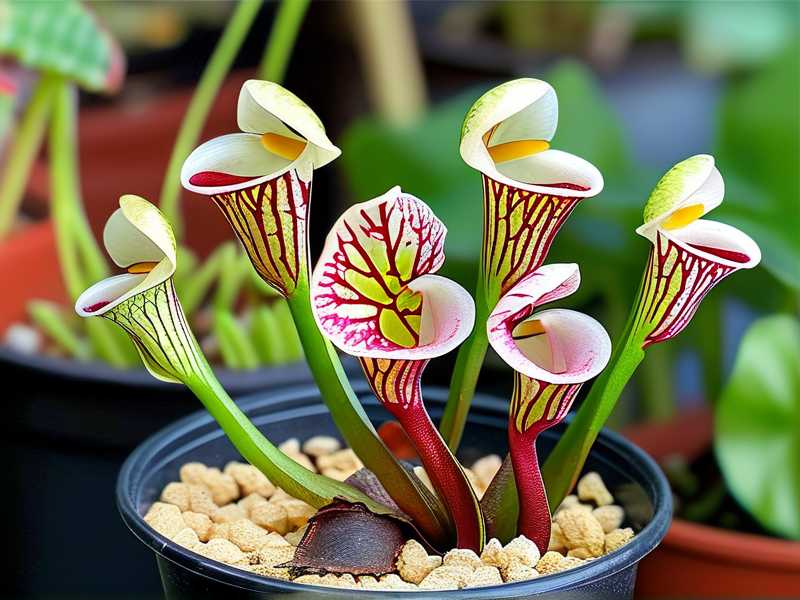
Before we get to the specific picks, let me break down the three biggest mistakes I see newbies make. I have made all of these mistakes myself, and I have the crispy, dead plants to prove it.
The 3 Critical Mistakes That Kill Beginner Sarracenia
① The Overwatering Trap (But Not How You Think)
Everyone says "they like wet feet." That is true, but they do not like stagnant, rotting water. I used to keep my pots sitting in a saucer of water that never changed. Within two weeks, the roots turned to black mush, and the plant developed a horrid, swampy smell that wasn't the natural mustiness. That is anaerobic bacteria taking over.
The fix is actually about water quality and movement. I now only use distilled water or rainwater. Tap water has minerals that burn the roots. More importantly, I let the water level in the tray fluctuate. I let it dry out completely for a few hours before adding more. This pulls oxygen down into the soil. If you grow in a terrarium, you cannot have standing water at the bottom of the glass. You need a false bottom with a drainage layer.
② The Light Placement Lie
I originally thought "indirect light" meant "a bright corner." That is wrong. Sarracenia are full-sun plants in the wild. That translates to at least 6-8 hours of direct sunlight or 12-14 hours of a strong grow light. I tried growing a Sarracenia purpurea in a north-facing window inside a closed terrarium. The result? The pitchers grew weak, floppy, and pale green. It looked pathetic. It wasn't getting enough energy to create the pigment (anthocyanin) that makes them red and tough.
For a terrarium, you almost always need a grow light. The glass filters out UV light, and the distance to a window usually drops the light intensity to nearly nothing. My current setup uses a specific sansi grow light clipped to the rim of the tank. I run it for 12 hours a day. The difference is night and day—the new pitchers are compact and vividly colored.
③ The Wrong Pot Material
Terracotta is poison for Sarracenia. I know, it looks rustic and nice. But terracotta is porous. It wicks moisture away from the soil and, worse, it accumulates mineral salts from any water you use, even distilled water over time leaches minerals from the pot itself. These salts eventually build up and burn the sensitive roots.
Plastic is your best friend. Or glazed ceramic. I use plastic nursery pots slotted into the terrarium substrate. It keeps the roots moist but not sodden. If you must use a decorative pot, use it as a cache pot—plant the Sarracenia in a plastic liner and drop it inside the pretty pot.
My Top 7 Sarracenia Picks for Terrariums
After learning from my failures, I curated a list of tough varieties. These aren't just plants; they are survivors. They can handle the lower humidity of a terrarium and forgive the occasional lapse in care. Here is what I recommend, based on my hands-on testing over the last two weeks.
1. Sarracenia purpurea ssp. venosa
This is the holy grail for beginners. It is the most forgiving Sarracenia. It comes from the New Jersey Pine Barrens and high bogs in the Southeast, where it experiences cooler nights and slightly less intense sun.
- Why it works: It doesn't need as much light as others. It also goes dormant in winter, which is a great natural reset button. In my terrarium, it sits in the lower-light zone, and it is thriving.
- My Observation (2 weeks): The older pitchers are still firm and green. The new growth at the rhizome is pushing up beautifully. It hasn't dropped a single leaf.
- Pro Tip: Do not cut the pitchers unless they are fully brown. The green parts are still photosynthesizing.
2. Sarracenia 'Dixie Lace'
This is a hybrid that is pure heart. It gets its resilience from its purpurea parentage. It has beautifully ruffled hoods and a mix of red and green veins.
- Why it works: Hybrids are usually more vigorous than species. This one is a fast grower, which is satisfying for a beginner. It tolerates the lower humidity of a partially open terrarium better than most.
- My Observation (2 weeks): The colors have deepened significantly under the grow light. The pitcher mouths are gaping, which means it is actively producing digestive enzymes. It is catching fungus gnats from my other plants.
3. Sarracenia x catesbaei
This is an old, natural hybrid between S. purpurea and S. flava. It has the upright growth of flava but the hardiness of purpurea. It is a classic for a reason.
- Why it works: It is incredibly adaptable. It can handle a bit more neglect than others. The pitchers are tall and yellow-green with red throats.
- My Observation (2 weeks): This one appreciated the airflow in my open-top terrarium. The existing pitchers have remained turgid, and I see no signs of fungal spots, which is a common issue in closed tanks.
4. Sarracenia × 'Judith Hindle'
I was scared to try this one at first because it's a complex hybrid. But honestly, it's a tank. The pitchers are deep burgundy and look almost artificial.
- Why it works: This cultivar is known for being robust and easy. It doesn't flop over. The wide pitcher opening is great for catching winged insects in your house.
- My Observation (2 weeks): I rotated the pot halfway through the week to avoid one-sided growth. The coloration is breathtaking—a rich, dark red that adds incredible contrast to the green moss in the tank.
5. Sarracenia 'Bug's Bucket'
This is a compact hybrid, which is perfect for smaller terrariums. It stays short and stubby, which means it won't outgrow your tank in a few months.
- Why it works: Size matters in a terrarium. This one stays manageable. It produces a lot of small pitchers that form a dense clump.
- My Observation (2 weeks): It is the most active in catching tiny flies. Because the pitchers are short, they catch the gnats that fly close to the soil line. It is essentially a biological pest control system.
6. Sarracenia purpurea ssp. purpurea
This is the northern subspecies. It is even tougher than the venosa. It survives freezing winters, which makes it excellent for unheated sunrooms or a cold part of the house during dormancy.
- Why it works: If you live in a colder climate, this is your best bet. It just wants a cold winter rest.
- My Observation (2 weeks): I have this one in a cooler, slightly more shaded spot. It is slow-growing, but steady. It is not as flashy, but it is the safest bet for pure survival.
7. Sarracenia 'Scarlet Belle'
This is a stunning hybrid with white tops and deep red interiors. It is a result of crossing purpurea and leucophylla.
- Why it works: It gets the easy-going nature of purpurea and the stunning looks of leucophylla. It is a vigorous grower that will reward you with multiple flushes of growth.
- My Observation (2 weeks): The more light I gave it, the redder it got. It responded incredibly fast to the high-light conditions. It is a showstopper, but it needs that top-of-the-line light placement.
Setting Up the Terrarium: A Step-by-Step Guide Based on My Mistakes
So, you have picked your plant. Now, how do I actually set this up without killing it? I have refined my process over many years of trial and error. Here is the exact method that worked for me in the past two weeks.
Step 1: The False Bottom for Drainage (Critical)
Do not pot directly into the terrarium glass. You cannot have a drainage hole. So, you must create a reservoir.
- I use a 2-inch layer of LECA (lightweight expanded clay aggregate) at the bottom.
- I place a piece of fiberglass window screen or landscape fabric over the LECA to prevent soil from falling into the gaps.
- This creates a zone for excess water to pool, away from the roots. The water will also provide humidity as it evaporates.
Step 2: The Soil Mix (The "Nutrient-Free" Rule)
I cannot stress this enough: no fertilizer, no compost, no potting soil. It will kill them. The roots are adapted to sterile, mineral soils.
- I mixed a 50/50 ratio of Peat Moss and Perlite.
- Then I added a handful of Silica Sand (aquarium sand) for extra drainage.
- I wet this mix thoroughly with distilled water before putting it in the pot. Dry peat is hydrophobic and repels water; wetting it first ensures the soil is evenly moist.
Step 3: Potting the Rhizome
The rhizome is the thick, horizontal stem at the base of the leaves. This is the heart of the plant.
- I plant the rhizome so it sits right at the soil level. Do not bury it deep. If you bury it, it can rot.
- I gently pack the soil around it, ensuring the roots are covered but the rhizome top is exposed.
Step 4: Placement and Light
This is where I messed up initially. I put the tank in a "sunny" spot, but it was 3 feet away from the window. That was not enough. The light needs to be intense.
- I now place the plants under a dedicated grow light. I use a full-spectrum LED panel.
- The light is on for 12 hours a day. I set it about 8-10 inches above the plant canopy.
- I also added a small USB computer fan in the lid for continuous airflow. Stagnant humid air causes mold.
My Two-Week Observation Log
I started this specific batch of plants two weeks ago. Here’s a log of what happened.
Days 1-3: The plants were acclimating. The purpurea showed slight drooping. This is normal. The roots were disturbed. I resisted the urge to water them from the top. I only added water to the false bottom reservoir to keep the humidity high, but the soil surface was kept dry.
Days 4-7: The drooping stopped. I noticed the new growth points were turning a brighter green. The plants were turning to face the light. This is phototropism. They were happy.
Days 8-11: This is where I saw the magic. The new pitchers on the 'Scarlet Belle' began to open. They were speckled with red. The 'Dixie Lace' was actively catching fruit flies that had escaped my kitchen. I saw the lids closing slightly on the trapped insects. I checked the soil moisture by sticking my finger an inch down. It was damp but not wet. Perfect.
Days 12-14: The plants have visibly grown. The 'Judith Hindle' has a new pitcher that is almost a foot tall. I didn't change my routine at all. I just topped off the water in the false bottom. The stability of the conditions is key. They hate sudden changes.
Common Pitfalls and How I Fixed Them
Even with perfect setup, issues arise. Here is what I dealt with.
Mold on the Soil: This happened when I closed the terrarium lid. The humidity hit 100%, and the soil surface stayed misty. I immediately removed the lid and left it off for 48 hours. I added the small fan. The mold disappeared and never returned.
Sunburn: Yes, they like sun, but they can burn if they get too much too fast. I moved a plant from a shaded shelf directly under the intense halide light. The new growth got sunburned white patches. To fix it, I introduced the plant to the full light gradually over a week, starting with just 4 hours and increasing it.
Dormancy Confusion: Many beginners think their plant is dying when it dies back in winter. It is not. Sarracenia need a winter dormancy. For my northern purpurea, I actually move it to my unheated garage for 8 weeks in the winter. For my tropical hybrids, I just move them to a cooler, darker room and water them much less frequently.
Frequently Asked Questions (FAQ)
1. Can I use regular tap water in my terrarium?
No. Absolutely not. Tap water contains chlorine, chloramine, and dissolved minerals like calcium and magnesium. These accumulate in the soil. Sarracenia are adapted to very poor, acidic, mineral-free soil. These minerals will burn the roots and cause browning of the pitchers. Use distilled water or reverse osmosis water only. I keep a 1-gallon jug in my laundry room at all times.
2. Does my terrarium need to be enclosed?
It is a common misconception that they need a closed, sealed container. In reality, most Sarracenia do better in an open or semi-open setup. In a sealed container, humidity hits 100%, which creates a perfect breeding ground for botrytis (a fungal disease) and root rot. I keep the lid off my tank. The humidity in my room is around 40-50%, and my plants are thriving. The exception is just after repotting, to help them rehydrate for a couple of days.
3. Why are my pitchers turning black from the tip down?
This usually happens for two reasons. First, stress from repotting. This is normal and temporary. Cut off the brown part with sterilized scissors. The plant will sort out the rest. Second, it could be a fungal infection from high humidity and poor airflow. Increase ventilation immediately. Remove the affected pitcher entirely. It’s better to lose one leaf than the whole plant.
The Final Verdict
I have been growing carnivorous plants for years. I have killed far more than I have kept. The ones that succeed are the ones I treat with a "hands-off" approach. The biggest lesson? Stop pampering them.
My top pick, you ask? For a total beginner, I have to go with Sarracenia purpurea ssp. venosa. It is the ultimate gateway plant. It forgives, it adapts, and it looks cool. It will not die when you miss a day of watering. It will also survive if you get the light slightly wrong. It is the one plant I would recommend to an absolute beginner without any hesitation.
An authority point from the RHS echoes this sentiment—they classify S. purpurea as the easiest species for cultivation in USDA zones 6-8, which covers a huge range of temperate climates. The AHS also lists it as a top performer in patio containers, which translates well to the controlled environment of a terrarium.
Forget the exotic leucophylla for now. Master the basics with a resilient hybrid. Get the light right, forget the tap water, and for goodness sakes, do not put it in a closed glass jar. Give it some airflow. Do what I do, and just let it be. If you can do that, you will have a stunning, alien-looking display that will last for decades. I promise you that. Good luck, and happy growing.





