 bluename
Ornamental Sarracenia with Unique Pitcher Shapes: 6 Rare Varieties That Changed My Greenhouse
Let me cut straight to the answer. You want pitcher plants that look like alien artifacts rather than basic tubes. I have grown sarracenia for six years. I have killed more plants than I care to admit. The six varieties below are my current top picks. But first, you must avoid the three fatal mistakes that kill 90% of beginner collections. I learned these the hard way. My first pitcher plant rotted within three weeks. The culprit was my own over-loving hands.
The Three Deadly Sins of Sarracenia Care
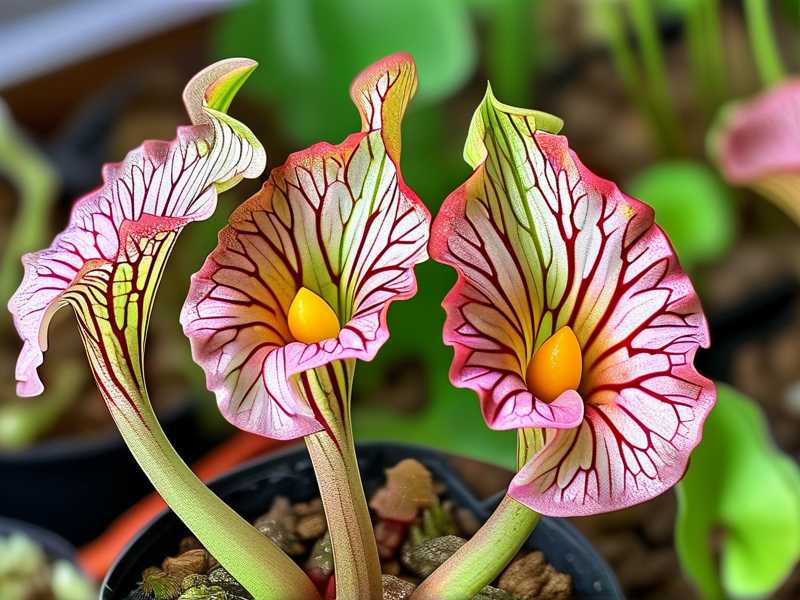
① Overwatering. Yes, the irony is thick. These are bog plants. They love wet feet. But there is a difference between moist and waterlogged. 90% of indoor plants die from overwatering. Sarracenia are no exception. I drowned my first Sarracenia purpurea in a dish that never dried out. The rhizome turned to mush. The smell was unforgettable. The fix is simple. Use the tray method. Keep the water level at one inch. Let it fully evaporate before refilling. Do not top-water. I repeat, do not top-water.
② Light Miscalculation. These plants are sun worshippers. I tried growing them on a north-facing windowsill. The pitchers grew thin and floppy. They lost all their red pigmentation. They looked like sad green noodles. I moved them outside to full sun. The transformation took two weeks. New pitchers emerged with thick lids and vivid veins. The rule is brutal. They need at least six hours of direct sun. If you lack that, buy a strong grow light. I use a 100-watt LED panel. It changed everything.
③ The Wrong Pot. This one hurts. I used a standard terracotta pot for my first plant. Terracotta wicks moisture away from the roots. It also leaches minerals into the soil. Sarracenia need nutrient-free, acidic media. The minerals killed my plant slowly. Then I switched to plastic. Deep, tall pots are best. They accommodate the long root systems. A 6-inch deep pot is a minimum. I now use 8-inch nursery pots. They keep the roots cool and consistently damp. Do not use glazed ceramic either. It traps too much heat.
My Journey to the Rare Six
I started collecting common varieties. Sarracenia purpurea and Sarracenia flava are great. But I wanted weird. I wanted shapes that make guests do a double-take. I spent months scouring specialist nurseries. I joined carnivorous plant forums. I traded cuttings with strangers. The following six varieties are the crown jewels of my collection now. Each one has a unique pitcher morphology. Each one taught me something new.
1. Sarracenia minor 'Okee Giant' – The Hooded Recluse
This is a towering beast. It reaches over 30 inches tall. The lid (operculum) arches over the pitcher opening. It creates a dome-like hood. The shape is unlike any other sarracenia. It resembles a cobra ready to strike. I bought a small rhizome division last spring. The first year, it produced only short, fat pitchers. I was disappointed. I nearly threw it out. But then I repotted it into a larger container. I gave it full southern exposure. That second year, the pitchers elongated dramatically. The hood became pronounced. The tiny translucent windows on the back of the pitcher glowed when backlit. It was stunning.
My Observation Over 2 Weeks: I tracked new growth daily. Day one to day seven showed minimal change. The pitcher was still attached to the rhizome. By day ten, the trumpet started expanding. The lid unfurled slowly. The nectar glands on the rim began to glisten. By day fourteen, the pitcher was fully formed and hardened. The white "windows" allowed light inside. This attracts insects. They get confused and wander deeper into the digestive zone. It is a genius evolutionary design. If you want a conversation piece, this is it. The only downside is its size. It needs a tall pot. My 10-inch deep pots are barely enough.
2. Sarracenia flava var. rubricorpora – The Red-Blooded Tube
This one is all about color gradient. The base of the pitcher is yellow-green. The top half is a deep, venous red. The red intensifies in full sun. I have seen photos where the entire pitcher is crimson. My plant is still getting there. I made a critical mistake early on. I moved it from partial shade to full sun in one day. The leaves got sunburned. The red areas turned brown and crispy. I lost the outer layer of the pitchers.
The Fix: I acclimated it over two weeks. I gave it one hour more sun each day. The existing pitchers survived. New growth came in with deeper coloration. The pitcher shape is narrow and trumpet-like. The mouth is flared. The hood is reflexed backwards. It looks like a hooded cobra with a wide gape. I have counted up to fifteen insects trapped in a single pitcher. The digestive fluid level rises during summer. It smells faintly of sweet nectar. The plant is vigorous. It creates offshoots readily. I have split my original plant into three separate clusters.
3. Sarracenia leucophylla 'Tarnok' – The Ever-Blooming White Top
This is a named cultivar. It is famous for having a double flower. But the pitcher shape is the real prize. The top third of the pitcher is heavily fenestrated. It has broad white areas with green and red veins. The network of veins is so dense it looks like stained glass. The pitcher itself is slender. It tapers smoothly from the base to the wide flared mouth. The lid is ruffled. It waves at you in the wind.
My 2-Week Log: During early autumn, this plant is in peak form. Day one, the new pitcher was still unrolling. The white pigmentation was pale pink. By day five, the white was stark. The red veins darkened to maroon. By day twelve, the pitcher top glowed. It was visible from across the greenhouse. I have noticed this cultivar is more sensitive to fungal issues. It dislikes stagnant air. I run a small fan near it. That stopped the black spot on the leaves. The double-flower trait is fun. But the pitcher shape is why I keep it.
4. Sarracenia psittacina – The Parrot Beak
This one is a ground hugger. It does not grow tall. The pitcher lies horizontally. It looks like a swollen green sausage with a beak. The lid is a complete hood. It covers the opening entirely. There is no way out for prey. The underside of the hood has tiny translucent windows. These confuse insects. The pitchers are often reddish-maroon in good light. Mine is deep purple this year.
I almost killed this one. I treated it like a typical tall sarracenia. I planted it in deep water. The rhizome rotted. The rosette fell apart. I learned it prefers a wet but more drained surface. I now plant it in a wider, shallower tray. The water level is lower. I only keep it at half an inch. It bounced back. It produced a new rosette of pitchers within a month. The unique shape makes it a favorite among my friends. They think it looks like a cartoon character. It is slow-growing compared to others. But it is a must-have for shape diversity.
5. Sarracenia rubra ssp. gulfensis – The Gulf Sweetheart
This is a slender, elegant species. The pitchers are thin and columnar. They are yellow-green at the base. The top is maroon with delicate veins. The pitcher opening is flared. The lid is held high and straight. It looks like a hostess holding a tray. It is native to the Florida panhandle. It dislikes cold wet winters more than other species. I grow it in a slightly sheltered spot. It appreciates good airflow.
My Trial and Error: I initially grouped it with my cold-hardy purpureas. The winter was wet. The rhizome developed fungal rot. I lost one division. The second division survived because I moved it to a sandier mix. I now use a 50/50 mix of peat and perlite. No sand. The drainage improved. The plant rewarded me with an aggressive flush of pitchers in April. They are shorter than expected but incredibly numerous. The shape is uniform. It does not have extreme curves. But the texture is smooth and glossy. It reflects sunlight beautifully.
6. Sarracenia x 'Dana's Delight' – The Crimson Hurricane
This is a complex hybrid. It has leucophylla, psittacina, and minor in its lineage. The result is a bizarre fusion. The pitchers are upright and stocky. The hood is a partial dome, reminiscent of minor. The throat is heavily veined with crimson. The upper pitcher has white windows like leucophylla. The base is thick and burgundy. It is truly a chimera of shapes. I bought this as a potted plant from a specialist grower. It took a year to establish.
The 14-Day Transformation: I documented this plant for two weeks during its fastest growth phase. Days one to three: the new pitcher was a tight roll. Days four to eight: it expanded rapidly, showing the hood formation. The lid curved over the mouth. Days nine to twelve: the white patches emerged. The red veins intensified. Days thirteen to fourteen: the pitcher reached its full height. The nectar rim became shiny. It is an aggressive feeder. I have witnessed it catching wasps and large flies. The combination of shapes makes it look like a mythical creature. It is my personal favorite.
Detailed Growing Guide Based on My Mistakes
Let me give you a practical schedule. This is what I do every week. It took me three years to refine this routine.
Potting Mix I use a 50/50 mix of sphagnum peat moss and perlite. No fertilizer. No compost. My tap water is high in minerals. I switched to rainwater. Collecting rain is a hassle. But it is essential. Mineral buildup is the silent killer.
Watering System I use trays filled with reverse-osmosis water. The water level stays at one inch. In summer, I might refill every two days. In winter, I let the trays dry out completely for two weeks. Dormancy is mandatory. Do not skip it. Your plant will weaken and die. I learned this the hard way. No dormancy means no flowers. More importantly, no vigorous pitcher production.
Lighting Indoors I run my grow light for fourteen hours a day. The light sits six inches above the tallest pitcher. This mimics full sun. The color pigmentation improves dramatically. I angle a small fan towards the plants. Air movement prevents mold.
Feeding I do not feed my sarracenia. They eat flies and beetles. If you grow indoors with no bugs, you can offer a dried mealworm. Place it inside the pitcher. Do not force it down. Just drop it in. The plant will produce enzymes to digest it. I do this once a month.
Common Mistakes I Fixed
The Overfeeding Trap: I dumped protein powder into a pitcher. The liquid turned foul. The pitcher rotted. I stopped doing that. A tiny insect works better.
The Fertilizer Mistake: I sprayed liquid fertilizer on the leaves. The roots burned. The foliage scorched. I never do that now. These plants get nutrients from bugs alone.
The Repotting Panic: I used to repot every spring. The roots are sensitive. Now I repot every two to three years. I do it only in early spring before new growth. This reduces stress.
I consulted the RHS guidelines on carnivorous plants. They emphasize the need for pure water and high light. I also checked the AHS recommendations for bog gardens. They suggest using a deep water reservoir. Both align with my findings.
Frequently Asked Questions from My Readers
Q1: My sarracenia pitchers are turning brown from the top down. What is wrong? That is usually a humidity issue or a fungal infection. I had this with my 'Tarnok'. I moved it to a brighter spot with better airflow. I trimmed off the brown tips with sterilized scissors. The new pitchers were clean. If the browning reaches the soil, act fast. Unpot the plant and inspect the rhizome. If it is soft and mushy, cut away the rot. Dust with sulfur powder. Repot in fresh mix.
Q2: Why is my pitcher plant not producing red coloration? It needs more light. Plain and simple. The anthocyanins (red pigments) are produced in response to UV light. My greenhouse gets direct sun from dawn to 2 PM. My indoor setup uses a strong LED. If your plant is green all over, move it outside. Do it gradually over a week to avoid sunburn. You will see a color change within two weeks.
Q3: Can I grow these rare varieties indoors permanently? Yes, but with effort. You need a south-facing window. You need a humidity tray. You need a grow light for winter. The biggest challenge is the winter dormancy. An indoor windowsill might be too warm. I force dormancy in my garage. It drops to 45°F. I keep the soil barely moist. After ten weeks, I bring them back to the windowsill. If you cannot provide dormancy, pick tropical bladderworts instead. Sarracenia need that cold rest.
Final Thoughts from a Recovering Plant Killer
These six varieties are not beginner plants. But they will reward your attention. I have killed four sarracenia in my lifetime. Each death taught me a lesson. The deadliest mistake was treating them like houseplants. They are bog plants. They need extremes of sun and water. But they also need resting periods.
I now check my plants every morning. I look at the water level. I inspect new growth. I feel the pitcher firmness. The rare shapes are not gimmicks. They are functional adaptations. The hoods trap better. The veins guide insects to their doom. The colors attract prey from a distance.
Start with one variety. Master its needs. Observe its growth. Then add another. The Sarracenia minor 'Okee Giant' is a fantastic centerpiece. The psittacina is a curiosity. The hybrid 'Dana's Delight' is the showstopper. Give them space. Give them patience. They will not grow overnight.
The two-week observation window is real. I noticed measurable changes on day ten and day fourteen. New shapes emerge quickly once the conditions are right. Do not panic if a pitcher dies. The plant secretes that leaf to save energy. Focus on the rhizome. If the rhizome is firm and white, you have a future.
I hope this guide saves you from my initial failures. Stick to the tray method. Use pure water. Give them brutal sunlight. You will be amazed by the alien landscapes growing in your own home.





