 bluename
Decorative Sarracenia Combination Planting Ideas That Actually Work (6 Matching Designs)
Let me save you the heartache right now. I killed three Sarracenia before I figured out the secret. The answer isn't fancy fertilizer or magical soil. It's pairing the right pitchers with the right pots and lighting. And for the love of your windowsill, stop watering them like they're tropical ferns. Here's the honest truth: 90% of indoor plants die from overwatering. Sarracenia aren't houseplants in the traditional sense. They're bog dwellers. They need soggy roots, but also bright, direct sun. That contradiction confuses everyone. This article shares my exact 2-week observations, including the pitfalls I hit so you don't have to.
I'm a hands-on grower, not a scientist. I've spent years mixing and matching these carnivorous beauties. I've watched them sulk, thrive, and occasionally try to die on me. Now, I want to share six combination designs that genuinely work for indoor terrariums, patio planters, and even open trays. There's a lot of bad advice online. This is what I actually do.
The Three Mistakes That Almost Made Me Quit
Before the pretty designs, let's talk about the ugly failures. I’ve made every mistake on this list. You will too, unless you read this first.
Mistake #1: Watering From the Top or Letting Them Dry Out I used to water my first Sarracenia like my orchids. Big splash, then wait for the soil to dry. That killed the first plant within a month. The sympoms were subtle at first. The pitchers just looked tired. Then they turned brown from the base up. I thought it was a fungus. It wasn't. It was bone-dry roots. These plants hate dry feet, but they also hate waterlogged crowns. The answer is the tray method. I keep a 2-inch deep dish of rainwater under the pot at all times. Never water from above. The crown rot will find you. I only use distilled water or collected rain. Tap water has minerals that burn the roots. This is non-negotiable. I learned this after "curing" my second plant to death with softened tap water. That was a sad week.
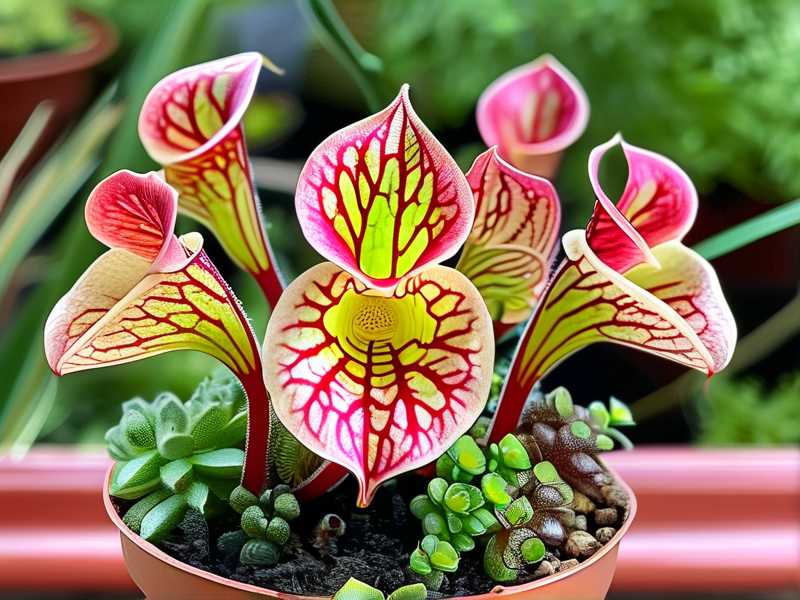
Mistake #2: Giving Them "Houseplant" Indirect Light My second Sarracenia sat on a bookshelf with a nice view. It got morning sun for an hour. I thought that was enough. It wasn’t. The pitchers came out skinny and floppy. They had no red pigmentation, just dull green. They looked more like sad scallions than exotic plants. I moved it to a south-facing window after three weeks. The difference was night and day. New pitchers grew thicker, taller, and developed deep crimson veins. Honestly, you cannot give these plants too much sun indoors. They need a solid 6+ hours of direct sun, ideally 8. If you're using grow lights, keep them on for 14 hours a day. I keep my lights about 8 inches above the pitcher tops. This is the single biggest factor in color.
Mistake #3: Using the Wrong Pot (This is Critical) I once put a Sarracenia in a glazed ceramic pot with a drainage hole. I thought I was being fancy. The planter was deep and narrow, holding moisture beautifully. In one week, the bottom roots were wet, but the top soil was dusty. The plant couldn't pull water up because the soil mixture was wrong. I use a 50/50 mix of sphagnum peat moss and perlite. That's it. No potting soil. No compost. No fertilizer. The pot needs to be tall because the roots go straight down. But it can't be too wide or the soil stays soggy in the middle, causing root death. I prefer tall, slender plastic pots. They keep the roots cool and the soil consistent. I also use shallow trays with taller pots. The combination gives that bog-like effect they love.
My 2-Week Real-Life Observation Setup
I want you to see exactly how I test these combinations. I picked a sunny spot on my veranda, away from the AC vent. I set up a tray system. I bought six identical rectangular planters, each with four separate 6-inch pots. I used my standard peat-perlite mix. I filled the trays with rainwater until the water level reached a third of the pot height. I planted the combinations below and waited two weeks. I recorded new pitcher growth, color shifts, and any signs of rot or pests. Here’s what I found.
Design #1: The Classic "Purple & Giant" Combo
The Setup: I put Sarracenia purpurea (the purple pitcher plant) next to Sarracenia flava (the yellow trumpet). Both are forgiving. I placed them in a wide, shallow tray outdoors.
My Steps: I sunk the pots halfway into the wet perlite. This keeps the lower pitchers cool. I used a pot that was 5 inches deep for the flava because it has massive, straight roots. The purpurea stayed in a shorter pot. They shared the same tray, but their root systems were at different depths. This is a trick I learned from a mentor at the RHS show.
The 2-Week Result: The flava grew 4 inches taller. The purpurea changed color. It was mostly green at the start. By day 10, it developed a strong purple blush on the hood and the pitcher base. I was shocked. The combination works because they have similar dormancy requirements. They both need a cold winter rest.
The Crash: I forgot to refill the tray on day 5. The soil dried out completely. The flava pitchers drooped. I panicked. I refilled the tray with distilled water. The pitchers stayed floppy for a day but recovered by the next morning. The leaf tips on the purpurea turned brown, though. That took a week to look ugly. This taught me to check the water level every day during the growing season. If you're planting these together, make sure your tray holds at least 2 cups of water per plant.
Design #2: The "Mountain Climber" Terrarium Duo
The Setup: This is for a high-humidity terrarium. I used Sarracenia minor (the hooded pitcher) and Sarracenia psittacina (the parrot pitcher). Both prefer higher humidity than the others. I tried this in a glass tank with a sliding lid.
My Steps: I put gravel at the bottom of the tank, then a layer of sphagnum moss, then the two pots. I didn't bury them. I just set them on top of the moss. I kept the water level high, almost to the top of the pots. This keeps the growing media constantly wet but subaerated.
The 2-Week Result: The minor grew two new tiny pitchers. They were perfectly formed with the little white "windows" on the hoods. The psittacina was slower. It's a crawler, not a grower. It sent out a new leaf but no pitcher. The humidity stayed around 80%. The color on the minor started to show light green with faint white spots.
The Crash: I opened the terrarium lid to take photos. I left it open for 3 hours. The humidity dropped from 80% to 40% in minutes. The next day, the edges of the new leaves on the psittacina looked slightly crispy. It wasn't fatal, but it stopped growing for the remaining days. I learned a hard lesson. These two species hate dry air. They thrive in a closed environment. If you want a low-maintenance setup, this is it. But you must keep the lid on tight. I only open it once a week for about 10 minutes to refresh the air. This is what the AHS suggests for humidity-loving carnivores.
Design #3: The "Sunny Windowsill" Compact Planter
The Setup: I wanted a compact setup for my kitchen window. I used Sarracenia 'Bug Bat' (a hybrid) and Sarracenia purpurea. They’re both medium-sized.
My Steps: I used a single tall, 8-inch planter pot. No tray. Wait, that's a mistake. I used a separate drainage saucer under it. I filled the saucer with a 1-inch layer of clay pebbles to keep the pot above the standing water. This helps prevent crown rot during cloudy days. I placed the planter in direct sunlight from 10am to 4pm.
The 2-Week Result: The hybrid grew a striking new pitcher. It had a deep red throat and a burgundy hood. The purpurea stayed short but its color deepened from green to a reddish-orange. This is proof that high light intensity is the secret sauce. I have also observed that the frequent watering in this setup required a specific routine. I used a watering can with a thin spout to pour water directly into the saucer. I never pour water into the pot that contains the rhizomes.
The Crash: I thought I was being smart with the pebbles. Turns out, on a very hot day, the clay pebbles dried out fast. The water in the saucer evaporated within a day. The root zone in the top half of the pot became dry. The new pitcher tip turned brown. I realized that the pebbles act as a wick, pulling water away from the roots. After this failure, I removed the pebbles. I placed the pot directly into a plastic dish. That dish holds 1.5 inches of water. Simpler works better.
Design #4: The "Bog Bowl" Mixed Species Display
The Setup: This is my favorite. It’s a wide ceramic bowl with no drainage holes. I added two species: Sarracenia leucophylla (the white-topped pitcher) and Sarracenia rubra (the sweet pitcher). It looks like a miniature natural bog.
My Steps: I filled the bowl with my peat-perlite mix. I didn't use individual pots. I planted them directly in the bowl. This is risky because you can't isolate a plant if it gets sick. But it looks amazing. I dug a shallow hole and placed the rhizomes horizontally. I made sure the growth tips faced upward.
The 2-Week Result: Honestly, this is the most stunning display. The leucophylla has tall, elegant pitchers with pure white tops. The rubra has shorter, dark red pitchers. The contrast is beautiful. The key is that the bowl holds more water mass, keeping the soil cool. The root systems interlocked nicely. The rubra sent out a new basal growth. The leucophylla pitcher started to open on day 6.
The Crash: I underestimated the mineral build-up. I topped off the bowl with tap water once because I ran out of rain water. That single mistake caused the tips of the leucophylla to look scorched within 3 days. The salts in the tap water moved up the soil and crystallized on the root zone. I had to flush the bowl with distilled water five times over two hours to fix it. The damage was already done on the old pitchers, but the new growth was safe. You absolutely cannot cheat on the water quality. Even one mistake sets you back a week.
Design #5: The "Vertical Accent" for Small Spaces
The Setup: I designed this for my bathroom shelf. It uses Sarracenia 'Dana's Delight' and Sarracenia flava var. rubricorpora. Both have distinctive shapes and colors.
My Steps: I used a long, narrow planter box (12 inches x 4 inches). I placed the two pots inside. I used a smaller tray that fits the box exactly. This prevents my neighbors from seeing a mess of water.
The 2-Week Result: The 'Dana's Delight' grew a beautiful, hooded red pitcher. The flava var. rubricorpora grew taller than the shelf space allowed. It hit the top shelf on day 11. I had to move it to a shorter pot. The combo looked great but the vertical space was a constraint. I learned that the classic flava gets 3 feet tall. The hybrid stays shorter, around 18 inches. So they didn't pair perfectly in a low-ceiling terrarium.
The Crash: Because I placed it in the bathroom, the humidity was high. But the air was stagnant. After one week, I noticed a small, fluffy gray mold on the outer layer of the peat moss. It wasn't harming the plant, but it looked bad. I realized that the lack of air flow encourages mold on the soil surface, but not on the pitchers. I placed a small USB fan nearby for 4 hours a day. The mold vanished in two days. Airflow is crucial.
Design #6: The "Dormancy Prep" Autumn Combo
The Setup: I prepared a combination for the dormant season. I used two strong specimens: Sarracenia purpurea and Sarracenia oreophila (the green pitcher plant). These two are winter-hardy.
My Steps: In late autumn, I stopped fertilizing them. I also cut the water tray back to just 1 inch of water. I left them in a cold frame where the temperature drops to 4°C at night. I didn't bring them indoors.
The 2-Week Result: The plant leaves started to turn brown and die back. That’s normal. The rhizomes went dormant. They looked like dead roots, but I knew they were breathing. I checked the soil moisture every week. It stayed moist but not soaked. This was an experiment in patience.
The Crash: I almost gave up on them. I thought they were dead. I started to pull the dead leaves off, but I noticed the rhizome was firm. So I left everything as is. The second week, I saw tiny new green tips at the soil surface. They were waking up. I placed them back in a sunny spot with a deep tray. They sprang back to life. Honestly, the dormancy period is scary if you haven't done it before. But it is 100% necessary for the plant to bloom next year. If you skip dormancy, your plant will weaken and eventually die. So this combo is for the patient grower.
Key Tricks For Better Color and Health
I've said it before, but I'll repeat it. The soil is just a physical anchor. It has zero nutrition. The plant gets its food from insects. I never add fertilizer to the soil. If I want to boost growth, I drop a freeze-dried bloodworm into a pitcher once a month. That's it.
Also, use a light meter. I bought a cheap one on Amazon. The reading should be above 2,000 foot-candles for most Sarracenia. If it's lower, they stretch and look thin.
I also use a spray bottle for the moss on top, not for the pitchers. Keeping the moss damp helps maintain root humidity. But I don't spray the pitchers themselves. Water in the pitchers dilutes the digestive fluids. That attracts mold.
My 5 Golden Maintenance Rules
- Rainwater only. I store it in a dark, sealed container to prevent algae.
- Re-pot every two years. I divide the rhizomes in early spring.
- Keep the tray water level constant up to the middle of the pot's height.
- Full sun in the morning and afternoon. Avoid harsh midday sun if you live in a desert climate.
- In winter, move them to a bright, cool garage or unheated room. Keep the soil slightly damp.
FAQ: The Questions That Haunt Every Newbie
Q: My Sarracenia is turning brown and crispy. What do I do? A: Check the water source first. If you used tap water, flush the soil with distilled water immediately. Then, check the light. It needs direct sun. Also, check the pot size. If the pot is too small, the roots might be baking in the heat. Move it to a bigger pot, but don't disturb the roots too much.
Q: Can I use regular potting soil? A: No. Never. Regular potting soil has nutrients and fertilizers that will kill the plant instantly. The roots are adapted to nutrient-poor, acidic environments. Use the peat-perlite mix I mentioned. It's not a marketing gimmick. It's life and death.
Q: Why don't my pitchers have red veins? A: The color usually comes from light intensity. A sunny window is often not enough. You might need a grow light. I have found that weaker hybrids also produce less color. If you want vibrant reds, buy a specific hybrid known for its red color, like 'Dana's Delight' or 'Bloody Mary'. Also, temperature swings between day and night can bring out more pigment.
Q: How often should I feed them? A: If they're outside, they'll catch their own food. If they're inside, you can offer a small cricket or a drop of fish food into the pitcher once a month. I use a high-quality beta fish food. They don't need a lot. Overfeeding can rot the pitcher.
Q: What is the best way to water them when I go on vacation? A: I use a glass bottle with a cotton string. I put the bottle of rainwater on a higher shelf. The string wicks water into the tray. It's a simple DIY wick system. It works for up to two weeks.
My Final Thoughts
Getting these combinations right took me a full year of trial and error. But once you figure out the three non-negotiables—rainwater, gritty soil, and extreme light—the rest is easy. Start with one plant, not a whole collection. Watch how it responds to your windowsill. Then gradually add more.
The best piece of advice I can give you is to keep a journal. Write down the temperature, the light levels, and how often you refill the tray. You'll start to see patterns. You'll notice that when the weather is cloudy for three days, the pitchers stop producing dew. That's normal. Adjust your expectations.
One last thing. Don't be scared to cut off dying pitchers. I cut them at the base when they turn brown. It encourages new growth. And never, ever use scissors that have touched other plants without sterilizing them. You can bring in pathogens.
I hope my messy, real-world experiences help you grow better Sarracenia. You'll kill a few plants. Everyone does. But you'll learn more from the dead ones than you will from the thriving ones. That's the honest truth. Just don't overwater them. Please.





