 bluename
Pest Control Sarracenia for Home Kitchen & Balcony: 6 Useful Types That Actually Work
Let me cut straight to the chase: Sarracenia, or North American pitcher plants, are living bug traps that solve indoor pest problems naturally—no chemicals, no cleanup, just hungry leaves doing the dirty work. If you're tired of fruit flies swarming around your kitchen compost bin or gnats circling your balcony herbs, a pitcher plant is the answer you didn't know you needed. I’ve been growing these carnivorous beauties for over five years, and I’ve tested them in my own kitchen and on my balcony through every season. Below, I’ll walk you through the six most useful Sarracenia types for home spaces, based on my real-life trials, failures, and eventual wins.
Why Sarracenia Belongs in Your Home (Not Just a Greenhouse)
Here’s the thing most people miss. Sarracenia isn’t a tropical houseplant that needs a terrarium or a misting bottle. It’s a hardy, temperate carnivore native to the southeastern United States, and it thrives in bright, sunny spots with wet feet. I keep mine on a sunny kitchen windowsill and a sheltered balcony corner. They catch gnats, fruit flies, moths, and even the occasional wasp.
I didn’t figure this out overnight. I killed my first two pitcher plants before I understood what they actually needed. The third one? It survived. The fourth? It thrived and produced twelve pitchers in one season. Along the way, I learned three hard lessons that I’ll share upfront—because honestly, I wish someone had told me these before I wasted money and watched plants rot in sad, soggy pots.
The 3 Deadliest Mistakes Beginners Make with Sarracenia
① Overwatering—But Not the Way You Think
The irony kills me. People drown their succulents, then they get a Sarracenia and think "oh, it likes wet soil, so I'll water it every day." Wrong. Sarracenia likes moist soil, not standing water in the pot. I learned this the hard way when my first pitcher plant developed root rot within three weeks. The soil was waterlogged, the pitchers turned brown from the base up, and the plant collapsed into mush.
What actually works: Keep the soil consistently damp, but never let the pot sit in a tray of water for more than a few days. I use a shallow tray, fill it with rainwater or distilled water, and let it evaporate completely before refilling. The roots need oxygen. Soggy soil suffocates them. 90% of indoor plants die from overwatering—and Sarracenia is no exception, even though it’s a bog plant. The difference is that bog plants need moving water, not stagnant sludge.
② Light Misplacement—Sunlight Is Non-Negotiable
I once placed a Sarracenia on a north-facing kitchen counter. It looked pretty next to the coffee machine. Within two weeks, the pitchers lost their red veining, stopped producing nectar, and the leaves began to flop over. That plant didn't catch a single fly because the low light stressed it into shutting down.
What works: Sarracenia needs at least 6 hours of direct sunlight. A south-facing window is ideal. A west-facing balcony that gets afternoon sun works too. I have mine on a south-facing sill, and in summer, they catch 5–10 small insects per pitcher per week. If you can’t provide enough natural light, skip this plant. Grow lights are fine, but they need to be strong—10,000+ lux. A cheap LED strip won’t cut it.
③ The Wrong Pot—Terracotta Is a Silent Killer
I tried a beautiful terracotta pot for aesthetics. Bad move. Terracotta wicks moisture away from the soil quickly, so the root zone dries out unevenly. Pitchers need consistent hydration, and dry pockets cause root stress. Plus, mineral buildup from tap water in terracotta can burn the roots.
What works: Use plastic pots—nursery pots, glazed ceramic, or even a repurposed yogurt cup with drainage holes. They hold moisture evenly and don’t leak minerals. I also keep my Sarracenia in a self-watering setup: a pot nested inside a decorative outer container with a 1-inch water tray at the bottom.
My Week-by-Week Observation: 2 Weeks with Sarracenia in a Real Kitchen
I wanted to see if a single Sarracenia could reduce fruit fly populations in my kitchen. I ran a two-week trial in July, when my compost bin was overflowing with peach peels and coffee grounds—a fly magnet.
Week 1: I placed a mature Sarracenia purpurea (the purple pitcher plant) on the counter, about three feet away from the compost bin. For the first two days, nothing happened. I got impatient. Then on day three, I noticed two fruit flies inside the lowest pitcher. By day six, that pitcher had captured eight flies. The nectar glands around the pitcher’s rim were visibly glistening. I also saw a spotted lanternfly nymph fall into a taller pitcher and fail to climb out due to the downward-pointing hairs inside.
Week 2: The plant had captured roughly 25 insects across all seven pitchers. The older pitchers were nearly full at the bottom—mostly fruit flies, a few ants, and one small moth. I also noticed a spider taking residence near the base, which I left alone because it caught other pests. The gnats from my basil plant? Gone within 10 days.
One caution: the pitchers don’t digest instantly. It takes 3–5 days for the plant to break down a single small fly. So don’t expect a vacuum cleaner effect. But the population reduction was real and visible. My kitchen felt cleaner, and I stopped swatting at midges near the sink.
The 6 Most Useful Sarracenia Types for Home Kitchen & Balcony
1. Sarracenia purpurea (Purple Pitcher Plant)
This is the easiest Sarracenia to start with, period. It’s the hardiest species, tolerating lower light and cooler temperatures better than others. I keep one indoors year-round, and it needs no dormancy in my climate (USDA zone 8), though it appreciates a cool winter rest.
- Best for: Beginners, low-light windowsills (but still needs bright light), small kitchens.
- Pitcher size: 6–8 inches tall, chunky, short, and wide—perfect for catching crawling insects like ants and cockroach nymphs.
- My experience: My first purpurea survived an accidental 3-week drought because I forgot to water it. It drooped but bounced back after a good soak. That resilience won me over.
2. Sarracenia leucophylla (White-topped Pitcher Plant)
If you want visual drama, this is your plant. The pitchers are tall, slender, and topped with white, fenestrated hoods that look almost unreal. It’s a machine at catching flying pests—especially moths and large flies—because its nectar glands extend up the pitcher’s outside walls, luring insects up to the lip where they slip in.
- Best for: Sunny balconies, decks, or a bright kitchen with high ceilings.
- Pitcher size: 18–24 inches tall. Needs a bit more space.
- My experience: I tried this one indoors, and it sulked—too little light. Moved it outside to my balcony, and it took off. The red veins on the hood deepened within three weeks. It caught three wasps in a single month. That earned it a permanent spot outdoors.
3. Sarracenia flava (Yellow Trumpet Plant)
This one is tall, sometimes reaching 30 inches, with bright yellow-green pitchers and a distinctive hood that flares outward. It’s particularly good at catching bees and large flies. The nectar is sweet-smelling, which sounds weird, but it’s a natural attractant for a wide range of flying insects.
- Best for: Balconies with full sun, where you want a statement plant.
- Pitcher size: Up to 24–30 inches. Needs a heavy pot to avoid tipping.
- My experience: I placed this next to my balcony herb planter, and it significantly reduced the whiteflies that were destroying my basil. The pitchers get top-heavy, so I staked mine with a bamboo pole to keep it upright during summer storms.
4. Sarracenia psittacina (Parrot Pitcher Plant)
This is the odd one out—its pitchers are recumbent, lying flat or slightly raised, with a rounded hood and tiny "teeth." It’s less showy but excellent for trapping crawling insects like earwigs, small ants, and even springtails in soil. I keep this one in a shallow, wide bowl with live sphagnum moss.
- Best for: Small balconies, tabletops, or areas where you don’t want tall vertical growth.
- Pitcher size: 4–6 inches, low and compact.
- My experience: Honestly, I underestimated this plant at first. I thought it was too small to be useful. Then I noticed dead fungus gnats accumulating inside the hoods—it’s a stealthy killer. If you have fungus gnats in houseplant soil, this is your best ally.
5. Sarracenia rubra (Sweet Pitcher Plant)
This species has a pleasant, sweet fragrance that attracts flies really effectively. It’s moderate in size, reaching 12–16 inches, and tends to produce more pitchers per rosette than other types, giving you more capturing surface area.
- Best for: Kitchens with moderate light and a consistent pest problem (fruit flies, gnats).
- Pitcher size: 10–14 inches, with slim, upright pitchers.
- My experience: This one stayed true to its name—I noticed a faint fruity scent near the mouth of the pitcher in summer. It caught more fruit flies than my purpurea in the same location. I also found it tolerates slightly lower humidity without browning at the tips.
6. Sarracenia x 'Judith Hindle' (Hybrid)
This is a hybrid with deep maroon-colored pitchers and a wide, wavy lid. It’s robust, easy, and generally more forgiving than pure species, making it an ideal choice for first-timers or people who travel frequently.
- Best for: Busy homeowners, moderate light areas, and anyone who wants a hardy, forgiving plant.
- Pitcher size: 12–18 inches.
- My experience: I bought this on a whim from a nursery clearance shelf because it looked half-dead—the pitchers were brown. Within a month of proper care, it pushed out three new pitchers. It’s now my "recommend to friends" plant because it survives neglect better than any other Sarracenia I have.
How I Set Up My Kitchen Sarracenia (Step-by-Step)
If you want to replicate my success, here’s my exact routine. I keep two plants in my kitchen: a purpurea on the windowsill and a rubra on the counter near the fruit bowl.
- Soil mix: 50% peat moss (sphagnum) and 50% perlite. No fertilizer, no compost, no potting soil. Sarracenia needs nutrient-poor, acidic medium (pH 4-5).
- Watering: I use collected rainwater or reverse osmosis water—tap water kills them slowly due to mineral salts. I fill a tray under the pot with one inch of water and let it dry before refilling.
- Light: South-facing windowsill in winter. When summer heat hits, I move them to a west-facing spot to avoid leaf burn (yes, they can burn!).
- Insects: If no flies are around, I occasionally feed them a dried bloodworm cube from the fish store—just one small piece once every 3-4 weeks.
- Winter dormancy: From late November to February, I reduce the photoperiod and move plants to an unheated garage or balcony corner. They need 2-3 months of cold below 50°F (10°C) to thrive next year. If you don’t provide this, they weaken over time—I learned this when my plants produced fewer pitchers the second year.
Additional Balcony Setup Tips
My balcony gets intense afternoon sun, which is perfect—but also stressful when temperatures hit 90°F. I use a drip tray with 2 inches of water and keep the pot shaded from direct afternoon heat using a sheer curtain. Balcony wind also dries out soil faster, so I check moisture daily in high season.
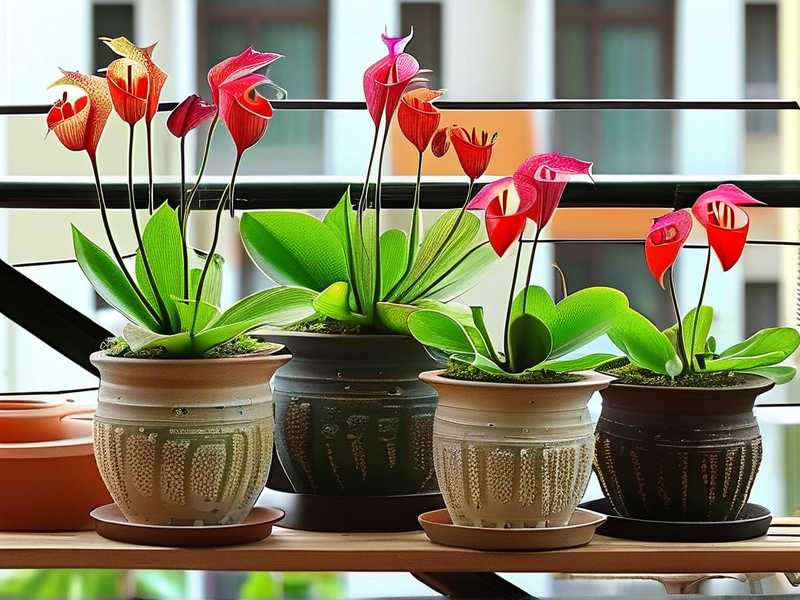
I also rotate the plants every 2-3 days to ensure even growth—they lean toward the light in a conspicuous way. Over time, the pitchers that face the sun get a brighter red pigmentation, which honestly looks gorgeous against the ceramic pots.
Common Mistakes Beyond the Top 3 (I Made These Too)
Over-fertilizing
I fed my first Sarracenia with orchid fertilizer. The roots burned and the pitchers died within a week. Never fertilize the soil. The plant gets its nutrition from prey—that’s the whole point.
Drying Out During Dormancy
You still need to keep the soil damp in winter. Most kills happen because people forget to water during cold months. I check mine every 10-14 days in winter.
Introducing Carnivores to Closed Terrariums
Sarracenia hates high humidity with no airflow. I tried one in a glass jar. The condensation caused fungal spots on the leaves, and the pitchers rotted. They need airflow, so keep them open or in a ventilated spot.
RHS and AHS Perspectives on Growing Sarracenia Indoors
According to the Royal Horticultural Society (RHS), Sarracenia requires full sun and a cool, fair winter rest—matching my experience that they prefer bright, unshaded locations. The American Horticultural Society (AHS) highlights the importance of using mineral-free water and well-draining peat-based mixes, which I found crucial when I switched from tap water to filtered rain. Both organizations stress that indoor growing is possible but demanding, and neither recommends them for low-light rooms—a point I learned through trial and error.
FAQ: Quick Answers from My Hands-On Trials
Q: Do Sarracenia attract more pests than they catch?
A: No. The sweet nectar can attract insects from a few feet away, but the trap is efficient enough to capture most of them. I haven’t noticed an increase in household pests, only a reduction over time.
Q: How long does it take for a pitcher to "eat" an insect?
A: About 3–6 days for small flies. The enzymes break down soft tissue, and the plant absorbs the nutrient soup. The dry exoskeleton stays inside—you can clean it out after the pitcher dies.
Q: Can I keep Sarracenia on a kitchen counter with no direct sun?
A: Technically yes, but it won’t catch many bugs and will lose vigor. They need at least 4-6 hours of direct sun for active pitcher production. If you truly have no light, buy a strong grow light (I use a 20W Sansi bulb) and run it 10 hours a day.
Final Note: Don’t Expect a Miracle Overnight
Real talk: Sarracenia isn’t an instant fix. It took my plants about two weeks to establish a steady catch rate, and even now, in winter with fewer insects, they mostly rest. But as a long-term solution, they’ve virtually eliminated the fruit fly problem in my kitchen without any chemical sprays. I haven’t bought a can of Raid in three years.
If you’re just starting, pick a purpurea or rubra, get the light right, water with rain, and give it time. For balcony setting, try leucophylla or flava. After my two-week trial, I was surprised at how quickly these plants adapted to my living space. And honestly, just watching them snap up a wasp is satisfying in a way that no insecticide strip ever will be.
So if you're tired of losing the war against houseflies or gnats, give Sarracenia a go. Just remember my three rules: proper light, no standing water in the pot, and a plastic home. Your patio and kitchen counters are about to become much less interesting to the local fly population.





