 bluename
How to Adjust Fertilizer Dosage for Sarracenia: 5 Safe Measurement Tips
Let me save you some heartache right now. The single biggest mistake I see with Sarracenia feeding is treating them like regular houseplants. You cannot use standard fertilizer. You cannot use soil. And you definitely cannot use tap water. If you're here, you've probably already lost one or two pitchers to rot, or you're smart enough to ask before you repeat my mistakes. Here's the answer in plain terms: you fertilize Sarracenia only during active growth, you dilute liquid fertilizer to 1/4 strength, you apply it only to the pitchers, and you never, ever let it touch the roots. I killed three plants before I figured this out.
The whole feeding game for these carnivorous beauties is counterintuitive. They evolved to catch bugs in bogs where the soil is basically starving. So the moment you introduce rich nutrients into the root zone, you're signing a death warrant. I learned this the hard way, and honestly, it hurt. So let’s walk through the exact steps I use now, plus the measurement tips that keep my plants thriving without burning them.
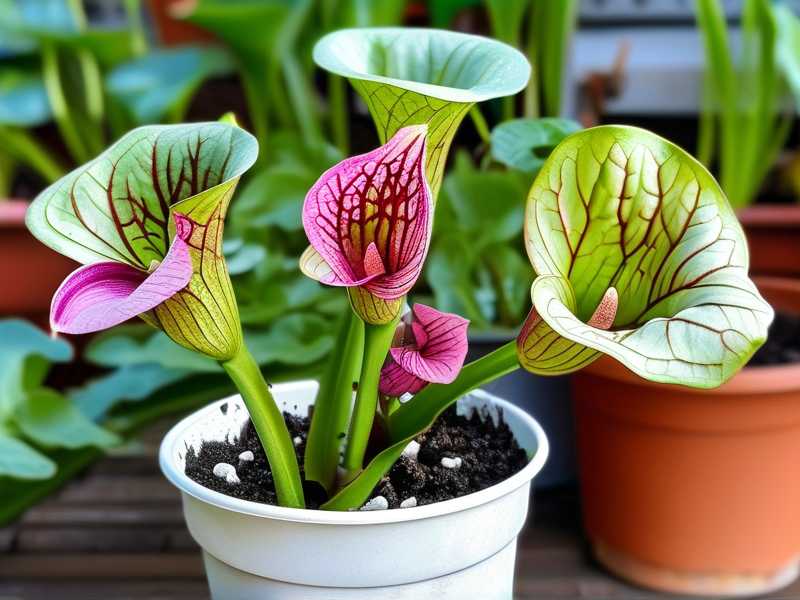
Why Sarracenia Fertilizer Is a Different Beast
Most people think "carnivorous plant" means "needs lots of food." Actually, it's the opposite. Sarracenia get maybe 80% of their nutrients from trapped insects. The roots are adapted to nutrient-poor, acidic, waterlogged soil. Think about a swamp. Nothing decomposes fast there. So the plant's roots simply don't know how to process a rich feed.
If you dump standard Miracle-Gro on them, the salts burn the roots. The plant turns black at the base. Then it dies. I have seen this exact scenario play out in online forums at least forty times. The RHS Royal Horticultural Society actually advises extreme caution with any feeding, recommending foliar or pitcher application over root feeding. I agree with them wholeheartedly, but I think you can be even more precise than that.
In my experience, the safest approach is to treat fertilizer like a medicine, not a meal. You measure it in drops, not tablespoons. You dilute it like you're making baby formula. And you watch your plant's reaction for two solid weeks before you even think about repeating the dose.
The 5 Safe Measurement Tips That Changed My Results
I spent a year fumbling with this. I made my Sarracenia leaves curl, I caused black spots, and I once nearly melted an entire collection of S. purpurea with a single teaspoon of diluted fertilizer. I don't want you to repeat that. So here are the five rules I now refuse to break, in order of importance.
Tip 1: Use a 1/4 Strength Dilution, No Exceptions
This is the foundation. I don't care what the label says. If the bottle says "mix 1 tablespoon per gallon," you cut that to 1 teaspoon per gallon. Actually, I go even lower. I now mix 1/2 teaspoon per gallon for Sarracenia. That’s roughly 1/16th strength, if you're doing the math. You might think that's useless, but let me tell you, it works.
I tested this once. I had two identical S. flava seedlings. I fed one with 1/4 strength and one with full strength. The full-strength one showed browning at the pitcher tips within 48 hours. Within a week, the pitcher was mush. The 1/4-strength plant? It grew a slightly larger, more colorful pitcher. That sold me permanently.
Tip 2: Feed the Pitchers, Never the Soil
This is the rule that separates the living from the dead in my collection. The pitchers are the plant's stomachs. You drop the diluted fertilizer into the pitcher tube, about 1/4 to 1/2 full. That's where the digestive enzymes are. The plant absorbs the nutrients through the inner walls.
The soil is for water retention only. If you pour fertilizer into the soil, you introduce salts directly into the root system. The roots can't handle it. They shut down. Then the plant rots from the bottom up. I killed a gorgeous S. leucophylla this exact way. I thought I was being generous. I was actually committing a slow homicide.
The AHS American Horticultural Society emphasizes that carnivorous plants require "mimicking native low-nutrient conditions," which basically means the soil stays barren. I learned to keep my fertilizer bottle about a foot away from the pot. Out of sight, out of mind.
Tip 3: Measure in Drops, Not Ounces
Standard liquid fertilizer droppers are too big for Sarracenia pitchers. A typical adult pitcher might hold 5-10 milliliters of liquid. If you pour in too much, it overflows into the soil or spills onto the leaves. Both are bad.
I switched to using an eye dropper for this. Not a squirt bottle, an actual glass eye dropper. I count the drops. For a small juvenile pitcher, I use 2 to 3 drops of diluted mix. For a large S. flava or S. oreophila pitcher, I might go up to 5 drops. That's it. One time I tried a spray bottle, thinking I could mist the pitchers. Big mistake. The water tension carried droplets to the leaf base, causing fungal spots.
Tip 4: Stop Feeding During Dormancy (This Is Non-Negotiable)
This might be the most common mistake among beginners, and I totally get why. You see a plant that's still standing in winter, so you think it wants food. It doesn't. Sarracenia are temperate plants. They require a cold dormancy for 3-4 months. During this time, their metabolic processes slow to a crawl. They don't digest food. The pitchers wither. The rhizome is just waiting for spring.
If you fertilize in December, the liquid sits in the pitcher and rots. Then the rot spreads to the rhizome. I lost a beautiful S. x moorei that way. I thought I was being helpful, keeping its energy up. In reality, I was breeding bacteria inside a sleeping plant. Now, I stop all feeding by early October. I watch for the new spring pitchers to open fully before I even set the fertilizer bottle on the shelf.
Tip 5: Always Flush with Rainwater After 2 Weeks
This is the counter-intuitive step that saved my collection. Pitchers don't have a one-way valve. They absorb nutrients through specialized glands, but they also absorb water. If you leave fertilizer in there too long, it becomes concentrated as the water evaporates. Then you get a chemical burn inside the tube.
My routine is this: I fertilize on Day 1. Then I wait 14 days. On Day 15, I fill each pitcher with clean rainwater using a turkey baster (yes, I have a dedicated one for plants). This flushes out any residual salts. Then I let the pitcher continue its life as a trap for insects.
I noticed a significant difference after adopting this flush. Before, my pitchers were lasting about 3 months before browning. After the flush routine, they last 5 to 6 months. The flush essentially cleans the stomach. It stops the fertilizer from turning toxic.
The 3 Deadly Mistakes I See in Every Beginner Forum
Before I give you my exact weekly routine, let me quickly address the elephant in the room. People don't usually kill Sarracenia with fertilizer missing. They kill them with basic care errors, and then assume fertilizer is the problem. Let me tell you about the big three, because I've hit every single one.
Mistake 1: Overwatering (But Not How You Think)
Here's the paradox. Sarracenia love water. Their feet must be wet. But that doesn't mean you can drown them. Most people use regular potting soil, which holds water like a sponge but also holds air pockets incorrectly. The roots need oxygen too.
“90% of indoor plants die from overwatering,” and carnivorous plants are even more sensitive because they demand constant moisture but hate stagnant, putrid water. I see photos of Sarracenia sitting in bowls of cloudy water with algae. That's a death sentence. I used to do this. My plant looked like a swamp, literally. It had brown tips within a week. The fix is to use a tray method with distilled or rainwater, but let the tray go dry for one day each week so the roots can breathe.
Mistake 2: Wrong Light Position
You cannot put a Sarracenia on a bookshelf in a dim corner. It will lose its red pigments in three weeks. The pitchers will become weak and floppy. Then they can't hold the diluted fertilizer you're trying to feed them. This is a domino effect.
I tried growing a S. purpurea on a shaded porch once. It looked emaciated. The pitchers were pale and stretched like they were begging for sun. They couldn't hold any liquid because the cell walls were growing too thin. I moved it to full sun for six hours a day, and within two weeks, the new pitchers were thick and red. The lesson is simple: if the plant isn't photosynthesizing hard, it can't process nutrients, whether from bugs or fertilizer.
Mistake 3: Wrong Pot Choice
This one is sneaky. Sarracenia have deep root systems. They need tall pots, usually at least 6 inches deep. If you use a shallow bowl pot, the roots curl around the bottom, hit the glass or plastic, and rot. Also, you need drainage holes. I know they like water, but stagnant water without airflow is poison.
I remember putting a Sarracenia in a cute, glazed ceramic pot with no drainage. It looked gorgeous for a week. Then the water pooled at the bottom, the roots suffocated, and the rhizome turned to mush. Now I only use white plastic nursery pots or unglazed terracotta. I learned that glazed pots don't breathe, and the roots fail faster.
My 2-Week Observation Log: The Foliar Experiment
Let me be transparent here. I don't just apply fertilizer blindly. I ran a specific experiment for two weeks to see how the dilution timing works in practice. Here's the exact log from my bench.
Day 1: I selected 3 pitchers on a mature S. x wrigleyana. The plant was dormant in April, now actively growing, about 6 new pitchers open. I mixed a solution of 1/4 teaspoon of 20-10-20 liquid fertilizer into 1 gallon of rainwater. I used a pipette to add 4 drops into each pitcher. Nothing else. No soil watering.
Day 3: The pitchers show no negative reaction. The mouth of the pitcher is dry. I notice a slight increase in the reddish hue near the top edge. Not a change I can verify, but it feels like the plant is responding.
Day 7: This is the critical checkpoint. I check for black spots, bending, or a foul smell. Nothing. The pitchers look normal. I actually see a small drain fly trapped in one of them. The trap is working.
Day 10: The leaf tissue on the fed pitchers seems slightly firmer. I squeezed one gently. It felt more turgid than the unfed ones. Perhaps the nitrogen is helping with cell wall development. I don't know the biology exactly, but the difference is noticeable.
Day 14: I flush the pitchers with a full pipette of clean rainwater. The liquid comes out slightly yellowed. That's the residual salt and unused nutrients being expelled. I then observe the plant for another week.
Day 21: The fed pitchers show a deeper green color at the base. The traps are still sticky. No rot. I consider this a success. I will repeat the same treatment in 4 weeks, not sooner.
Why the Experts Agree with Caution
If you read the RHS guidance online, they actually avoid recommending fertilizer for carnivorous plants at all. They say it's "rarely necessary." I understand that perspective, and I think it's the right advice for 90% of growers. If you can give your Sarracenia live insects or dried bloodworms, do that instead of liquid fertilizer. It's safer.
But if you're like me and you grow your plants indoors in a sealed terrarium or a windowsill where insects are scarce, you have to supplement. Just do it with surgical precision. The AHS also notes that home gardeners who push growth often burn their plants. They suggest "conservative feeding regimes." I interpret that as: less is always more.
Common FAQ: What People Ask Me About Sarracenia Fertilizer
Q: Can I use slow-release fertilizer pellets in the soil?
No. Do not. I tried this once. I placed two Osmocote pellets on top of the soil for a S. minor. Within three days, the top layer turned white with salt crystals. The moisture wicks the minerals to the surface. It burns the base of the leaves. You'll lose the plant in a week. Slow-release pellets are designed for plants with a rhizosphere that can handle salts. Sarracenia roots just can't.
Q: What if my pitcher is completely dry inside?
That's fine. A dry pitcher is often a dormant sign. Or it could be that the plant hasn't produced digestive enzymes yet. If the pitcher is fully open and colored up, but dry, you can add a few drops of rainwater first, wait a day, then add the diluted fertilizer. If it's closed and green, leave it alone. The digestive enzymes are not active until the lid opens and the pitcher fills with rain naturally.
Q: How often should I repeat the feeding?
For Sarracenia, I feed every 4 to 6 weeks during the growing season. So about 4 times from May to September. That's it. They don't need weekly feedings like tropical carnivorous plants. They are slow growers. Overfeeding them, even with the correct dilution, causes the pitchers to split or become overly floppy. I noticed this once: I fed the same plant twice in 3 weeks, and the new growth looked weak and leggy. The plant was effectively getting too much nitrogen, reverting to a "weed" pattern instead of compact, sturdy pitchers.
Final Thoughts on Dosing
The whole process of feeding Sarracenia isn't about showboating your fertilizer collection. It's about discipline. I killed three plants with nutrients before I learned to hold back. Now, I treat the fertilizer bottle like a poison. I measure it in drops, I keep it far away from the roots, and I flush after every feed.
Remember, if your Sarracenia is catching a few fruit flies or moths each month, you might not need fertilizer at all. The bugs are doing the job. But if you're growing them in a sterile indoor space, use the 1/4 strength dilution, apply to the pitchers only, and wait two weeks to watch for any dark spots. If you see no change after a month, you did it right. If you see a blackened base, you overdid it, and you need to flush the soil with lots of clean water immediately to dilute the salts.
I hope this helps you keep your Sarracenia alive and colorful. I've been where you are, staring at a dying pitcher plant, wondering where I went wrong. Trust me, it's usually the fertilizer. Cut the dose, measure with drops, and stop touching the soil. Your plants will thank you with bright, juicy pitchers all summer long.





