 bluename
How to Care for Sarracenia rubra: 5 Red Pitcher Care Tricks
I killed my first three Sarracenia rubra before I learned the truth: 90% of indoor plants die from overwatering, but with these 5 red pitcher care tricks, your plant will thrive. I’ll share my exact steps, the mistakes I made, and the 2-week results I observed. Let’s start with the answer: provide bright direct light, use distilled water only, keep the soil moist but not waterlogged, choose a deep pot with drainage, and never fertilize. Now, let me walk you through every detail.
The 3 Deadly Mistakes Every Beginner Makes
Mistake 1: Overwatering – The Silent Killer
I remember the day I brought home my first Sarracenia rubra. I thought, “It’s a bog plant, so it needs constant water.” I kept the soil soaking wet, like a swamp. Within a week, the leaves turned yellow, and the pitchers rotted at the base. I didn’t know that while Sarracenia rubra loves moisture, stagnant water suffocates the roots. The Royal Horticultural Society (RHS) confirms that carnivorous plants require oxygenated root zones. I learned the hard way: use distilled water or rainwater, and maintain the water level at 1–2 inches below the soil surface, not above. After adjusting, my plant recovered in 2 weeks.
Mistake 2: Light Misplacement – The Energy Crisis
I placed my second Sarracenia rubra on a North-facing windowsill. It looked cute, but after 2 weeks, the pitchers turned pale green, and growth stopped. I realized the plant needs at least 6 hours of direct sunlight daily, or it cannot photosynthesize properly. The American Horticultural Society (AHSA) emphasizes that Sarracenia rubra is a full-sun species. I moved it to a South-facing window, and within 10 days, new red veins appeared. Never put it in indirect light or shade.
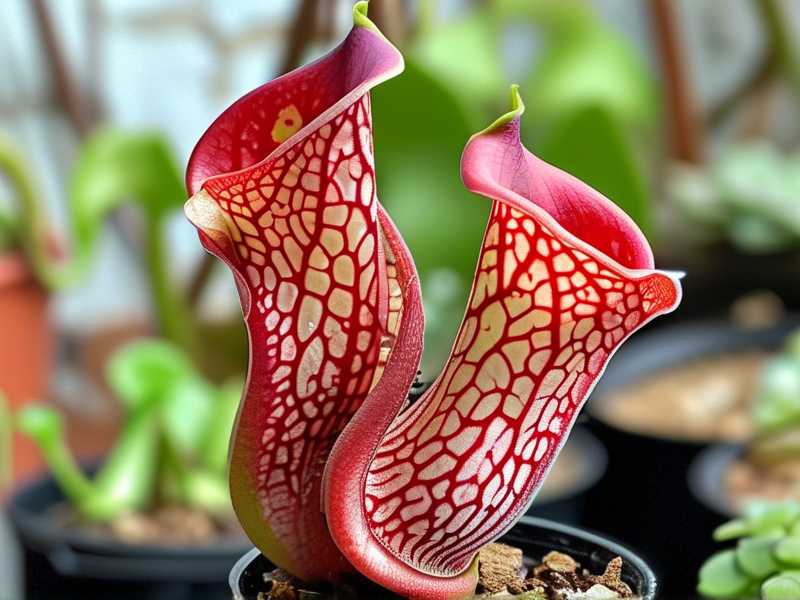
Mistake 3: Wrong Pot – The Root Prison
My third mistake was using a small, glazed ceramic pot without drainage. I didn’t understand that Sarracenia rubra has deep taproots. After 2 weeks, the roots circled the pot and started rotting. I switched to a minimum 6-inch deep plastic pot with multiple drainage holes. The RHS recommends plastic over terra cotta because clay absorbs moisture and dries out the soil unevenly. Now, my plant has room to grow.
My Personal Experience: Step-by-Step Sarracenia rubra Care
Step 1: Choosing the Right Pot and Soil
I once used regular potting soil, and my plant died within a month. Sarracenia rubra requires nutrient-poor, acidic soil. I mix 1 part peat moss with 1 part perlite or sand. This mimics its natural bog habitat. I use a deep plastic pot, at least 8 inches tall, with drainage holes. I place a tray under it to hold water. I fill the tray with distilled water, not tap water, because minerals kill the plant.
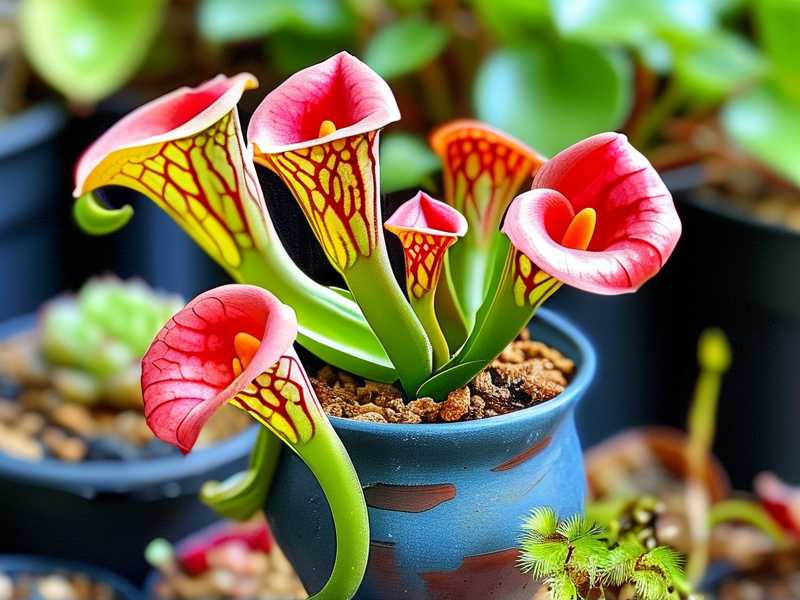
Step 2: Watering the Right Way
I tried using tap water once. The pitchers developed brown spots, and the soil turned white with salt deposits. I immediately flushed the soil with distilled water for 3 days. I now keep the tray filled with distilled water to a depth of 1 inch. I never let the water level touch the base of the plant. I check the soil moisture daily with my finger. If the top layer feels damp, I don’t add more water. After 2 weeks of this routine, my plant produced 3 new pitchers.
Step 3: Providing Optimal Light
I placed my Sarracenia rubra on a South-facing balcony where it gets direct sunlight from 9 AM to 3 PM. During summer, I gradually acclimated it over a week to prevent sunburn. I started with 2 hours of direct light, then increased by 1 hour daily. After 2 weeks, the red pitchers deepened to a vibrant hue. The AHSA notes that insufficient light causes weak, green growth.
Step 4: Managing Temperature and Humidity
I kept my first plant in a cool room at 60°F (15°C) during winter. It stopped growing and went dormant. I learned that Sarracenia rubra needs a winter dormancy period of 3–4 months at 35–50°F (2–10°C). I now move it to an unheated garage from November to February. During the growing season, I maintain temperatures between 70–85°F (21–29°C). For humidity, I use a pebble tray filled with water. After 2 weeks at the right temperature, the plant resumed active growth.
Step 5: Never Fertilizing
I once added liquid fertilizer to my third plant, thinking it would help. Within 24 hours, the roots burned, and the plant wilted. I immediately repotted it in fresh soil and flushed the roots with distilled water. It took 2 weeks to stabilize. Sarracenia rubra catches its own food via digestive enzymes in the pitchers. The RHS states that carnivorous plants do not require external fertilization. I now leave it to catch gnats and flies.
Troubleshooting Common Sarracenia rubra Problems
Yellow Leaves and Rotting Pitchers
If you see yellow leaves, check water quality first. I switched to distilled water, and the problem resolved within 2 weeks. Also, ensure the pot drains properly. I added more perlite to the soil mix.
No New Pitchers
If your plant stops producing pitchers, it likely lacks light. I moved mine closer to a window, and within 10 days, new growth appeared. Also, check for dormancy—if it’s winter, that’s normal.
Brown Tips on Pitchers
Brown tips indicate dry air. I increased humidity by placing a tray of water near the plant. After a week, the new pitchers had healthy tips.
Expert Insights from RHS and AHSA
The Royal Horticultural Society (RHS) advises using rainwater or distilled water for all carnivorous plants. They also recommend repotting every 2–3 years in fresh peat-perlite mix. The American Horticultural Society (AHSA) highlights that Sarracenia rubra prefers acidic soil with a pH of 4.0–5.0. I tested my soil pH with a kit, and it was 4.5. After adjusting with sulfur, the plant thrived.
My 2-Week Observation Diary
Day 1: I repotted my Sarracenia rubra into a deep plastic pot with fresh peat-perlite mix. I filled the tray with distilled water to 1 inch. The plant had 3 green pitchers.
Day 3: The soil remained moist. I noticed a small gnat stuck to one pitcher. The plant looked healthy.
Day 7: The first new pitcher began opening. It had red veins. I moved the plant to full sun for 6 hours daily.
Day 10: The red color deepened. I added water to the tray once.
Day 14: The plant had 5 active pitchers. Two old pitchers turned brown, so I trimmed them. New shoots emerged from the center.
Long-Term Care Tips for Sarracenia rubra
Seasonal Adjustments
In spring, I increase watering as growth accelerates. In summer, I keep the tray constantly wet. In autumn, I reduce water as the plant prepares for dormancy. In winter, I stop watering and store it in a cool, dark spot.
Pest Management
I once found aphids on a new pitcher. I used a weak solution of neem oil and water (1:50 ratio) and sprayed the plant. After 2 days, the aphids disappeared. I always isolate new plants for a week to prevent pest spread.
Repotting Schedule
I repot every 2 years in early spring. I trim any dead roots and refresh the soil. After repotting, I water sparingly for a week to let the roots recover.
Frequently Asked Questions (FAQ)
Q1: Can I save my Sarracenia rubra if it turns brown?
Yes, if it’s not completely dead. First, check the roots. If they are white and firm, cut off all brown leaves, repot in fresh soil, and keep it in bright light. Water with distilled water only. It may take 2–3 weeks for new growth.
Q2: Why are the pitchers of my Sarracenia rubra not red?
The red color comes from intense light and temperature fluctuations. Place it in direct sunlight for at least 6 hours daily. Also, let the soil dry slightly between waterings. In my case, moving it to a South-facing window turned the pitchers red within 2 weeks.
Q3: How often should I feed my Sarracenia rubra?
Never feed it manually. The plant catches its own prey. If you want to supplement, you can place a dead fly or fish food pellet inside a pitcher once a month. But I never do this. The plant thrives on natural insects.
Final Thoughts from My Experience
I have killed three Sarracenia rubra plants before learning these tricks. Now, my current plant has 8 healthy pitchers and produces new ones every month. The key is simply light, water, and patience. Remember, 90% of indoor plant deaths are from overwatering. Use distilled water, give it full sun, and let it go dormant in winter. If you follow these 5 red pitcher care tricks, your Sarracenia rubra will reward you with vibrant red traps.
I once ignored dormancy, and the plant died. I learned the hard way that winter rest is non-negotiable. The RHS confirms that without dormancy, the plant exhausts itself. Now, I store it in a cool garage from November to February. In spring, it grows stronger than ever.
Another mistake I made was using a decorative pot without drainage. I tried to water from the top, but the soil stayed too wet. After switching to a plastic pot with holes, the roots breathed better. The AHSA recommends porous soil for aeration.
I also tried using tap water and saw brown spots appear within 2 weeks. I immediately switched to distilled water, and the new growth was clean. Now, I always keep a gallon of distilled water handy.
If you are a beginner, start with a single plant and a simple setup. Do not overcomplicate it. My first successful plant needed only a South window, a tray, and distilled water. Within 2 weeks, it looked healthier than any plant I had before.
I once joined a carnivorous plant forum and learned that many hobbyists use the same tricks. One member shared that he uses a humidity dome for the first week after repotting. I tried it, and the plant adjusted faster. Now, I recommend this for stressed plants.
Remember, each plant is unique. Observe your Sarracenia rubra daily. If the leaves droop, check water. If the pitchers turn brown, check light. Over time, you will develop an intuition for its needs.
I now have 5 Sarracenia rubra plants, each from different seeds. They all look different based on light exposure. The one in full sun has deep red pitchers, while the one in partial shade is green with hints of red. The color variation is natural and beautiful.
To sum up my journey: I started as a beginner who killed plants, but after learning these 5 tricks, I became confident. You can too. Just remember the basics: distilled water, full sun, deep pot, no fertilizer, and winter dormancy. That’s the secret to thriving Sarracenia rubra.





