 bluename
How to Choose Sarracenia for Large Gardens: 5 Tall Variety Tricks
You’ve got the space. A sweeping border, a dedicated bog garden, or maybe just a vast, sunny corner that’s been calling out for something dramatic. You’ve set your sights on Sarracenia, the magnificent North American pitcher plants, knowing their towering, sculptural forms can create an unforgettable display. But then you’re faced with the dizzying array of species and hybrids. Which ones will truly thrive and dominate that large-scale canvas? How do you avoid ending up with a collection of underwhelming, short clumps when your vision is one of majestic, sky-reaching pitchers?
I’ve been there. After years of cultivating these carnivorous wonders in my own expansive garden plot, I’ve learned that selecting the right tall varieties isn't just about picking the one with the biggest advertised size. It’s a strategic process. Through trial, error, and careful observation, I’ve distilled the approach into five key tricks that ensure your large garden becomes a showcase of Sarracenia grandeur.
Trick 1: Look Beyond Species Names – Target Genetic Heritage
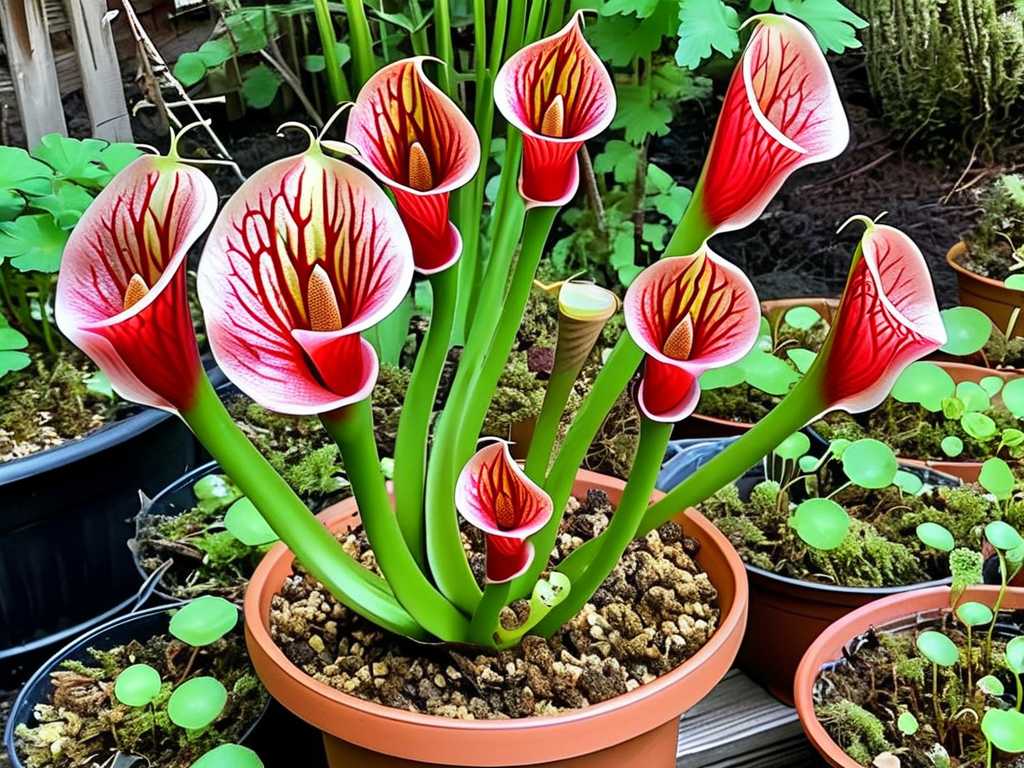
When you’re planning a large-scale planting, thinking in terms of pure species like Sarracenia flava or Sarracenia leucophylla is a great start, but it’s only the first layer. The real secret lies in understanding and seeking out specific genetic lines and proven cultivars known for their vertical ambition.
My initial mistake was assuming all S. flava were created equal. I purchased a few generic plants labeled simply as Sarracenia flava. While they were healthy, their pitchers plateaued at a modest 18 inches. The visual impact in my large bog was minimal; they got lost. The solution? I began researching and sourcing from specialist nurseries that offered identified clones or cultivars. I sought out Sarracenia flava var. maxima, a form renowned for its robust size, and specific cultivars like Sarracenia flava ‘Maxima Giant’. The difference was staggering. The new plants, given the same conditions, consistently produced pitchers reaching 28 to 32 inches in their first full season. Their sheer scale immediately defined the back layer of my garden.
Trick 2: Prioritize Rhizome Size and Maturity Over Pitcher Count
This is perhaps the most counterintuitive but critical trick for large gardens. A young plant with three tall pitchers might look appealing in a pot, but a mature, sprawling rhizome with only one or two emerging growth points is a better long-term investment for space.
Here’s my real-world experience. Two seasons ago, I acquired two Sarracenia leucophylla plants. One was a division with a small, tight rhizome and three 20-inch pitchers. The other was a hefty, older rhizome section, almost as wide as my hand, with just one large, slightly battered pitcher. I planted them in adjacent spots. The smaller plant remained a neat clump. The large rhizome, however, exploded the following spring. It sent up not one, but seven massive, heavily veined pitchers, each exceeding 30 inches. The lesson was clear: in a large garden, you are building for future dominance. A large, healthy rhizome is an energy reservoir that fuels spectacular, tall growth and rapid colony expansion. Organizations like the International Carnivorous Plant Society (ICPS) often emphasize plant vitality and rhizome health as the true indicators of a specimen's potential, a principle that holds especially true for landscape-scale growing.
Trick 3: Master the Sun-to-Soil Ratio for Maximum Vertical Growth
Sarracenia are sun worshippers, but for them to channel that energy into height rather than just color, the substrate must be perfectly tuned. They require a nutrient-poor, acidic, and constantly moist (but not waterlogged) medium. Any nutrient richness will stunt growth and distort pitchers.
I learned this through a two-week observation that followed a soil amendment error. In one section of my new bog, I had inadvertently used a peat moss that contained added wetting agents and minor fertilizers. I planted a tall Sarracenia moorei hybrid (a cross known for size) there and another in my standard mix of 50/50 sphagnum peat moss and perlite, with a top dressing of live sphagnum moss. For two weeks, I monitored them daily. The plant in the pure mix produced a new pitcher that grew visibly taller each day, reaching its full 26-inch height within that period. The plant in the “contaminated” peat struggled; its new pitcher grew slowly, thickened oddly, and capped out at just 14 inches. It was a clear demonstration of how sensitive these plants are. I immediately replanted the stunted specimen in the correct medium. While it recovered, it lost a full growing season of majestic display. The fix is non-negotiable: use only horticultural-grade sphagnum peat and inert additives like perlite or silica sand.
Trick 4: Strategize Placement for Microclimate and Visual Impact
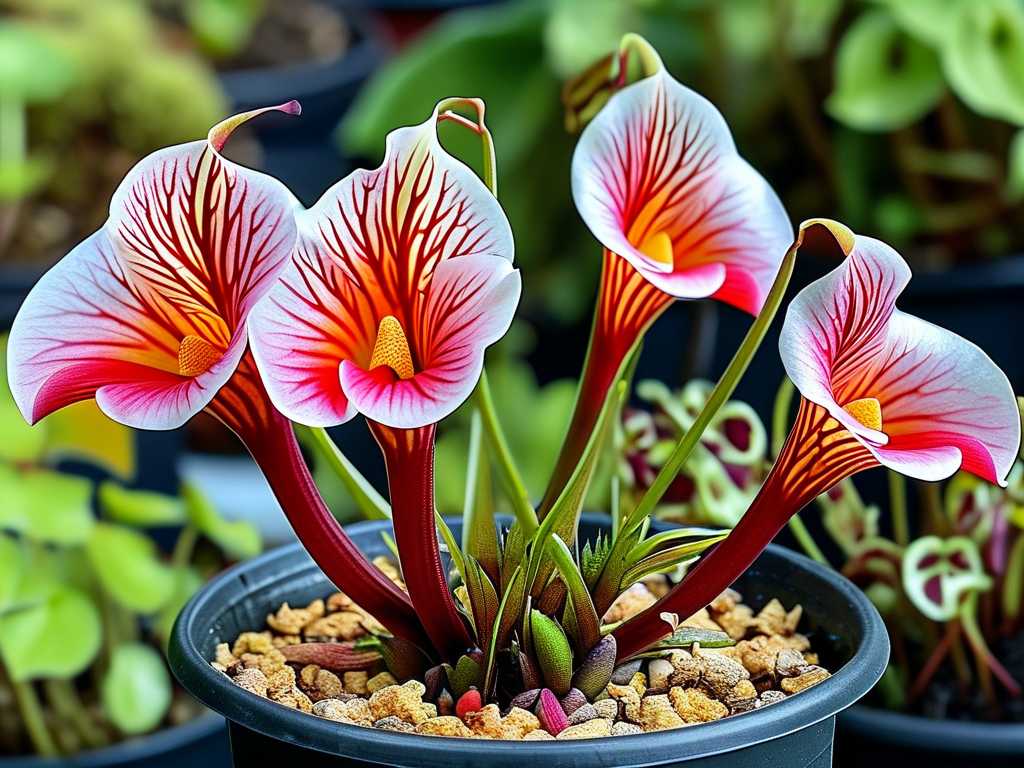
In a large garden, not all sunny spots are equal. Wind exposure, heat reflection, and proximity to water features create microclimates that can enhance or inhibit growth. Furthermore, placing tall varieties requires design thinking to maximize their architectural effect.
My garden has a slight slope. I found that pitchers planted at the bottom of the slope, where cool air settled, were consistently shorter than those planted midway up. I moved several Sarracenia ‘Juthatip Soper’ plants (a fantastic tall hybrid) from the bottom to a mid-slope position with excellent air drainage. The subsequent pitchers were notably taller and more robust. For visual impact, I use the tallest varieties—like Sarracenia ‘Night Sky’ or the immense Sarracenia ‘Judith Hindle’—as focal points or in repeating drifts to create rhythm. Placing them against a dark backdrop, like a fence or evergreen shrubs, makes their luminous colors and forms truly pop. The American Sarracenia Conservancy (ASC) notes that such strategic placement not only showcases the plants but can also slightly moderate extreme temperatures, benefiting growth.
Trick 5: Plan for Dormancy and Long-Term Colony Expansion
Your large garden is a permanent stage, and Sarracenia are perennial actors. Choosing varieties that reliably go dormant in your climate and planning for their spread over years is essential. You don’t want a glorious display that vanishes or becomes overcrowded and stunted.
I made the error of planting a group of Sarracenia rosea (formerly S. purpurea subsp. venosa) too close to a giant S. flava. While both are tall for their types, the S. flava’s rhizome spread aggressively and began to overshadow the slower-growing S. rosea. I had to undertake a careful division and relocation project in late winter. Now, I map my bog garden on paper, spacing rhizomes at least 12-18 inches apart for tall, clumping varieties, and I’m prepared to divide them every 3-4 years. This maintenance isn’t a chore; it’s an opportunity to propagate and expand your display or share with fellow enthusiasts. Ensuring they experience a cold, damp winter dormancy is non-negotiable for long-term health and vigorous spring growth.
Frequently Asked Questions
Can I grow these tall Sarracenia in containers if I don’t have an in-ground bog? Absolutely. For large gardens, you can use oversized, water-tight containers or half-barrels to create mobile bog features. The key is depth—use pots at least 12 inches deep to accommodate the extensive roots and rhizomes, and employ the same soil mix. This method also gives you control over placement and makes winter protection easier in very cold climates.
How quickly can I expect a new plant to reach its maximum height? A mature division or healthy nursery plant will typically put up its characteristic tall pitchers in the first full growing season in your garden. However, to truly bulk up and form a dense, impressive clump with multiple large pitchers, plan on a 2 to 3-year establishment period. Patience is rewarded with spectacular results.
What is the single biggest threat to achieving tall, healthy pitchers? Apart from incorrect soil, it’s insufficient light. Sarracenia need a minimum of 6 hours of direct, unfiltered sunlight daily. More is better. In partial shade, plants become etiolated—stretched, weak, and pale—or simply remain small. For the tallest varieties, full, blazing sun all day is the ultimate catalyst for their most dramatic growth.
Choosing the right Sarracenia for a large garden transforms it from a simple planting into a living sculpture exhibit. It requires looking past the label, investing in plant infrastructure (the rhizome), perfecting the foundation (the soil), designing with purpose, and planning for the future. When you apply these five tricks, you’re not just growing plants; you’re engineering a breathtaking, carnivorous landscape that will stop visitors in their tracks for years to come. The journey of observation and learning is as rewarding as the stunning visual payoff.





