 bluename
How to Identify Sarracenia Rubra Varieties: 5 Subspecies Tips for the Curious Grower
If you’ve ever found yourself staring at a cluster of slender, red-tinged pitcher plants, wondering, “Is this a Sarracenia rubra subsp. rubra, or could it be the gulfensis variety?”, you’re not alone. I’ve been there, feeling that mix of fascination and frustration. For years, I struggled to tell these stunning carnivorous plants apart. Misidentification meant I wasn’t providing the precise care they needed, leading to less vigorous growth and fewer of those beautiful, nodding flowers. It wasn’t until I dedicated a focused, two-week observation period to comparing key traits that the subtle differences finally clicked. This guide is born from that hands-on experience, the mistakes I made, and the clear, actionable tips that will help you confidently identify the five primary Sarracenia rubra subspecies.
My journey into properly identifying Sarracenia rubra varieties began after I acquired several plants labeled simply as “Sarracenia rubra.” Their growth patterns and pitcher shapes seemed oddly diverse. Determined to solve the puzzle, I set up a side-by-side comparison project. For two weeks, I meticulously documented their development, pitcher morphology, and even floral structures. This process, though sometimes tedious, was the key to unlocking their identities. I’ll share not just the textbook definitions, but the practical, in-the-field (or on-the-windowsill) markers I learned to trust.
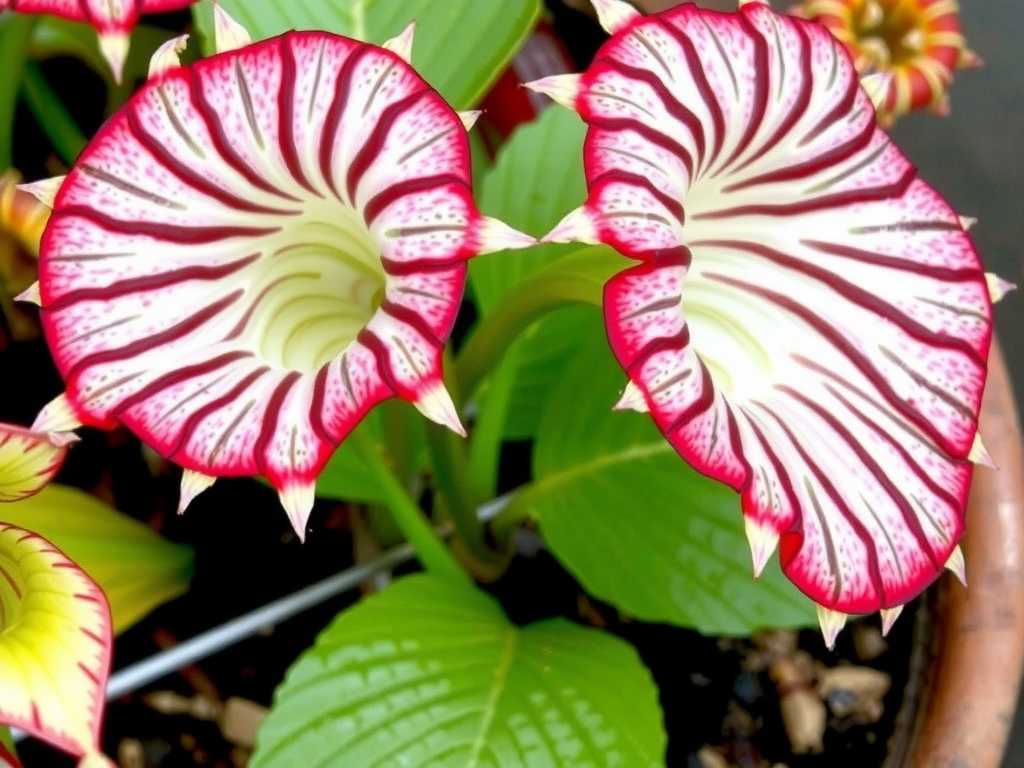
Understanding the Sarracenia Rubra Complex: More Than Just a Red Pitcher
First, let’s establish what we’re dealing with. Sarracenia rubra isn’t a single, uniform species. It’s a complex of closely related subspecies, each adapted to specific, often isolated, habitats in the southeastern United States. According to the authoritative work compiled by the International Carnivorous Plant Society (ICPS) and referenced by experts like Dr. Donald Schnell, whose field work is foundational, there are five generally accepted subspecies: S. rubra subsp. rubra, S. rubra subsp. gulfensis, S. rubra subsp. alabamensis, S. rubra subsp. jonesii, and S. rubra subsp. wherryi. Accurate identification matters because while their core needs are similar, subtle differences in their native environments can inform better cultivation, helping us replicate conditions for optimal health.
My 2-Week Observation Protocol: Setting the Stage for Success
Before diving into the identification tips for Sarracenia rubra subspecies, I want to outline my method. I gathered my ambiguously labeled plants and placed them in identical conditions—same soil mix (a 50:50 peat moss and perlite blend), same water tray (using distilled water), and the same bright, direct light exposure. Every other day for two weeks, I took dated photographs from standardized angles: a full plant profile, a close-up of a newly opened pitcher, and a shot of the pitcher’s interior. I also noted the texture, scent, and any emerging flower buds. This disciplined observation was crucial; many distinguishing features are relative and become apparent only through direct comparison.
Tip 1: Decode the Pitcher Shape and Stature
The most immediate clue lies in the pitcher’s overall form and the plant’s posture.
- Subspecies gulfensis: This was the easiest for me to spot. My gulfensis specimens developed the tallest and most robust pitchers in my collection, often with a distinct “waist” or swelling in the upper third. They stood upright and proud, unlike some of their relatives. The pitchers felt substantial and firm.
- Subspecies rubra (the typical form): These presented a more slender, graceful silhouette. The pitchers were narrower and consistently tubular from base to hood, without the pronounced swelling of gulfensis. They had a delicate, almost willowy appearance.
- Subspecies alabamensis: Here’s where I hit my first snag. Initially, I confused alabamensis with the typical rubra. However, upon sustained observation, I noticed alabamensis pitchers were often slightly stouter and the hood (or operculum) tended to be more rounded and bulbous, arching over the pitcher mouth more dramatically.
- Subspecies jonesii and wherryi: These generally produce shorter pitchers. Jonesii pitchers are notably slender and erect, while wherryi often has a more squat, funnel-shaped pitcher. My wherryi specimen’s pitchers seemed almost “cute” and compact compared to the others.
The Pitfall I Faced: I initially judged based on a single, mature pitcher. The mistake was not tracking a new pitcher’s development from emergence to maturity over my observation window. A young gulfensis pitcher can look deceptively slender before it swells.
Tip 2: Examine the Pitcher Interior and Nectar Roll
The inside of the pitcher and the structure of its rim (the peristome or nectar roll) are fantastic diagnostic tools. I used a small, bright LED flashlight for this.
- Subspecies gulfensis: The interior exhibited heavy, dark red venation against a lighter background. The nectar roll was wide, prominent, and heavily dripped with nectar, making it very sticky to the touch.
- Subspecies rubra: The venation was finer, like delicate red lace. The nectar roll was present but less conspicuously wide than in gulfensis.
- Subspecies alabamensis: This was a standout. The interior, particularly in the throat just below the lid, displayed a stunning, almost solid patch of deep red or maroon—a key identifier highlighted in the Sarracenia monograph by the ICPS. The nectar roll was also well-developed.
- Subspecies jonesii: The interior had distinct, but not overly dense, red veining. The nectar roll was relatively narrow.
Tip 3: Analyze the Hood Structure and Fenestrations
The hood, which prevents rain from diluting the digestive fluids, varies significantly.
- Subspecies wherryi: This provided the clearest “aha!” moment. The hood on my wherryi was large, undulating, and notably covered in numerous translucent “windows” or fenestrations. These spots allow light to enter, confusing trapped insects. No other subspecies in my comparison had fenestrations to this degree.
- Subspecies alabamensis and gulfensis: Their hoods are large and arched, often covering the pitcher mouth completely. They may have very limited fenestration, usually just a few small spots near the rear hinge, if any.
- Subspecies rubra and jonesii: The hoods are more erect, held closer to vertical, and smaller relative to the pitcher mouth. They rarely, if ever, show fenestrations.
Tip 4: Don’t Neglect the Flowers and Scent
While you may need patience for this clue, it’s incredibly reliable. In late spring, I was fortunate to have two of my mystery plants bloom.
- Subspecies rubra (typical): The flower had a distinctive, potent fragrance. Experts and resources like the Carnivorous Plant FAQ often describe it as “rosy” or like “cloves.” To me, it was a sweet, spicy scent impossible to miss.
- Subspecies gulfensis: The flower was visually similar but larger. Crucially, its scent was markedly different—fainter and less sweet, sometimes described as mildly musty or even slightly unpleasant.
- Subspecies alabamensis, jonesii, wherryi: Their flowers are typically smaller and tend to have little to no noticeable fragrance. The scent (or lack thereof) was the final piece that confirmed my alabamensis identification.
The Problem I Solved: One plant wasn’t flowering. I almost gave up on this tip until I reached out to a specialist from a recognized horticultural society. They advised checking for old, dried flower scapes from the previous season. I found one! Measuring its length and comparing it to documented ranges (flowers of jonesii are generally held highest above the pitchers) gave me a strong secondary clue.
Tip 5: Consider the Geographic Origin (When Known)
This is a supporting clue, not a primary one, but it can point you in the right direction. If your plant comes with location data, it’s invaluable.
- S. rubra subsp. gulfensis: Found in the Florida panhandle.
- S. rubra subsp. alabamensis: Endemic to a small region in central Alabama.
- S. rubra subsp. jonesii: Restricted to the mountains of North and South Carolina.
- S. rubra subsp. wherryi: Limited to coastal areas of Alabama and the Florida panhandle.
- S. rubra subsp. rubra: Has the widest range, from North Carolina to Mississippi.
Knowing my “mystery plant #3” was sourced from Alabama immediately made me scrutinize it for alabamensis and wherryi traits, ruling out jonesii.
What is the most foolproof single trait for identifying Sarracenia rubra subspecies? There isn’t one single silver bullet. Reliable identification requires looking at a combination of traits, particularly pitcher shape/size, hood characteristics (like fenestrations in wherryi), and the interior color pattern (the deep throat patch in alabamensis). If you can observe the flower scent, that becomes a very strong confirmatory clue.
I have a plant that seems intermediate between two subspecies. What does that mean? This is common and reflects the natural complexity of the rubra group. In the wild, where subspecies ranges approach each other, hybridization can occur. Your plant may be a natural hybrid or a cultivated one. In this case, it’s best to appreciate its unique characteristics and simply label it as a Sarracenia rubra hybrid.
Why does accurate identification matter if I’m just growing them at home? Beyond the satisfaction of knowing exactly what you’re growing, it can guide subtle care adjustments. For instance, S. rubra subsp. jonesii, from cooler mountain wetlands, might appreciate slightly lower temperatures or more consistent moisture than a gulfensis from the warmer Florida coast. It helps you tailor your care for the plant’s long-term thriving, not just its survival.
Identifying these beautiful plants is a rewarding skill that deepens your connection to them. It transforms a generic “red pitcher plant” into a specific, storied organism with a unique ecological history. My two-week deep dive, filled with missteps and corrections, taught me that patience and multi-trait comparison are everything. Start with the pitcher’s form and hood, peer inside, wait for a flower, and cross-reference what you see. The world of Sarracenia rubra identification opens up, revealing a layer of diversity that makes cultivating these carnivorous wonders even more engaging.





