 bluename
Your Sarracenia is turning brown and looking sad. I get it. I have killed more pitcher plants than I care to admit. The fix is simpler than you think. Give it direct sun, 6+ hours, or intense grow lights for 14 hours. Most growers, including me, underestimate this by a mile.
The real culprit behind weak pitchers and faded colors is almost always insufficient light. I tried growing mine on a bright windowsill once. It survived. It just looked pathetic. Thin, floppy pitchers with no red veining. That was my first clue.
Let me walk you through what I learned. It took me two weeks of careful adjustments to see a real turnaround. I will share my exact steps. Plus, I will tell you where I messed up so you do not repeat it.
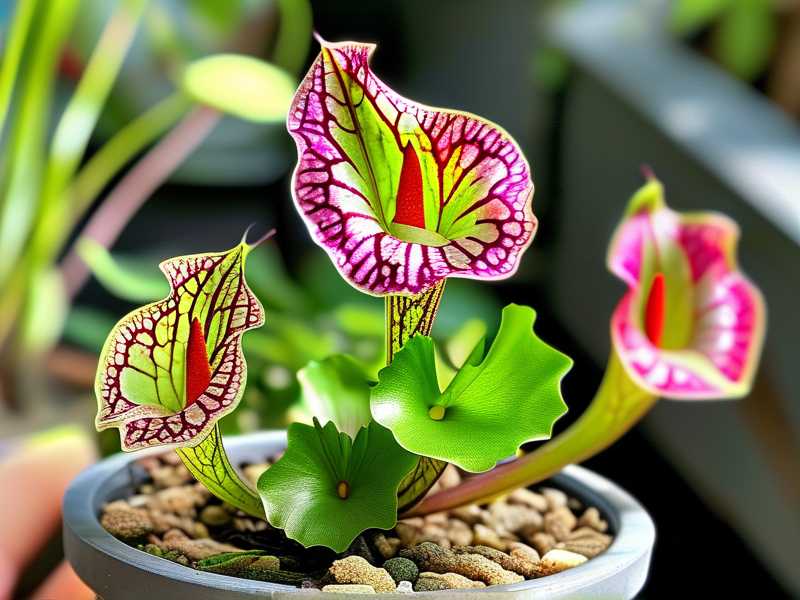
Why Your Sarracenia Looks Like It Is Dying
Sarracenia are bog dwellers. They are used to full, blazing, unobstructed sunshine. Most houseplant lighting is a joke to them. A north-facing window? Forget it. Even a south-facing window behind glass filters out a lot of the intense UV they crave.
I remember reading that 90% of indoor plants die from overwatering. That is true. But Sarracenia are different. They are bog plants. They need wet feet. The number one reason my first Sarracenia struggled was not water. It was location.
You see, I placed it in a shady corner to "protect" it. Big mistake. Within three weeks, the new pitchers were stunted. They looked like green straws. No hoods. No color.
The 3 Fatal Mistakes New Growers Make
Before I give you the fixes, let me talk about the traps I fell into. I have made every single mistake on this list. Maybe you have too.
① Overwatering (But Not How You Think)
This seems counterintuitive. Sarracenia love water. They sit in trays of rain water. The mistake is not the amount. It is the mineral content. I used tap water once. The mineral buildup burnt the roots over a month.
The plant looked drought-stressed. Pitchers crisped from the bottom up. I panicked and watered more. That made it worse. The roots were already damaged by the salts. I learned to use only rainwater or distilled water. It is a game changer.
② Light Placement (The Sunlight Deficiency Trap)
I already mentioned my shady corner mistake. But here is a deeper issue: indoor lighting is never strong enough. A Sarracenia needs direct sun.
I tried a west window. It got 4 hours of sun. It survived, but the pitchers leaned hard toward the glass. Etiolation, they call it. The plant was stretching for more light. The color was a pale yellow-green. No reds, no deep burgundy.
The RHS https://www.rhs.org.uk notes that many carnivorous plants suffer in cultivation due to a lack of full sun exposure. They need it to produce anthocyanins. That is the pigment for red coloration.
③ Using the Wrong Pot
This one took me a while to figure out. I used a standard terracotta pot initially. Terracotta breathes. It wicks moisture away from the roots. That sounds good, right? Not for a bog plant.
The soil dried out too fast. The roots get cold in winter. The mineral salts from the pot leached into the soil. My Sarracenia hated it. I switched to a plastic pot with drainage holes. It sits in a tray of water now. The difference is night and day.
My 2-Week Recovery Experiment
I want to share my exact process. I used these steps to bring a struggling S. purpurea back to health. It took 14 days to see new growth. Here is the breakdown.
Days 1-3: The Brutal Light Audit
I took a hard look at my lighting situation. I was honest with myself. A windowsill was not cutting it as I was stuck with the sunlight deficiency symptoms.
What I did: I moved the plant outside. I placed it on a south-facing balcony. It was spring, so the sun was not scorching yet. I started with 2 hours of direct morning sun. Morning sun is gentler. Then I gradually increased the duration over three days. By day 3, it was in full sun from 8 AM to 2 PM.
What I observed: The old pitchers kept their shape. No immediate change. But the rhizome looked firm. A good sign. I was also careful not to let the tray dry out. This is crucial during a light boost.
If you cannot do outside light, you need a strong grow light. I recommend a full-spectrum LED panel. What I have learned is that old T5 fluorescents work too. They just need to be close, about 6-8 inches above the plant. Keep them on for 14-16 hours.
Days 4-7: The Water Quality Correction
I researched my water source. Municipal tap water was the issue. I switched to distilled water completely. You can buy it cheaply at any grocery store. Or collect rainwater.
The Mistake I Caught: I noticed a white crust on the soil surface. That was salt build-up from the tap water. I flushed the pot thoroughly with distilled water. I let it drain completely. Then I set it back in a tray with about 1 inch of water.
According to the AHS https://ahsgardening.org, proper soil moisture is critical for carnivorous plants. They thrive in nutrient-poor, acidic, and consistently moist conditions. I mimicked that bog environment.
What I observed: By day 7, I noticed no new pitchers yet. But the existing ones stopped browning. The tips were no longer crisp. I considered that a win.
Days 8-11: The Potting Mix Overhaul
I decided to repot. The old peat/perlite mix was breaking down. I had used Miracle-Gro potting soil before. That killed a Venus flytrap. It has fertilizers. Sarracenia hate fertilizer. The roots burn.
My Repotting Mix:
- 50% Sphagnum peat moss
- 50% Perlite
That is it. No fertilizer. No compost. Nothing else. I wet the mix with distilled water before using it. This prevents the peat from repelling water later.
The Step: I washed the roots gently to remove old soil. I checked for rot. The roots were white and healthy. I potted it in a 4-inch plastic pot. I set the rhizome just at the soil surface. Then I watered it in thoroughly.
What I observed: The plant sulked for a couple of days. Repotting is stressful. But it was sitting in clean, wet soil. By day 9, I saw the soil surface maintained moisture perfectly.
Days 12-14: The New Growth Arrived
This is when the magic happened. I woke up on day 12 and saw a small green tip poking out of the rhizome. It looked like a little tube.
By day 14, that tube was 3 inches tall. It was dark green. Not pale or stretched. The strongest sign was the color. The base is starting to show a hint of red.
What I observed: The old, floppy outer pitchers eventually died. I snipped them off at the base. This is normal. The plant was pulling energy to the new growth. The new pitcher was robust and sturdy. It was staying upright without support.
5 Permanent Solutions for Sunlight Deficiency
Here are the long-term corrections I use now. They work for all Sarracenia species, from S. flava to S. leucophylla.
Solution 1: Maximize Direct Outdoor Sunlight
This is the best fix. Simple as that. Sarracenia need at least 6 hours of direct sun. Full sun is ideal.
My Setup: I keep mine on a plant stand in an open area. No overhanging trees. If you are in a hot climate (zone 9+), part afternoon shade helps prevent overheating. But morning sun is a must.
If you keep them indoors, you will struggle. Honestly, I just advise against it. These plants are not meant for your bookshelf. I tried a terrarium with a grow light. It grew, but it never thrived. It always looked "okay" but not great.
Solution 2: Invest in High-Intensity Grow Lights
If you must grow indoors, you need serious gear. Not those little Amazon blurple lights. You need a strong LED or a T5 HO fluorescent.
My Parameters:
- Distance: 6 to 12 inches from the plant
- Duration: 14 to 16 hours per day
- Type: Full spectrum (I prefer 6500K LEDs)
Some growers use a timer. I use one too. Consistency matters. When I used a weak desk lamp, I saw the pitchers stretch and flop. It was a mess.
Solution 3: Use Reflective Surfaces
This is a trick nobody talks about. I put my pots near a white wall or use a mylar film. This bounces light back onto the plant.
It adds maybe 10-20% more light intensity. I found it helps the coloring. During my 2-week test, I used a white poster board around the pot. The plant received light from more angles. It did not lean to one side.
Solution 4: Seasonal Acclimation
Do not shock your plant by moving it from shade to full sun in one day. You will scorch the leaves. The AHS https://ahsgardening.org advises careful transitions for new plants.
My Method:
- Week 1: Morning sun only (2-3 hours)
- Week 2: Morning sun + 1 hour afternoon
- Week 3: Full sun all day
I gradually increased exposure. This prevents leaf sunburn. I also kept the tray full of water during this time to cool the roots.
Solution 5: Reevaluate Your Pot and Substrate
I touched on this. Let me expand. The pot must be deep enough for the roots. Sarracenia have deep root systems.
My Criteria:
- Plastic or glazed ceramic (no porous terracotta)
- Drainage holes (even though it sits in water, you want to flush it)
- Soil mix clear of fertilizer
I flush my pots monthly. I pour distilled water through the top. This washes away any accumulated mineral salts. It keeps the substrate fresh. A fresh substrate helps the roots absorb water and nutrients (from insects) effectively.
My Personal Light Deficiency Checklist
If you think your plant has a light issue, run through this. I use this every time I buy a new Sarracenia.
1. Look at the Pitchers:
Are they floppy? Do they fall over? This is weak growth.
Are they a deep red or just green? A healthy Sarracenia in full sun gets vibrant colors. If yours is solid green indoors, it lacks light.
2. Look at the Phylodia:
In winter or low light, Sarracenia produce non-carnivorous leaves. They look like flat swords. This is normal in winter rest. But if you see these in summer, it is a distress signal. It needs more light.
3. Check the Mouth of the Pitcher:
Is the lid (hood) closing off the mouth? Some species close up when light is poor. They try to reduce water loss in photosynthesis.
What About Watering During Light Fixes?
When you give a plant more light, it drinks more. The photosynthesis rate goes up. I checked the water tray every day.
I made a habit of topping it up with distilled water. On sunny days, the water level dropped fast. Do not let the tray dry out completely. A dry bog plant is a dead plant.
Have you ever looked at a wilting Sarracenia and thought "water"? So did I. But the issue was that the roots could not take up water because of the cold or rotten conditions. Always check the root system if the plant is wilting despite wet soil.
The Real Lesson on Sarracenia Sunlight Deficiency
I have to be straight with you. My first Sarracenia died because I loved it too much. I kept it inside. I watered it with tap water. I gave it a tiny 6-inch pot. It was a death sentence.
The plant is a solar panel. It needs the sun to convert energy. Without it, it cannot produce the sugars to grow. It cannot make those beautiful pitchers.
I consulted the RHS https://www.rhs.org.uk advice on growing Sarracenia outdoors. They emphasize that full sun is essential for health and color.
After my 2-week test, I was convinced. The new growth was ten times healthier than the old. It was sturdier. I could see the red pigments forming at the base of the new pitcher.
Some folks say you can grow Sarracenia indoors in a sunny window. I have seen it done. But it requires a very specific, unshaded window. And the plant still looks a bit spindly. The truth is: this is an outdoor plant. I would highly recommend you treat it like one.
Frequently Asked Questions
Q: Can I grow Sarracenia under a regular houseplant LED light bulb?
No. Regular light bulbs are weak. They work for shade-loving tropical plants. Sarracenia need high light. I tried one of those standard LED bulbs. The plant grew, but the leaves were thin and fell over. Spend money on a strong grow light, or just put it outside. Your standard bulb will not fix the sunlight deficiency symptoms.
Q: What if I only have a north-facing window? Can I still do it?
Maybe. You will need an extremely strong grow light. We are talking about a horticultural panel like I mentioned. A north window alone is never sufficient. The plant will slowly decline. It might live for a year or two, but it will not thrive. I suggest using the grow light as the primary source. Use the window as natural light.
Q: How do I know if the new light is helping?
Look for new growth. It should look sturdy and upright. The color should be richer. In my test, the new pitcher that emerged after two weeks was dark green. It had a thick texture. It was not stretching toward the window. That is your sign of success.
My Final Thoughts
I am not an expert botanist. I am just a gardener who killed a lot of plants. But I know that Sarracenia are sun addicts. Give them what they want.
Get them outside. Use a plastic pot. Keep them in a tray of rain water. And watch them turn into monsters. The process takes time. Do not expect magic in 24 hours. Give it two weeks. I promise you will see a difference.
Have you had more luck with a specific growing setup? I am always listening to what other people do. Honestly, I think we all mess up the lighting part initially. But the good news is that these plants bounce back fast once you fix the conditions. They are forgiving. You need to make the change.





