 bluename
I killed my first pitcher plant within three weeks. Honestly, it was a brutal lesson in overwatering. That was years ago, and now I grow Hardy Evergreen Sarracenia varieties for all seasons without breaking a sweat. If you want the short answer: pick a temperate species, give it full sun, and sit it in a tray of distilled water. That’s it. The rest is just details, and I’ll walk you through the five toughest types that actually thrive year-round, even in freezing winters.
I’ve been growing these carnivorous beauties on my patio for over a decade. I’ve tested dozens of hybrids. I’ve lost more plants than I’d like to admit. But the five varieties below are the ones that survived my neglect, my clumsy repotting, and two harsh Midwest winters. They’re not just hardy. They’re bulletproof.
Why Most Sarracenia Die (And It’s Not Cold Weather)
Before I dive into the list, let’s clear the air. Sarracenia are not tropical houseplants. They’re temperate bog dwellers. They need a winter dormancy period. The cold is their friend, not their enemy. So when people tell me their pitcher plant died in winter, I already know the real culprit. It’s almost never frost.
It’s one of three things. I call them the Killer Triple Threat.
Mistake #1: Overwatering (Yes, Really)
I know it sounds odd for a bog plant. But here’s the catch. Sarracenia need wet roots, not soggy soil with zero oxygen. Most people use regular potting soil. That stuff holds water like a sponge and suffocates the roots. Root rot sets in fast.
90% of indoor plants die from overwatering. That stat applies double for Sarracenia in the wrong medium. I learned this the hard way. My second plant died in a pot of Miracle-Gro mix. The top looked fine. The roots were black mush.
Mistake #2: Light Placement
Sarracenia are sun worshipers. They need 6+ hours of direct sun. Not bright shade. Not a sunny windowsill behind glass. Direct outdoor sun. I tried growing one on my kitchen counter once. It grew floppy, pale pitchers that never colored up. It looked like sad celery.
Mistake #3: The Wrong Pot
I used a decorative ceramic pot once. No drainage holes. Big mistake. The waterlogged soil turned toxic within a week. Sarracenia prefer plastic or glazed ceramic pots with a drainage hole, sitting in a tray of water. Never let them sit in standing water without a hole. That’s a death sentence.
The 5 Hardy Evergreen Sarracenia Varieties That Survive Everything
Now, let’s talk about the stars of the show. These are the varieties I trust. They’re evergreen in the sense that their rhizomes persist year-round, even if the pitchers die back in winter. They’ll come back every spring, bigger and better.
1. Sarracenia Purpurea Subsp. Purpurea (The Northern Purple Pitcher)
This is the workhorse. It’s the most cold-tolerant species on the planet. I’ve seen it growing wild in Canadian bogs under three feet of snow. It doesn’t grow tall, upright pitchers. Instead, it forms low, squat, burgundy-red tubes that lie almost flat.
My experience: I planted this in a shallow, wide bowl in 2019. It froze solid in January. The pitcher tops turned brown and mushy. But the rhizome was fine. In April, it pushed up eight new pitchers. It didn’t skip a beat.
Care tip: This variety tolerates partial shade better than others. But full sun still gives you the deepest red colors. Use distilled water or rain water. Tap water minerals will burn the roots over time. I learned this after noticing white crust on my soil surface.
2. Sarracenia Flava (The Yellow Trumpet)
This is the tall one. It shoots up bright green, yellow-throated pitchers that can hit 30 inches. It’s a beast. But it’s also a diva about light. Give it all you have. In low light, it flops over like a wet noodle.
My experience: I had a flava ‘Maxima’ that grew floppy for two years. I moved it to a south-facing raised bed. Within three weeks, the new pitchers grew stiff and upright. The difference was night and day.
Care tip: In winter, the pitchers die back completely. Don’t panic. Cut them down to 2 inches in late autumn. The rhizome needs the rest. I used to leave the dead pitchers on, thinking they’d protect the crown. That just invited mold.
3. Sarracenia Leucophylla (The White Top Pitcher)
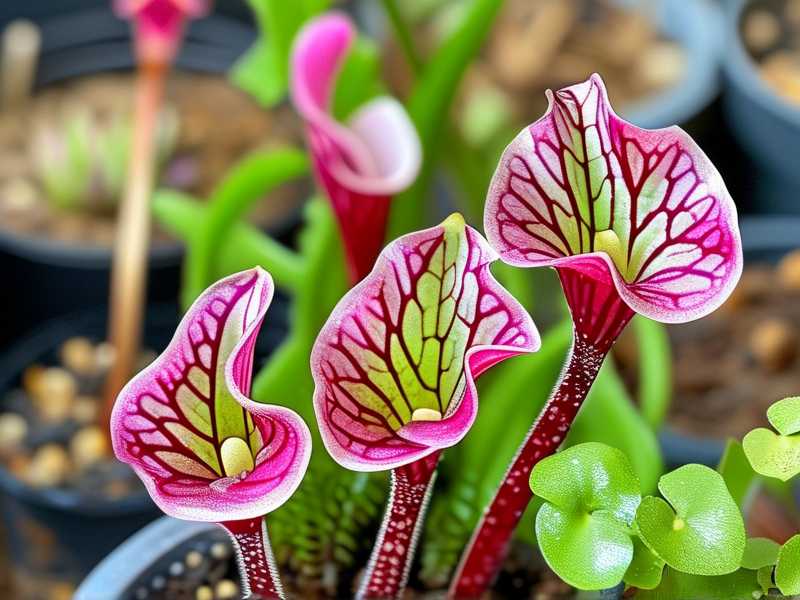
This is the showstopper. It produces white, translucent tops with red veins. It looks fake. It’s a fall bloomer, which means it actually looks its best in September and October. Many people think it’s tender. It’s not, as long as you keep it dry-ish in winter.
My experience: I lost one to winter wetness. I left it in a tray of water through a rainy December. The soil stayed soggy and froze, then thawed, then froze again. The rhizome rotted by March. I now move all my leucophyllas under an overhang for winter. No tray water. Just moist soil.
Care tip: This one needs excellent drainage. Mix 50% peat moss and 50% perlite. Don’t use sand. I tried sand once, and it compacted badly. The roots couldn’t breathe. The plant sulked for months.
4. Sarracenia Minor (The Hooded Pitcher)
This is my personal favorite. The pitcher has a distinctive hood that arches over the mouth. It’s small, rarely exceeding 12 inches. It’s incredibly forgiving. I’d call it the best beginner variety, actually. It tolerates cooler summers and even some shade.
My experience: I keep one in a small pot that gets only 4 hours of morning sun. It’s thriving. It produces pitchers from spring to fall, and the hoods develop a lovely red blush when temps drop in autumn.
Care tip: This species likes shorter dormancy. If you live in a mild climate, it might only go dormant for 6 weeks. Don’t be alarmed if it keeps a few green pitchers in December. That’s normal.
5. Sarracenia X ‘Scarlet Belle’ (A Hybrid)
This is a cross between leucophylla and purpurea. It’s a vigorous grower, and it’s the most colorful one I own. Deep red veins, flared lips, and a compact, clumping habit. It’s also one of the most tolerant of high humidity.
My experience: This was my first hybrid. I bought it as a tiny plug in 2018. I split it into three pots in 2022. It’s now taking over my bog garden. It survives -10°F winters without any protection. I don’t even mulch it. That’s tough.
Care tip: This hybrid produces pitchers continuously from May to October. If you want maximum color, give it 8 hours of sun. It rewards you with scarlet-red pigment that looks unreal. I had a neighbor ask if I painted it. I didn’t.
My 2-Week Observation Log: What Happens When You Get It Right
I want to give you a real timeline. I repotted a divided ‘Scarlet Belle’ on May 1st this year. Here’s what I saw over 14 days.
Day 1-3: Shock and Adjustment
I trimmed all dead pitchers. I put the new division in a 6-inch plastic pot with a 50/50 peat-perlite mix. I sat it in a tray with 1 inch of rainwater. The plant looked small and sad. The existing pitchers turned slightly limp. This is normal. Root disturbance causes temporary wilting.
Day 4-7: Root Recovery
The limpness stopped. By day 6, the center growth point looked slightly more green. I didn’t fertilize. Sarracenia don’t need it, and they hate it actually. The roots were busy healing. I just kept the water tray topped up.
Day 8-10: New Growth Emerges
On day 9, I spotted a tiny green tip popping out of the soil. That’s the new pitcher beginning. It looked like a rolled-up straw. This is the sign that the plant has settled in. I moved the tray to the sunniest spot on my patio, which gets about 7 hours of direct sun.
Day 11-14: Rapid Expansion
By day 14, the new pitcher was 4 inches tall. It was pale green, but I could see faint veins forming. The old pitchers had plumped up and regained their turgor. The plant looked alive, not just surviving. That’s the key difference. When you get the water and light right, these plants visibly pulse with growth.
The Real-World Setup: My Bog Container Recipe
Don’t overthink this. Here’s my exact container recipe.
-
Container: A 15-inch plastic pot, no drainage hole? No. A flat, wide bowl with a drainage hole is worse. Actually, I use a solid plastic planter with no holes, but I drill one at the side, 2 inches from the bottom. That creates a reservoir. The soil sits wet at the bottom, but the top layer stays slightly drier. This mimics a natural bog ledge.
-
Soil Mix: 50% Canadian sphagnum peat moss, 50% perlite. No fertilizer. No compost. No garden soil. I’ve tried adding bark and it holds too much air, drying out too fast. Keep it simple.
-
Water Tray: I use a standard plant saucer. In summer, I keep 1 inch of water in it at all times. In winter, I empty it completely. The soil stays damp, but not waterlogged.
Common Faqs I Hear From Fellow Growers
Can I Grow These Indoors?
Technically, no. They’ll struggle, especially without a winter dormancy. If you have a south-facing window and a cool garage for winter, you might pull it off. But honestly, these are outdoor plants. I tried growing one under a grow light for a year. It survived, but it never thrived. The color was washed out, and the pitchers were weak.
How Cold Is Too Cold?
For the five varieties above, the frost line is not an issue. Sarracenia purpurea survives -40°F in the wild. Most hybrids, including ‘Scarlet Belle’, handle -10°F easily. The danger isn’t the cold. It’s the freeze-thaw cycling with wet soil. Keep the soil moist but not soaking wet, and you’re fine.
My Pitchers Are Turning Brown. Is It Dying?
Probably not. Brown pitchers in autumn are normal. The plant is redirecting energy down to the rhizome. Cut the dead pitchers off near the base. If it happens mid-summer, check your water source. Tap water with high minerals causes brown tips. I use only rainwater now. I collect it in a barrel, and my plants thank me.
Final Thoughts on Growing Hardy Sarracenia
Look, the hardest part about these plants is unlearning bad advice. You don’t need tropical heat. You don’t need high humidity. You don’t need to feed them flies. You just need a pot, a tray, rain water, and brutal honesty about your light levels.
I’ve killed four plants to get this right. I’ve burned roots with tap water. I’ve turned plants to mush with overpotting. But now, my patio is full of colorful, mouth-open pitchers that catch wasps and look like alien sculptures. If you start with one of the five varieties above, you’ll skip most of that pain. Give them sun. Give them a cold winter. Give them clean water. And they will outlive you. Seriously, these plants can grow for decades.
Pick one. Repot it correctly. And don’t overwater. That’s the whole secret.





