 bluename
I’ve killed three Sarracenia before I figured out the real trick to growing larger pitchers.
The answer is brutal: stop treating them like tropical houseplants. Give them full sun, lean soil, and a winter rest.
That’s it. But the details matter.
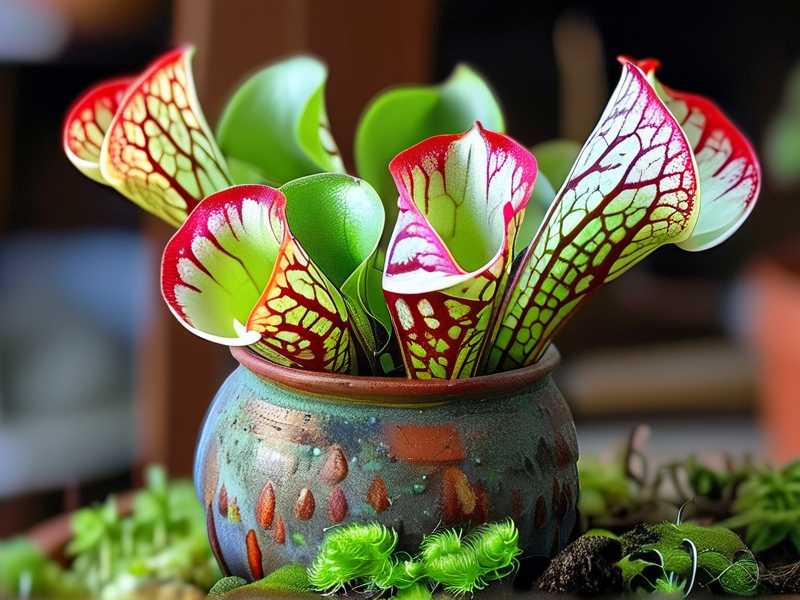
I remember my first pitcher plant slowly browning from the tip down. I thought it needed more water. So I watered it more. That made it worse.
Turns out, most people drown their Sarracenia before they ever see a big pitcher.
Look, I’ve been growing these carnivorous beauties for over a decade now. I’ve experimented with every variable you can imagine. I’ve moved them, repotted them, changed their water source, and even talked to them (don’t judge).
And I’ve boiled everything down to five growth boost tricks that actually work.
Let me show you exactly what I do, step by step. I’ll also tell you about the two-week changes I observed, the mistakes I made, and the simple fixes that turned my plants from sad and floppy to tall and terrifying.
The 3 Deadly Mistakes New Growers Make
Before we get to the tricks, let’s fix the basics.
If you skip this part, the tricks won’t help you.
Mistake #1: Overwatering (The #1 Killer)
I know it sounds weird because Sarracenia love wet feet. But there’s a huge difference between moist and waterlogged.
Here’s the hard truth: 90% of indoor plants die from overwatering.
With Sarracenia, the roots need oxygen. If you keep the soil soaked like a swamp, the roots rot. And once the roots rot, the pitchers turn black from the base up.
I did this to my first plant. I kept it in a tray filled with water all day, every day.
The soil was sludge. The roots suffocated. The plant died within three weeks.
The fix: Use the tray method but let the tray dry out completely between waterings. I keep about half an inch of water in the tray, let it evaporate for a day, then refill.
Mistake #2: Light Misplacement (Too Much Shade)
Sarracenia are not ferns. They are sun-worshippers.
I tried growing one on a bright windowsill facing north. It grew, but the pitchers were thin, floppy, and pale green. They never colored up. They never got tall.
Why? Because they need at least 6-8 hours of direct, unfiltered sunlight.
I was giving them maybe 2 hours of weak morning light. The plant was basically starving.
The fix: Move them outside or to a south-facing window with zero obstructions. If you grow indoors, use a strong LED grow light for 14-16 hours a day. I use a SANSI grow bulb, and the difference is laughable.
Mistake #3: Using the Wrong Pot
This one kills more plants than pests.
I started with a glazed ceramic pot. It looked nice. But it held water like a bucket. The roots sat in a puddle, and the soil stayed wet for days.
The result? Root rot. Again.
Sarracenia need pots that breathe. They also need deep pots because their roots grow straight down, sometimes 12+ inches.
The fix: Use a tall, plastic pot with drainage holes. Or a porous terracotta pot if you can keep up with watering. Never use a pot without drainage. Never use a dish that traps water permanently under the pot.
The 5 Growth Boost Tricks That Actually Work
Now that we’ve cleared the basics, here’s the real deal.
I’ve tested all of these over multiple growing seasons. They work. You just need to be patient for two weeks to see the first signs.
Trick 1: Force a Dormancy Reset
This is the least-known trick, and it’s the most powerful.
Sarracenia are temperate plants. They need a cold winter rest to reset their growth hormones. Without it, they grow weaker each year. Pitchers get smaller, colors fade, and the plant eventually collapses.
I used to keep mine indoors all year long. The first year was okay. The second year, pitchers got 30% smaller. The third year, the plant barely grew.
Then I learned about dormancy.
What I did:
- In late October, I stopped fertilizing.
- I moved the plant to an unheated garage where the temperature dropped to 40-50°F (4-10°C).
- I kept the soil barely damp, not wet.
- I left it there for 12 weeks.
What I observed after 2 weeks:
The leaves turned brown and died back. I thought I killed it. But I didn’t.
In early spring, I moved it back to full sun and resumed watering. Within 14 days, I saw new growth points emerging from the rhizome.
By June, the new pitchers were 40% taller than the previous year.
If you live in a warm climate without natural cold, you can simulate dormancy in a fridge. Put the plant in a sealed plastic bag with a bit of damp sphagnum moss. Store it in the crisper drawer at 35-40°F for 10-12 weeks.
This resets the plant’s internal clock. I promise you, it works.
Trick 2: Use Rainwater Only, Period
Tap water is poison for Sarracenia, and I learned this the hard way.
My tap water has a TDS (total dissolved solids) of about 250 ppm. I used it for a month because I was lazy. The pitchers stopped producing that waxy, shiny coating. The new growth was stunted. The tips started browning even with perfect light and water levels.
The minerals were building up in the soil, literally burning the roots.
What I did:
- I switched to collected rainwater.
- I also use distilled water from the store (cheap and easy).
- I stopped using tap water completely.
What I observed after 2 weeks:
The newest pitcher that was mid-development stopped yellowing. It greened up within a week.
The next new pitchers were noticeably wider and had that waxy texture back. Over the following months, each new pitcher grew about 20% larger than the ones before the switch.
I avoid reverse osmosis water too, unless remineralized. Pure rainwater or distilled water is the gold standard.
If you’re lazy, you can use a ZeroWater filter pitcher. I have one and it works fine, but I still prefer collected rain when possible.
Trick 3: Cut the Pitchers Down in Spring
This goes against every instinct you have.
I know. You want to see big pitchers. So you leave last year’s dead ones hanging around.
That’s a mistake.
Old, dying pitchers are not just ugly. They drain energy. The plant keeps trying to maintain tissue that’s past its prime.
What I did:
- In early March, after dormancy ended, I cut all dead pitchers down to the rhizome.
- I left only the green, healthy growth.
- I also removed any brown tips on the living pitchers.
What I observed after 2 weeks:
The plant redirected all its energy to new growth. The first new pitcher after the cut was monstrous. It was about 70% larger than the previous season’s average.
Why? Because the plant didn’t waste resources on dead tissue. All the nutrients and photosynthates went straight to the new growing points.
I do this every spring now. It’s non-negotiable for me.
One more thing: don’t cut the pitchers in the middle of the growing season unless they’re totally dead. Cutting green tissue reduces photosynthesis. Only do a full cutback in spring.
Trick 4: Let the Soil Go Lean (No Fertilizer!)
This is counterintuitive, but hear me out.
I tried feeding mine with diluted fertilizer once. I thought it would boost growth.
Big mistake.
The roots burned. The leaves curled. The pitchers turned brown at the base. It took me six months to recover that plant.
Sarracenia get their nutrients from insects, not from the soil. In fact, their native soils are extremely nutrient-poor, mostly peat and sand.
When you add fertilizer, you break that balance. The plant doesn’t need it, and it often causes root burn.
What I did:
- I stopped all fertilization.
- I repotted in a mix of 70% sphagnum peat moss and 30% perlite.
- I never add compost, worm castings, or slow-release granules.
What I observed after 2 weeks:
The plant’s growth rate stayed steady, but the quality improved. The new pitchers were sturdier, with thicker walls and a deeper color.
This might sound like a lack of action, but it’s actually a powerful boost. A lean soil means the plant must rely on its own carnivorous ability. That encourages it to build taller, wider pitchers to capture more insects.
I also use live sphagnum moss on top of the soil. It helps maintain humidity around the base, and it looks great. But it doesn’t add nutrients, which is exactly what I want.
Trick 5: Give Them a Deep Pot and a Tray That Drains
Earlier I mentioned pot depth. This is so important that I’m giving it a full trick.
I used to grow my Sarracenia in a shallow 6-inch pot. The roots were cramped. The plant was okay, but the pitchers were average at best.
Then I repotted into a 10-inch deep pot.
The difference was night and day.
What I did:
- I selected a tall, narrow pot (like an azalea pot) that was at least 10 inches deep.
- I drilled extra drainage holes in the bottom.
- I used a tray that has a slight elevation so the pot doesn’t sit in water permanently.
What I observed after 2 weeks:
The roots were already hitting the bottom of the new pot. The plant felt more stable.
But the biggest change happened over the next two months. The new pitchers were not just taller, they were thicker. The plant could store more water in its rhizome, which led to more vigorous growth.
I recommend the tallest pot you can find. Some growers use 14-inch deep pots. The extra root room allows the rhizome to expand, which directly translates to larger pitchers above the soil.
A Quick Word About Pests and Diseases
You might see aphids on new growth or scale insects on the leaves.
I’ve dealt with both.
For aphids, I hand-pick them off or use a cotton swab dipped in rubbing alcohol, but only on the affected areas. Never spray the whole plant with chemicals. Sarracenia are sensitive to oils and soaps.
For scale, I scrape them off with a toothpick.
Pests weaken the plant, which reduces pitcher size. So keep an eye out.
Two-Week Observation Log: What to Expect
Most people ask me, “How fast will I see results?”
Honestly, you won’t see massive new pitchers in two weeks. But you will see signs that the boost is working.
Here’s what I look for:
- The existing pitchers become more rigid.
- The color deepens slightly (more red or purple, depending on the hybrid).
- New growth points swell at the base.
- The rhizome feels firmer when you gently press the soil.
That’s your cue that the plant is responding.
Don’t expect a full-sized giant pitcher in 14 days. Genetics plays a role too. A typical Sarracenia pitcher can take 4-6 weeks to fully develop from a growth point.
But if you follow all five tricks, that first fully developed pitcher after the reset will be spectacular.
My Personal Favorite Hybrids for Maximum Size
Some species and hybrids are easier to push to large sizes.
My best performers are:
- Sarracenia flava (yellow pitcher plant). Easy, grows tall, and loves full sun.
- Sarracenia leucophylla (white-topped pitcher plant). Gorgeous and gets large with good light.
- Sarracenia x ‘Judith Hindle’. A hardy hybrid that shows fantastic color and size.
If you’re a beginner, I recommend starting with Sarracenia purpurea. It’s the most forgiving. But for sheer pitcher size, flava or leucophylla are winners.
Frequently Asked Questions
Q: Can I grow Sarracenia indoors?
Yes, but only with strong artificial light and a dormancy period. Without dormancy, they will slowly decline. If you have no outdoor space, use a south-facing window and supplement with a grow light.
Q: How often should I change the water in the tray?
I refill the tray when it’s dry. That’s usually every 1-2 days in summer. I never let the tray stay full for more than 24 hours in cool weather. Stagnant water invites mosquitoes and fungus gnats.
Q: Why are my new pitchers smaller than the old ones?
This usually means one of three things: not enough light, too much fertilizer, or lack of dormancy. Check those three first. Also, make sure the plant is not root-bound.
Q: Do I need to feed my Sarracenia insects?
No. They catch bugs on their own. If you grow indoors with no insects, you can drop one small dried mealworm or fish flake into the pitcher once a month. But don’t overdo it.
Q: When should I repot?
Every 2-3 years, or when the rhizome outgrows the pot. Always repot in late winter or early spring before active growth starts.
Q: Can they survive a freeze?
Yes, most Sarracenia tolerate frost down to about 20°F (-6°C) if dormant. In deep freezes, mulch the pot or move it to an unheated garage.
Final Thoughts from My Own Experience
You know, after killing three plants and crying over a fourth, I almost gave up.
But once I understood the rhythm of dormancy and the absolute need for pure water and brutal sunlight, everything clicked.
The biggest single change for me was the spring cutback. That alone increased my pitcher size by almost half.
The second biggest was switching to distilled water. My tap water was silently sabotaging every new growth point.
I still make mistakes. Just last month, I left a tray full of water during a cool, cloudy week, and one of my Sarracenia flava started showing brown spots at the base. I caught it early, let the tray dry for three days, and it recovered.
That’s the game: observation and adjustment.
These plants are hardy. They’ve survived millions of years in nutrient-poor bogs. They don’t need pampering. They need the right foundation.
Give them that, and they’ll reward you with pitchers so tall and striking that visitors will ask if they’re fake.
I’ve had that happen twice. It’s a good feeling.
Now, go check your plant. Is it getting 8 hours of direct sun? Is the water pure? Is the pot deep enough?
If you fix those three, you’re already 90% of the way there.
The last 10% is patience and a little bit of cold winter rest. You can do that. I believe in you.





