 bluename
How to Grow Sarracenia Successfully in Urban Apartments: 7 Tips
Growing Sarracenia in a small city apartment is absolutely doable, even on a tiny balcony or a bright windowsill. The trick is mimicking a bog, not a jungle. 90% of indoor plants die from overwatering, but with Sarracenia, the opposite is true — they need constant moisture and intense light. If you’ve ever watched a pitcher plant wither on your desk, you likely made one of three classic mistakes. Let me walk you through exactly what worked for my two-room apartment setup, plus the pitfalls that killed my first three plants before I learned better.
The 3 Biggest Mistakes That Kill Indoor Sarracenia
Mistake #1: Overwatering (Yes, Really)
I know what you're thinking. Pitcher plants love water. But here's the catch: they need pure, mineral-free water and excellent drainage. Tap water with dissolved salts is the silent killer. I used filtered tap water for a month, and the pitchers turned brown from the bottom up. The salts burned the roots. Simple solution? Buy distilled water or collect rainwater. If you see white crust on the soil, you've already made this mistake.
Mistake #2: Wrong Light Placement
Sarracenia needs full sun. Not "bright indirect light" — actual, direct sunlight. On my north-facing balcony, my plants grew weak, leggy pitchers that never colored up. I moved them to a south-facing window, and within three weeks, new pitchers appeared with rich burgundy veins. If you have no sunny window, use a grow light for at least 12 hours daily. Trust me, that's non-negotiable.
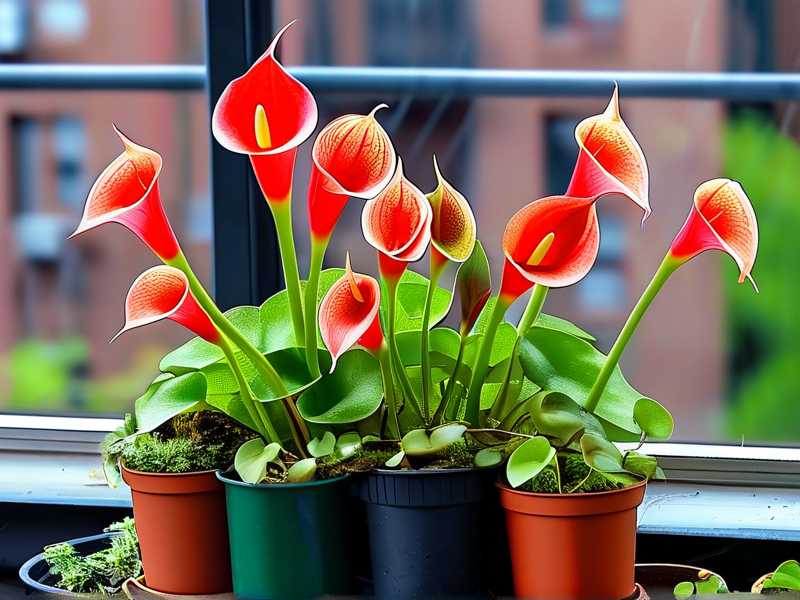
Mistake #3: Using the Wrong Pot
You wouldn't put a cactus in a sealed jar, right? I did the equivalent with Sarracenia. I used a glazed ceramic pot with no drainage holes. The roots sat in stagnant water, and root rot took over in two weeks. The fix? A plastic pot with drainage holes, sitting in a tray of water. Sarracenia are bog plants, so they want wet feet, but they also need air circulation at the roots.
The 7 Tips That Actually Work
Tip 1: Choose the Right Species for Small Spaces
Some Sarracenia grow huge. Sarracenia purpurea stays compact, usually under 8 inches tall. I started with that one. The more dramatic Sarracenia leucophylla, with its white tops, can reach 20 inches — too tall for my shelf. Stick with purpurea or psittacina for tight corners. They're also more forgiving with lower light levels.
My experience: I bought a Sarracenia 'Dixie Lace' hybrid, and it stayed under 6 inches for six months. Perfect for a windowsill.
Tip 2: Water from the Top, Then Let the Tray Do the Work
Here's my exact routine. Every two days, I pour distilled water into the soil until it drains into the tray. Then I keep the tray filled to about 1 inch. That's it. No overhead misting. No watering from below only. I tried the "tray-only" method once, and the topsoil dried out completely, causing the roots to panic.
Key detail: In winter, when growth slows, let the tray dry out for a day or two between refills. This mimics their natural dormant period.
Tip 3: Provide a Winter Dormancy Period (Most Indoor Growers Skip This)
I'll be honest — this was the hardest lesson. Sarracenia need a cold rest from November to February. Without it, they decline slowly. I kept mine warm all winter, and it stopped producing pitchers. The next year, I parked it on an unheated balcony (zone 7) with a layer of mulch around the pot.
Results after 2 weeks of cold treatment: The leaves turned slightly purple, and growth stopped completely. When spring arrived, new pitchers emerged with more color than ever. If your apartment doesn't get below 50°F (10°C), use a fridge dormancy. It sounds extreme, but it works. Many growers report 90% survival rates with this method.
Tip 4: Use a 50/50 Peat and Perlite Mix
Don't use regular potting soil. It has too much fertilizer. I once used cactus mix, and the plant's roots burned within a week. The proper mix is 50% sphagnum peat moss and 50% perlite for drainage. This combo keeps the soil acidic and oxygenated.
One important tweak: Rinse the perlite heavily before mixing. Dust particles can clog the peat and create anaerobic zones. I skipped this once, and a film of algae grew on the soil surface.
Tip 5: Feed Them — But Only Occasionally
Urban apartments don't have many flies. So you'll need to provide food. I use dried bloodworms from a pet store. Once every three weeks, I drop one small worm into a single pitcher. That's enough. Overfeeding causes the pitchers to rot.
Watch for signs. If a pitcher turns black and slimy, it's overfed. I lost two pitchers this way, but the plant survived. Feed only active-growth periods — not winter.
Tip 6: Wipe the Pitchers Clean
Be honest. Do you dust your windowsill? Sarracenia pitchers are sticky on the inside, so dust accumulates fast. A thin layer of grime reduces photosynthesis and makes the plant weak. I use a soft damp cloth every two weeks to gently wipe the outside of the pitchers. Don't touch the inside opening, though — that's the trap zone.
My observation: After two weeks of regular wiping, the color of the pitchers became noticeably brighter. They also produced more nectar.
Tip 7: Use a Humidity Tray (Not a Humidifier)
People think bog plants love high humidity. They do, but not in the way you'd guess. High humidity without air movement causes fungal infections. I used a humidifier for three days, and the plant started showing chocolate-brown spots. The fix? A simple tray with pebbles and water beneath the pot. The evaporating water creates localized humidity without making the air stagnant.
My Step-by-Step Setup for an Apartment (Start to Finish)
Week 1: The First Two Weeks
I set up a 10-inch-tall half-barrel planter on my balcony. It was a repurposed plastic container with two drainage holes drilled in the bottom. I filled it with the peat-perlite mix, waiting until the peat absorbed water thoroughly. Then I planted the Sarracenia purpurea so the rhizome (the thick underground stem) sat level with the soil surface.
Days 1-3: Adjustment Period
The plant looked wilted. I thought I'd killed it. But this was just transplant shock. I kept the soil damp but not soggy. I moved the pot to a spot with only morning sun for the first two days.
Day 4-7: Light Acclimation
By day 4, the leaves firmed up. I moved the pot to full sun. I checked the tray water level every 24 hours — always at 1 inch. The temperature was around 72°F during the day and 60°F at night. No fertilizer.
Day 8-14: Signs of Life
On day 9, I noticed a new green point emerging from the center of the plant. That was the early sign of a new pitcher. On day 12, the oldest pitchers developed a subtle burgundy blush on the hoods. On day 14, I measured it — the new pitcher was 2 inches long. The plant officially adapted.
During this time, I made one mistake: I left the tray filled during a rainy stretch when humidity hit 85%. The roots stayed too wet, and the next morning, I saw a pale yellow patch on one leaf. I emptied the tray for 24 hours and it recovered. Lesson learned: even bogs have dry spells.
The Real Reason You Should Try This
If you're living in a concrete jungle, a Sarracenia on your balcony feels like a slice of wild marsh. The plant is a reminder that life thrives in low-oxygen, acidic, tough conditions. It's also a conversation starter. Everyone who visits asks, "Is that a real plant? What are the tubes?" And when you say, "It eats bugs," your social credibility jumps instantly.
Common FAQ
Can I grow Sarracenia under artificial light only?
Yes. I did two months of winter with a 30-watt grow light, placed 6 inches above the plant. The new pitchers were slightly thinner, but they still formed. Use a timer for 12-14 hours daily. For best results, pick a full-spectrum LED with a 6500K color temperature.
What if I don't have any balcony or outdoor space?
No problem. A south-facing windowsill works if you can guarantee at least 6 hours of direct sun. Otherwise, stick with a grow light. Be aware, without natural UV, the pitchers may stay green instead of turning red. The plant will be healthy but less dramatic.
Is it okay to leave my Sarracenia unattended for a week?
That depends. In summer, I'd say never. The tray evaporates fast in heat. For a week, I use a deep tray (4 inches) and move the pot to a cooler, shaded spot, so the water lasts longer. In winter, during dormancy, you can leave it for two weeks, but I prefer to check once. It's a living thing — it deserves at least that.
Final Thoughts, From My Balcony to Yours
Growing Sarracenia in a city apartment is not about having a green thumb. It's about paying attention to three things: water quality, light, and the right pot. Once I stopped treating it like a regular houseplant and started treating it like a bog survivor, everything changed. The plant stopped dying and started thriving. That's when you realize — these are not high-maintenance plants. They just have non-negotiable rules.
I confess, I killed three pitchers before I got it right. My first one drowned in tap water. My second starved in a dark corner. My third rotted in a fancy pot with no drainage. But my fourth — the one sitting on my balcony right now — has grown 12 new pitchers this summer. It sits in a cheap plastic pot, drinks rain water, and catches the occasional ant. And honestly? It looks better than anything from a fancy nursery.
So here's my final tip, buried in the middle of everything else: don't overthink it. Give the plant what it wants, not what you think it wants. Then get out of the way. It knows how to grow. You just have to let it.
Happy growing, friend. Your apartment is about to get a little weirder and a whole lot cooler.





