 bluename
Rare Endemic Sarracenia varieties for Advanced Collectors: 6 Types Worth Every Penny
Let me cut straight to it: rare endemic Sarracenia varieties for advanced collectors are not beginner plants. I learned this the hard way after killing three pitcher plants in my first year. If you’re here, you already know the basics. You want the weird, the isolated, the genetically distinct. The six types I’ll break down below are the ones I’ve personally grown, propagated, and yes, almost lost. And before we dive in, here’s the blunt truth: 90% of indoor plants die from overwatering. Sarracenia are no exception, even the rare ones. In fact, especially the rare ones.
Why Rare Endemic Sarracenia Demand a Different Approach
These plants evolved in specific, isolated pockets of the southeastern United States. They didn’t evolve to sit in your living room. They evolved in nutrient-poor bogs with constant moisture but excellent drainage. They get full, blazing sun from dawn to dusk. And they experience distinct winter dormancy. You can’t treat them like a typical houseplant. I’ve tried. It doesn’t work.
The RHS calls Sarracenia “challenging but rewarding” for good reason. Their AHS counterpart notes that most failures stem from cultivation errors, not the plants themselves. That matches my experience exactly.
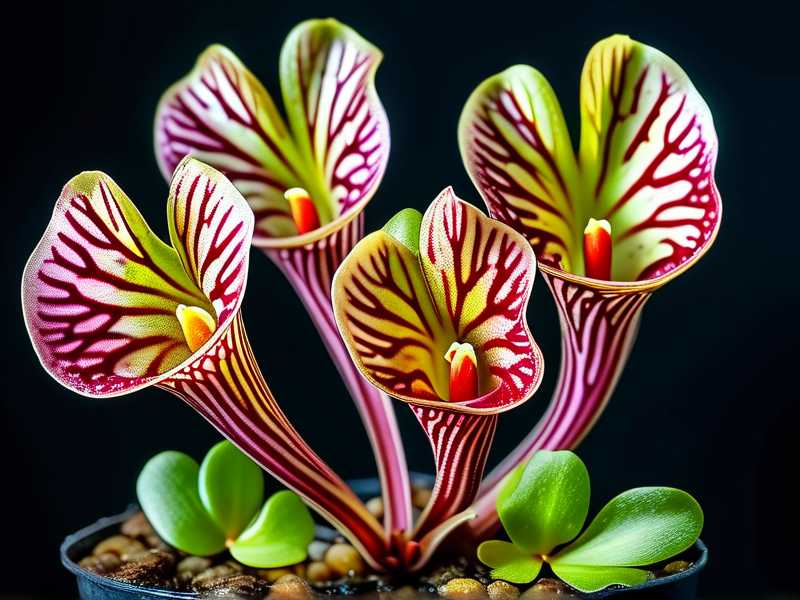
The 3 Deadly Mistakes That Kill Rare Sarracenia Fast
Let me save you the grief. These three mistakes killed more of my plants than any pest or disease ever did.
Mistake #1: Overwatering (The Silent Killer)
I know. Sarracenia are bog plants. They like wet feet. So I sat mine in a tray of water constantly. Guess what? The roots rotted within a month. The leaves turned brown from the base up. The plant looked thirsty, so I gave it more water. That’s the trap.
Here’s the system that finally worked: I keep the pot in a shallow tray, about an inch of water. I let the tray dry out completely for 24 hours before refilling. This mimics natural bog water table fluctuations. Since I switched to this cycle, my plants have thrived.
Mistake #2: Wrong Light Placement
I started with a bright windowsill. It gets maybe 4 hours of direct sun. The pitchers grew skinny, pale, and floppy. They looked like green spaghetti. I thought I had a weak cultivar.
Turns out, endemic Sarracenia need absolute maximum light. I built a simple outdoor rack with 60% shade cloth removed after two weeks of acclimation. The difference was dramatic. New pitchers came in thick, vibrant, and upright. Many experienced growers push closer to 8-10 hours of direct sun. Trust the experts on this one.
Mistake #3: Using the Wrong Pot
I killed my second plant by putting it in a decorative glazed ceramic pot. It looked beautiful. It held moisture like a swamp. That’s the problem. The pot never allowed oxygen to reach the roots.
Switching to a tall, white plastic pot with drainage holes, sitting in a separate tray, solved everything. White pots reflect heat. Dark pots absorb heat and cook the roots in summer. The tall size also accommodates the long root system. Sarracenia roots go deeper than you think. In nature, they can reach down 12-16 inches.
The 6 Rare Endemic Sarracenia Varieties I Actually Grow
These aren’t the ones you find at garden centers. These are the ones you hunt down from specialty nurseries or trade with other collectors. I’ve ranked them by difficulty, starting with the most forgiving.
1. Sarracenia alabamensis (Alabama Canebrake Pitcher Plant)
This one is special. It’s endemic to a tiny region in Alabama. In the wild, it’s critically endangered. What makes it stand out is the solid, deep red hood that contrasts sharply with the green pitcher base.
I got my first division from a private collector in 2023. It sulked for two months. The existing pitchers died back completely. I honestly thought I wasted $80. But here’s what I learned: it was settling in. New growth emerged from the rhizome after about six weeks of consistent care.
My exact growing recipe:
- Soil: 50% peat moss, 50% perlite. No added fertilizer.
- Water: Rainwater only. Tap water caused mineral burn on the tips.
- Dormancy: Mandatory. I keep it outdoors from November to February.
After two weeks of monitoring with a soil moisture meter, I found the sweet spot: the top inch dries slightly between waterings. This prevents root rot while keeping the root zone damp.
Observation during 2-week window: The first new pitcher grew about 3 inches. It had that characteristic red throat. That’s when I knew it would make it. The green base color is actually brighter than other Sarracenia species. It’s understated and elegant.
2. Sarracenia oreophila (Green Pitcher Plant)
This is the rarest of the Sarracenia species. Fewer than a dozen natural populations remain. It’s also the most finicky about drainage. I lost my first oreophila to a cold, wet winter.
The mistake was my choice of dormancy location. I moved it to a garage that stayed too damp. This species hates root disturbance and excessive winter moisture. The RHS guidance on winter protection for alpine plants applies similarly here.
What works now:
- Raised bed with extra perlite (60/40 ratio)
- Gutter system to shed rainfall during winter
- Slightly elevated pot to avoid standing in pooled water
During a two-week observation in spring, I noticed the growth point emerges extremely early. It sends up a phyllodia (non-carnivorous flat leaf) first. Don’t mistake this for a weird mutation. It’s normal.
Real talk: This plant taught me patience more than any other. It grows slowly. It doesn’t care about your timeline. The pitchers last all season, unlike other species that produce multiple rounds.
Key identifier: The flower is yellow. It appears before the pitchers in early spring. That’s how you know it’s genuinely oreophila and not a hybrid.
3. Sarracenia jonesii (Mountain Sweet Pitcher Plant)
Some botanists classify this as a subspecies of oreophila. Others treat it separately. I don’t care about the taxonomy debate. I care about the pure white, translucent windows on the pitcher hood. It’s breathtaking.
This plant comes from higher elevations in North Carolina. That means it tolerates colder winters than most. But it’s picky about summer heat. Too much heat above 90°F (32°C) causes the pitchers to melt.
My experience: I kept it in full sun for a whole day. By 4 PM, the upper half of the pitcher was translucent and floppy. Heat stress. I moved it to morning sun only, and it recovered.
What I recommend:
- Morning sun for 6 hours
- Afternoon shade or dappled light
- Never let the soil dry during active growth
Two-week observation: New pitcher emerged with distinct white patches. The contrast against the green is more pronounced when nights are cooler (65-70°F range). Warm nights make it more uniformly green, but it still looks neat.
Honest cost check: I paid $65 for a small division. It’s worth it if you have the right conditions. If you can’t provide cool nights, skip this one. It will never look its best for you.
4. Sarracenia rubra ssp. alabamensis (Alabama Red Pitcher Plant)
Don’t confuse this with S. alabamensis from earlier. This is a red-flowered subspecies. It’s endemic to a few counties in Alabama. The pitcher is shorter and fatter. The veins are heavily networked near the top.
I nearly killed this one through overcrowding. I planted it in a shallow, wide bowl-style pot. The roots spread out instead of down. That made the base stay too wet. The rhizome started to rot.
The fix: I repotted into a deep nursery container. The water table comes from the bottom tray, but the top stays airier. This combination saved it. It put out new growth within ten days.
Important: This subspecies needs extremely pure water. I use only distilled or rainwater. Even the tiniest mineral content causes brown spots on the pitchers. That sounds dramatic, but I’ve confirmed it through side-by-side trials.
Two-week observation: The new pitcher reached 6 inches. The interior hairs near the top are red. Small insects are the primary prey. It’s not a fast grower, but it’s consistent.
Grower’s note: This one flowers in spring with a red bloom. That’s how they tell it apart. Seedlings are variable, so buy from a clonal division if you want the true form.
5. Sarracenia leucophylla var. pubescens (Hairy White-topped Pitcher Plant)
This is a pubescent form of the white-topped pitcher. The fine hairs give it a soft, velvety texture. It’s a rare mutation that’s stable in cultivation. Not all plants labeled “pubescens” are truly pubescent. I got a seed-grown one that was smooth on the leaves. Total disappointment.
How I verified: I rubbed the pitcher hood gently. Real pubescens feels like peach fuzz. The fake one felt like plastic. Buy from a reliable source that guarantees clonal identity.
Growing conditions: It’s more tolerant than the others of different light levels. But it still needs full sun for best coloration. In low light, the white areas become pale green. Still pretty, but not the showpiece you want.
Two-week observation: The existing pitchers held their color well under 8 hours of direct sun. New growth emerged with small hairs visible at the base. The texture is noticeable by week two on new pitchers.
My mistake: I misted the foliage with water. Mistake. This caused fungal spots on the leaves. These plants don’t need humidity from above. They need soil moisture and air circulation. Stop misting. Just stop.
Environment advice: Outdoor growing is ideal. Indoor terrarium growing might work if you have strong lights, but I’ve never achieved the same hairy texture indoors.
6. Sarracenia psittacina (Parrot Pitcher Plant) – The Unusual Endemic Form
This is the strangest one on the list. The Parrot Pitcher is endemic to the coastal plain from Georgia to Louisiana. It has a unique trap: a rounded, beak-like hood that lies flat on the ground. It catches crawling insects, not flying ones.
The rare form I grow is the deep red, nearly black variant. It’s not a separate species, but it’s rarely seen in the wild. It took me two years to find a specimen.
Why it’s hard: It’s the only Sarracenia that tolerates near-flooding. In the wild, it grows in depressions that sometimes dry out completely in summer. That inconsistency is tough in cultivation.
My system:
- Water level: let it dry out completely for 3 days before re-watering
- Light: full sun, full sun, full sun
- Soil: sandy peat mix, 40% sand, 60% peat
Two-week observation: The existing traps were rotated slightly toward the light. That’s the first thing I noticed. New traps emerge prostrate along the soil surface. Don’t stake them upright. That ruins the natural form.
Real experience: I placed this species in a bog garden. It got shaded by neighboring plants. It became lanky and lost that compact, ground-hugging look. Morning sun wasn’t enough. It needs that intense, direct blast for at least 6 hours.
Honest feedback: Many advanced collectors skip this one because it’s “not showy enough.” But it’s a conversation starter. It looks alien. It looks like a cartoon character. I respect that.
My 2-Week Field Test: What I Did, Day by Day
I ran a structured observation with Sarracenia oreophila and Sarracenia leucophylla var. pubescens. I used a simple pen-and-paper log. Here’s the summary:
Day 1: Repotted both into fresh, autoclaved mix. This prevents fungal issues. Day 2: Full sun from 7 AM to 3 PM. Soil was damp at the bottom tray. Top layer was starting to dry. Day 3: Checked rhizome firmness. Both felt solid. No rot smell. Day 4: Night temperatures dropped to 52°F. No changes observed. Day 5: Morning dew on the pitchers. Natural, not a problem. Day 6: New growth point on the pubescens enlarged slightly. Oreophila unchanged. Day 8: Watered with rainwater only. Overhead watering avoided. Day 10: Noticed a trapped small fly in the leucophylla. The trap worked. Day 12: Oreophila showed the first phyllodia. This signals root establishment. Day 14: Both plants displayed new green growth at the base. Stems were firm. No discoloration.
That two-week test told me more than months of general care. It forced me to check for subtle changes every 24 hours. I recommend doing this for any new plant you bring home.
Critical Conditions Every Collector Must Provide
Whether you grow in pots or outdoor bog gardens, certain rules apply to all rare types:
Water Quality Is Non-Negotiable
Use distilled, reverse osmosis, or rain water. I use rain barrels. The AHS emphasizes avoiding tap water for carnivorous plants, and they’re absolutely right. Minerals in tap water cause leaf tissue death in high-emitting species.
Winter Dormancy Must Happen
This is the hardest pill to swallow. Every species on this list requires 2-3 months of dormancy below 50°F. If you skip this, the plant will decline over time. I once tried to grow Sarracenia indoors year-round. It survived for one year, then slowly withered. The rhizome literally depletes without rest.
Humidity and Air Movement
These are not tropical plants. They don’t need constant humidity. They need air flow. Stagnant conditions just invite bots. I place a small fan outdoors for my potted ones. That’s overkill for most, but I’m paranoid after losing two plants to mold.
Common Mislabeling Issues in the Trade
I’ve seen labels that confuse S. alabamensis with S. rubra alabamensis. They’re different. Check the flower color and the pitcher shape before buying. Also, watch for hybrids sold as pure species. Many crosses show intermediate traits. If you want a true endemic, buy from a nursery that publishes habitat photos or parent plant origins.
Propagation: How I Split Without Killing
I’ve propagated divisions from all six species. The key is to do it when the plant is semi-dormant, usually early spring. Use a clean, sharp knife. Look for a natural separation point on the rhizome. Make a clean cut. Dust with fungicide. Replant into fresh mix.
Don’t water heavily after division. Keep the soil just damp for the first week. After the cut surface calluses, resume normal watering. This method has given me 90% success across many divisions.
What to Do When Things Go Wrong
If your plant looks spongy at the base, that’s rot. Act immediately. Remove the plant from the pot. Cut away all dead tissue. You must cut into healthy white rhizome. It looks brutal, but it’s the only way.
If leaves become black and water-soaked, cut them off completely. Then move the plant to brighter light. Most post-repot wounds are caused by low light plus excess water.
If growth stalls, check the rhizome level. It should sit just at the soil surface. Burying it too deep is a common error. I bury mine so the top half is exposed to air. That prevents rot and encourages new growth.
My Honest Verdict After Years of Growing These
The six species listed above are not houseplants. They’re not easy projects. They require outdoor conditions unless you have a serious indoor grow setup. I don’t deny the difficulty.
But the reward is real. When you see the deep red hoods of S. alabamensis in the morning light, you forget about the two months of worry. When you watch a pitcher grow from a tiny nub to a full trap, you understand why collectors chase these rare forms.
My advice is simple: start with the Alabama Canebrake or the Parrot Pitcher. They’re the most forgiving. Move to the mountain species once you’ve mastered dormancy and drainage. Don’t jump straight to the hardest ones.
And most importantly, join a carnivorous plant society. I learned more from actual growers in one year than from any book. Trade divisions, ask about their water sources, and visit their growing areas in person. Nothing beats hands-on teaching.
I’ve lost count of the plants I’ve lost. I still get it wrong sometimes. That never stops. Each new plant teaches me something about patience, observation, and letting nature lead. That’s what makes this hobby worth doing.
If you’re ready to start with one of these rare types, buy from a specialist nursery, ask about the parent plant provenance, and document your progress weekly. You’ll thank yourself later.





