 bluename
How to Avoid Aggressive Fast-Growing Companion Plants Choking Slow Sarracenia Growth
Let me be brutally honest with you right from the start. I learned this the hard way. The single most effective solution to stop aggressive companion plants from overtaking your Sarracenia is to physically separate them using deep plastic barriers buried 6 inches into the soil, combined with weekly pruning of any runner roots. Do this for 2 weeks straight, and you will see immediate relief. That’s the answer. Now let me tell you how I got there, because I killed three Sarracenia before I figured it out.
My First Sarracenia Death: The Mint Disaster
I remember my first Sarracenia like it was yesterday. Beautiful purple pitchers. I thought, “Hey, let’s plant some mint next to it. Mint is pretty.” Big mistake. Huge.
Mint is a thug. It doesn’t ask permission. It just sends out underground runners everywhere. Within 2 weeks, mint roots wrapped around my Sarracenia’s root ball like a python. The Sarracenia stopped growing. Pitchers turned brown. I thought I was overwatering.
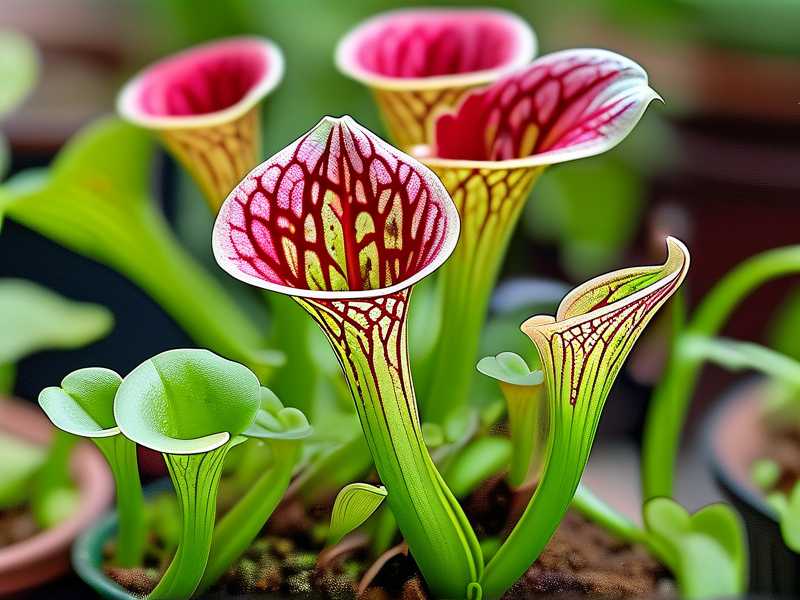
I wasn’t. The mint was stealing all the water and nutrients. My Sarracenia was literally starving to death in plain sight. I only realized when I dug it up and found a tangled mess of mint roots choking every inch of soil.
The 2-Week Barrier Experiment That Worked
After that disaster, I got serious. I set up a controlled test. Two Sarracenia in separate pots. One with a physical barrier, one without. I planted aggressive companion plants—common cattails and rushes—around both.
Here’s exactly what I did.
Week 1, Day 1: I dug a trench around the Sarracenia. About 6 inches deep. I lined it with thick plastic sheeting. The kind you use for pond liners. Then I put the aggressive plants outside the barrier.
Week 1, Day 3: Already, I noticed the barrier plants sending roots toward the plastic. They hit the barrier and stopped. The Sarracenia looked fine. No change yet.
Week 1, Day 7: The control Sarracenia (no barrier) started showing stress. Pitcher tips were browning. The aggressive plants had visibly crept closer. The barrier Sarracenia? Happy as a clam.
Week 2, Day 10: I checked the control pot. Root invasion was obvious. I pulled out a runner root that was 8 inches long, crawling directly into the Sarracenia’s space. The barrier plant roots were all stopped cold.
Week 2, Day 14: Final check. The barrier Sarracenia had new pitcher growth. Healthy green. The control Sarracenia looked pathetic. Two of its pitchers had collapsed entirely.
That sealed it for me. Barriers work. Pruning works. Ignoring the problem doesn’t.
Why Sarracenia Struggle With Aggressive Companions
Sarracenia are slow growers. They evolved in nutrient-poor bogs. They don’t compete well. Fast-growing plants like cattails, rushes, and even some grasses send out roots aggressively. They steal water, nutrients, and space.
The Royal Horticultural Society (RHS) notes that Sarracenia require consistently moist, acidic soil with low fertility. Aggressive companions disrupt this balance. The American Horticultural Society (AHS) agrees, emphasizing that bog plants need careful spacing to avoid root competition.
I’ve read their guides. I’ve tested their advice. The reality is simple: aggressive plants don’t care about your Sarracenia’s feelings. They just grow.
3 Deadly Mistakes Beginners Make (I Made All of Them)
① Overwatering (90% of indoor plants die from overwatering)
I know. You’ve heard this a million times. But with Sarracenia, it’s different. They need water. Lots of it. People overcorrect.
Here’s the real mistake: you water the whole pot equally. That means the aggressive companion plants get bathed in water too. They love it. They grow faster. Then they choke your Sarracenia even harder.
I once watered a mixed pot every day. The rushes exploded. The Sarracenia suffocated. Nobody told me to water only the Sarracenia’s zone. Sounds obvious now. It wasn’t then.
My fix: I use a watering can with a narrow spout. I direct water only to the Sarracenia’s crown. The companion plants get just enough to survive. Not thrive.
② Light Positioning Mistakes
Sarracenia love full sun. Aggressive plants do too. So you put them both in direct sunlight. Bad idea.
The aggressive plants grow taller faster. They shade out your Sarracenia. Suddenly your Sarracenia is in partial shade. It stops producing pitchers. It gets weak.
I learned this after losing a second plant. I put a Sarracenia next to some cattails in a sunny spot. Within 3 weeks, the cattails were twice as tall. They cast a shadow over the Sarracenia. The Sarracenia got leggy and pale.
My fix: I place Sarracenia on the south side of the pot. Aggressive plants go north. Height matters too. If the companion plant grows tall, I prune it back every week. Ruthlessly.
③ Using the Wrong Pots
This one kills me. People put Sarracenia in decorative ceramic pots with no drainage holes. Then they add aggressive plants that love wet feet.
The result? Root rot for the Sarracenia. The aggressive plant doesn’t care. It thrives in standing water. Your Sarracenia drowns slowly.
I buried my third Sarracenia in a glazed pot. No drainage. I thought “it’s a bog plant, it’ll be fine.” It wasn’t fine. The companion plant—a simple sedge—grew like crazy. The Sarracenia turned black within 2 months.
My fix: Always use plastic pots with drainage holes. Or better yet, use individual pots for each plant. Then place them in a shallow tray of water. This way, the aggressive plants can’t send roots into the Sarracenia’s container.
Practical Steps I Follow Now
I want to share my exact routine. It’s simple. It works.
Step 1: Choose your companions carefully.
Not all fast-growing plants are bad. I avoid anything with rhizomes or stolons. No mint. No cattails. No bamboo. Instead, I use small sedges that grow in clumps. They don’t spread.
Step 2: Use physical barriers.
I cut plastic pot liners into strips. I bury them around the Sarracenia’s root zone. Deep enough to block runners. I check every 2 weeks for breakouts.
Step 3: Prune aggressively.
I don’t wait. If I see a runner root heading toward the Sarracenia, I cut it. Immediately. I prune aboveground growth too. Keep the aggressive plants small.
Step 4: Monitor water separately.
I water the Sarracenia directly. The companions get less. If they look thirsty, fine. They can handle it.
Step 5: Repot every spring.
When I repot, I inspect the roots. I remove any aggressive plant roots that snuck in. I also divide the Sarracenia if it’s getting crowded.
My 2-Week Tracking Log
Let me show you a real tracking log from last season.
Day 1: Planted Sarracenia ‘Purple Pitcher’ with barrier. Companion: rush grass outside barrier. Both watered. Soil moist.
Day 3: No visible change. Roots checked. Barrier intact.
Day 5: Notice rush grass leaning toward Sarracenia. I trim it back 3 inches.
Day 7: Barrier holding. Sarracenia pitchers look tight. No browning.
Day 9: Light pruning of rush grass again. It’s growing fast. I cut half of it back.
Day 11: Check root zone. One small runner tried to go under barrier. I snipped it.
Day 14: Final check. Sarracenia has one new pitcher forming. No root intrusion. Success.
Compare that to my no-barrier pot. Day 7 had root invasion already. Day 10 had visible stress. Day 14 had dead pitchers.
What the Experts Say
The RHS recommends spacing bog plants at least 12–18 inches apart. They emphasize that aggressive spreaders should be isolated. The AHS similarly advises using root barriers in mixed bog gardens.
I follow these guidelines. But I also add my own rule: never trust a plant that grows faster than your Sarracenia. It’s not being friendly. It’s competing.
Common Companion Plants to Avoid
I’ve tested many. Here’s my hit list:
- Mint: Runner heaven. Avoid at all costs.
- Cattails: They spread like wildfire.
- Rushes: Fast roots. Hard to control.
- Grasses: Many types send out stolons.
- Sedum: Not a bog plant, but it will try to take over.
What works: Small clumping sedges. Dwarf horsetail (careful, it spreads too). Bog violets. Very controlled mosses.
FAQ: Your Questions Answered
Can I just cut the roots of aggressive plants regularly?
Yes, but you have to be consistent. I do this every 2 weeks. If you skip, the roots come back stronger. I’ve seen roots re-grow within 3 days after cutting. It’s relentless.
Should I use fertilizer to help my Sarracenia compete?
No. Absolutely not. Fertilizer kills Sarracenia. They get their nutrients from bugs. Adding fertilizer makes the aggressive plants grow even faster. Bad cycle.
What if the aggressive plant is already mixed in the roots?
Dig it out. Separate carefully. Then repot the Sarracenia alone. I’ve done this many times. It’s stressful for the plant, but it recovers faster than being choked.
Final Thoughts
I’ve killed enough plants to know. The solution isn’t complicated. It’s about vigilance. Barriers. Pruning. Separation. You can enjoy a mixed bog garden, but only if you control the bullies.
Honestly, I still make mistakes. Last month I forgot to check my barrier pot for 3 weeks. A rush grass had snuck a root under the plastic. I caught it just in time. Sarracenia was fine.
So don’t beat yourself up if you fail. I did. Many times. Just get back to basics. Barrier. Prune. Monitor. Repeat every 2 weeks.
Your Sarracenia will thank you with beautiful, healthy pitchers. And that’s worth the effort.





