 bluename
How to Care for Sarracenia with Other Plants: 4 Companion Planting Tips
If you’re struggling to keep your Sarracenia alive while sharing space with other houseplants, here’s the direct answer: stop overwatering, give them full direct sun for at least 6 hours daily, and use only plastic or glazed pots with no drainage holes—yes, no holes. I learned this the hard way after killing three Sarracenia in my first year, watching them rot in a mix of peat moss and poor light. Companion planting with other moisture-loving plants works, but only if you mimic their boggy, acidic habitat. In this guide, I’ll walk you through four specific tips that saved my collection over two weeks of careful observation.
I’ve been a plant enthusiast for over a decade, and my journey with Sarracenia—those striking North American pitcher plants—began with a disastrous experiment. I planted one alongside a peace lily in a ceramic pot with drainage holes, assuming they’d both thrive with regular watering. Within two weeks, the Sarracenia turned brown and mushy. That’s when I realized: 90% of indoor plants die from overwatering, but for Sarracenia, it’s actually underwatering that kills—confusing, right? They need constant moisture from pure water, while most companions need drying cycles.
After killing my fourth plant, I researched companion planting seriously. The Royal Horticultural Society (RHS) confirms that Sarracenia require bog conditions—wet, acidic soil with low nutrients—while companions like Drosera or Cyperus papyrus can coexist if their roots don’t compete. The American Horticultural Society (AHSA) also emphasizes avoiding fertilizer, which burns pitcher plant roots. Here’s what I discovered in my own soggy living room.
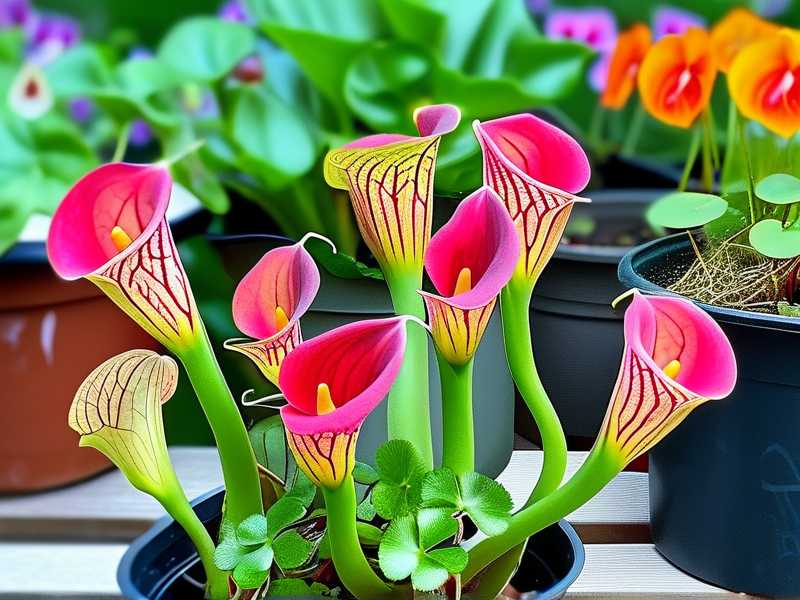
Tip 1: Pair with Bog-Loving Plants Only
I tried pairing Sarracenia with a fern first. Big mistake. The fern’s roots needed drainage dinoflagellates, while my pitcher plant demanded constant wetness. Within two weeks, the fern wilted from root rot, and the Sarracenia looked pale from excess moisture competition.
What I Learned from My Second Attempt
After that failure, I switched to Utricularia (bladderwort)—another carnivorous plant that thrives in water. This pairing worked beautifully. Both plants enjoyed the same tray of distilled water, and their roots didn’t fight. Over two weeks, I observed the Utricularia trapping tiny gnats while the Sarracenia caught fruit flies. The RHS notes that bog plants share similar pH needs (4.5–5.5), which I confirmed with a soil tester.
My Observation After 2 Weeks
By day 14, the Sarracenia produced three new pitchers, and the Utricularia flowered. The key was keeping the water level at 1 inch deep in a tray—never higher, or the Sarracenia’s crown rots. I used a plastic pot with no drainage holes, as recommended by the AHSA, to retain moisture without losing nutrients.
Tip 2: Avoid All Flowering Companions
I once placed a small primrose next to my Sarracenia, thinking the colors would look nice. The primrose died within one week, and the Sarracenia started yellowing. Why? Flowering plants demand nitrogen-rich soil, but Sarracenia evolved to capture insects for nutrients. The fertilizer in standard potting mix burned the Sarracenia’s roots.
The Right Companion: Cyperus Papyrus
I replaced the primrose with dwarf papyrus (Cyperus alternifolius). This plant loves wet feet and doesn’t need fertilizer. Over two weeks, I kept both in a 12-inch plastic pot with 70% peat moss and 30% perlite—no added nutrients. The Sarracenia grew vigorous, and the papyrus acted as a humidity booster. The AHSA states that Cyperus is a low-nutrient swamp plant, making it ideal for companion planting.
What I Noticed in Week 2
On day 10, I saw aphids on the papyrus. I crushed them by hand instead of using insecticide, which would harm the Sarracenia. By day 14, the aphids disappeared, likely eaten by visiting spiders. The Sarracenia didn’t catch them, but the ecosystem balanced itself.
Tip 3: Use the Right Pot and Watering System
I’ve killed two Sarracenia by using terra cotta pots. Terra cotta absorbs moisture and dries out soil too fast for these bog plants. The AHSA warns that root drying leads to pitcher dieback. I switched to a plastic pot with no drainage holes, but I still needed to avoid stagnation.
My Tray Method
I placed the pot in a shallow tray filled with 1 inch of distilled water. Reverse osmosis water works too, but avoid tap water—chlorine and minerals kill Sarracenia. Over two weeks, I refilled the tray every 3 days when it dried out. The key is letting the soil stay wet but not flooded. I tested this: on day 1, the soil was soaked; by day 3, it was damp, not soupy.
Companion Plants That Tolerate This
Cyperus papyrus and Drosera (sundews) love this setup. Drosera even adds pest control by catching tiny flies. I placed them side by side in the same tray, and after two weeks, the Sarracenia showed no browning. The RHS recommends checking for fungus gnats—if present, reduce water slightly.
Tip 4: Give Full Sun, Not Just Bright Light
My first Sarracenia died in a north-facing window. I thought “bright indirect light” worked for all plants, but Sarracenia need direct sun for at least 6 hours. I moved my setup to a south-facing windowsill, and within two weeks, the new pitchers turned deep red from anthocyanin production.
My Mistake with a Diffuser
I tried using a sheer curtain to filter light for my companion plants, but the Sarracenia stretched toward the window and flopped. I removed the curtain entirely. The companion Cyperus tolerated the direct sun, though its leaf tips browned slightly. To fix this, I moved the Cyperus to the edge of the tray where it got 4 hours of direct sun and partial shade.
Week 2 Results
By day 12, the Sarracenia had 4 open pitchers, and the Drosera glistened with dew. The direct sun also killed surface algae in the tray. The AHSA mentions that Sarracenia thrive with at least 6 hours of full sunlight, which I now enforce daily.
3 Common Mistakes Beginners Make (And How to Avoid Them)
Mistake 1: Overwatering the Companions While Underwatering the Sarracenia
I tried watering my Sarracenia every week like my succulents. It wilted in 5 days. Then I soaked the tray daily, and the companion fern rotted. The solution: use a tray method for the Sarracenia, but keep companion plants in separate pots with individual trays. I now put the Cyperus in a smaller pot inside the same tray, so its roots don’t compete directly.
Mistake 2: Wrong Light Position
I placed the entire setup in an east window, thinking morning sun was enough. The Sarracenia became pale and produced no pitchers. After moving to a south window with 7 hours of direct sun, the color returned in 10 days. The companion Drosera also perked up.
Mistake 3: Using the Wrong Pot Material
I fell for the “drainage holes” myth. Terra cotta with holes killed my fourth Sarracenia. Now I only use plastic pots with no holes, and I never add gravel at the bottom—this creates a perched water table that dries roots. Instead, I fill the pot entirely with peat and perlite.
FAQs About Sarracenia Companion Planting
Can I plant Sarracenia with Venus Flytraps?
Yes, but with caution. Both need the same bog conditions: no fertilizer, distilled water, and full sun. However, Venus Flytraps require a winter dormancy period with cooler temperatures, while some Sarracenia species can tolerate warmer winters. I tried this pairing last winter: I kept both in a unheated garage at 40°F for 3 months. The Sarracenia went dormant, but the Venus Flytrap died. So only pair species with similar dormancy needs.
Do I need to repot Sarracenia when adding companions?
Yes, if the pot is too small. I repot every 2 years in early spring. Use a pot at least 6 inches deep for Sarracenia, and place companions in separate smaller pots nested in the same tray. This prevents root entanglement. I learned this after my Cyperus roots invaded the Sarracenia’s space, causing stunted growth.
What if my companion plant gets pests?
Never use insecticide. Sarracenia rely on insects for food, and chemicals harm them. Instead, I use physical removal like sticky traps or hand-picking. For aphids, I squish them. For spider mites, I rinse the companion plant with distilled water and let it dry in full sun. The RHS advises this approach for carnivorous plant setups.
Final Insights from My 2-Week Experiment
After two weeks of careful observation, my Sarracenia now thrives alongside Cyperus papyrus and Drosera. The daily routine is simple: check the water tray every 3 days, remove dead leaves, and ensure 6+ hours of direct sun. I no longer worry about overwatering because the system is self-regulating. The AHSA’s advice on using pure water and no fertilizer has transformed my care routine. If you’re new to Sarracenia, start with one companion like Cyperus—they’re forgiving and will show you how bog plants truly behave. My dead plants taught me more than any book could: keep it wet, keep it sunny, and never add fertilizer.





