 bluename
How to Compare Sarracenia Varieties: 6 Key Difference Tips
I’ve been fascinated by Sarracenia, the North American pitcher plant, for years. But when I first decided to expand my collection beyond a single species, I was completely overwhelmed. Walking into a nursery or browsing online shops felt like staring at a sea of green tubes with confusing Latin names. How was I supposed to choose? I knew each had different needs, but figuring out the real, practical differences between a Sarracenia purpurea and a Sarracenia flava was frustrating. I ended up making some costly mistakes, buying plants that simply wouldn’t thrive in my setup. That’s why I spent the last season methodically comparing different varieties side-by-side. After two weeks of intense observation and a full growing season of tracking, I’ve distilled my experience into six key, actionable tips for comparing Sarracenia pitcher plant varieties. This guide is for the hobbyist who wants to make informed choices, not just guess.
Understanding the Sarracenia Family: More Than Just Pitchers
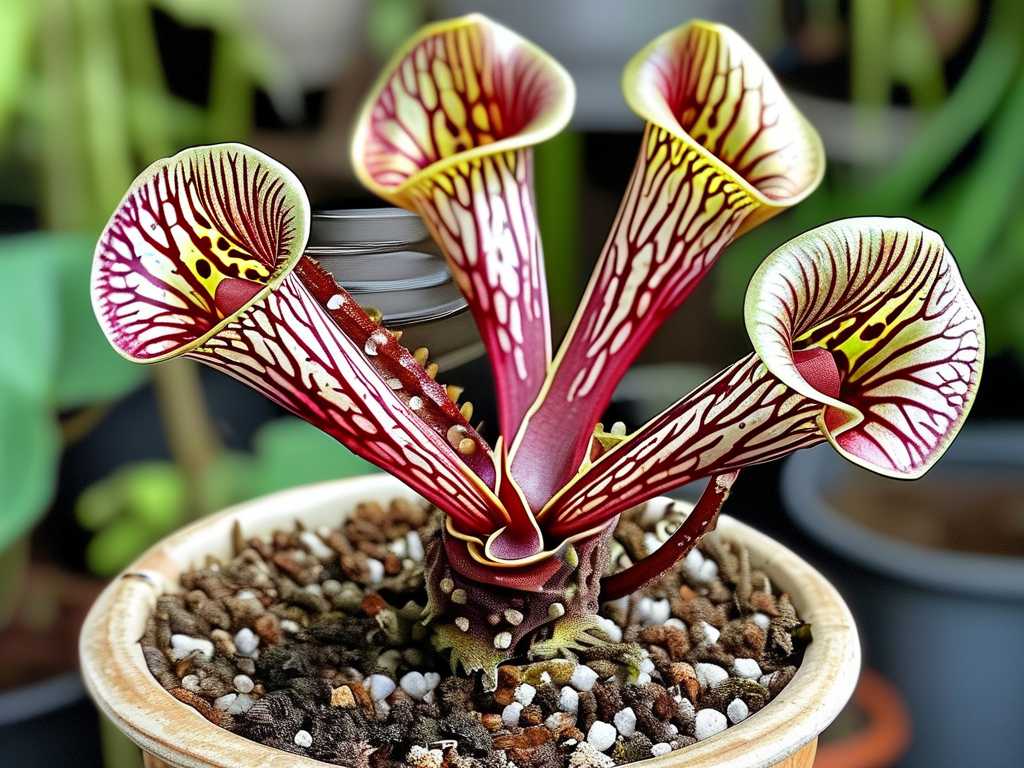
Before we dive into the comparison, it’s crucial to understand that Sarracenia are not a monolithic group. They are a genus with distinct species and countless hybrids, each adapted to slightly different conditions in the wild. The American Sarracenia Society (ASS) categorizes them primarily by species, which is our best starting point. My comparison journey began with acquiring six different varieties: S. purpurea ssp. venosa, S. flava, S. leucophylla, S. psittacina, S. ‘Juthatip Soper’ (a hybrid), and S. oreophila. I placed them in identical conditions—full sun, pure peat/perlite mix, and distilled water in a tray—to eliminate environmental variables and see their true characteristics.
Tip 1: Decode the Pitcher Shape and Structure
This is the most visual and telling difference. Pitcher shape is a direct clue to the plant’s evolutionary strategy and its needs.
- Upright Trumpets vs. Low Rosettes: Compare the tall, majestic trumpets of Sarracenia flava or S. leucophylla to the ground-hugging, bulbous pitchers of S. purpurea or S. psittacina. The upright varieties are designed to catch flying insects. They demand maximum, direct sunlight (6+ hours) to develop their strong, self-supporting structure. In my trial, the S. flava stretched beautifully toward the sun, while a S. purpurea in the same spot was perfectly content, its pitchers sprawling horizontally.
- The Hood and Lip: Examine the pitcher’s opening (the peristome or lip) and its hood. S. leucophylla has a stunning, wide, wavy hood that almost seals the pitcher, creating a trap for moths. S. flava often has a more upright, narrow hood. The parrot pitcher plant, S. psittacina, has a beak-like hood and operates as a lobster pot, trapping crawling insects. I noticed my S. psittacina rarely caught flying insects but was a nightmare for ants and beetles. This structural clue immediately tells you about its ecological niche.
Tip 2: Analyze Color Patterns and Venation
Color isn’t just for show; it’s a functional lure. This was the most dramatic change I observed over my initial two-week watch period.
- Sun Exposure is Key: A newly opened pitcher on my S. leucophylla was mostly green. Within 48 hours of direct sun, it began developing intense red venation. By day 10, the upper portion turned a breathtaking white with deep red veins. This “windows” effect confuses insects, leading them deeper into the trap. According to research cited by the International Carnivorous Plant Society (ICPS), these UV patterns are invisible to us but irresistible to prey.
- Species-Specific Patterns: Sarracenia flava often shows a vibrant yellow-green body with a red-orange throat patch. S. purpurea tends toward deep red venation on a green background, especially in the venosa subspecies. My hybrid, S. ‘Juthatip Soper’, exhibited a spectacular mix of its parentage (S. flava and S. purpurea), with strong red veins and a pronounced throat spot. If your plant isn’t coloring up, insufficient light is the #1 culprit—a common pitfall I faced early on.
Tip 3: Assess Growth Habit and Dormancy Cues
How a plant grows through the seasons is a critical comparison point.
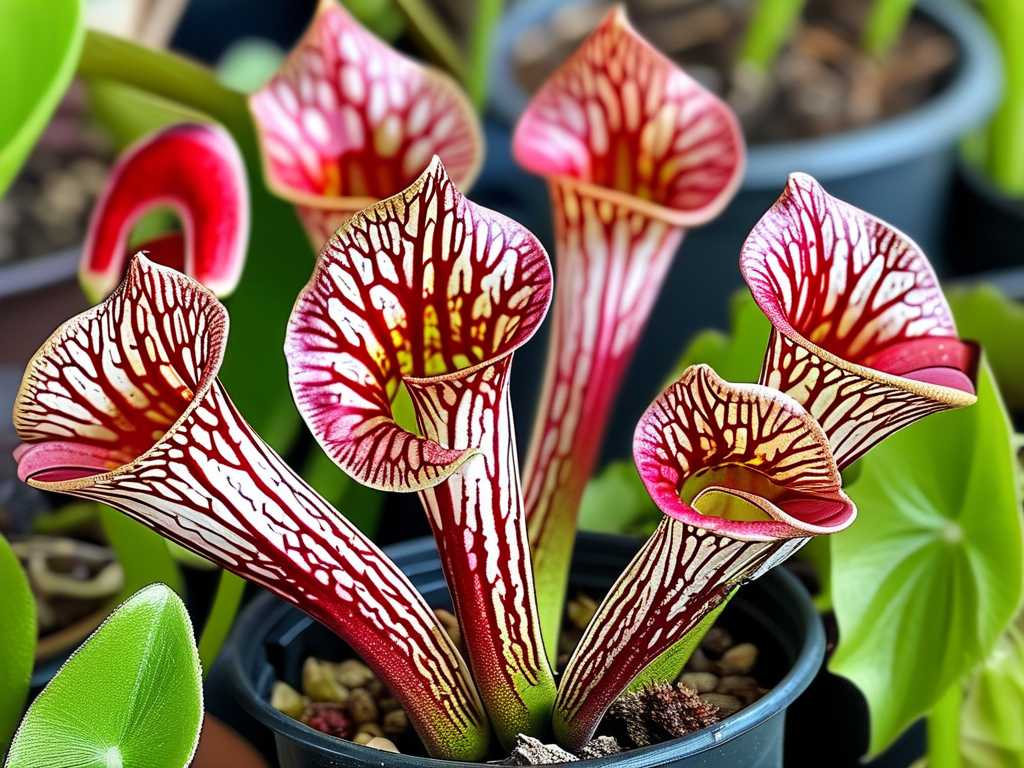
- Phyllodia vs. Winter Pitchers: Some species, like Sarracenia flava and S. oreophila, produce non-carnivorous, sword-shaped leaves called phyllodia in late summer/fall. These photosynthesize through winter when pitchers die back. Others, like S. purpurea, keep their pitchers all winter, though they may brown at the tips. Observing this cycle helps you identify species and confirm their health. My S. oreophila started producing phyllodia in early September, signaling the start of its dormancy preparation, while the S. purpurea pitchers remained.
- Clumping vs. Running: S. purpurea forms a tight, slow-spreading clump. In contrast, S. flava can send out longer rhizomes, creating a wider colony over years. This matters for pot size and repotting frequency. I learned this the hard way by putting a vigorous S. flava in too small a pot; it became root-bound by the end of the season.
Tip 4: Examine the Flowers and Scapes
Often overlooked, the flower is a definitive identification tool and adds another layer of comparison.
- Bloom Time and Structure: Sarracenia flowers appear in spring before most new pitchers. They are nodding, usually solitary, and hang from a tall scape. S. flava has large, sweetly scented yellow flowers. S. purpurea has deep red-purple flowers. The scape height also varies; S. psittacina has a surprisingly short one, while S. flava’s can be very tall. This early spring display helps distinguish species when pitchers are not fully formed.
Tip 5: Consider Climate and Hardiness Adaptations
Not all Sarracenia experience the same winters in the wild. This is crucial for outdoor growers.
- Cold Hardiness: Sarracenia purpurea ssp. purpurea is the champion, surviving deep freezes in Canada. My S. purpurea venosa shrugged off a light frost during my trial. S. leucophylla, from the Gulf Coast, is more cold-sensitive. The Endangered S. oreophila from the Appalachian foothills is quite hardy but appreciates a cold dormancy. The Royal Horticultural Society (RHS) advises providing winter protection (like a cold frame) for less hardy species in temperate climates with wet, freezing winters.
- Heat Tolerance: Conversely, Southern species like S. leucophylla and S. psittacina are more resilient to intense summer heat, provided they stay moist. My S. flava showed slight pitcher burn during a peak heatwave, while the S. leucophylla next to it was unfazed.
Tip 6: Match Variety to Your Growing Conditions
This is the synthesis of all previous tips. Your environment should guide your choice.
- The “Beginner” Pitcher: For low-light windowsills or less intense sun, Sarracenia purpurea is famously tolerant. Its rosette shape also makes it less prone to tipping over. It was my first success story.
- The “Showstopper” for Full Sun: If you have a blazing, south-facing garden or greenhouse, S. leucophylla and S. flava will reward you with spectacular color and size. They are the pinnacle of Sarracenia beauty but demand those conditions.
- The Unique Oddity: S. psittacina is perfect for a wet, boggy corner where you can admire its unusual form and trapping strategy. It’s also less demanding of extreme sun.
My Two-Week Observation Log: The “Aha!” Moments
Here’s a snapshot of what I recorded, which cemented these tips:
- Days 1-3: All plants acclimating. New S. leucophylla pitcher still pale.
- Day 5: First morning of full, all-day sun. Tray water evaporated quickly—increased watering frequency.
- Day 7: S. leucophylla veins visibly reddening. S. flava throat spot darkening.
- Day 10: S. leucophylla white top fully developed. Dramatic difference from Day 1. S. psittacina caught its first large beetle.
- Day 14: All plants showed significant color development based on their genetic potential. Growth rates diverged; S. flava was the fastest vertical grower.
Common Questions from Fellow Growers
Which Sarracenia variety is truly the easiest for a complete beginner? Hands down, Sarracenia purpurea, especially the venosa subspecies. It’s more forgiving of lower light levels, its pitchers are sturdy and long-lasting, and its cold hardiness makes overwintering simpler. It was the plant that survived my initial learning curve.
I live in an apartment with only a sunny balcony. What should I choose? A hybrid like Sarracenia ‘Juthatip Soper’ or S. ‘Judith Hindle’ can be excellent. They often combine the hardiness and color of multiple species and are selected for vigor. Ensure your balcony gets at least 4-6 hours of direct sun and use a large, deep pot (to prevent tipping and buffer moisture) with the standard peat/perlite mix. Be prepared to water daily in summer.
How critical is the dormancy period, and how do I provide it? It is non-negotiable for long-term health. These are temperate perennials, not tropical plants. Without a 3-4 month cold dormancy, they will weaken and die after a few years. If you grow outdoors in a suitable climate, nature handles it. For indoor growers, an unheated garage, cold frame, or even a refrigerator (for potted, trimmed plants) can work. The key is cold (32-50°F / 0-10°C), reduced light, and slightly damp but not soggy media.
Choosing the right Sarracenia pitcher plant transforms the hobby from frustrating to immensely rewarding. By looking beyond the label and comparing these six key aspects—structure, color, growth habit, flowers, hardiness, and your own growing space—you can select a plant built to thrive with you. My side-by-side experiment taught me that each variety has its own personality and requirements. Start with one that matches your conditions, master its rhythm, and you’ll soon find yourself captivated, eagerly planning your next addition to the collection. The world of these carnivorous wonders is deep and beautiful, waiting to be explored one carefully chosen pitcher at a time.





