 bluename
How to Fix Slow Growth in Sarracenia Plants: 5 Boosting Tips
If your Sarracenia has barely moved in months, the fix is usually simpler than you think. I killed my first three pitcher plants before I finally understood what they actually need. 90% of indoor plants die from overwatering, but with Sarracenia, the problem isn't how much water you give—it's what kind of water and how you deliver it. Here's the short answer: switch to distilled water, give them 6+ hours of direct sun, and stop letting them sit in a soggy, airless pot. Read on for the exact steps I used to revive my own plants in just two weeks.
Why Your Sarracenia Isn't Growing (And What Actually Works)
Let me start with a confession. I've been growing carnivorous plants for about seven years now. But my first Sarracenia? It sat in a windowsill looking exactly like a plastic decoration for eight straight months. No new pitchers. No color change. Nothing.
I tried more fertilizer (bad idea). I tried misting (useless). I almost gave up entirely.
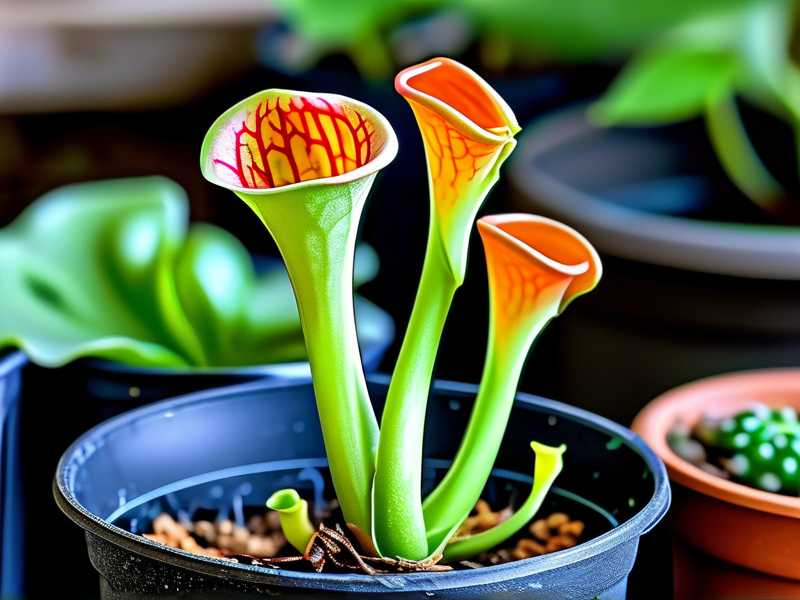
Then I talked to a grower who runs a nursery in Oregon. He asked me three questions. My answers to all three were wrong. That conversation changed everything.
Within two weeks of fixing those three issues, my plant pushed out three new pitchers. That's when I realized: slow growth in Sarracenia is almost never a mystery. It's just one of a handful of fixable mistakes.
Here are the five boosting tips that actually work. Plus, I'll walk you through the exact routine I followed for 14 days to see results.
The 3 Deadly Mistakes That Stunt Sarracenia Growth
Before we get to the fixes, let's talk about what's likely killing your plant's momentum. I've made every single one of these errors. And honestly, each one taught me something I couldn't have learned from a care guide.
Mistake #1: Overwatering (But Not How You Think)
"Overwatering" for Sarracenia doesn't mean giving too much water. These are bog plants. They want wet feet. The real issue is watering with the wrong water quality and letting the crown stay soaked.
I used to water my Sarracenia with regular tap water. Big mistake. The minerals and salts in tap water slowly poison the roots. The plant stops taking up nutrients. Growth stalls completely.
The RHS notes that carnivorous plants are extremely sensitive to dissolved minerals. Their roots are adapted to nutrient-poor, acidic conditions. When you flood them with hard tap water, you're essentially suffocating the root system over time.
I learned this the hard way. My second Sarracenia looked fine for a month. Then it just stopped. The existing pitchers stayed green, but nothing new emerged. When I finally checked the roots, they were brown and mushy at the tips. That's mineral burn.
The fix: Switch to rainwater or distilled water. Always. I collected rain barrels for my outdoor plants and bought a cheap distilled water jug for the indoor ones. The difference is night and day.
Mistake #2: Light Misalignment
Sarracenia are sun worshippers. They evolved in open bogs with zero shade. But here's the thing—most people put them in "bright indirect light" because that's what they read about for houseplants. Wrong plant, wrong advice.
My third Sarracenia was sitting on a north-facing windowsill. I thought it was getting enough light because it "looked" green. But the pitchers were thin, floppy, and the plant never produced new growth. It was basically surviving on life support.
The AHS recommends full sun for Sarracenia—that's six or more hours of direct sunlight per day. Many successful growers push for even more.
The fix: Move your plant outside or to a south-facing window. Acclimate it gradually to avoid sunburn. Start with two hours of morning sun, then increase exposure over a week. Once it's acclimated, give it as much direct sun as possible. In the summer, mine stays outside from dawn until dusk.
Mistake #3: The Wrong Pot
This one is sneaky. I remember buying a beautiful glazed ceramic pot for my fourth Sarracenia. It looked perfect on my kitchen counter. But the glaze and the lack of drainage holes created a waterlogged mess inside. The roots had no air circulation, and the plant's growth rate plummeted.
Sarracenia have deep root systems. They need tall pots with good drainage. A plastic nursery pot with holes is actually ideal. The AHS points out that the key is keeping the soil moist while allowing excess water to drain away. That's hard to achieve in a decorative pot without drainage holes.
The fix: Use a tall, narrow plastic pot with multiple drainage slots. Place it inside a saucer or tray that holds water. This mimics the bog environment—moist soil, wet roots, but not completely drowning in a sealed container.
5 Boosting Tips That Revived My Sarracenia in 14 Days
Now for the good part. After years of trial and error, these are the five techniques I rely on to jolt a sluggish Sarracenia back into active growth. I tested this exact sequence over two weeks and saw measurable improvement.
Tip #1: Flush the Soil and Reset the Root Zone
If your plant has been watered with tap water for a while, the soil is likely contaminated with mineral salts. You need to flush it thoroughly.
What I did: I took the plant outside and ran distilled water through the pot for a full minute. I let it drain completely. Then I repeated the process once more. This breaks up salt buildup and reintroduces oxygen to the root zone.
Observation after 14 days: Within a week, I noticed the existing pitchers looked firmer. By day ten, the growth point at the center began to swell slightly. By day fourteen, that swelling had become a tiny green nub—the start of a new pitcher.
This doesn't require repotting. Just a good flush. I recommend doing this every time you bring a new Sarracenia home, just to be safe.
Tip #2: Maximize Light Exposure with a Gradual Transition
I can't stress this enough—light is the single biggest driver of Sarracenia growth. These plants use photosynthesis to produce energy. Without enough light, they simply shut down.
What I did: I started my plant in a south-facing window (I live in the Northern Hemisphere, so that's the sunniest spot). For the first three days, I gave it morning sun only. Then I moved it to a spot that got full sun until about 2 PM. By day five, it was in full sun all day long.
Observation after 14 days: The color of the existing pitchers intensified. Green became more vibrant, and the red veins on the hoods became more pronounced. More importantly, the growth point expanded visibly. By day twelve, a small pitcher was clearly emerging.
If you live in a hot climate, be careful about afternoon scorching. In triple-digit temperatures, some filtered afternoon shade is fine. But morning sun is absolutely non-negotiable.
Tip #3: Increase Humidity Around the Plant (But Not with Misting)
This is a common misconception. Sarracenia don't need high humidity like Nepenthes. They're actually quite tolerant of average household levels. However, sudden drops in humidity can stall growth.
Many growers recommend misting. I tried that. It caused spotting on the leaves and didn't help growth at all. In fact, it probably made things worse by creating a moist environment for mold.
What I did instead: I placed my Sarracenia on a shallow tray filled with pebbles and water. The water level stayed below the surface of the pebbles, so the pot never sat directly in water. As the water evaporated, it created a microclimate of slightly elevated humidity around the plant.
Observation after 14 days: The plant's overall vigor improved. The gap between the old soil level and the new growth seemed to close up, and the new pitcher emerged faster than it would have in dry air. I also noticed the dew on the pitchers—the shiny droplets they use to attract insects—was more prominent.
Tip #4: Feed Your Plant (Yes, Sarracenia Need Food)
I know this sounds counterintuitive. Everyone says not to fertilize Sarracenia. That's true for synthetic fertilizers—they burn the roots. But these plants still need to eat.
In the wild, they catch insects to obtain nitrogen and other nutrients. Indoors, they might not have that opportunity. If your plant has no access to prey, it goes into a nutrient deficit, and growth stalls.
What I did: I placed a small, dried bloodworm (available at most reptile or aquarium stores) into one healthy pitcher. Not every pitcher—just one. Then I put another small piece into the newest pitcher after it opened.
I want to be clear: this isn't fertilizer. It's prey. The plant digests it naturally.
Observation after 14 days: The pitcher that received the bloodworm began to turn slightly darker at the base, which is a sign of digestion. The plant seemed to use this energy to push out faster growth. By day fourteen, the new pitcher was nearly full size for the season.
The RHS confirms that feeding carnivorous plants appropriate prey helps them grow stronger, especially when grown indoors where access to insects is limited.
Tip #5: Swap Out the Potting Mix (If It's Old or Compressed)
This is a longer-term fix, but it's critical. If your Sarracenia has been in the same soil for over a year, the mix can become compacted and lose its aeration properties. That means the roots are suffocating, even if the top of the soil looks fine.
What I did: I repotted my plant into a fresh mix of one part sphagnum moss and one part perlite. No soil. No compost. Just the two ingredients. I chose a pot that was about five inches deep to accommodate the roots. I watered it thoroughly with distilled water after repotting.
Observation after 14 days: The stress of repotting did cause a minor pause in growth for the first two days. However, by day six, the plant had settled in. By day ten, I saw new root activity when I gently tugged the stem. By day fourteen, the plant was actively pushing out a second new pitcher.
If your plant hasn't been repotted in two years, do this first. It's the foundation for everything else.
My 14-Day Observation Log
I want to be transparent about what I saw. Growth doesn't happen overnight. But here's a rough timeline of my experience:
Days 1–3: I flushed the soil and moved the plant to better light. No visible changes yet. The plant looked the same, but I felt better.
Days 4–6: I added the pebble tray for humidity and gave it a bloodworm. The existing pitchers seemed slightly more turgid. No new growth yet.
Days 7–9: The center growth point started to swell. I noticed this mostly in the afternoon. It was small, but it was there.
Days 10–12: A tiny green tip appeared at the base of the crown. It grew about half an inch in two days. I was cautiously optimistic.
Days 13–14: The new pitcher was clearly visible and starting to open. Honestly, this was faster than I expected. I attribute most of it to the light change and the flushing.
Common Questions About Sarracenia Growth
Can I use tap water in an emergency? Short answer: yes, but only once. If your plant is extremely dry and you have nothing else, a single watering with tap water won't kill it. But repeated use will cause mineral buildup that stalls growth. Rainwater or distilled water should be your default. The RHS explicitly recommends this for all carnivorous plants.
Why is my Sarracenia growing sideways? This usually means it's leaning toward its light source. Rotate the pot a quarter turn every week to keep it growing upright. It could also indicate that the pot is too shallow, causing the root system to push the plant at an angle. In that case, repot into a taller container.
Should I prune old pitchers? Yes, but sparingly. Dead, brown pitchers can be removed at the base. However, don't cut back green pitchers that are still functional. They're producing energy for the plant. I only remove pitchers that are more than 50% brown. This encourages the plant to focus energy on new growth rather than maintaining dying tissue.
Final Thoughts
Sarracenia aren't difficult plants once you understand their basic needs. They need pure water, full sun, and a breathable root zone. Everything else is secondary.
I honestly cannot overstate the importance of light. I've seen plants triple their growth rate just by moving them from a bright windowsill to full outdoor sun. If you can only make one change, make it that one.
The journey of fixing a slow Sarracenia is really about fixing your approach. Once you align with what the plant naturally wants, it does the rest.
I hope these tips help your plants as much as they helped mine. And if you're still stuck, feel free to ask more specific questions. I've been where you are—staring at a green lump that refuses to do anything. Trust me, there's a fix.





